
Matilda Browne (later Van Wyck)
(1869 – 1947)
HENRY RANKIN POORE (1859–1940)
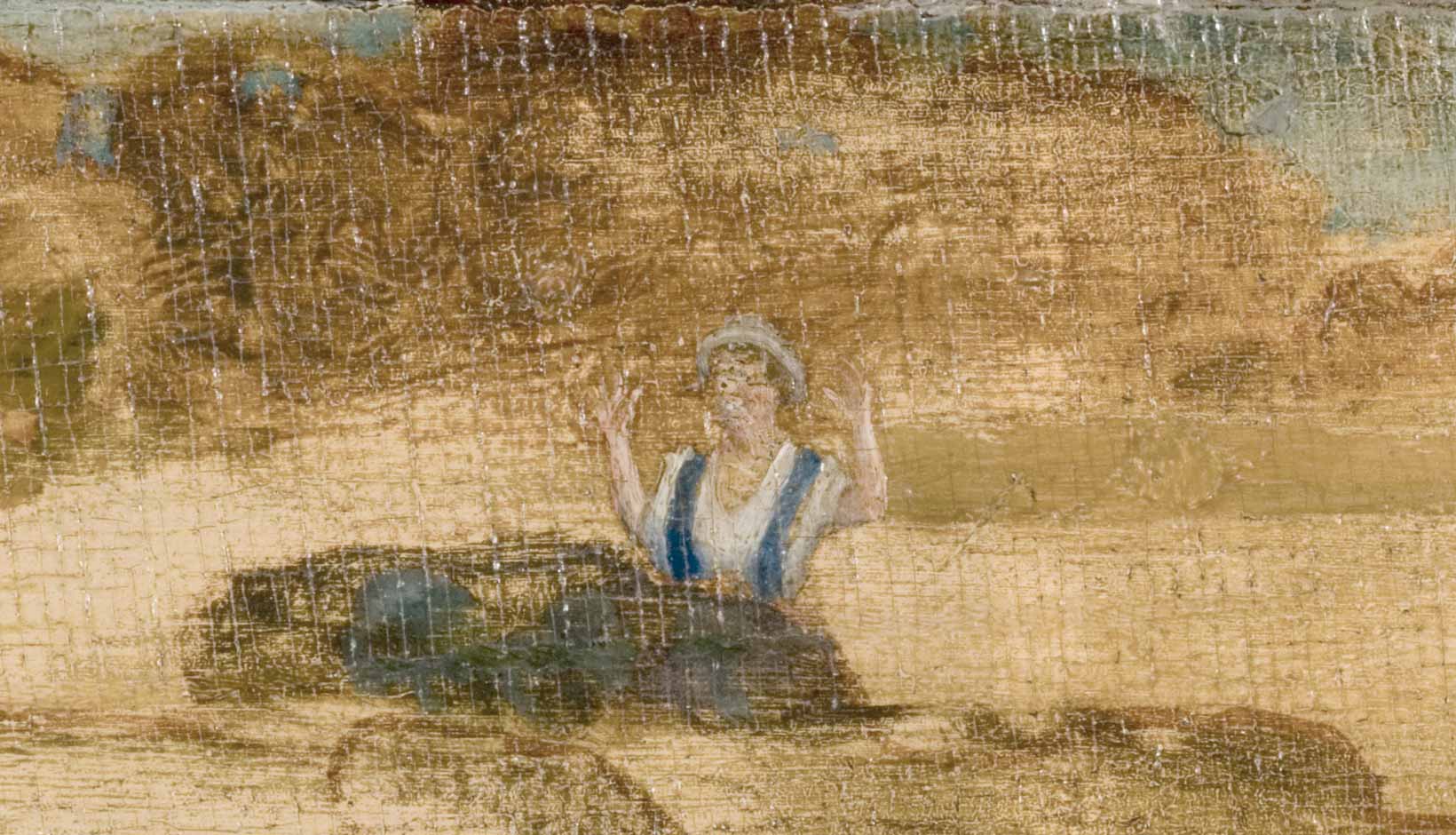
THE FOX CHASE (detail), 1901-1905; REVISED C. 1920
OIL ON WOOD PANEL
FLORENCE GRISWOLD MUSEUM
GIFT OF THE ARTIST
Born May 8, 1869, Newark, New Jersey
Died November 3, 1947, Greenwich, Connecticut
In Old Lyme, periodically, c. 1902-1906, 1911-1924
As a child in Newark, New Jersey, Browne was lucky to live next door to the artist Thomas Moran (1837-1926), famous for his large paintings of Yellowstone National Park. He allowed his 9-year old neighbor into his studio to watch him work before inviting her to experiment with paint, brushes and canvas on her own. Her natural talent was obvious. He encouraged her to take additional art lessons, and by age 12 one of her paintings of flowers was accepted into an exhibition at the National Academy of Design in New York.
She soon became interested in painting farm animals and traveled with her mother to Europe to study with animal painters in France and Holland. Her mother would buy calves from the local fair to serve as models. When a painting was finished the calf was traded for another. Years earlier Browne had studied with Carlton Wiggins who often painted sheep. It was Wiggins who most likely provided her entrée into the boardinghouse in Old Lyme. She later rented a house on Lyme Street in the center of the village.
She was the only female depicted in The Fox Chase (detail above), as an artist or otherwise – even Miss Florence is missing! – and the only female artist to be invited to paint a door or panel for Miss Florence’s house. Stunned by the shock of discovering a bare-chested Childe Hassam painting en plein air, Matilda Browne is shown with her hands frozen in the air. Despite her painted reaction, Browne was probably less affected by the antics of the men of the Lyme Art Colony than most, since she was one of very few women welcomed into their male-dominated art club. She contributed a pair of panels titled Bucolic Landscape (1905, below), forming a scene of calves grazing beneath a tree, on the door leading to Miss Florence’s bedroom.
Artistically she was the men’s equal, having trained with masterful artists and garnered an assortment of prestigious awards by the time she came to Lyme in 1905. Moreover, her slight lameness, stout frame, and overall seriousness caused the men to treat her like a sister. “Matilda Browne is one of the best equipped of women painters. She often wields her brush with almost masculine vigor, — her work possesses personal strength and individuality; yet the influence of her distinguished masters is also perceptible.” – Writer Henriette Daus
Most of the other female artists who came to Lyme were students that the professional artists felt were not serious. They encouraged Miss Florence not to rent them rooms in the boardinghouse. The artists called these female students “blots on the landscape,” and Willard Metcalf titled his portrait of his art student Lois Wilcox Poor Little Bloticelli (1907, pictured in the gallery below), a play of words referencing the Italian Renaissance painter Sandro Botticelli (1445–1510).
Matilda Browne’s scene on Florence Griswold’s bedroom door (below) resembles those that the art world of her day admired her for: a tranquil country landscape with cows. “Tilly’s cows” not only look alive but seem to have personality, as though one could go into a field and readily find the ones who modeled for the artist.
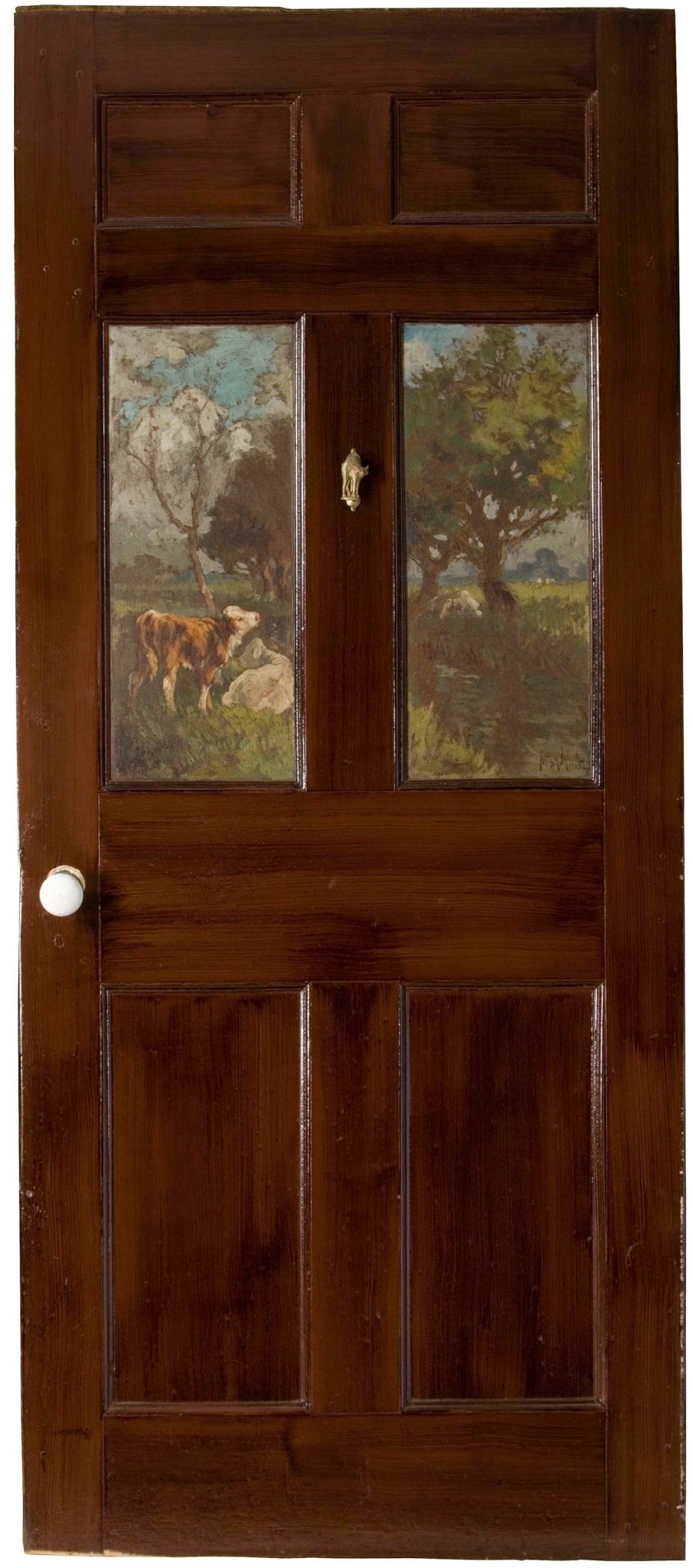
MATILDA BROWNE (1869–1947), "BUCOLIC LANDSCAPE," 1905. OIL ON WOOD PANEL. FLORENCE GRISWOLD MUSEUM, GIFT OF THE ARTIST
Browne’s landscapes usually reveal her interest in light and shadow, seen here, for example, in the cloudy sky and in the way light strikes the cows on the left and the tree on the right. Like many artists of her time, Browne sometimes combined aspects of the two styles most popular then: Tonalism and Impressionism. Colors on this door are somewhat toned (she sometimes used bright ones), but her brushwork is somewhat loose and the composition is asymmetric.
Note the doorknocker in the shape of a cat. It was a later gift from the art colonists to try to console Miss Florence for their “reduction” of her large cat population, which had greatly exceeded reasonable limits. She had not had the heart to do anything about it herself.
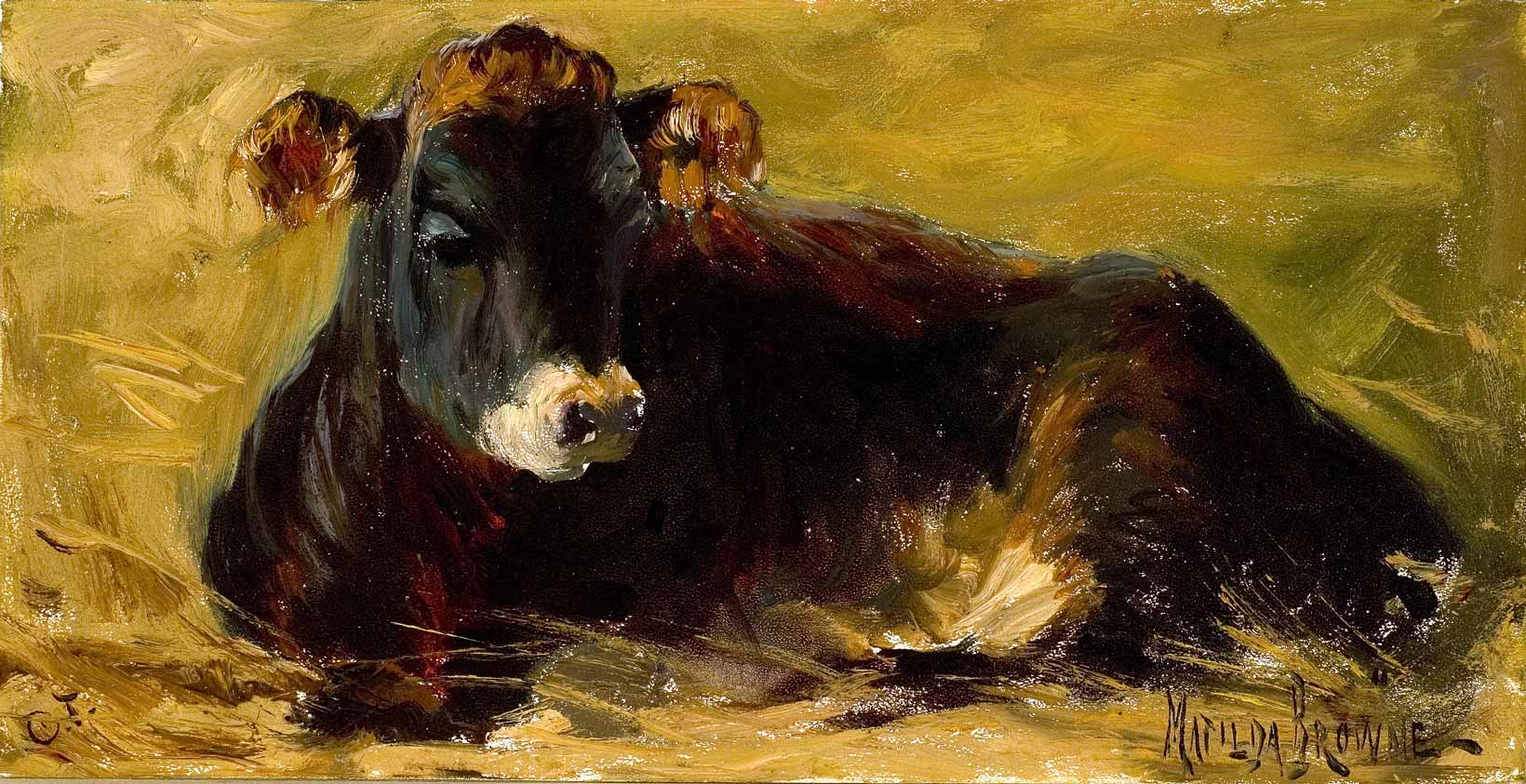
Matilda Browne (1869–1947), Cow Lying Down, n.d. Oil on panel, 6 5/16 in. x 12 1/4 in. Florence Griswold Museum, Gift of the artist
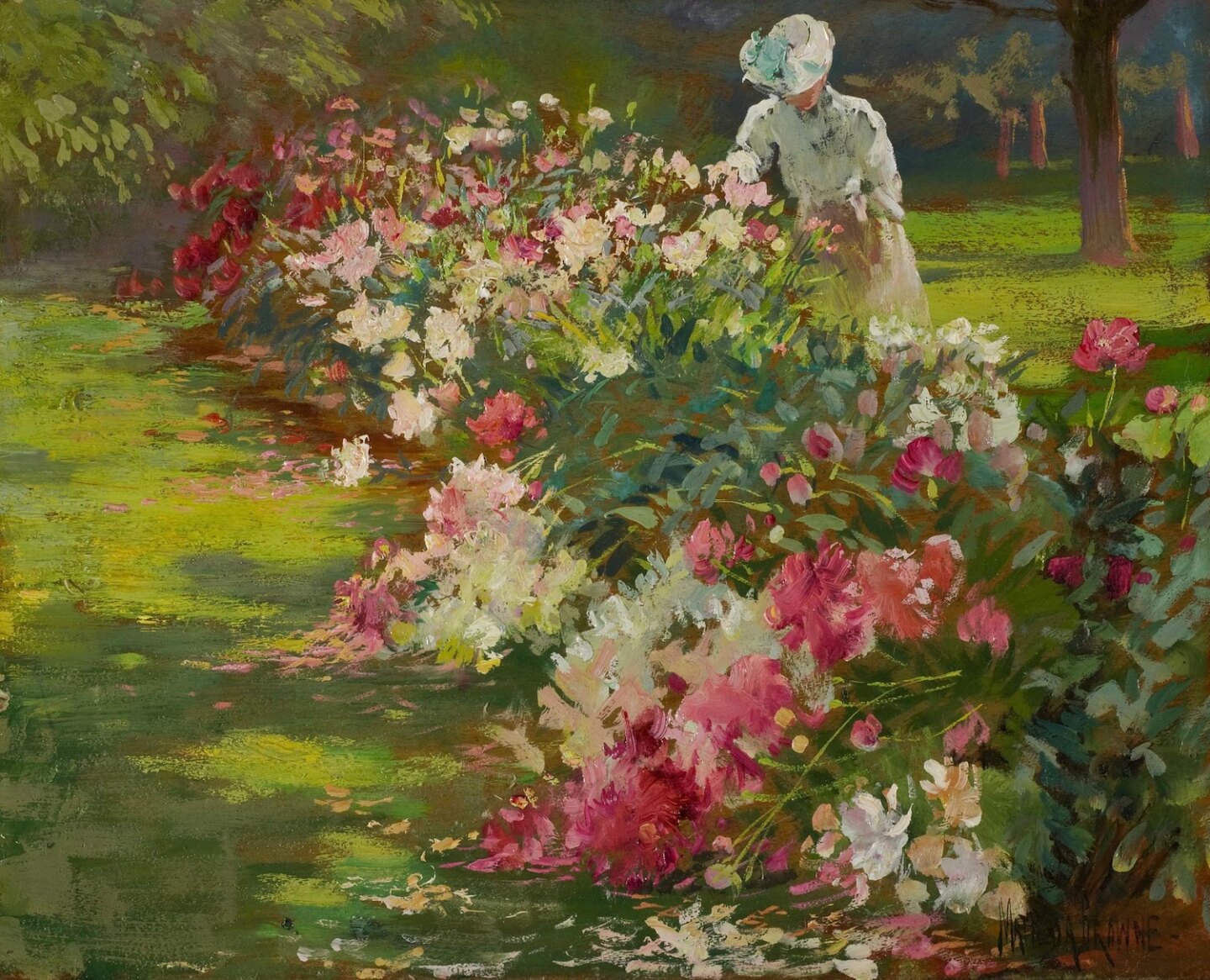
Matilda Browne (1869–1947), Peonies, ca. 1907. Oil on wood, 11 1/2 x 14 in. Florence Griswold Museum, Purchase
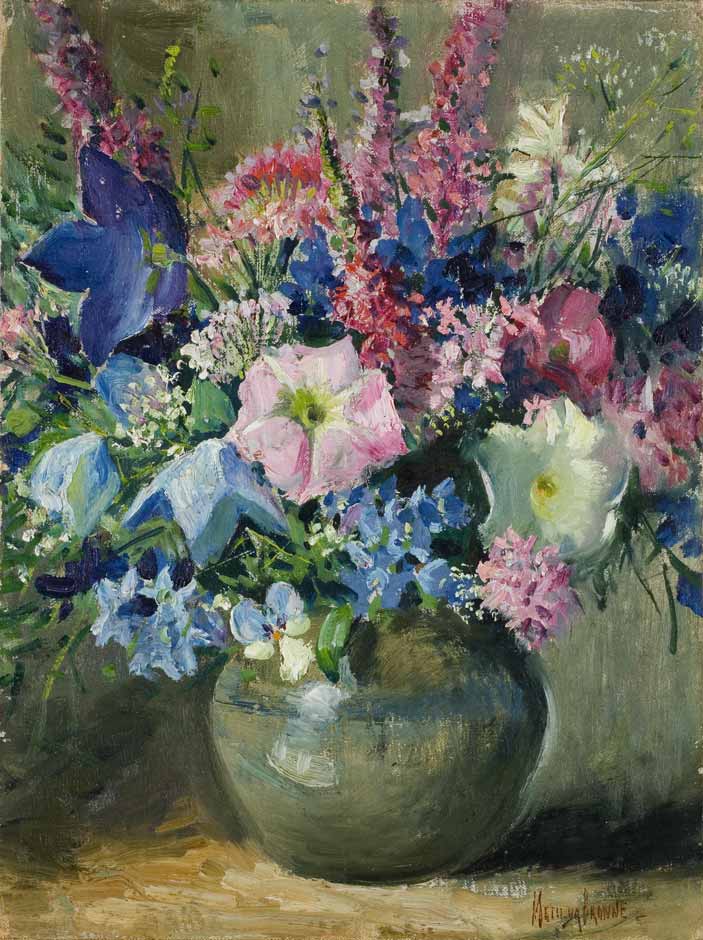
Matilda Browne (1869–1947), Flowers, n.d. Oil on canvas board, 16 in. x 12 in. Florence Griswold Museum, Gift of Mr. and Mrs. Larry J. Lawrence in Loving Memory of Isabel Scoville Peterson Patricelli
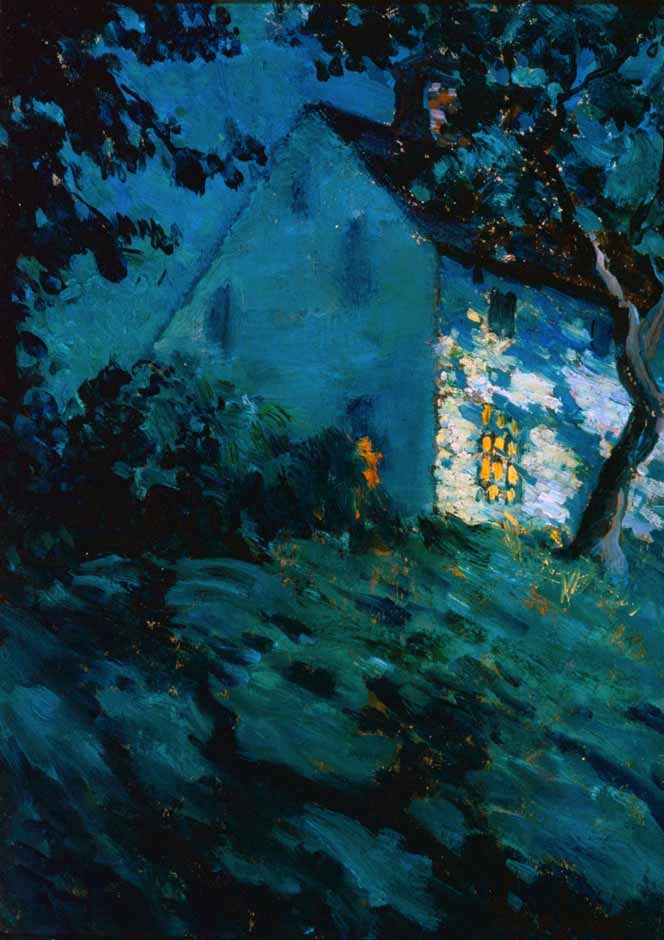
Matilda Browne (1869-1947), Saltbox by Moonlight, n.d. Oil on canvas, 14 x 10 in. Florence Griswold Museum, Gift of the Hartford Steam Boiler Inspection & Insurance Company
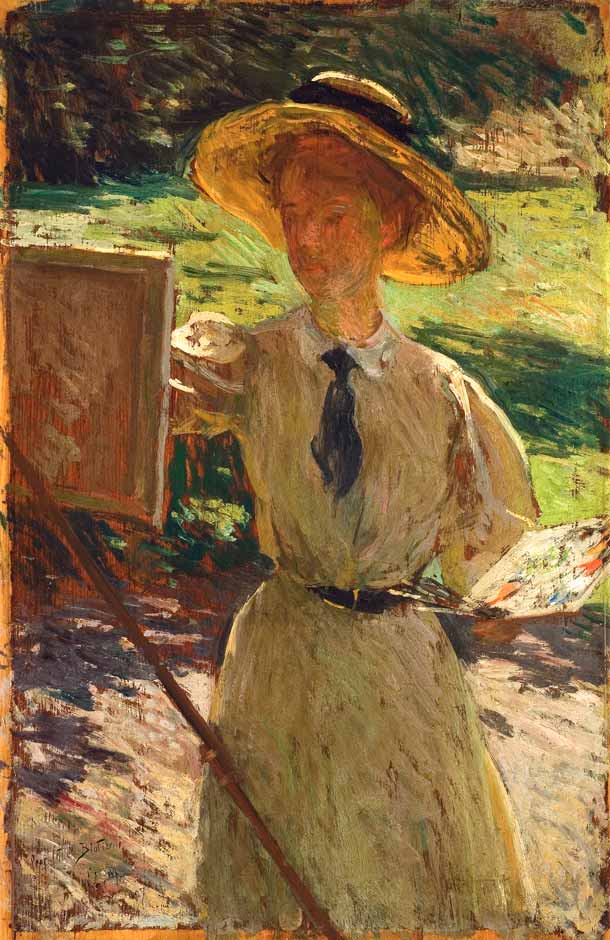
Willard Metcalf (1858–1925), Poor Little Bloticelli, 1907. Oil on wood panel. Gift of the Artist