
Harry Leslie Hoffman
(1871 – 1964)
HENRY RANKIN POORE (1859–1940)
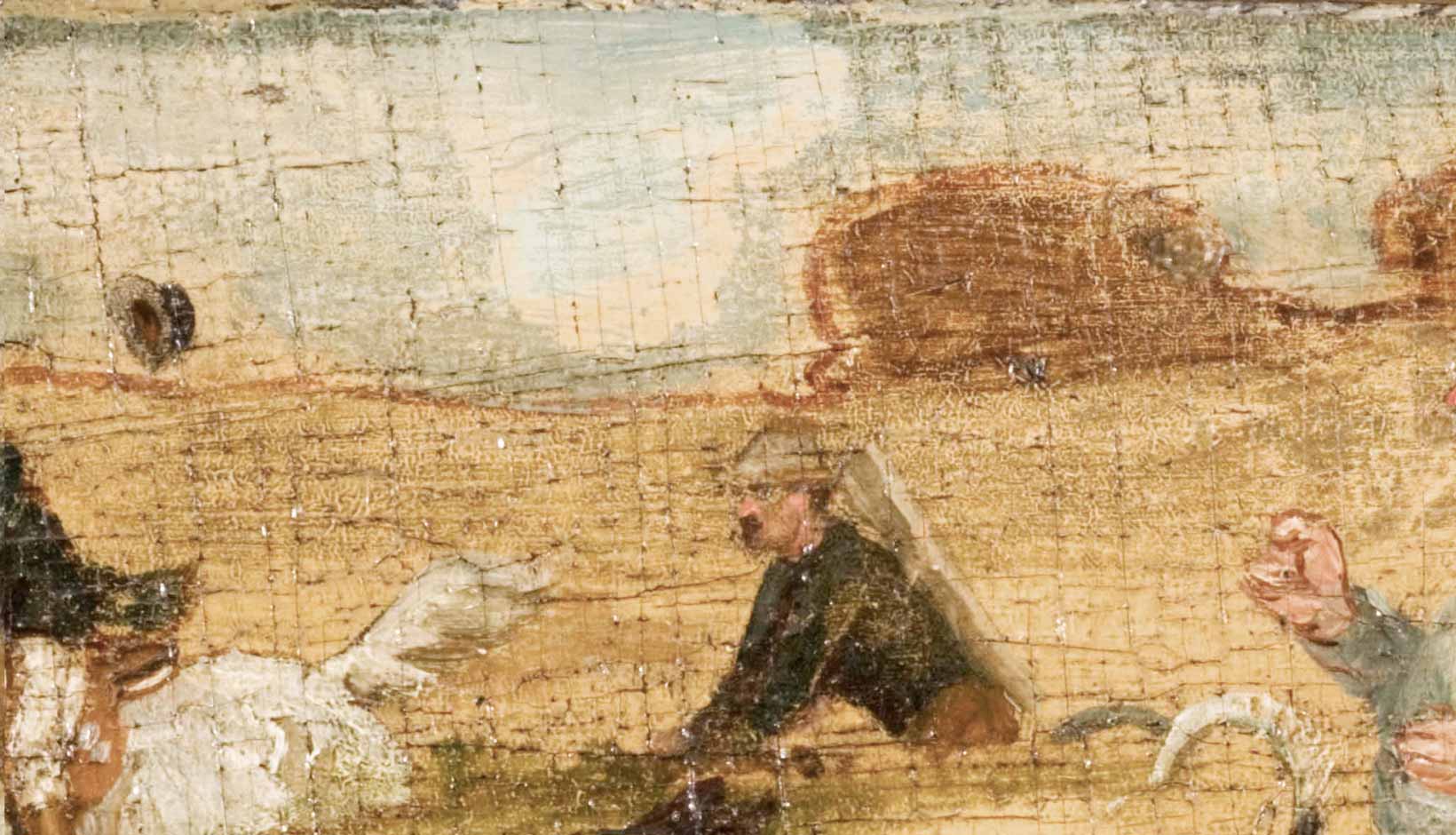
THE FOX CHASE (detail), 1901-1905; REVISED C. 1920
OIL ON WOOD PANEL
FLORENCE GRISWOLD MUSEUM
GIFT OF THE ARTIST
Born March 16, 1871, Cressona, Pennsylvania
Died March 6, 1964, Old Lyme, Connecticut
In Old Lyme, summers 1902-1909; permanently, 1910-1966
Shown riding a bike with a large canvas strapped to his back in The Fox Chase (detail above), the artist Harry Hoffman brought good-natured fun and frivolity to the Lyme Art Colony. He and his good friend Arthur Heming arrived in Old Lyme as early as 1902 as art students of Frank Vincent DuMond. The two were not invited to stay at the boardinghouse (the artists discouraged Miss Florence from renting to students), but they did take their meals there and became friends with the artists — as their placement in the panel proves. Though he came to Old Lyme as a student, Hoffman quickly became accepted as a member of the art colony. He was an accomplished musician who would share his talents in the impromptu musicales in the parlor during summer evenings. According to his good friend Heming, Hoffman “generously afforded entertainment . . . with his tap-dancing, his sleight-of-hand tricks, his playing upon his banjo and flute, his wit and humor, and his laughter-provoking singing.”
Hoffman chose to be an artist although he had been offered a handsome salary to pitch for a professional baseball team. After making this decision, he threw himself into his craft and was determined to make good use of his artistic time in Old Lyme. However, his heart got the better of him and he would steal away on moonlit canoe rides with Beatrice Pope, a young lady also staying with Miss Florence, and serenade her on the flute. They were married in 1910. The young couple spent their honeymoon in Spain, where Harry was arrested when he was mistaken for a British spy while sketching in a sensitive location in Palos. Upon their return to the United States, they moved into a large house off Sill Lane in Old Lyme, just up the road from the boardinghouse. They named the house Chuluota a Native American word meaning “beautiful view” and Harry painted murals in their dining room of underwater scenes.
By the 1920s, Hoffman was gaining a reputation as a painter of underwater scenes. Since this predates diving helmets, Hoffman would use a water-glass (a bucket with a glass bottom) to see beneath the waves. In this way, he would paint what he described as “the wave shadows traveling over the bottom of the sea with the fishes and their usual co-inhabitants moving around as though they were birds of the air. A nature kaleidoscope.” His keen observations of this undersea world led to invitations to accompany scientists on their expeditions to the Galapagos Islands in 1923 and later to Bermuda. He would paint hundreds of underwater scenes, several of which were then translated into weavings by his wife Beatrice. About the process of creating these underwater scenes, Hoffman wrote c. 19s0s: “To paint this was a puzzle—to put it mildly. It was not one color, nor was it one tint or shade. It was all colors, but in the same value. And the only way to paint it was impressionistically, using broken colors of light pink, green, violet, and blue. These colors thin out in the distance so that they merge into the disappearing iridescence.”
In 1910, Harry Hoffman, who had been spending summers in Old Lyme since 1902, settled in the town year-round with his wife Beatrice. Thus, unlike many of the art colonists, he was able to experience there a late fall day like the one he chose to portray on this dining room panel (below).
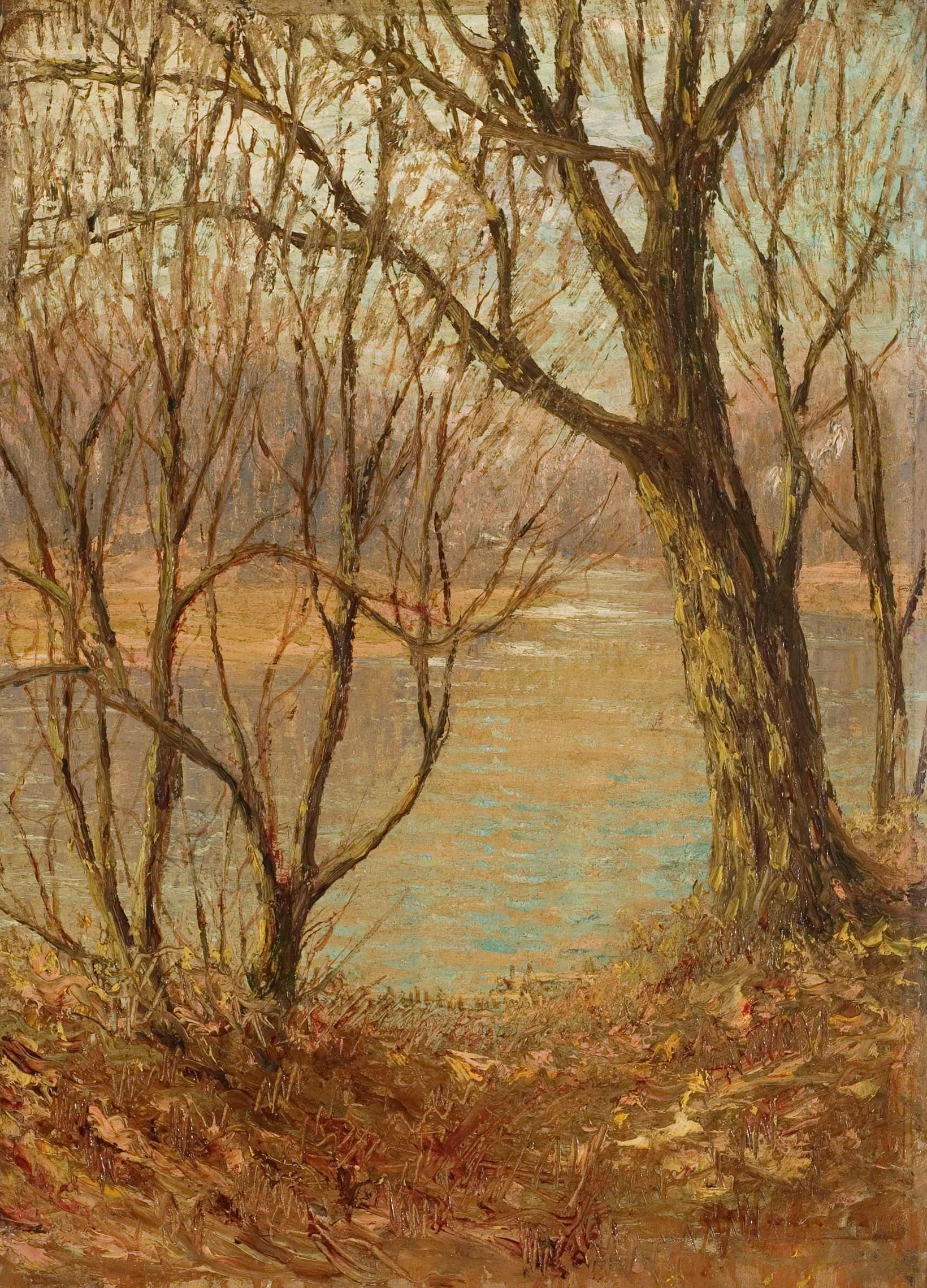
HARRY HOFFMAN (1871–1964), "WOODLAND STREAM – AUTUMN." OIL ON WOOD PANEL. FLORENCE GRISWOLD MUSEUM, GIFT OF THE ARTIST
Limiting his subject matter mostly to bare trees, his perspective to a snapshot view, and his colors to a few earthy tones, he was nonetheless able to create a picture with a good deal of visual interest, rising mostly from the screen of varied tree trunks and bare branches. The eye discovers openings through which to see what lies beyond. At the same time the screen attracts attention to itself by the intricacy and diversity of its design, which seems always about to settle into the consistency of a set pattern but never does. The reverse side of this panel features a sketch of a landscape near rushing water, perhaps a first attempt to better relate to Heming’s panel nearby.
Landscape artists have always loved to depict trees that are beautifully shaped and in full foliage – ideal trees, one might say. Real trees, however, are almost never perfect specimens, because any number of factors or accidents affects their growth. Hoffman makes us enjoy the resulting flaws – a branch bending at a crazy angle or otherwise going off in a direction seemingly of its own choosing. He allows us to savor the subtle variations of his trees’ basic browns and see how they blend with the tones of grasses, water, and sky on a subdued but not somber November day. Hoffman uses a similar approach in his painting of Miss Florence’s handyman James (pictured in the gallery below), showing him sawing wood during a winter storm beneath a dramatic network of branches.
Hoffman’s panel is installed in the dining room above that of his good friend Arthur Heming, whose dramatic black-and-white Shooting the Rapids is immediately below. Heming took some credit for Hoffman’s success, because once, when Hoffman was so short of money he almost accepted an offer to pitch for a professional baseball team, Heming talked him out of it.
(Hoffman was quite athletic and posed for the sculpture titled The Sprinter (1902, pictured below) by Canadian artist R. Tait McKensie (1867-1938), a cast of which sat on the bookshelf in the Griswold parlor during the years of the art colony.) Hoffman was also grateful to the artist Willard Metcalf for his valuable advice. Metcalf told him to forget the traditional art theories he had been taught and “go out and paint what you see.” This panel is a clear demonstration of Hoffman’s heeding those wise words.
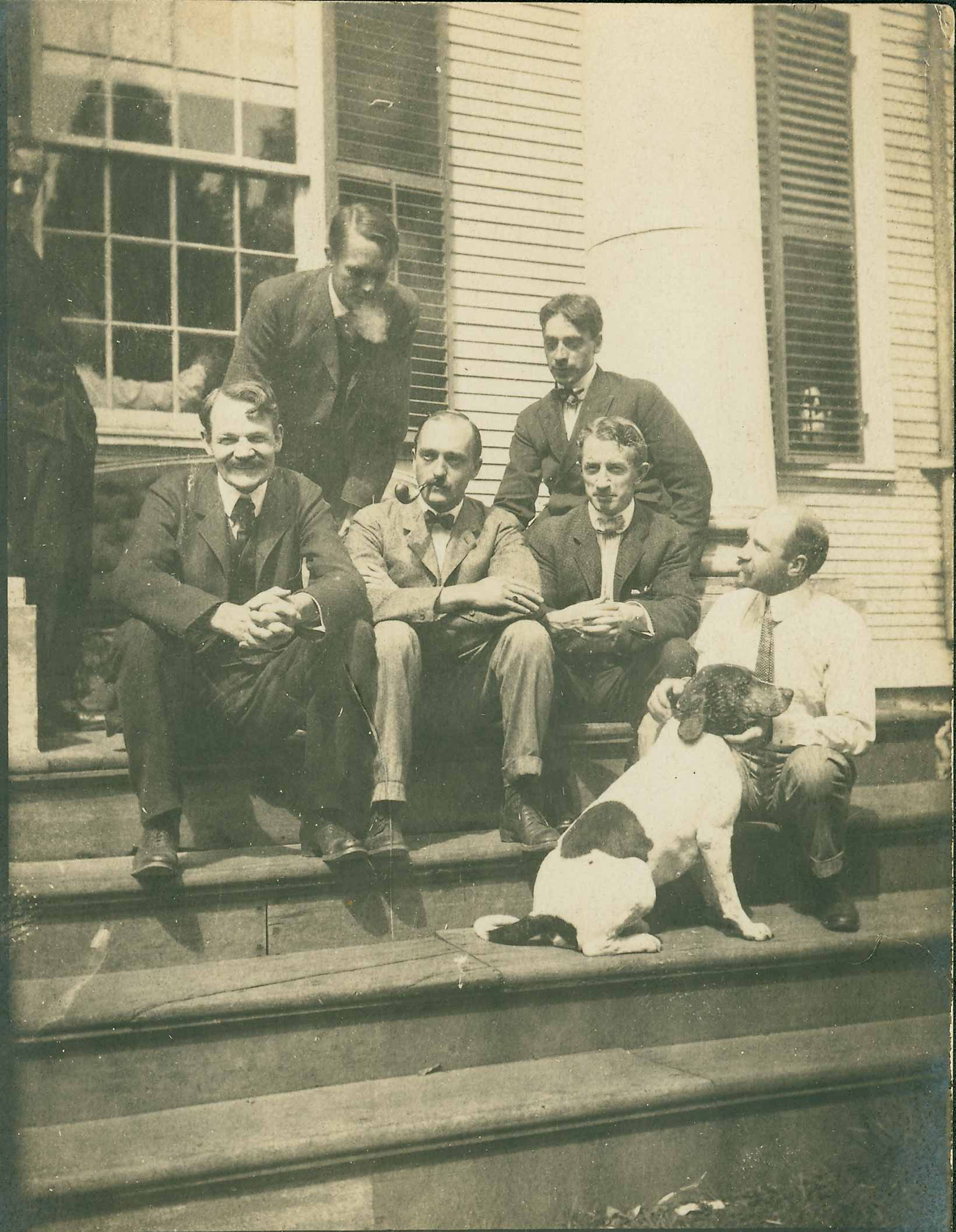
Artists on the front porch of the Griswold House, c. 1902. Harry Hoffman is seated far right back row (in front of column)
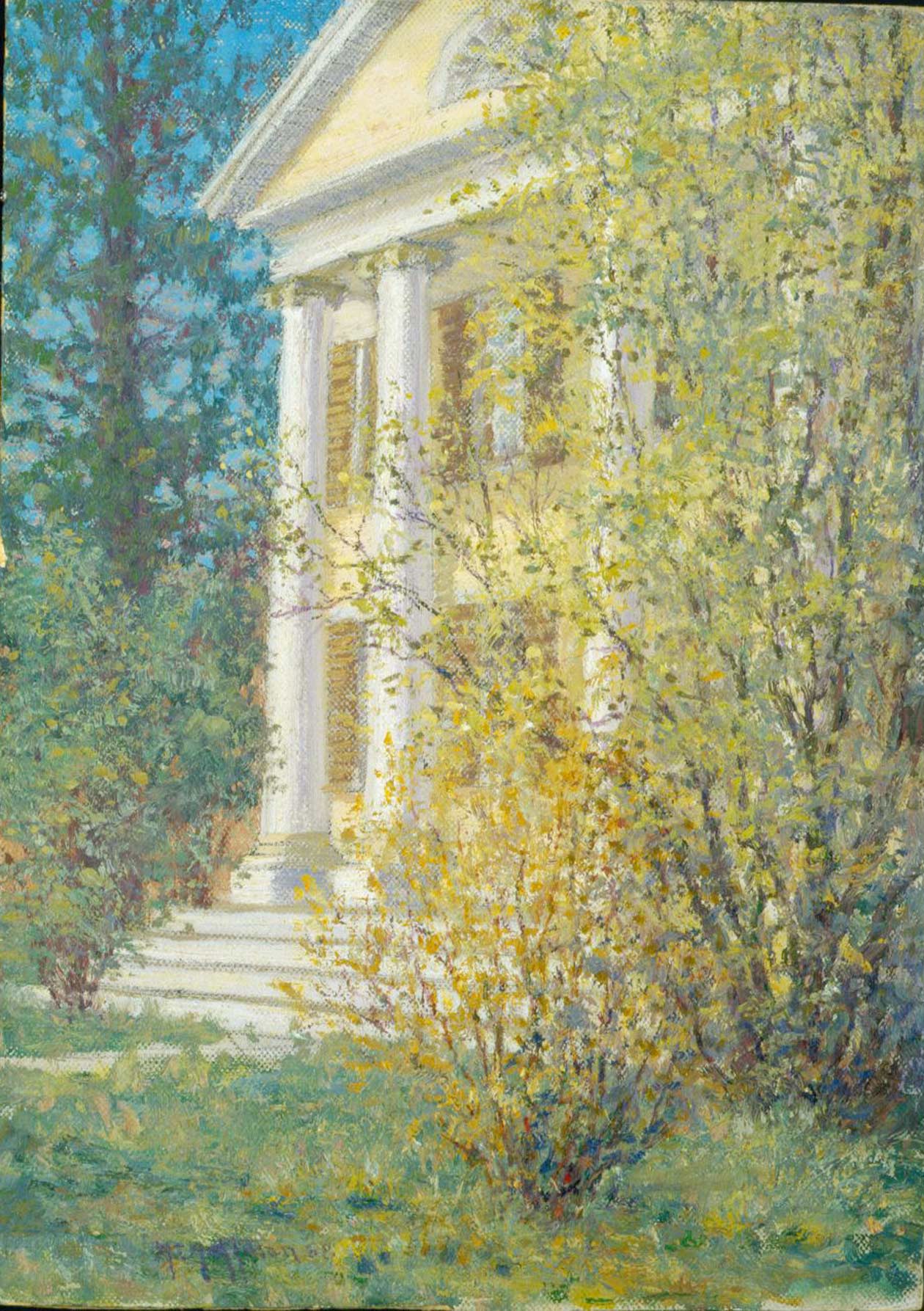
Harry Leslie Hoffman (1871–1964), View of the Griswold House, 1908. Oil on pressed board, 16 in. x 12 in. Florence Griswold Museum, Gift of the Family of Mrs. Nancy B. Krieble
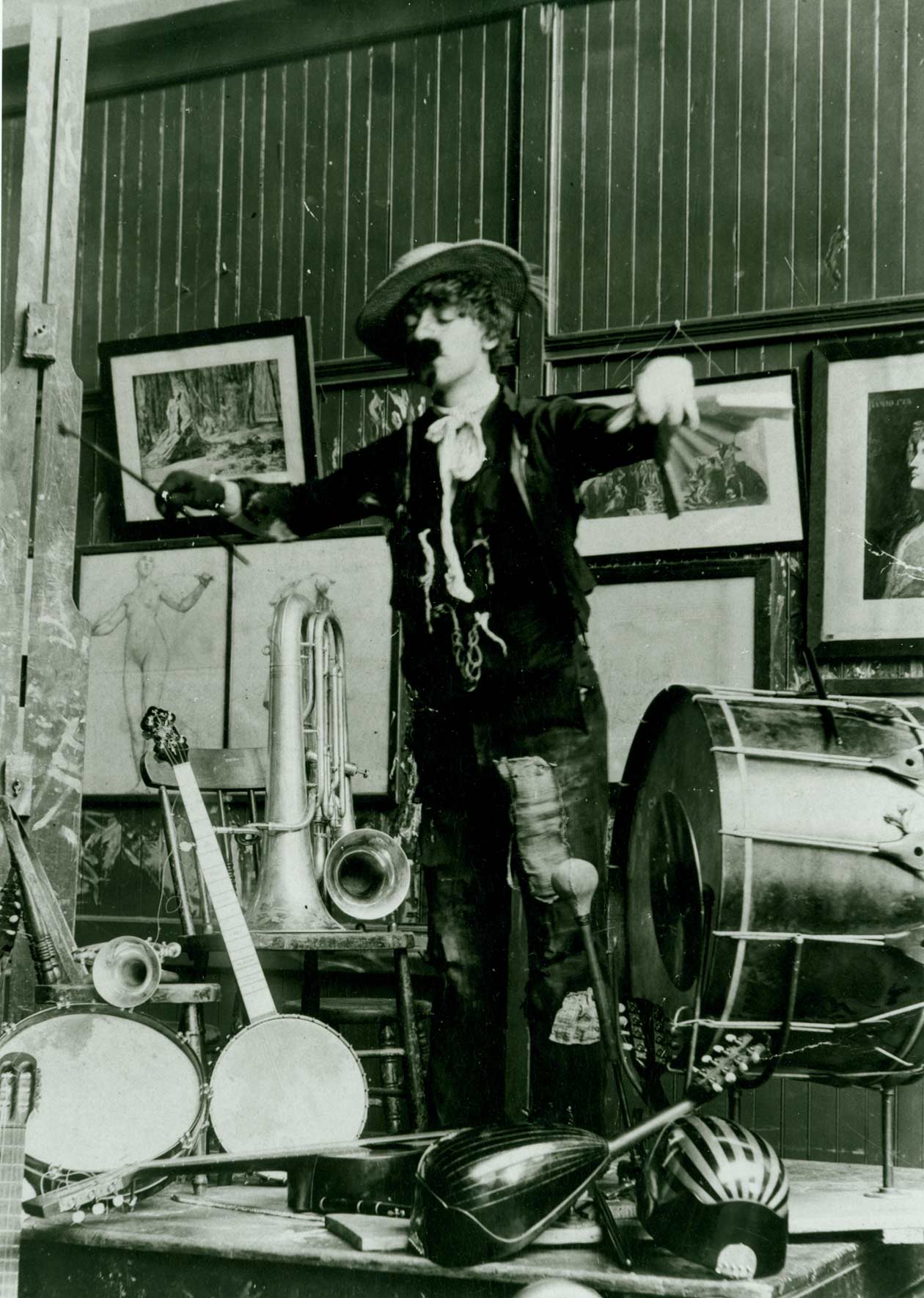
Harry Hoffman in costume with instruments
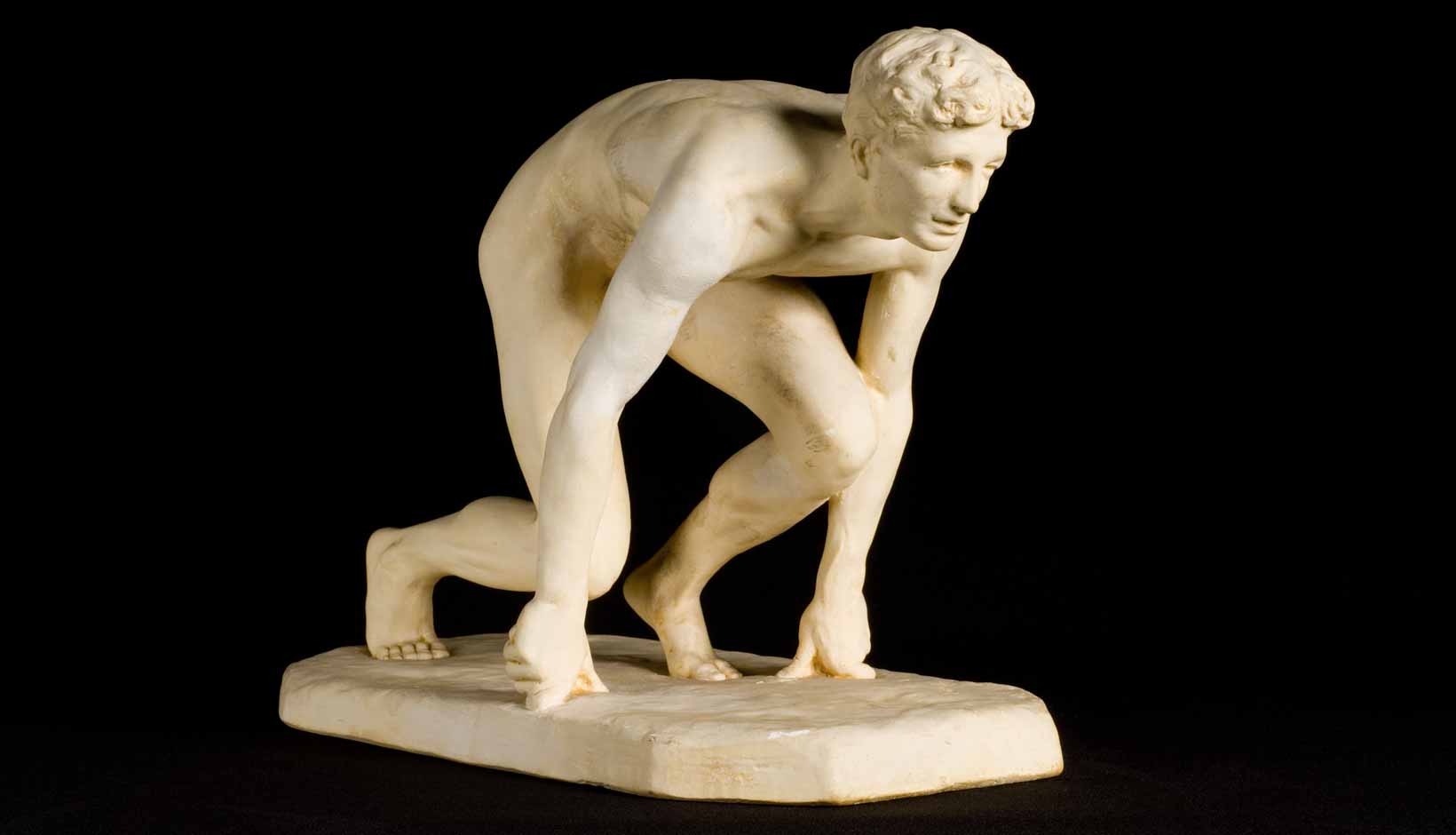
R. Tait Mckenzie (1867–1938), The Sprinter, 1902. Plaster. Courtesy of Amherst Library. Harry Hoffman was the model for this sculpture
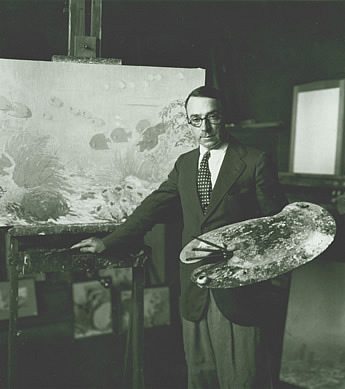
Harry Hoffman in his studio
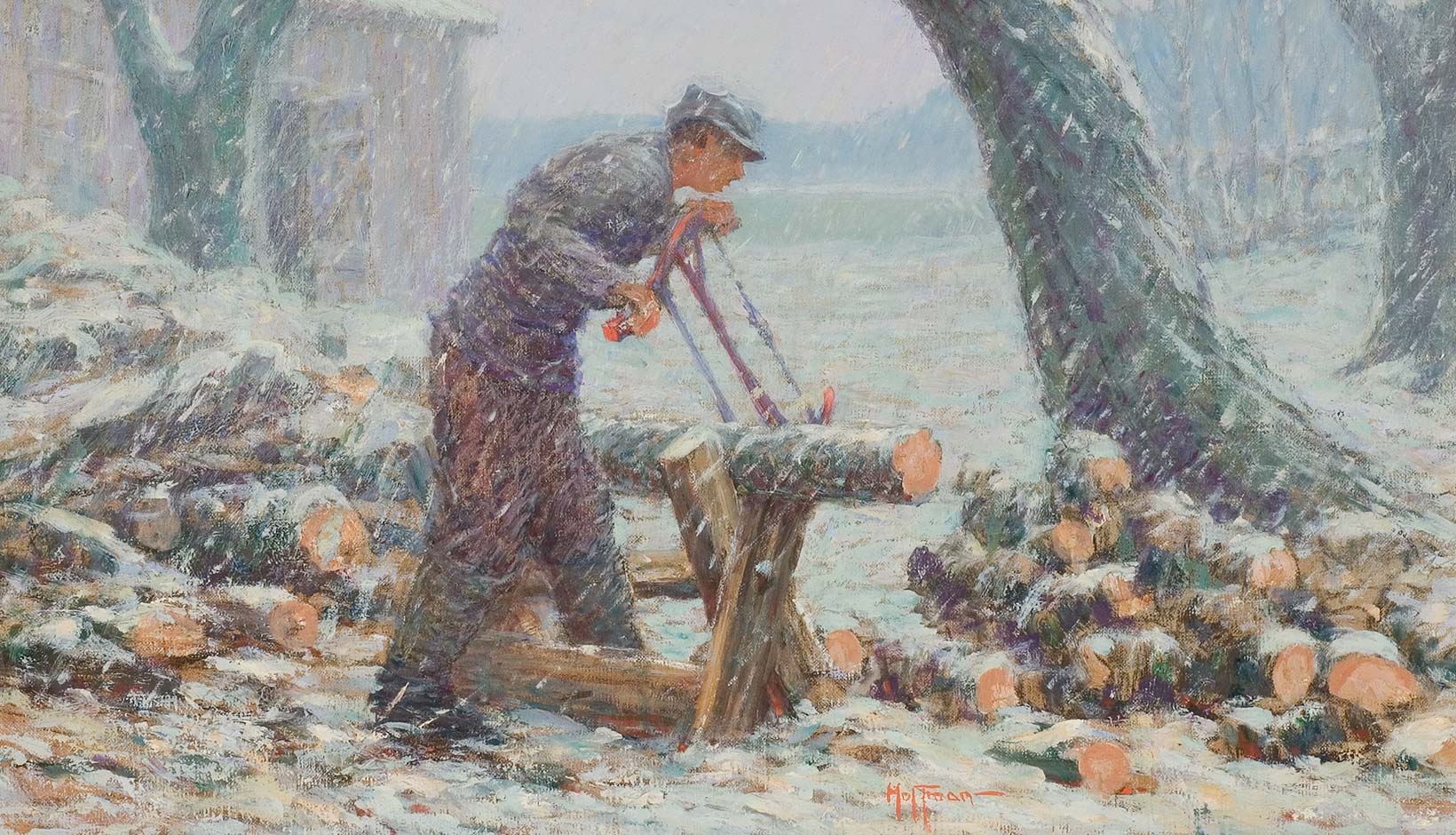
Harry Hoffman (1874–1966), James (detail), n.d.. Oil on canvas, 24 in. x 26 in.. Florence Griswold Museum, Gift of the artist
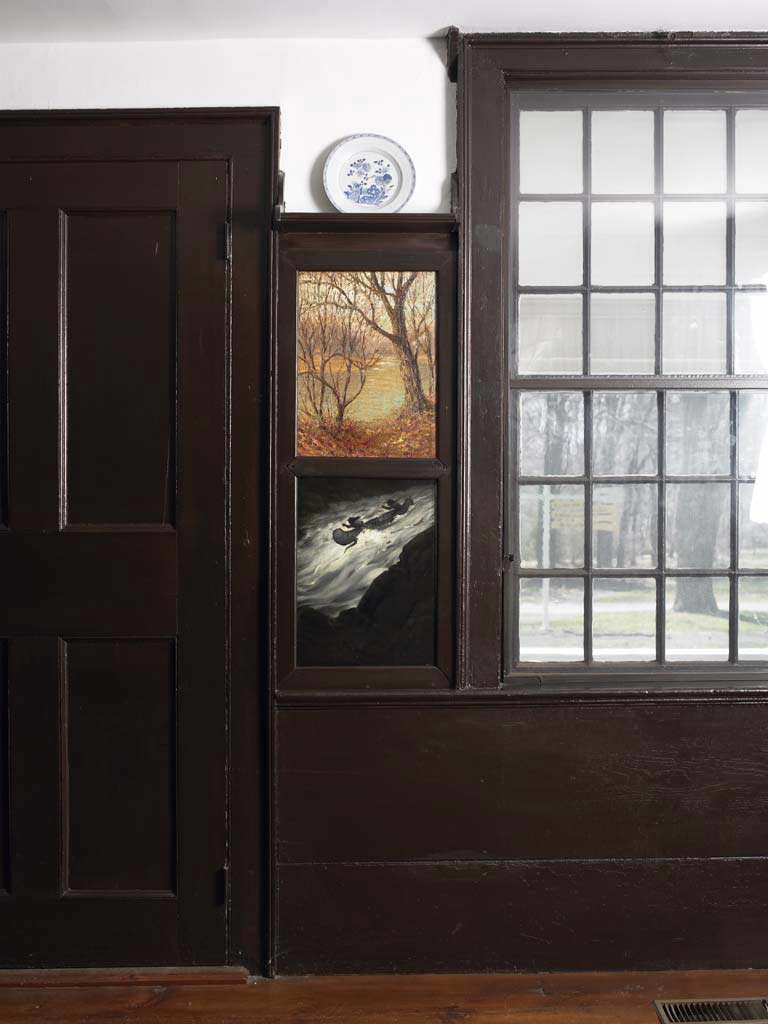
The South wall of the Florence Griswold House dining room
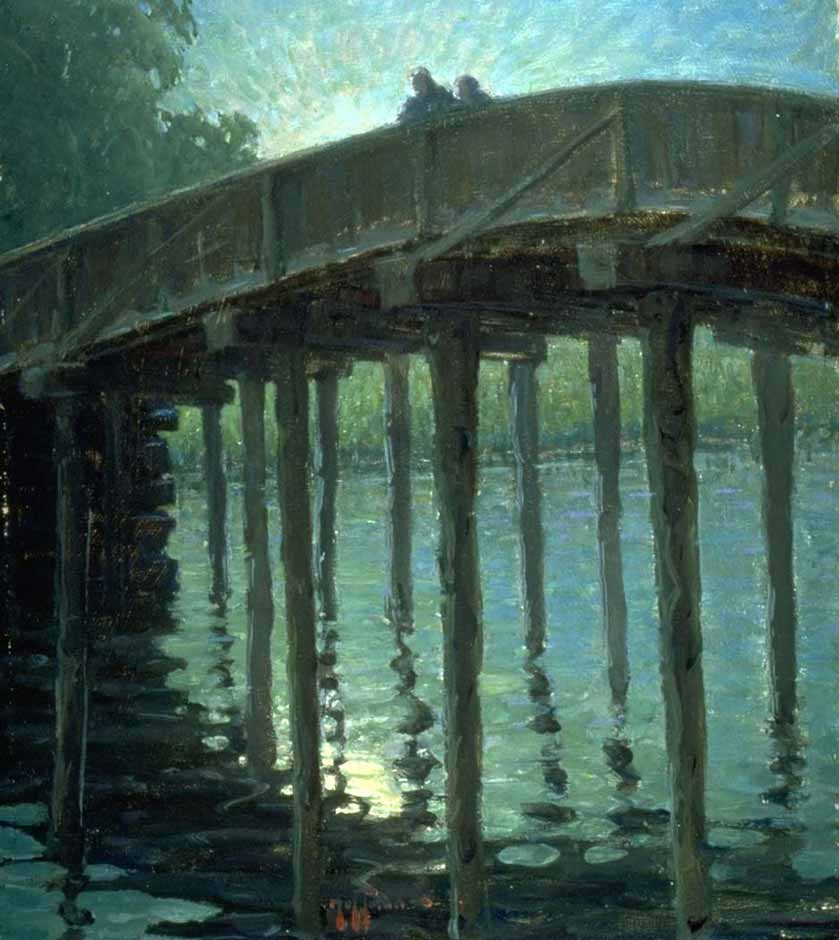
21-HoffmanBridge
Harry Hoffman (1871–1964), Bridging the Lieutenant, c. 1906. Oil on canvas board. Florence Griswold Museum, Gift of Mrs. Morris Joseloff
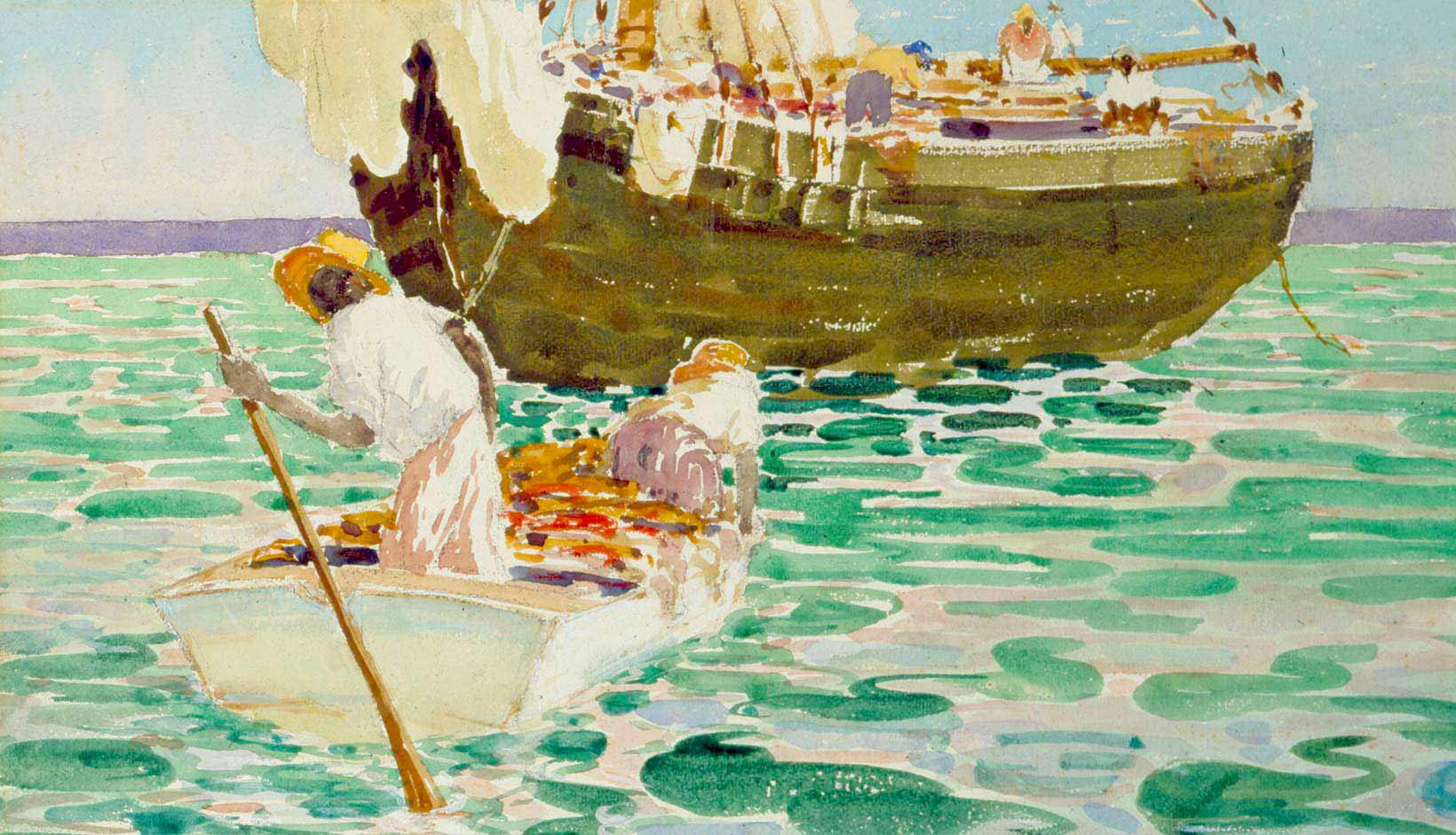
Harry Leslie Hoffman (1871–1964), February, Nassau, Bahamas, c. 1920. Watercolor and gouache over chalk on board with watercolor paper surface, 15 in. x 21 15/16 in. Florence Griswold Museum, Gift of the artist