Jules Turcas
(1854 – 1917)
HENRY RANKIN POORE (1859–1940)
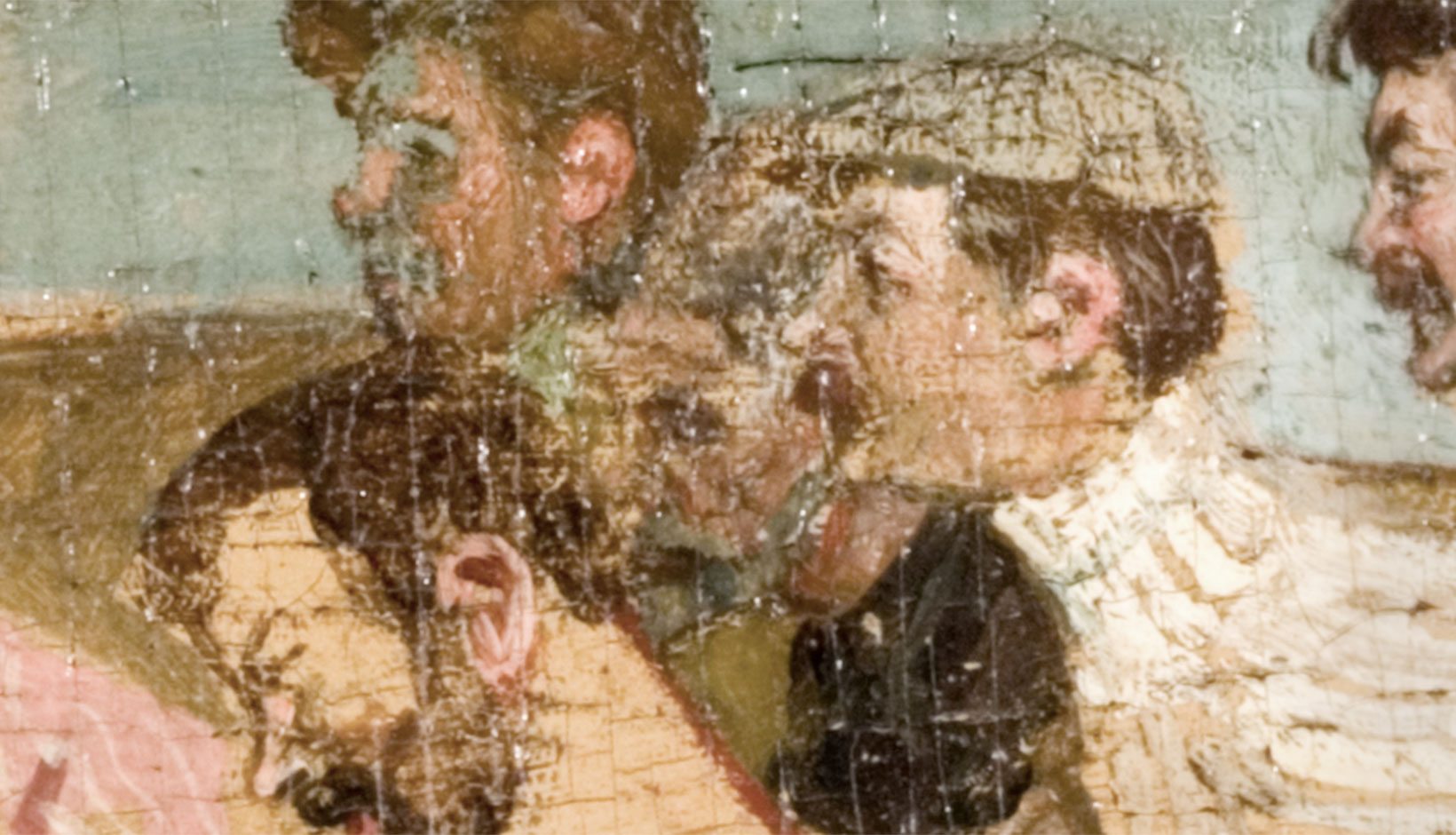
THE FOX CHASE (detail), 1901-1905; REVISED C. 1920
OIL ON WOOD PANEL
FLORENCE GRISWOLD MUSEUM
GIFT OF THE ARTIST
Born 1854, Cuba
Died March 16, 1917, New York City
In Old Lyme, summers, c. 1902-1917
Among the jumble of heads at the front of the pack of artists in The Fox Chase (above), Jules Turcas can be identified by his khaki-colored hat and telltale gray beard. Perhaps his being born the son of a wealthy sugar plantation owner in Cuba fostered Jules Turcas’s longtime interest in painting toiling farmers and their animals. He stayed at the Griswold boardinghouse beginning in 1902 and was showing his work in the annual exhibitions three years later. Enamored with the charm of Old Lyme, he and his wife bought a summer house on top of Grassy Hill, a choice location about six miles north of the village. Stunning views of Long Island Sound above the treeless hills were available from this elevated prospect. The house was also close to the small farms of Lyme where Turcas would paint his agrarian scenes.
Although his paintings are rare, Turcas did exhibit in the Old Lyme annual summer exhibitions for a dozen years in a row, always receiving critical praise. His paintings fall easily into the tonalist style both in coloration and subject matter. Much like the painters of the Barbizon region in France, who preceded the Lyme Art Colony, Turcas’s images of rural life are painted with a limited palette of subdued earth tones, rich in sentimentality, that imbue the local farming folk with great dignity.
Turcas, a proponent of Tonalism, chose a bucolic autumn subject for his dining room panel (below), a farmscape that he bathed in a misty sunset light and painted in a subdued range of grays and browns. It is typical of his work.
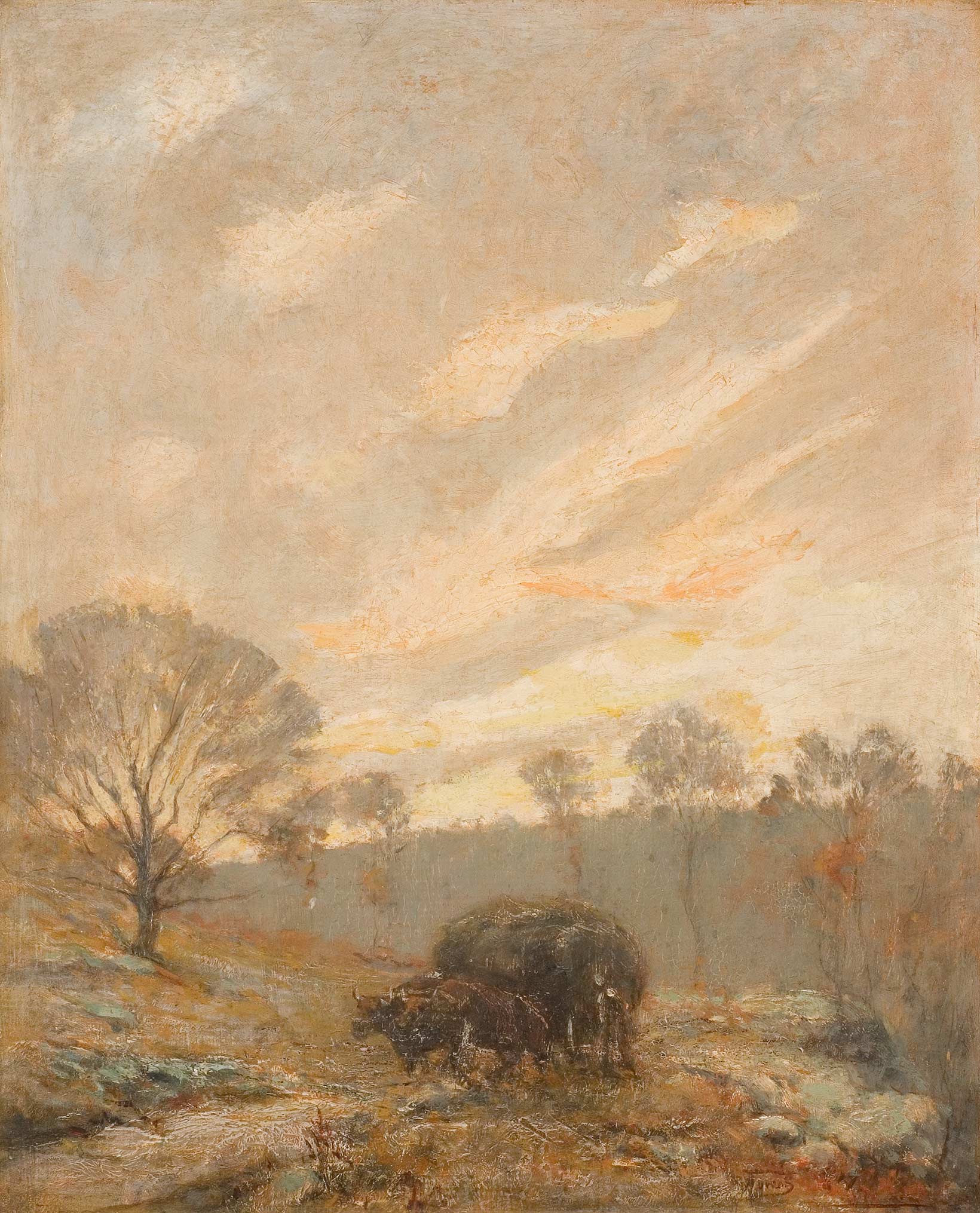
JULES TURCAS (1854–1917), "LANDSCAPE WITH OXEN." OIL ON WOOD PANEL. FLORENCE GRISWOLD MUSEUM, GIFT OF THE ARTIST
The expansive cloud-streaked sky has a feeling of movement and transience, while the ox team, the loaded wagon, and the land itself provide a strong contrast of mass and weight. Animals, wagon, and the human figure all but blend into a single form. Young trees, curving in a row behind and around in a kind of embrace, are reminders of the nurturing quality of nature, for one expects these trees to grow and become verdant again in the spring. Even a picture like this, more conservative than the work of the Impressionist artists at Old Lyme, relies more on suggestion rather than on close detail and has the light touches of Impressionism in some of the brushwork, as in the bits of orange and spots of white.
Turcas may have been feeling nostalgic, for few oxen were still used in Connecticut in the early 1900s. Some, however, were to be seen on a farm owned by Louis Dessar, a fellow Old Lyme artist and Turcas’ neighbor on Grassy Hill, where he and his artist wife Ella settled in 1904. Both men loved Tonalism, a realistic American art form employing only a few, usually dark, tones in order to create a sense of mild melancholy or time gone by. Tonalism was inspired by the art of a half-century earlier in the village of Barbizon, France, but while the French paintings spoke of the hard life of peasants, Tonalism is more about respecting the values of pre-industrial America, which made the nation special and could keep it steady in a rapidly changing modern world. Turcas’ Potato Harvest (in gallery below) in the Museum’s collection is another painting in this romantic vein.
In the early 1900s an art critic wrote that Jules Turcas was someone whose career “the public was watching expectantly.” Yet today very little is known about him beyond his noteworthy exhibition record, which apparently began in 1893, and a few personal facts. Born in Cuba in 1852, he was in the U.S. by the next year. In 1880 he was still single and working in Manhattan as a tobacco dealer.
Later, when not at Grassy Hill, he lived surrounded by artists, including several Old Lyme associates, in a mid-Manhattan studio building. He was a founder of the Allied Artists of America, a group formed in 1914 to promote American art, despite the reality that the Armory Show in New York the year before had demonstrated that European art had become more innovative than any in America.
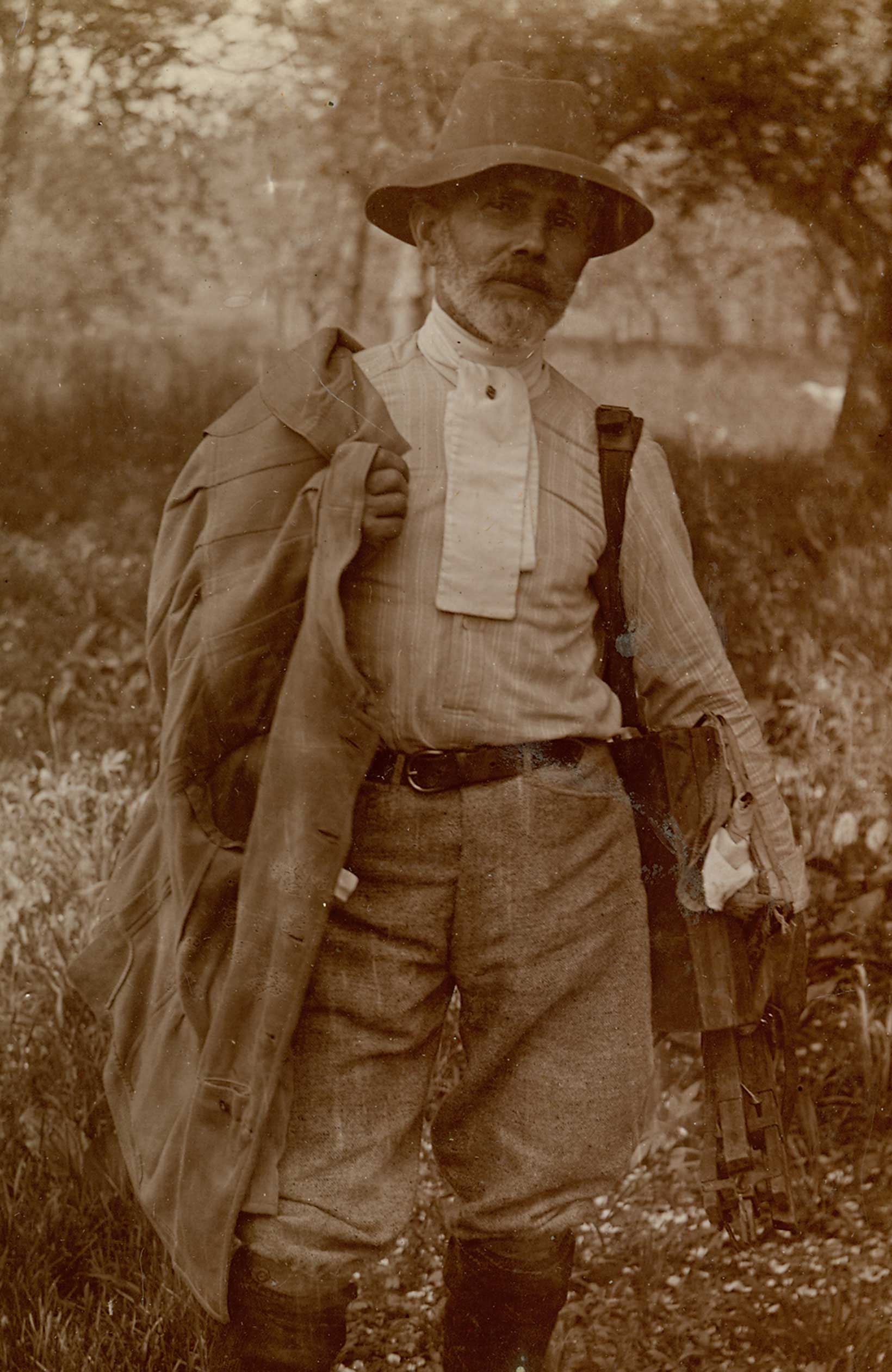
Jules Turcas outfitted for a day of plein air painting
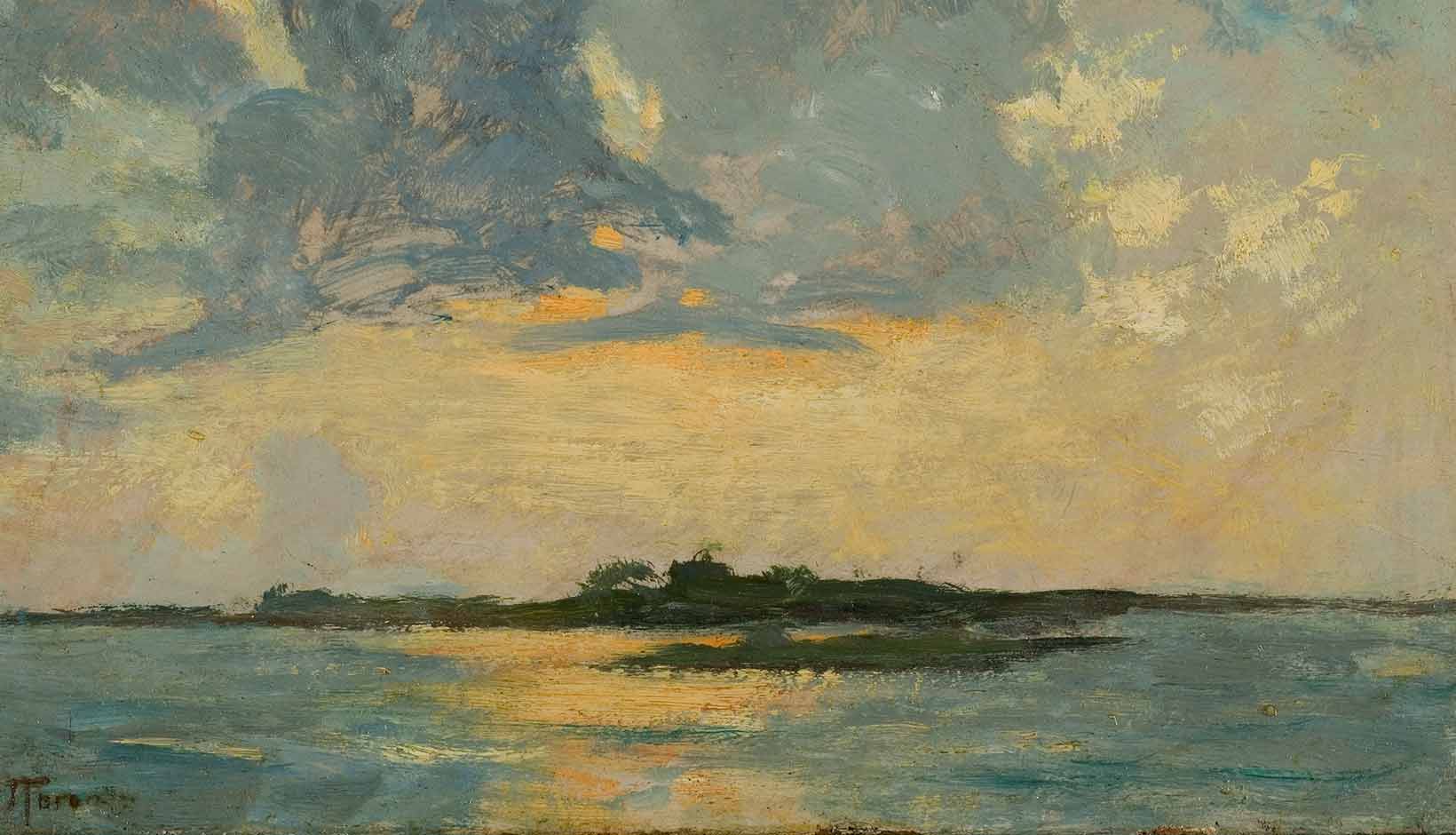
Jules Turcas (1854–1917), Island Sunset, n.d. Oil on academy board, 6 in. x 8 1/2 in. Florence Griswold Museum
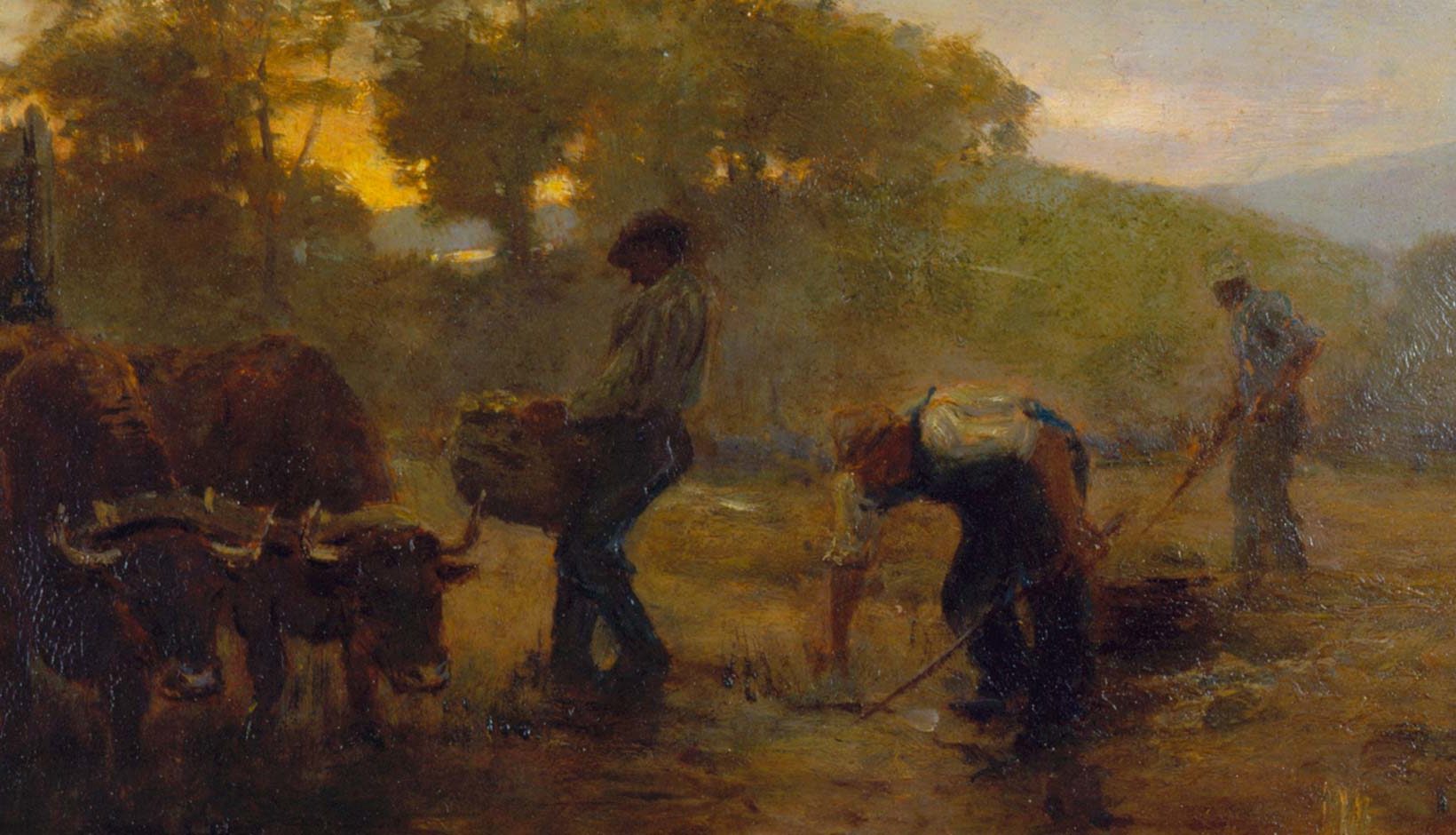
Jules Turcas (1854–1917), Potato Harvest, n.d. Oil on wood panel, 10 3/4 in. x 13 1/4 in. Florence Griswold Museum, Gift of Mrs. Dorothy Tarrant in Memory of Her Husband