
Carleton Wiggins
(1848 – 1932)
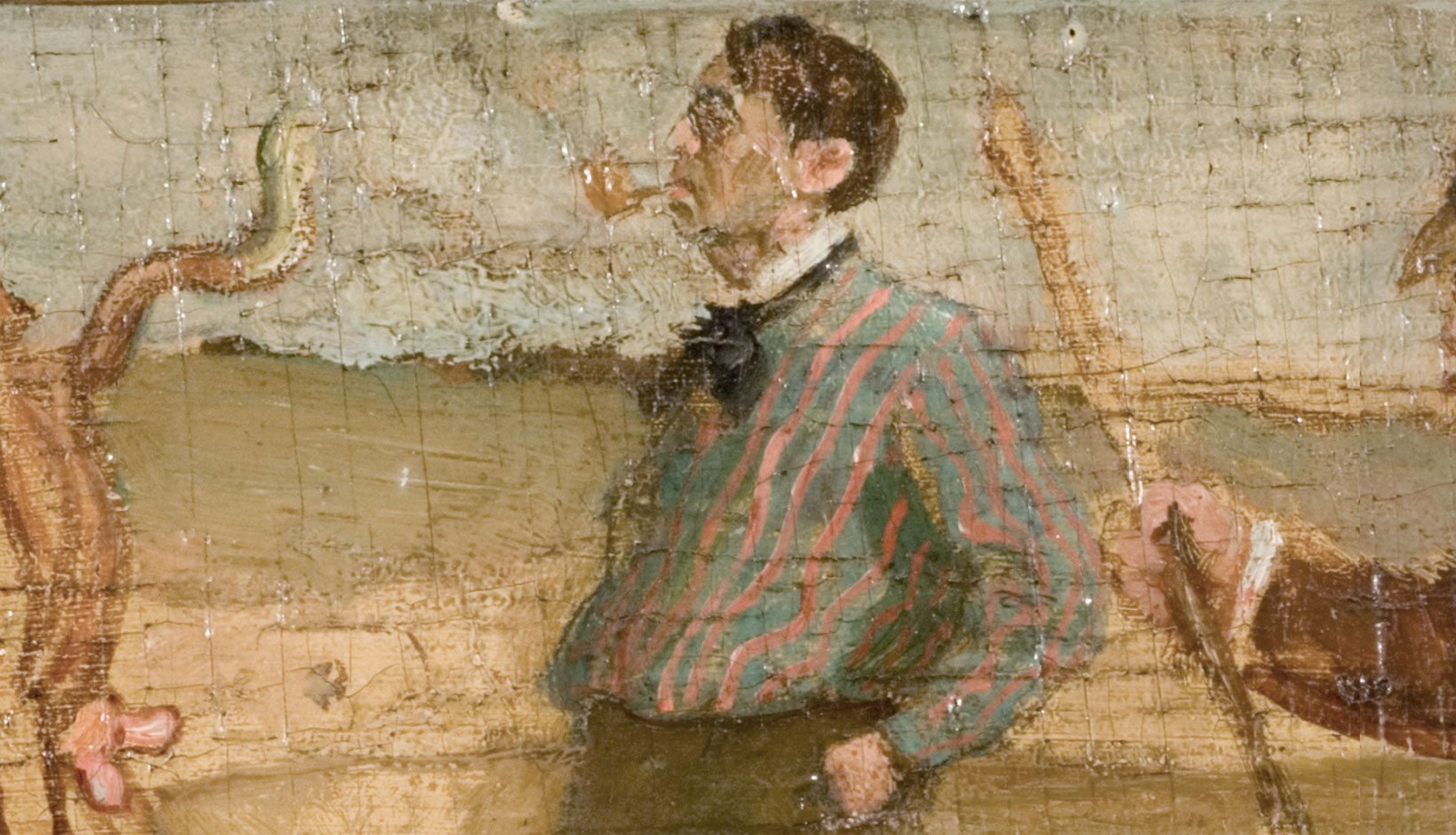
HENRY RANKIN POORE (1859–1940)
THE FOX CHASE (detail), 1901-1905; REVISED C. 1920
OIL ON WOOD PANEL
FLORENCE GRISWOLD MUSEUM
GIFT OF THE ARTIST
Born March 4, 1848, Turners (now Harriman), New York
Died June 11, 1932, Old Lyme
In Old Lyme, summers, 1904-1916; permanently 1917-1932
Nearly three years older than Miss Florence, the painter Carleton Wiggins (born John Carleton Wiggins), is shown standing in The Fox Chase (detail above) rather than running. Fuzzy smoke rises from the pipe in his mouth as he abandons his panel of a cow in his paint box to watch his fellow artists running after the fox. A great fan of painting cows, Wiggins was, however, best known for his images of sheep grazing on a dark slope beneath moody skies — a version of which he painted on a panel for the Griswold boardinghouse dining room.
The son of a tailor, Carleton left school at fifteen to work in a lawyer’s office on Wall Street in New York. When not engaged in errands or office tasks, he would fill the hours by drawing, often copying war pictures out of the illustrated papers. A wealthy client began buying his drawings and offered to pay for art lessons. Soon Carleton was studying art under the famous Tonalist painter George Inness, who was well known for his evocative landscapes. After working with Inness, Carleton continued to paint landscapes, but began to add animals, such as sheep. After getting married, he and his wife sailed for Paris, where he soon won a Gold Medal for his sheep-filled landscapes at the esteemed Paris Salon of 1894.
He continued to win awards for his paintings after he returned to the United States. While in New York, he most likely met Henry Ward Ranger and learned about the art colony in Old Lyme. He joined the colony in its fourth season in 1904, exhibited at their end-of-the-season exhibition held in the library, and bought a Victorian home nestled aside an orchard with a view of the Connecticut River. He named it River Wood.
“For years the village of Old Lyme, Connecticut, has had a summer art colony of much note. This season the colony has been augmented by Mr. Carleton Wiggins, who has acquired a very picturesque place overlooking the Connecticut River and with a combination of scenic qualities which has fairly entitled it to its name of River Wood.” — Reported in Brooklyn Life, 1905
Carleton and his wife had four children. One of their two sons grew up to be a successful artist as well. His name was Guy Carleton Wiggins (the father named his other son and one of his daughters after Grafton, the man who bought his first drawings and paid for his early art training).
Unlike the father, however, the son’s impressionistic style was substantially influenced by the Lyme painters. Indeed, father and son differed in their subject matter as well. While Carleton continued to paint sentimental pastoral scenes of life on the small New England farm, his son’s fame was jettisoned by snowy canvases of the bustling flag-draped streets of New York City.
As his dining room panel (below) reveals, Carleton Wiggins was inspired by the Barbizon painters of France, who had developed a landscape tradition a half-century earlier that still appealed to many American artists and their patrons. The subject matter is unabashedly rural, the style realistic, and the colors earthy and dark, but the light, especially in the sky, seems caught in flux and casts shadows that transform landscape forms into haunting silhouettes.
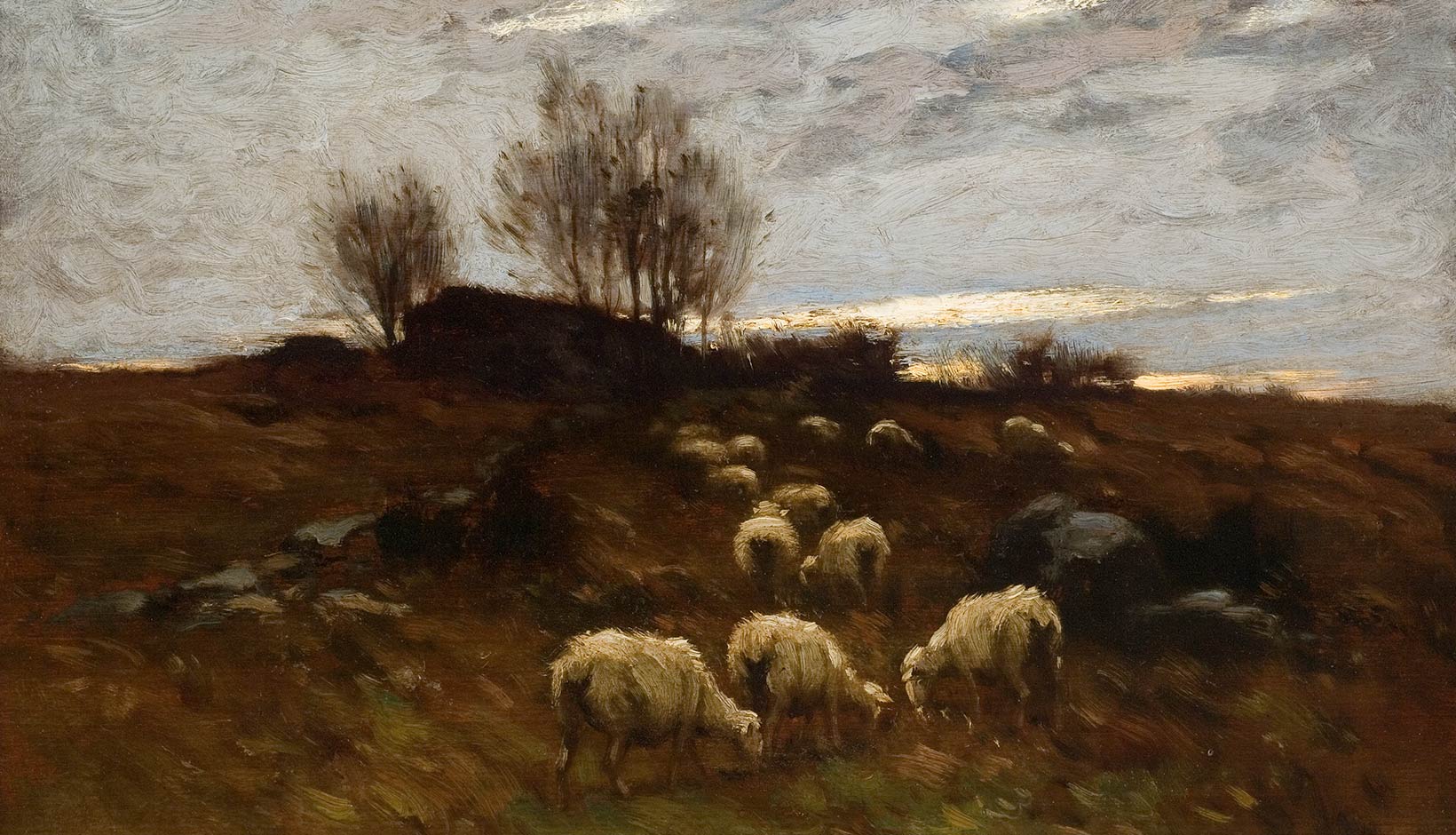
CARLETON WIGGINS (1848–1932), "WINTER TWILIGHT - GRAZING SHEEP." OIL ON WOOD PANEL. FLORENCE GRISWOLD MUSEUM, GIFT OF THE ARTIST
Paintings like this speak of something age-old and eternal and can feel profound and poetic. They can also allude to the legendary values and simplicity of an earlier pre-industrial America, which they suggest should not be forgotten. Here, Wiggins counters the drama of a clouded sky at twilight – the special sky of a shoreline place like Old Lyme – with a central arrangement of sheep that are lit as though from within. The boulders at their sides and top ground and appear to protect them in their slow zigzag movement through the terrain.
Carleton Wiggins had a notable reputation in the American art world of the late 19th century as a Tonalist painter of cattle and sheep. It was subject matter that he specialized in from the time of his student days in France and Holland. While abroad in 1881, his entry in the Paris Salon had been of a shepherd tending his flock. In the early 1900s he was elected a member of the National Academy of Design, where he had once studied with George Inness. He found some of his rural subject matter on Cape Cod, Nantucket, and Long Island, but he painted mostly in Old Lyme, which he first visited in 1903. He returned regularly over the next decade and moved to Lyme year-round in 1915.
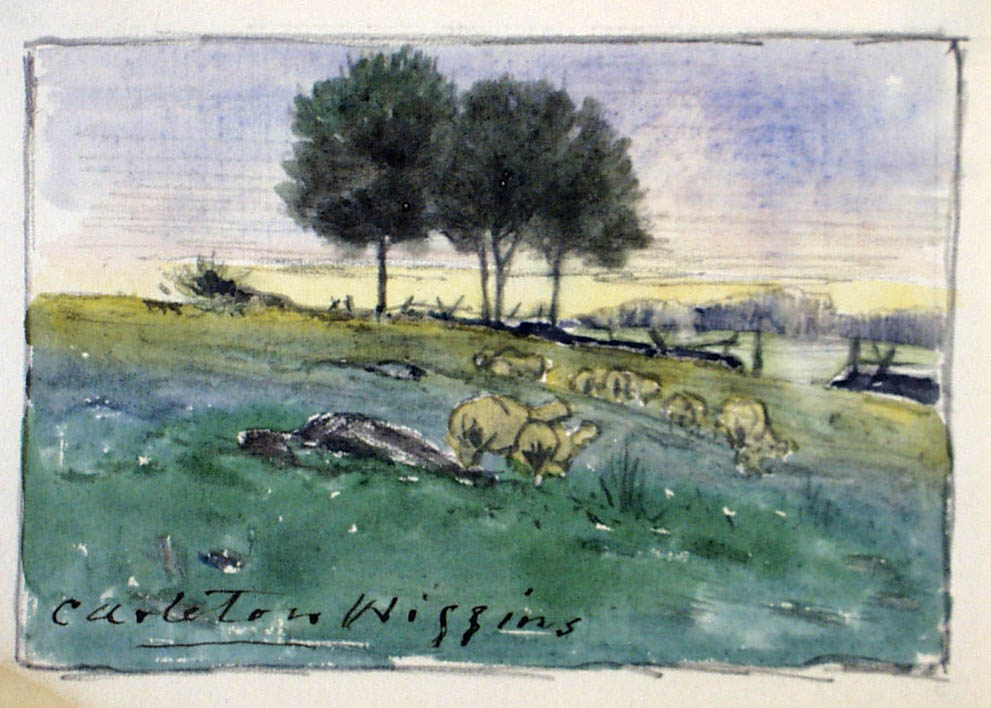
Carleton Wiggins (1848–1932), Grazing Sheep, n.d. Watercolor and pencil on paper, 4 in. x 6 1/2 in. Florence Griswold Museum, Gift of Mrs. Robert D. Graff
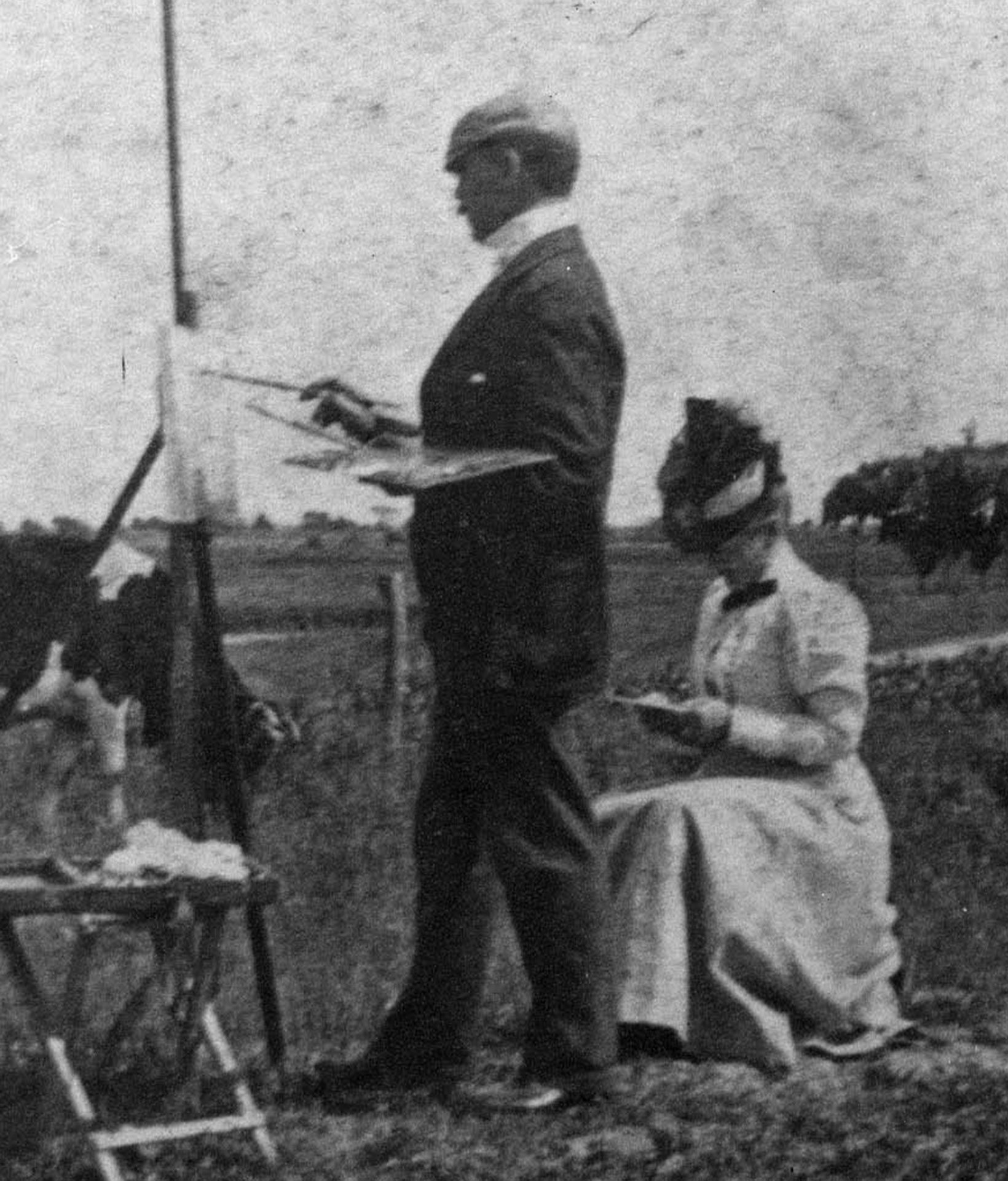
Carleton Wiggins and his wife Mary Clucas
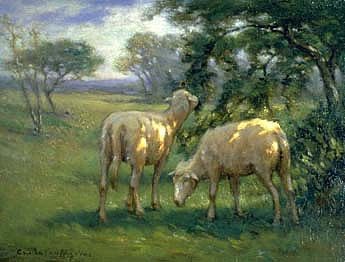
Carleton Wiggins (1848–1932), Lambs at Pasture, n.d. Oil on canvas, 13 3/4 in. x 17 3/4 in. Florence Griswold Museum, Purchase
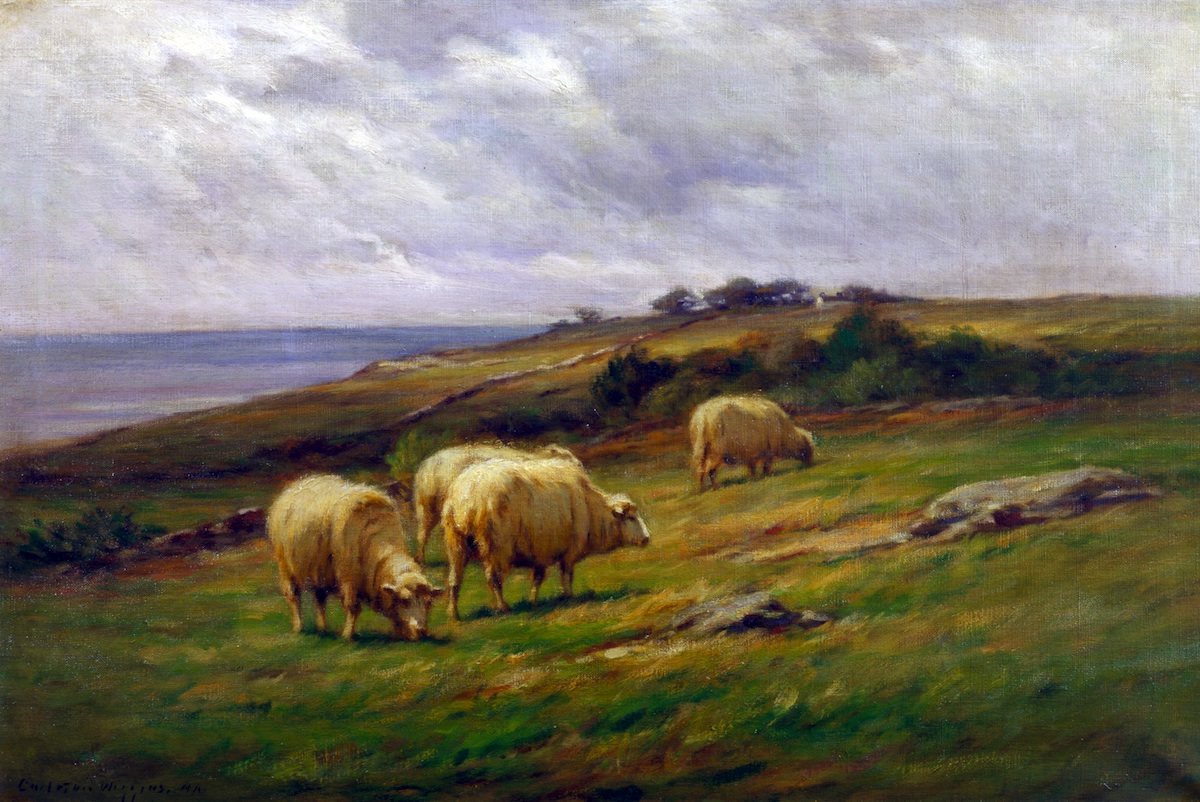
Carleton Wiggins (1848–1932), Seaside Sheep Pastures, after 1906. Oil on canvas, 24 1/8 in. x 36 1/4 in. Florence Griswold Museum, Gift of The Hartford Steam Boiler Inspection and Insurance Company
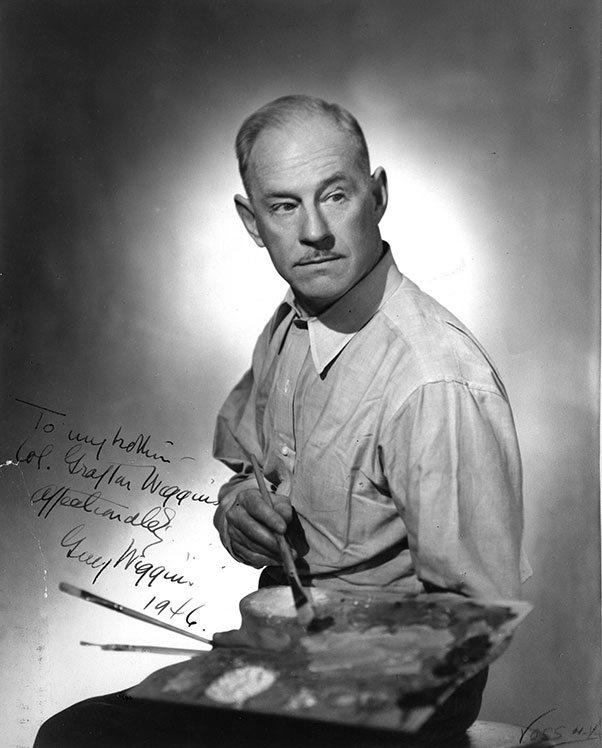
Artist Guy C. Wiggins (1883–1962), son of Carleton Wiggins
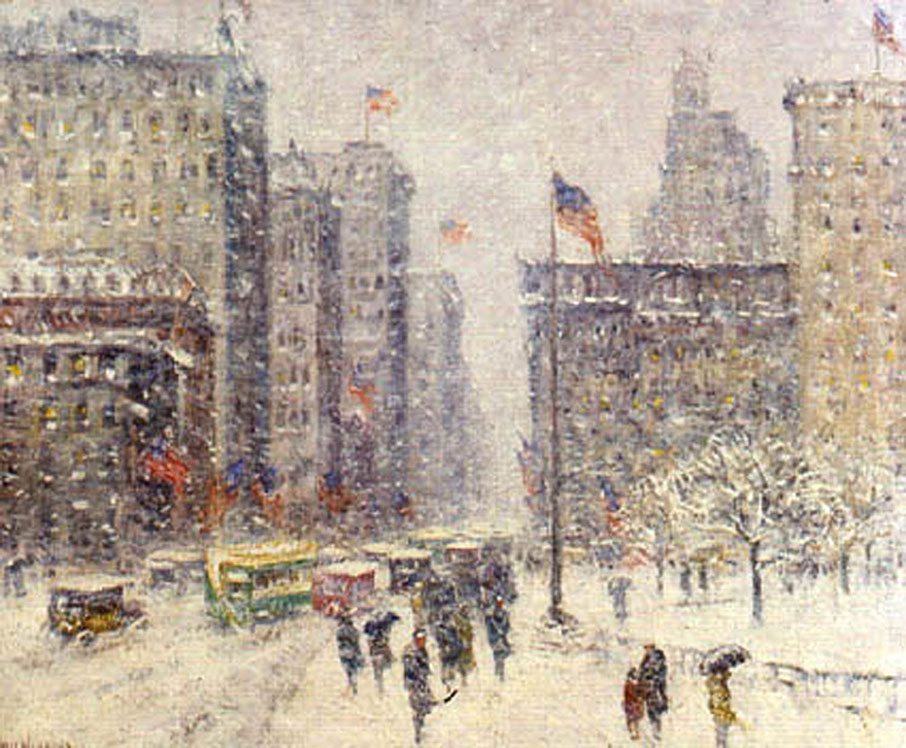
Guy C. Wiggins (1883–1962), Washington's Birthday at Madison Square, 1927. Oil on canvas, 25 in. x 30 in. Florence Griswold Museum, Gift of the Hartford Steam Boiler Inspection and Insurance Company