
Florence Griswold Museum

Documents: Lyme Family Slaves, Part 1- Arabella’s Dwelling Place

By |2024-02-22T15:33:09-05:00February 27, 2013|

A Negro slave named Arabella, of unknown origin, served in Lyme’s first parsonage. There she attended Rev. Moses Noyes (1643–1729) and his family until she passed by will to his daughter Sarah. The original Noyes homestead has been demolished, but Arabella’s dwelling place can still be imagined from a sketch drawn by artist Ellen Noyes Chadwick (1824–1900), based on her father’s descriptions.

Documents: Valentine Greetings

By |2014-06-25T18:05:21-04:00February 12, 2013|

Valentines exchanged and collected in Old Lyme express romantic yearning, enduring friendship, and marital devotion. The earliest Valentine greetings in the Archives’ collection date from the 1850s. By the 1910s the elaborately decorated hand-made Valentines popular during the Victorian era had been replaced by smaller and less ornate printed cards and postcards.

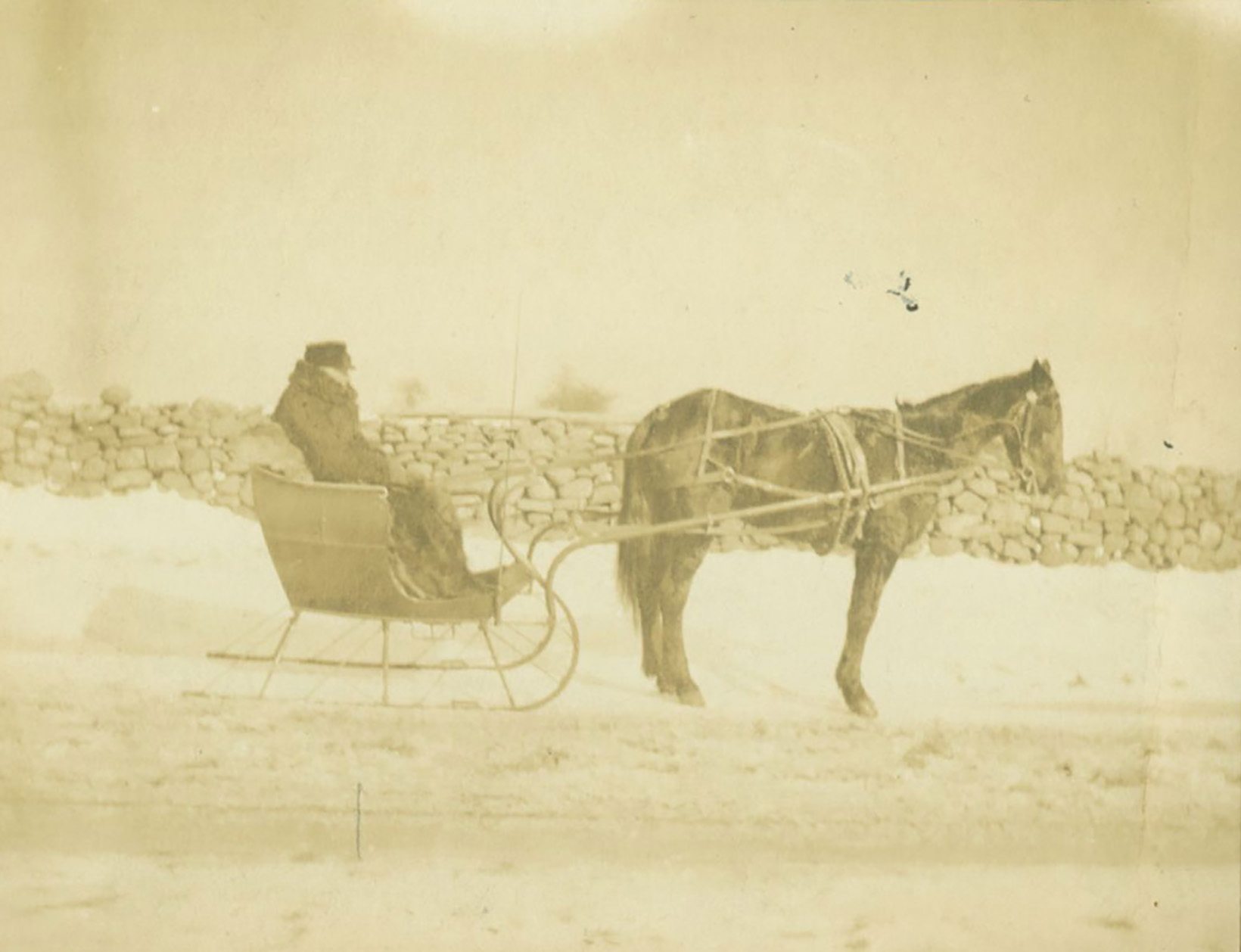
Photographs: Sleighing in Lyme

By |2022-07-28T16:55:44-04:00December 20, 2012|

In winters past when rivers froze and heavy snowfalls made roads impassable for carriages and wagons, sleighs provided transportation for Lyme’s wealthier residents. Local families used sleighs for travel to church on Sundays, for business and farm work, and for winter outings and journeys. But not everyone had access to sleigh rides. Less affluent townfolk had to walk through the bitter cold when they ventured outside.

Documents: Holiday Greetings

By |2014-06-25T18:08:25-04:00December 17, 2012|

Personalized Christmas cards showcase the creative talent of Old Lyme’s artists, many of whom painted, drew, or printed original designs each year to convey messages of holiday cheer.

Profiles: Ernestina Fisher Coult (1842-1919)

By |2022-07-28T11:02:18-04:00November 27, 2012|

Old Lyme’s prominent families traditionally used marriage ties to extend their property, wealth, and status. William Ely Coult (1797–1877) ignored that precedent when at age 65 he married the young German woman who worked as his household servant.

Exhibition Notes: Lyme’s White Churches

By |2020-11-16T11:23:39-05:00October 19, 2012|

In the first decade of the 20th century when Ellen Axson Wilson summered in Old Lyme, eight white churches dotted the landscape. Together they expressed the beliefs and responded to the needs of a rapidly changing community.

Photographs: Election Day, 1900

By |2014-06-25T18:11:51-04:00September 28, 2012|

Election day in 1900 fell on Tuesday, November 6, and Old Lyme’s eligible voters cast their ballots at the town hall starting “at 9 o’clock in the forenoon.” Above the polling place a Republican campaign banner declared: “Our Candidates McKinley & Roosevelt.”

Profiles: Margaret Mather Sill

By |2014-06-25T18:12:39-04:00September 24, 2012|

Margaret Mather (1787–1866), called “Peggy” by her family and in Lyme’s birth records, moved to Albany when she reached the marriageable age of 21. Just half a year after she became the wife of William Nicoll Sill (1786–1844) and settled into a grand brick mansion house overlooking the Hudson River, her father died in Lyme, leaving each of his nine children a substantial bequest.

Photographs: The Great Hurricane of 1938

By |2014-06-25T18:13:48-04:00September 2, 2012|

As Old Lyme works to recover from Hurricane Sandy in 2012, scenes from around town recall images like this photograph from the archives. Taken on September 22, 1938, the day after the category-3 “Great Hurricane” of 1938 struck Old Lyme, the image focuses on the upturned roots of a monumental tree that dwarfs the wood-framed house behind it.

Landmarks: Marvin-Griffin House

By |2014-06-25T18:15:35-04:00August 5, 2012|

The distinctive house with pillared veranda at the foot of Lyme Street that historian Martha J. Lamb described in 1876 as a “modern” mansion traces its origins to Albany. Erected for Benjamin Marvin, Jr. (1743–1823) ca. 1820, the two-story mid-section was built with lumber provided by his sons who had settled in the Hudson River Valley. The timbers, pre-cut in an Albany sawmill and shipped down the Hudson River, then across Long Island Sound, were assembled just south of the village green on the site of an earlier family dwelling.

Go to Top