
Clark Greenwood Voorhees
(1871 – 1933)
HENRY RANKIN POORE (1859–1940)
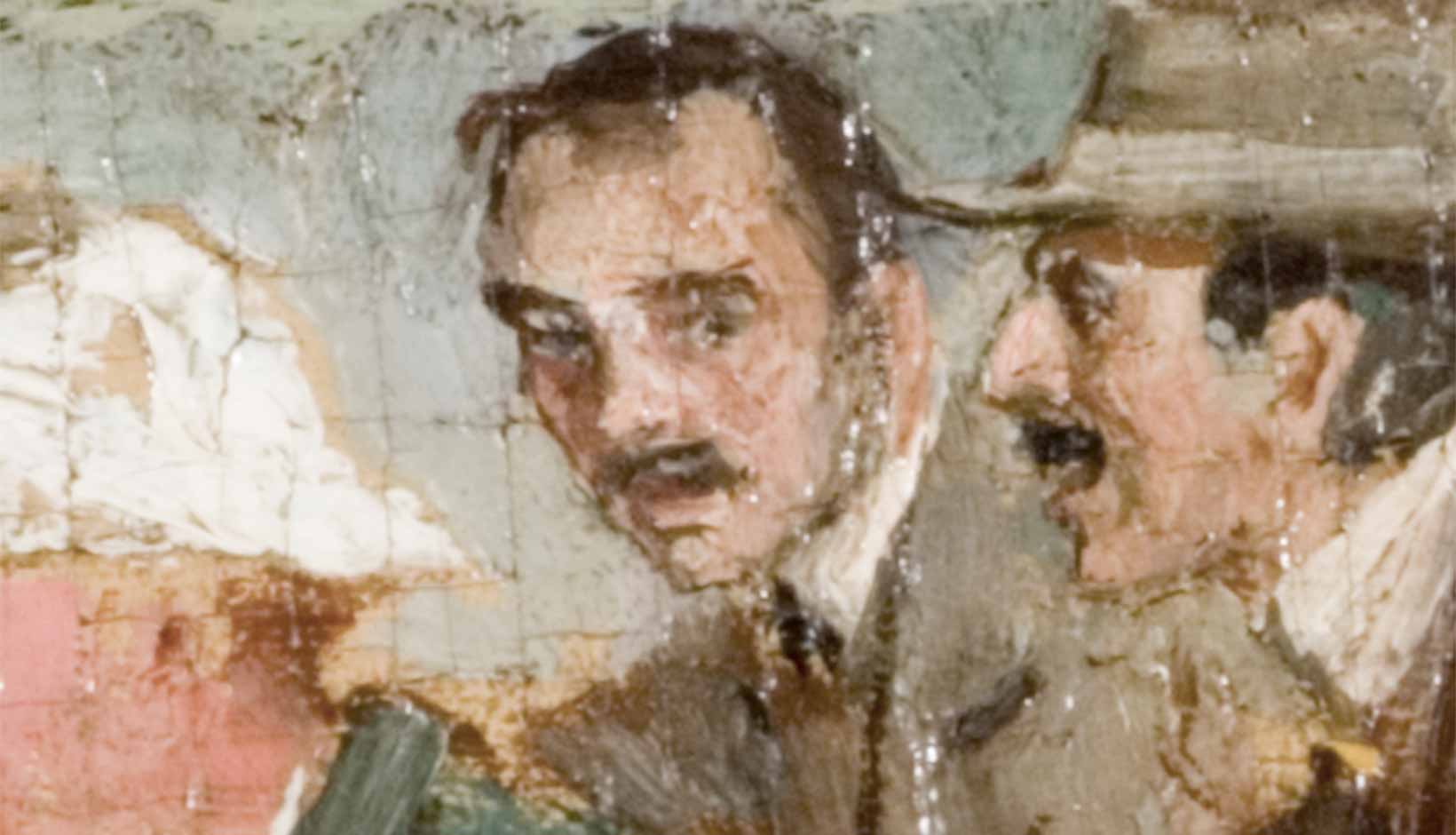
THE FOX CHASE (detail), 1901-1905; REVISED C. 1920
OIL ON WOOD PANEL
FLORENCE GRISWOLD MUSEUM
GIFT OF THE ARTIST
Born May 29, 1871, New York City
Died July 17, 1933, Old Lyme, Connecticut
In Old Lyme, summers, 1896, 1901-1903; permanently, 1904-1933
Clark Voorhees is the only person in The Fox Chase (detail above) to make eye contact with the viewer. Like a theatrical aside, his glance outward from his painted world seems to say, “See what I started!” Indeed, it was probably Voorhees who suggested to Henry Ward Ranger that he look to Old Lyme and the Griswold boardinghouse in his quest to find a suitable location to establish his artist colony.
Voorhees was familiar with both the town and Miss Florence from trips he took to the area as early as 1893. Voorhees was mad about his “wheel,” as he called his bicycle, and would clock thousands of New England miles on his cyclometer. Three years later, Voorhees boarded in Old Lyme at the Bacon House, while his mother and sister stayed at the Griswold House, a fledgling boardinghouse operated by Mrs. Robert Griswold and her daughter Florence. During these early visits he would spend his days duck hunting and painting.
Although trained as a chemist at Yale, Voorhees was more interested in collecting bird nests and sketching. His journal entries after his long bike rides reveal an artistic eye and soul: “The country we passed through on the way up was an ideal New England farming district. . . The road passes by very old farm houses and by fresh bottom lands covered in wheat.” In 1894, he began taking art classes in the evening that eventually led to his studying at the Académie Julian in Paris and touring around Europe with his new artistic friends.
Voorhees returned to America in 1900 and came to Old Lyme the following year to stay in the Griswold boardinghouse with his fellow artists. As his daughter Florence Fish noted in 1981, “My father kept to a regular routine. He spent mornings in his studio and no one was allowed to disturb him during those hours. He was a neat painter, but the studio was cluttered with all sorts of things. He worked very quickly. He was patient and a good teacher. Sometimes gave private lessons, but did not like to. He had a good sense of humor and also a good practical approach to local affairs.”
He fit right in. Voorhees’ diary from the summer of 1903 listed baseball games, canoeing, picnics, tennis matches, trips to the beach, and evenings of poker, whist (an early form of bridge), and musical entertainment, in addition to the business of painting. He was so enamored with Old Lyme that he bought a house at the end of the painting season and moved there permanently with his new wife the following summer. Named Ker Guen, meaning “white house” in Dutch, the Voorhees house overlooked the Connecticut River and, along with the lush flower-filled gardens, was painted by several Old Lyme artists.
Coming early to Old Lyme and staying late, Voorhees’ artistic style ran the gamut from dark tonal landscapes to brighter impressionistic scenes. Fascinated with moonlight and snow, Voorhees would adapt his style to the particular subject at hand. In the dining room, Voorhees offered Miss Florence one of his local landscapes in his pair of panels on the door leading to the back stairs, titled The Whippoorwill Road (below). Here he captured a quintessential Lyme scene, with a country road leading past the stonewalls of a small farm that, over time, has been reclaimed by the forest.
“In Old Lyme he bought a small sideboard from a lady in the back woods who had it in her chicken coop. He even collected broken teacups, because he liked them, not for their value. He found Indian arrowheads and axes. He knew a lot about all these things and was able to give his children an appreciation for the things he enjoyed.” — Voorhees’ daughter Florence Fish, 1981
Voorhees’ painting of a dirt road in Old Lyme (below), curving in front of a barway and a stonewall, with woods beyond, is the most unusual in the dining room, because we see what appears to be only the bottom half. The fact is that this door required glass in its upper part, so that people coming down the back stairs could see if someone might be struck when the door was opened.
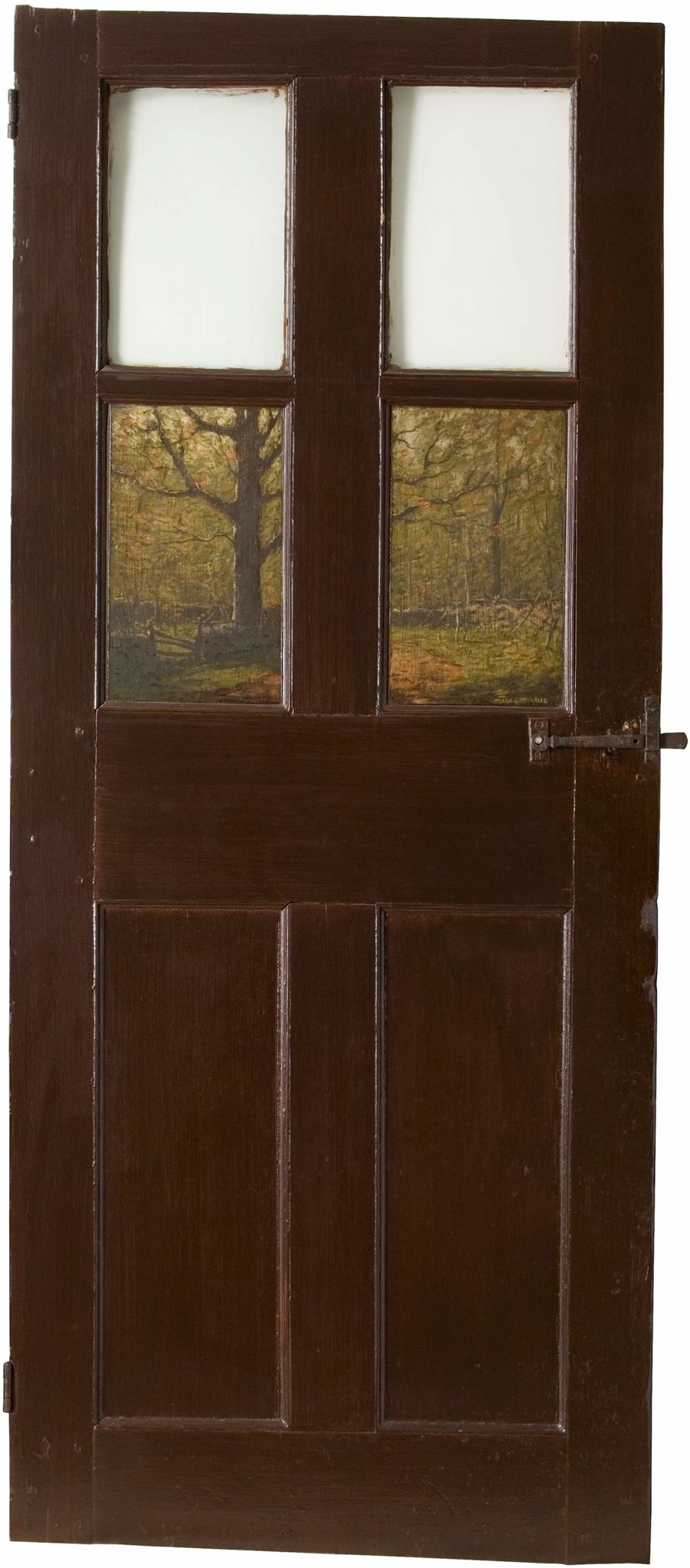
CLARK VOORHEES (1871–1933), "WHIPPOORWILL ROAD. (SPREADING OAK IN FENCED AUTUMN WOODLAND)." OIL ON WOOD PANEL. FLORENCE GRISWOLD MUSEUM, GIFT OF THE ARTIST
We can use our imaginations to complete the image, but it can be argued that the painting is not incomplete at all. One simply has to regard it as an image that has been cropped, like some photographs, by the frame of a “window.” It is interesting because of its design and the soft colors that suggest the light and feel of a day in spring (although a few orange leaves can be seen dangling from the branches – perhaps leftover from the previous fall). Whippoorwill Road begins just up the road from the Griswold House and winds through a varied terrain of Old Lyme past rocky outcroppings and forests as well as some open meadows and small farms. It is easy to imagine that Voorhees discovered many vistas like this one on his many bike rides through the area.
The tall, very straight tree at the left attracts one’s eye so strongly that it is difficult to look elsewhere for long. But seeing two or three of its branches reach far into the space of the right-hand panel unites the two panels and confirms for the viewer how sturdy and healthy this tree must be. While these panels are meant to be seen as one picture, a separate examination of each can also be a satisfying experience.
Voorhees met not only Henry Ward Ranger but Childe Hassam in Old Lyme, and his paintings show the influence of both. Tonalism’s muted tones are here, but so is Impressionism’s lack of detail and dabs of pure color. Voorhees continued to blend the two visions – in Old Lyme and also in Bermuda, where he wintered after 1919.
“Mr. Voorhees shows . . . ‘December Moonrise,’ a moonlit snow scene, with a row of leafless trees stretching across the picture in the middle distance, and the crooked little brunette stream that finds its way into so much of the Lyme painting winding bright and dark between the blue banks. The light lies softly on the snow, and through the branches of the trees is seen a cool sky. The picture is so large, so simple, and quiet that at first glance it has a look of emptiness, but its dignity and spaciousness grow upon one with every moment of attention given to it,” noted an unidentified writer for the New York Times, 1906.
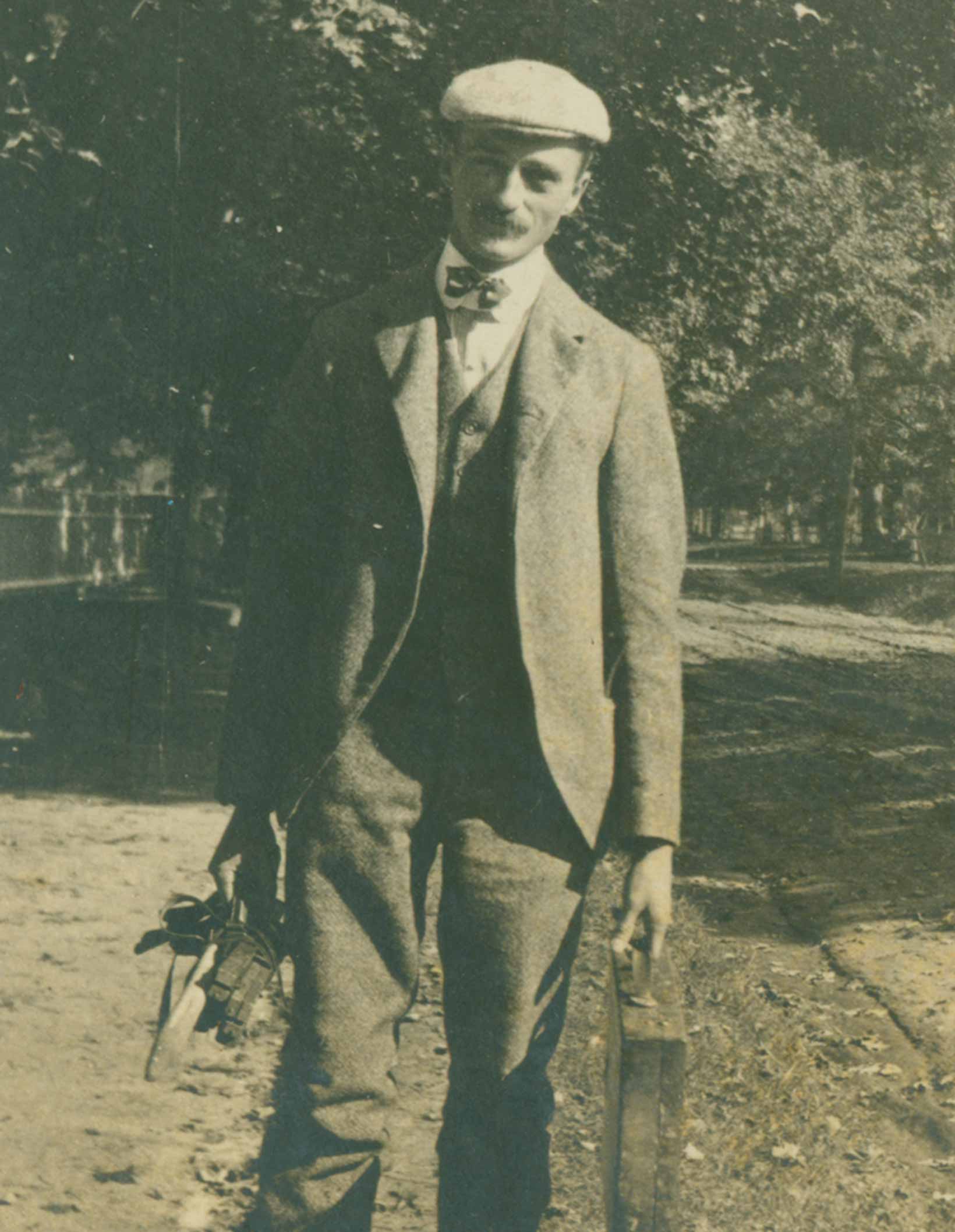
Clark Voorhees outfitted for a day of plein air painting
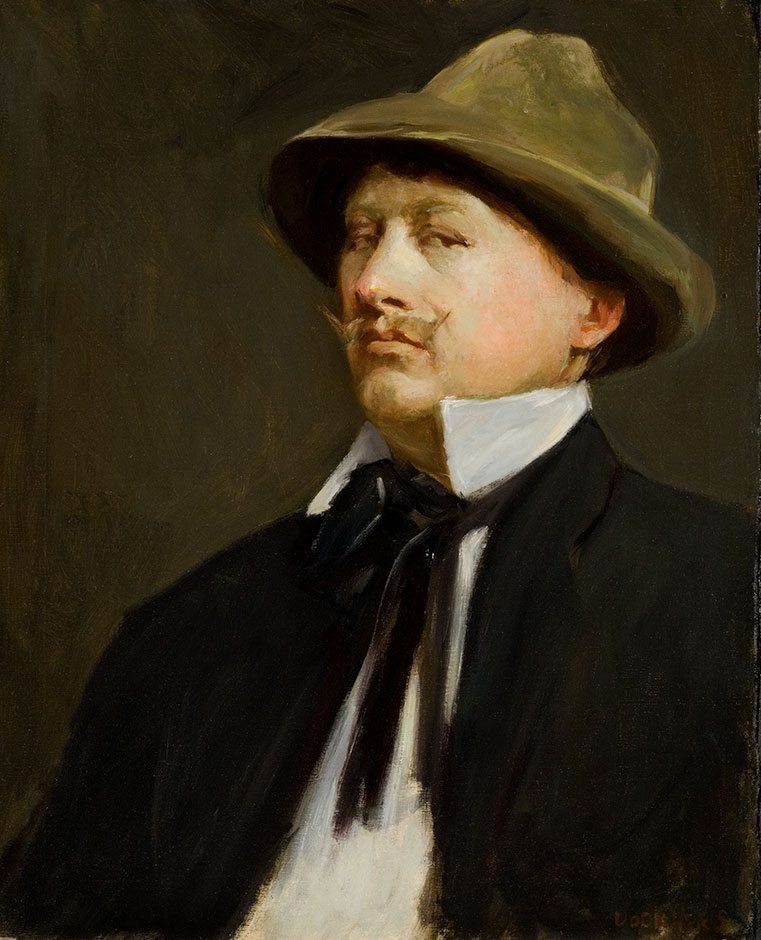
Clark Greenwood Voorhees (1871–1933), Portrait of a Man, n.d.
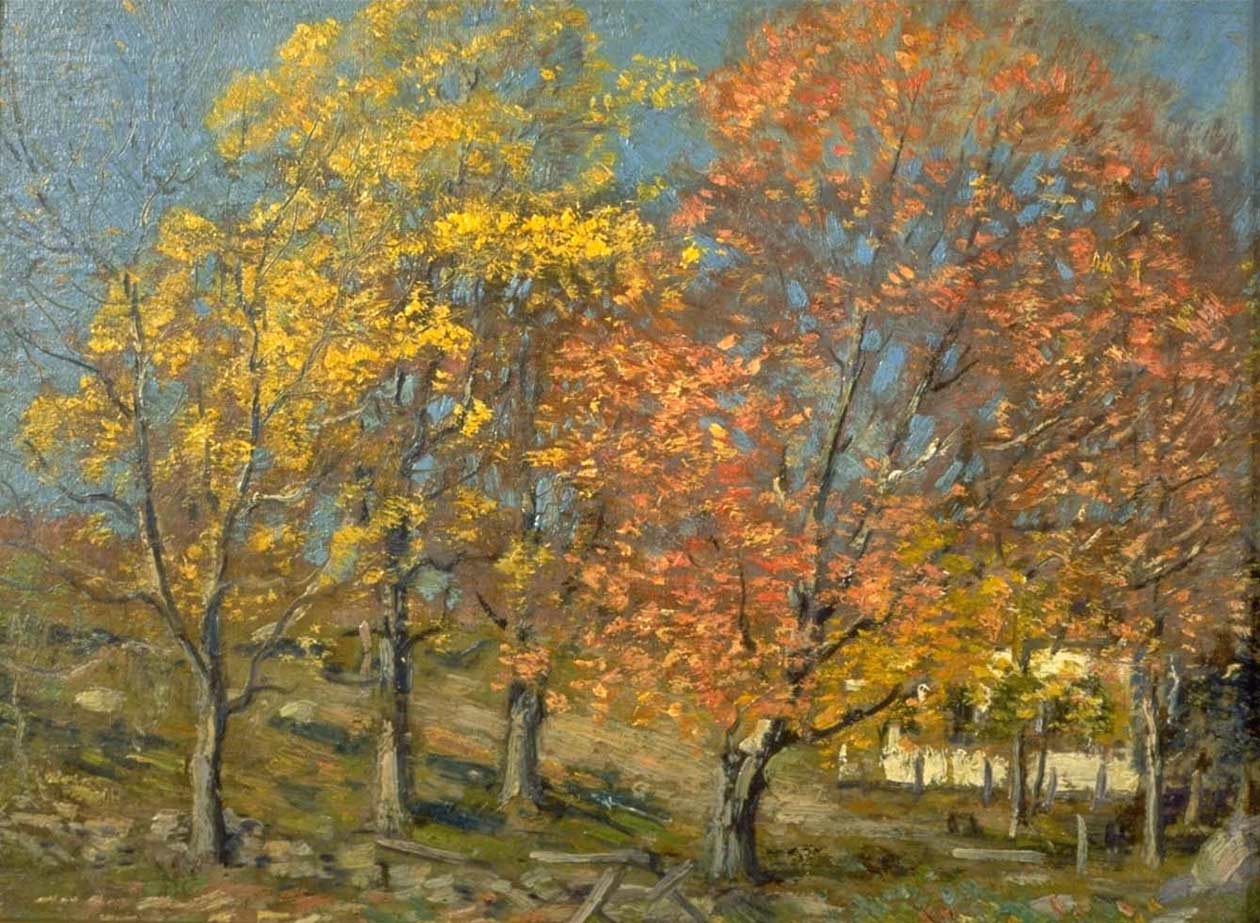
Clark Greenwood Voorhees (1871–1933), Autumn Scene, n.d. Oil on artist board, 12 in. x 16 in. Florence Griswold Museum, Purchase with partial gift from Mr. and Mrs. Jeffrey Clarke
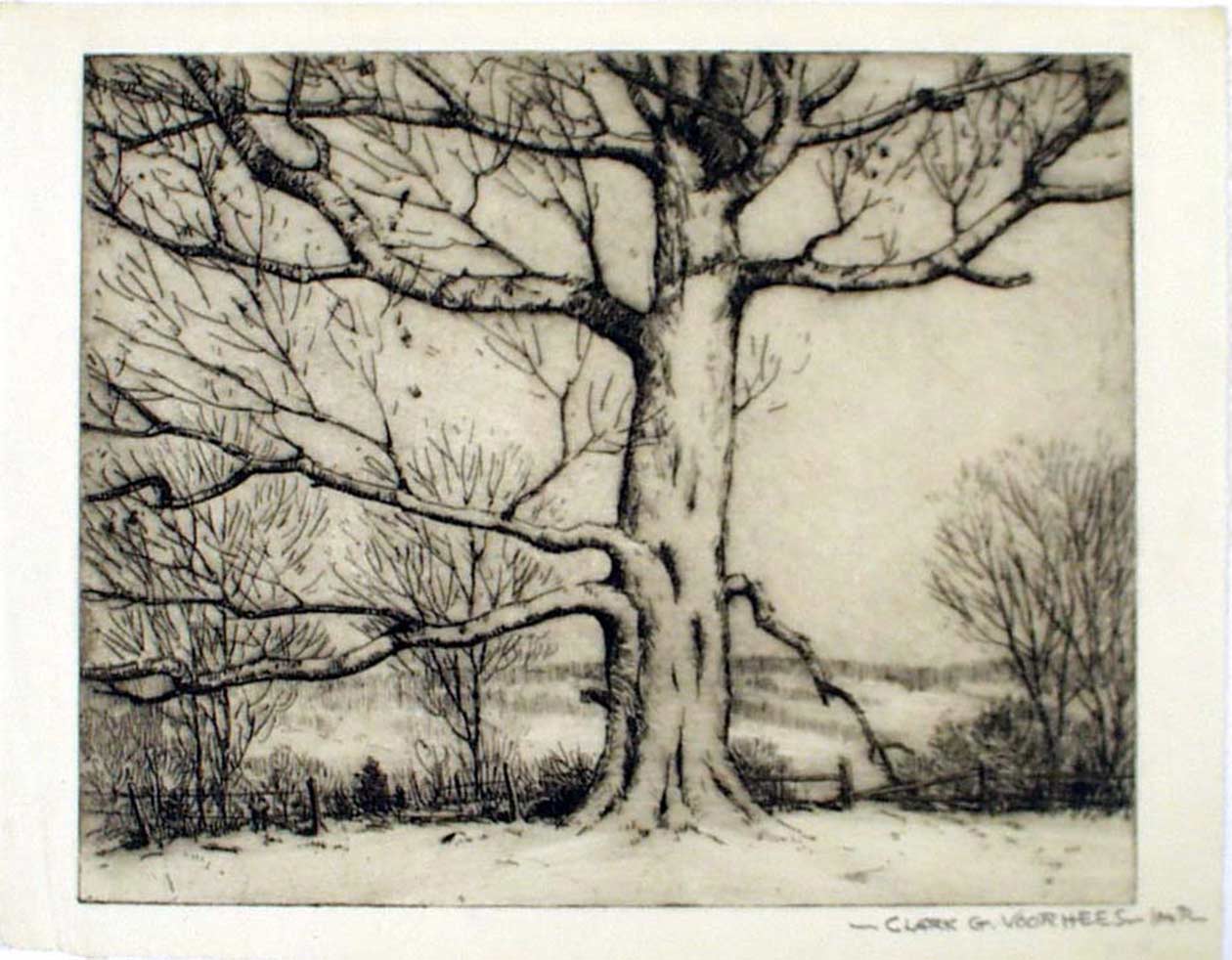
Clark Greenwood Voorhees (1871–1933), Old Lyme Winter Scene, c. 1930. Etching on paper, 9 in. x 11 1/2 in. Florence Griswold Museum, Gift of Mr. Clark Voorhees, Jr.
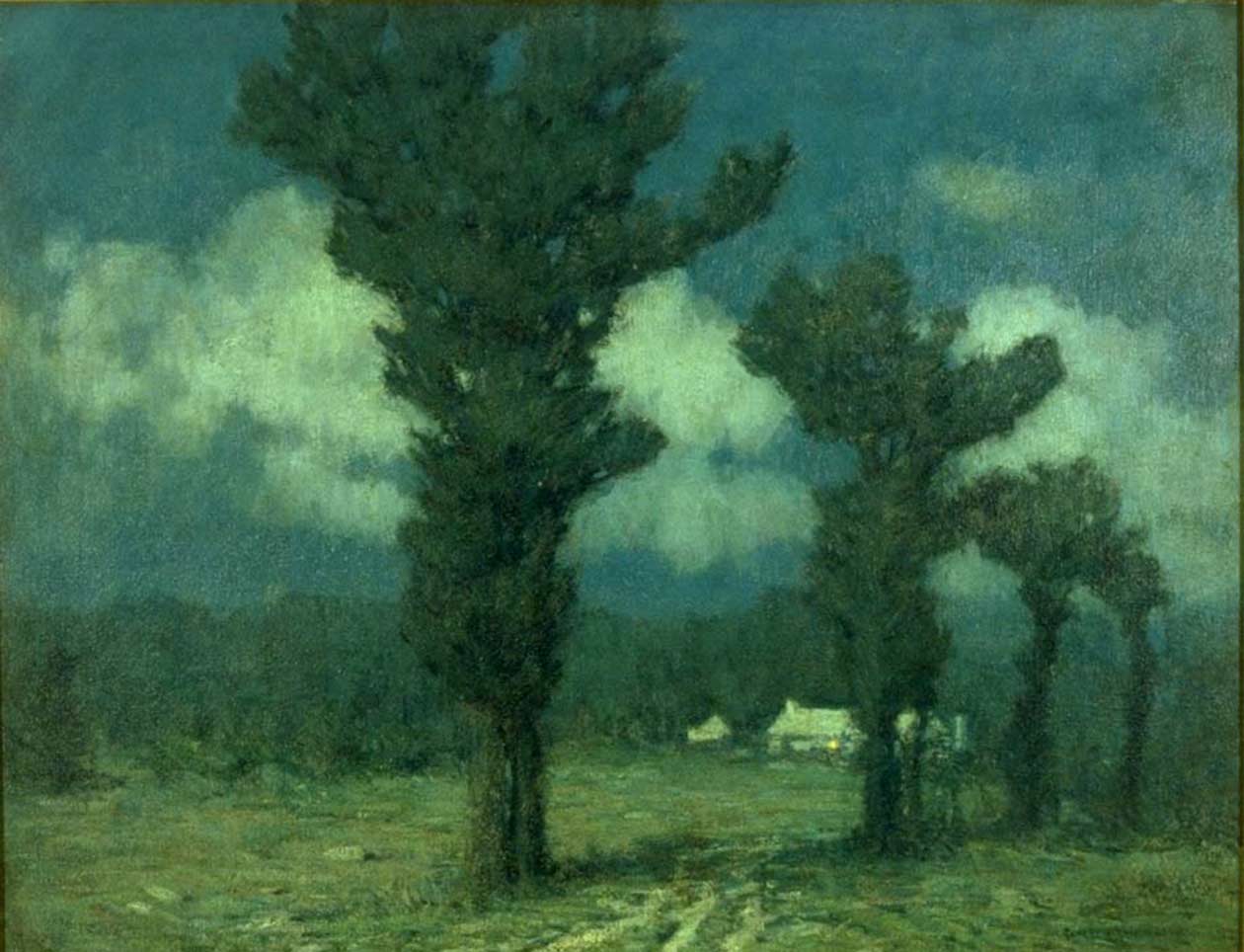
Clark Greenwood Voorhees (1871–1933), Landscape by Moonlight - Bermuda, post 1919. Oil on canvas, 28 in. x 36 in. Florence Griswold Museum, Gift of Mr. and Mrs. James B. Murphy II
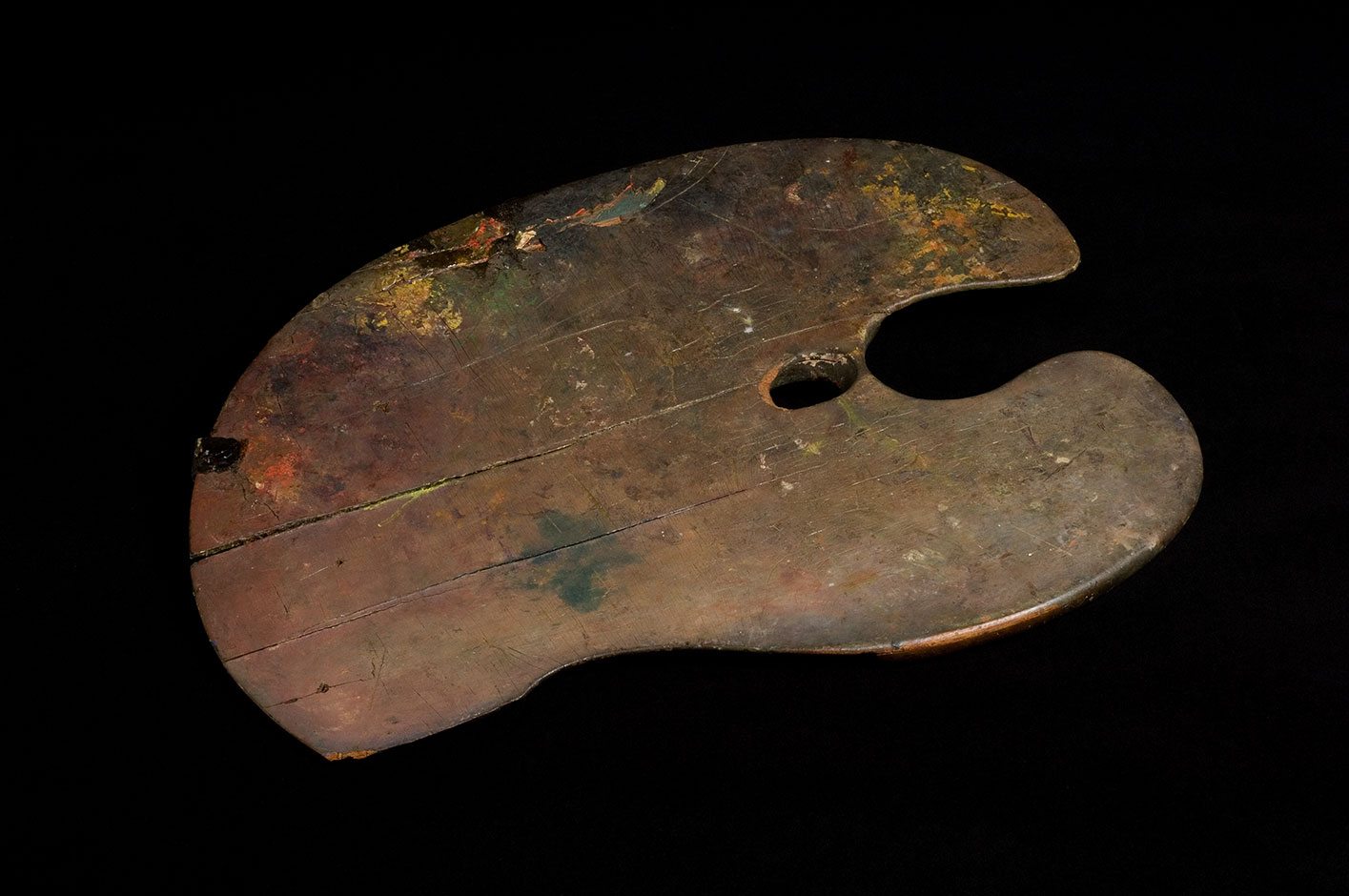
Clark Greenwood Voorhees (1871–1933), Palette - Clark Voorhees, n.d. Wood, 14 1/2 in. x 19 3/4 in. x 1/4 in. Florence Griswold Museum, Gift of Christopher G. and Michael W. Voorhees, grandchildren