
Henry C. White
(1861 – 1952)
HENRY RANKIN POORE (1859–1940)
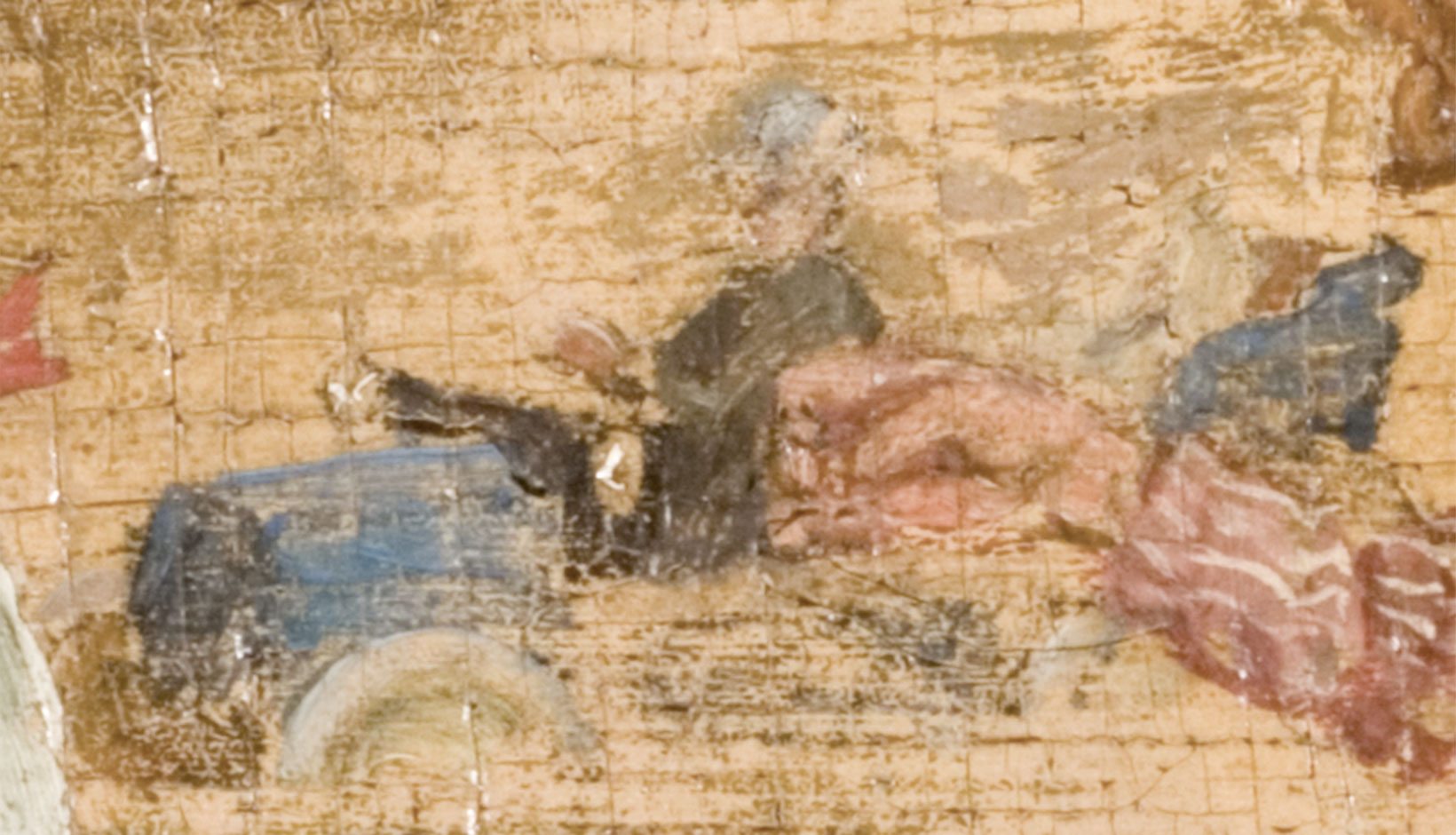
THE FOX CHASE (detail), 1901-1905; REVISED C. 1920
OIL ON WOOD PANEL
FLORENCE GRISWOLD MUSEUM
GIFT OF THE ARTIST
Born September 15, 1861, Hartford, Connecticut
Died September 28, 1952, Waterford, Connecticut
In Old Lyme, 1903-1907 and nearby Waterford, 1914-1952
Quite different from the artists who came for the summer, Henry C. White preferred the transitional seasons of spring and fall, complaining that the summer foliage was like “too much spinach!” So he planned his travels to the shore in such a way as to extend the length of the season by moving from Hartford, to Old Lyme, to Waterford, in succession.
Unlike the other artists in The Fox Chase (above), White is not shown running but rather driving his 1903 Knox air-cooled automobile. White’s car was one of the first in Old Lyme. He would drive it down from Hartford, where he lived until 1914, before moving to the seaside at Pleasant Beach in Waterford. He first visited Old Lyme in the spring of 1903 and stayed in the boardinghouse with his family. Later, he rented another building called “The Brickstore” just up the road. As his son, artist Nelson C. White noted “In the early 1900s Old Lyme was a sleepy, country village with a very few carriages or horses going by now and then a yoke of oxen from a farm nearby. My father was the first person to introduce a serpent in to this idyllic Eden by having bought a 1903 Knox air-cooled automobile — one of the earliest models — a run about which steered with a tiller instead of a wheel and which of course attracted much attention.” White sheltered his Knox automobile in a barn opposite the “Barbizon Oak,” so-called because it was so often portrayed by Henry Ward Ranger and the other Old Lyme Tonalists.
The son of a Hartford Judge, Henry White began his art career when only a teenager taking private lessons with the landscape artist Dwight Tryon. In the mid-1880s, he enrolled in the Art Students League in New York, to continue his studies with Tryon and other professional artists such as Kenyon Cox and George de Forest Brush. Afterward, he married and became the drawing teacher at Hartford High School.
During the late 1890s, he traveled through Europe and upon his return to the United States taught for a short time at the Art Society of Hartford. Although he formed great friendships with many of the Old Lyme artists, he only returned to the village through 1907, choosing to spend his time in Waterford. In 1910 he helped to establish the Connecticut Academy of Fine Arts in Hartford. Connecticut landscapes and seascapes were his primary subject matter during the 60 years he worked as an artist. Although he would sketch outdoors in pencil and pastels, his paintings were finished in the studio. According to his artist son Nelson C. (who would visit the boardinghouse as a child), his father “could put into a few square inches of paper an extraordinary amount of the essential spirit of the scene before him.”
When composing a painting, “it was the fleeting, evanescent effects that really moved and inspired him.” Despite this connection to the artistic motivations of Impressionism, he never considered himself a follower of the movement, and his paintings are more in keeping with the earlier tonalists. Both Henry and his son Nelson (although not technically a member of the Lyme Art Colony) contributed painted panels to the dining room, which were installed in 1954.
“What he loved best were the pastures of Southern New England in the later autumn after the deciduous trees had shed their leaves and great white oaks and graceful birches stood singly or in groups on gently rolling meadows or moorlands with here and there a glacial boulder or granite ledge out-cropping above the soil.” – Artist Nelson C. White about his father Henry C. White, 1954
In White’s panel for Miss Florence’s dining room (below), colors are grayed in the manner of Tonalism, but the sketchy brushwork and lack of detail indicate a painting done en plein air rather than one constructed and smoothly “finished” in a studio. Space is implied in the traditional ways that some Tonalists retained: forms are smaller and blurrier near the horizon line; and there are clear demarcations of foreground, middle, and background.
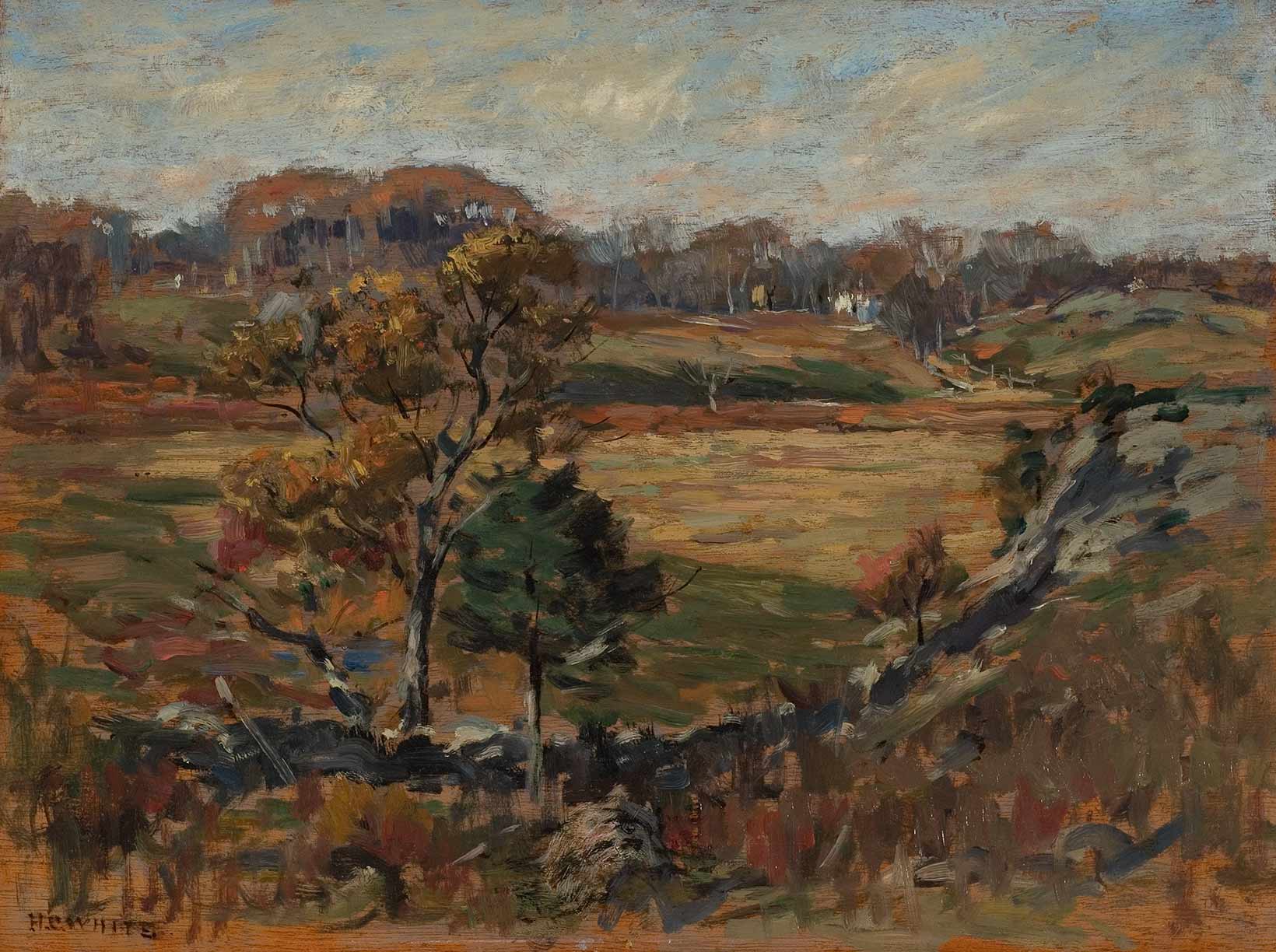
HENRY C. WHITE (1861–1952), "AUTUMN LANDSCAPE," C. 1904 (INSTALLED 1954). OIL ON WOOD PANEL. GIFT OF THE ARTIST
More reflective of Impressionism, however, is the forward and off-center placement of the two focal trees, the brightness of the empty space to their right, the heaviness of the sky, and, most of all in this instance, the prominent integration of geometry into the landscape: a semicircle is defined by the sweeping curve of the stone wall and horizontal band of brown. The result is a landscape with a strong sense of place that can also be appreciated for the artist’s eye for color, texture, and design.
Henry White loved best the two seasons of the year that are the most in flux – spring and fall – so his autumnal “calling card” in the Griswold House dining room represents him well. His portrayal exhibits a synthesis of the Tonalism he learned from Dwight Tryon and admired in work at Old Lyme with the Impressionism that Childe Hassam introduced there in 1903.
White’s panel was installed in 1954 – two years after White died and perhaps as long as a half century after he painted it – as a tribute to him as an artist and longtime friend to the Lyme Art Colony. Removal of a china cabinet in the corner made room for panels by both Henry White and his son Nelson.
White continued to exhibit annually with the Lyme Art Association until 1921.
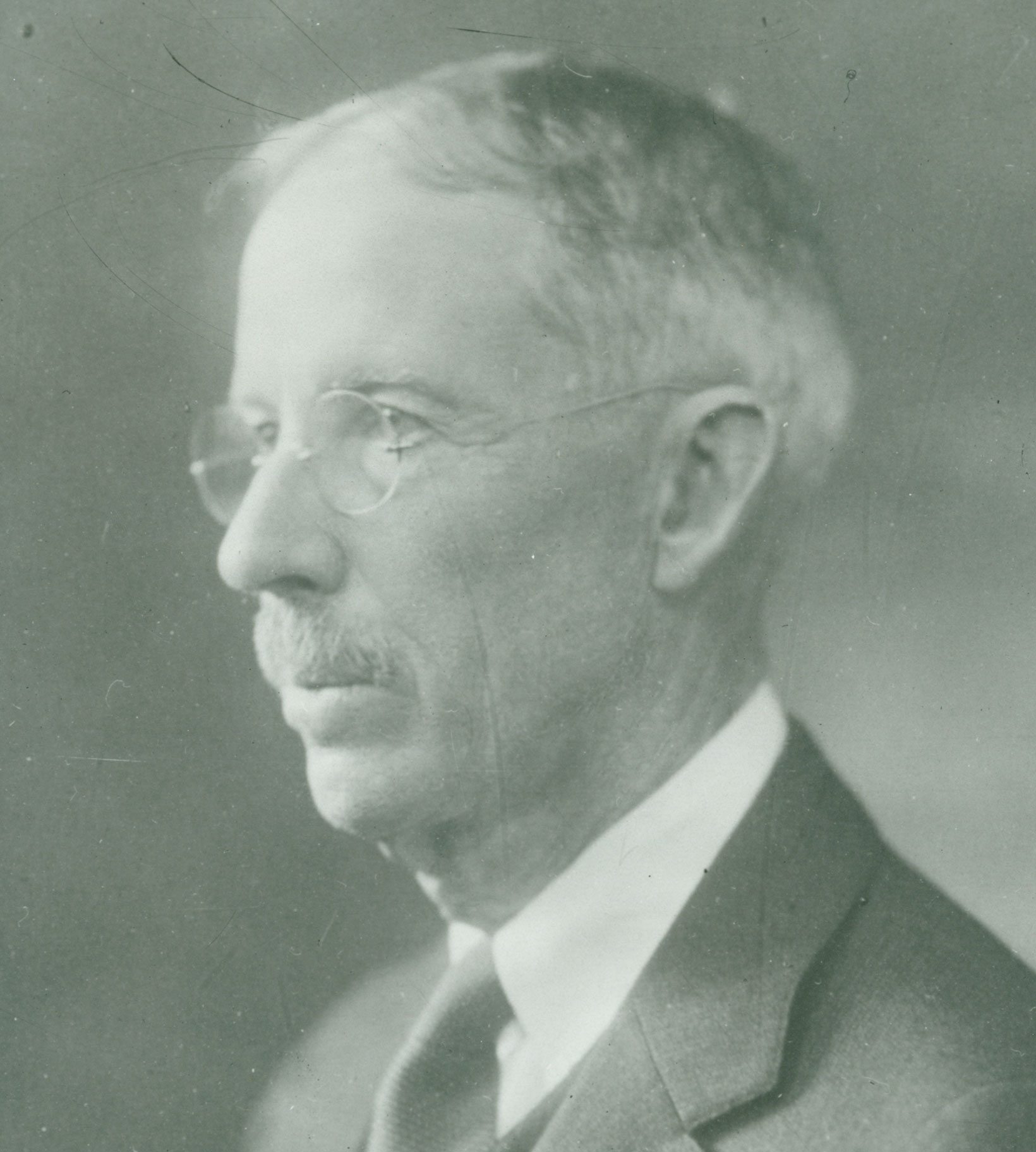
Portrait of artist Henry C. White
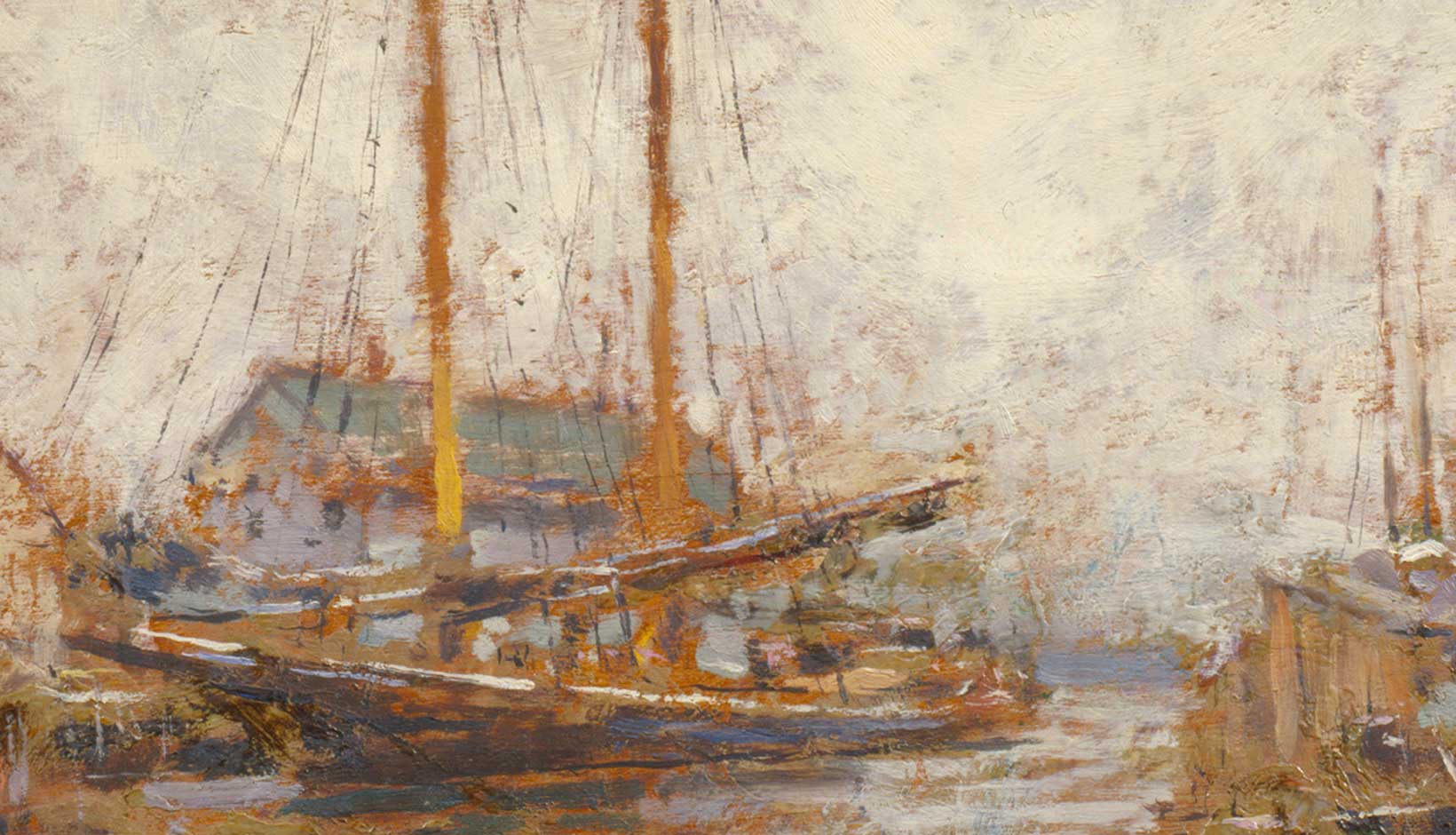
Henry C. White (1861–1952), In the Slip, Greenport (detail), n.d. Oil on wood panel, 9 in. x 12 in. Florence Griswold Museum, Gift of The Hartford Steam Boiler Inspection and Insurance Company
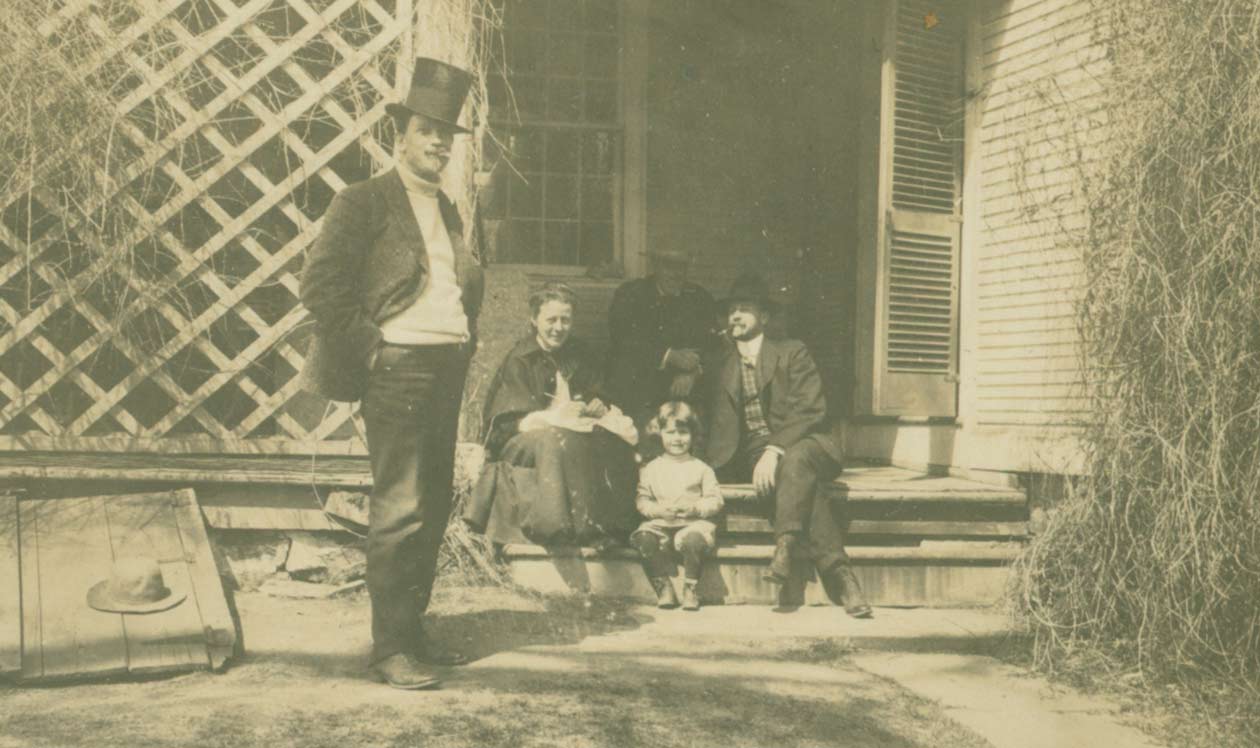
Mrs. Henry C. White (center) with her son, Nelson, at the Griswold House
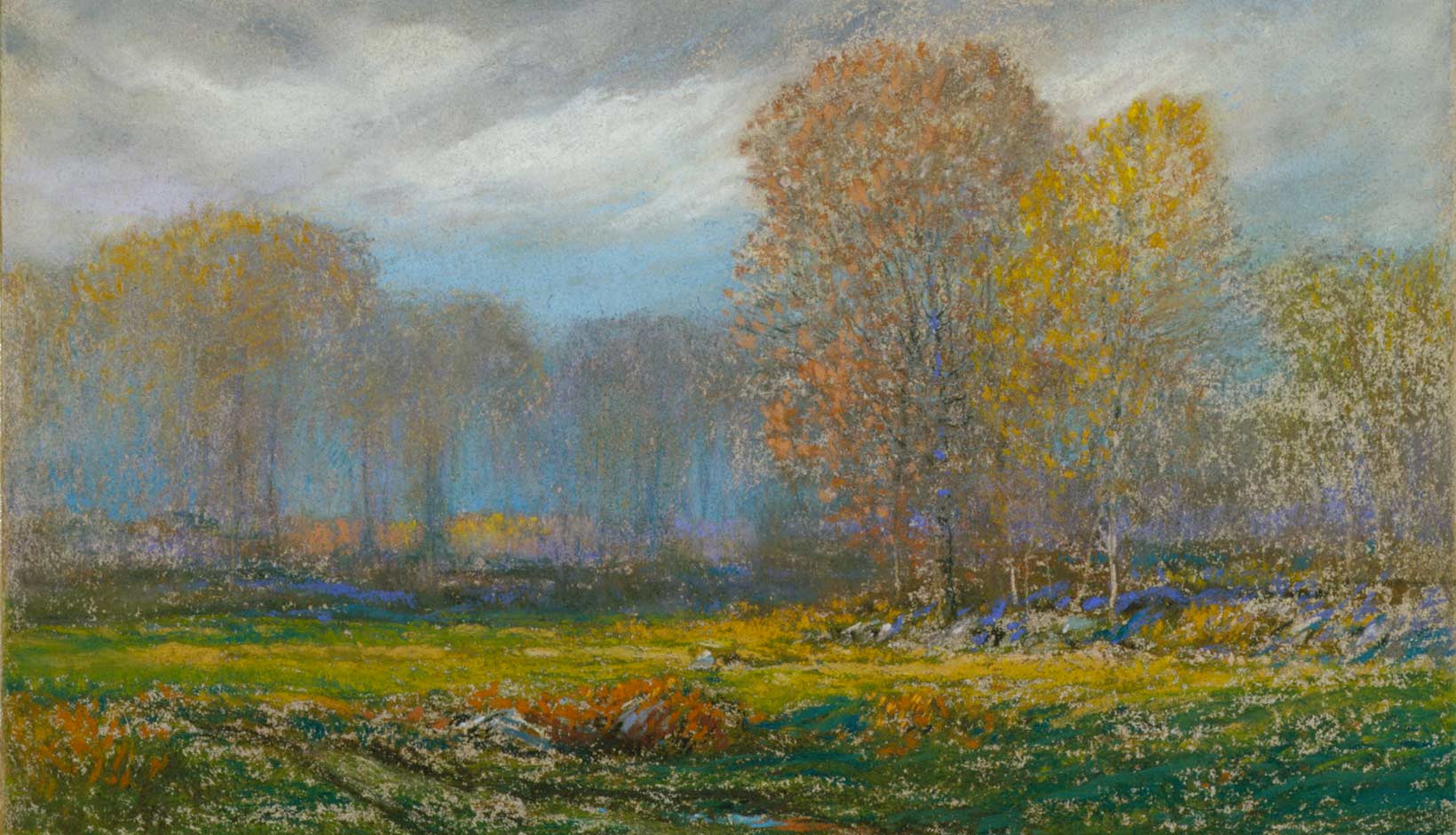
Dwight Tryon (1849–1925), Autumn, 1913. Pastel on gray paper, 7 3/4 in. x 11 3/4 in. Florence Griswold Museum, Gift of The Hartford Steam Boiler Inspection and Insurance Company
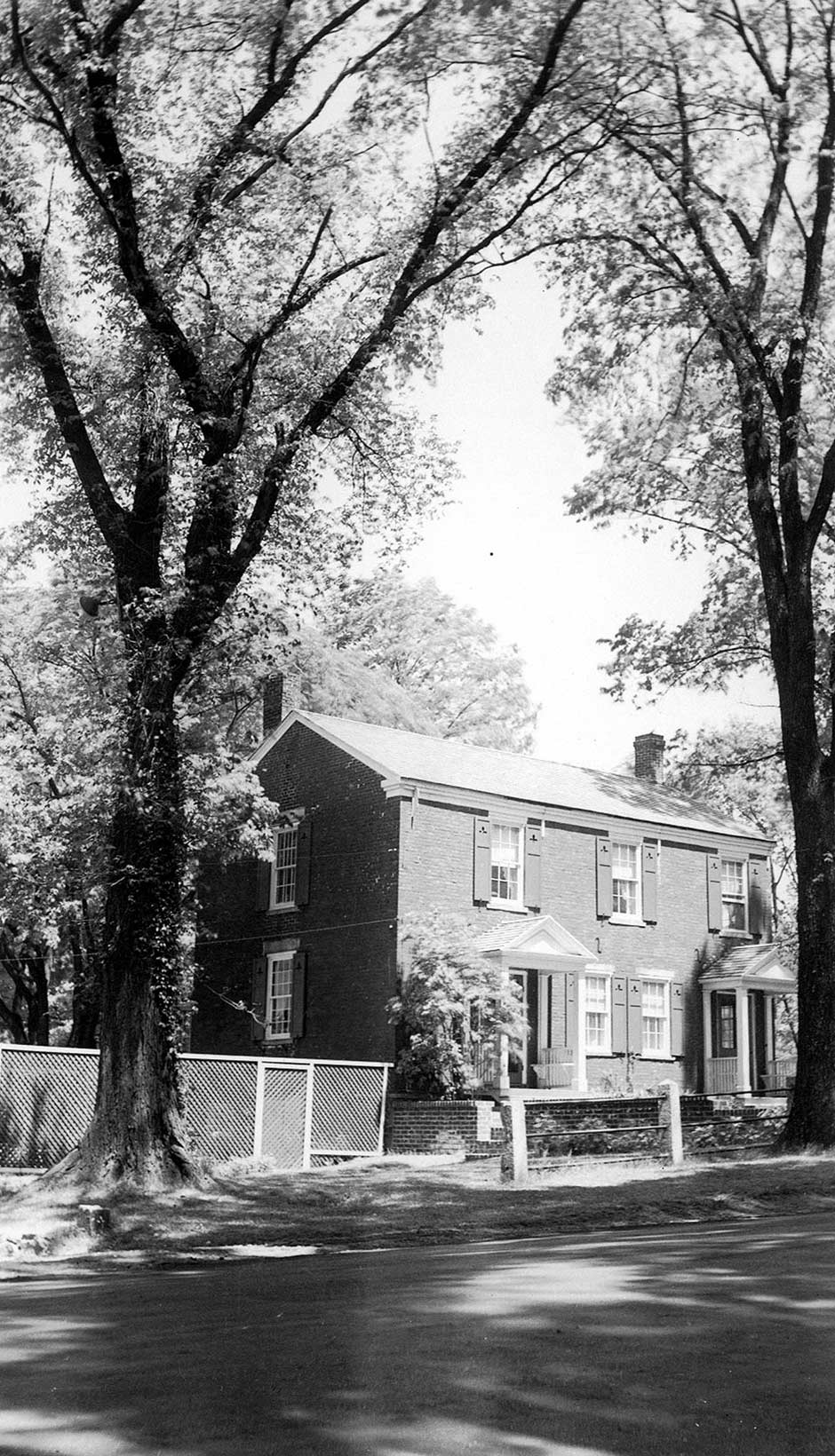
The "Brickstore"
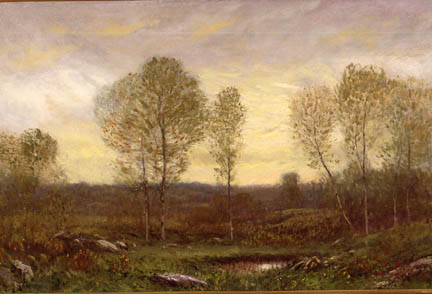
Dwight Tryon (1849–1925), Evening, Autumn, 1914. Oil on panel, 16 in. x 24 in. Florence Griswold Museum, Gift of The Hartford Steam Boiler Inspection and Insurance Company
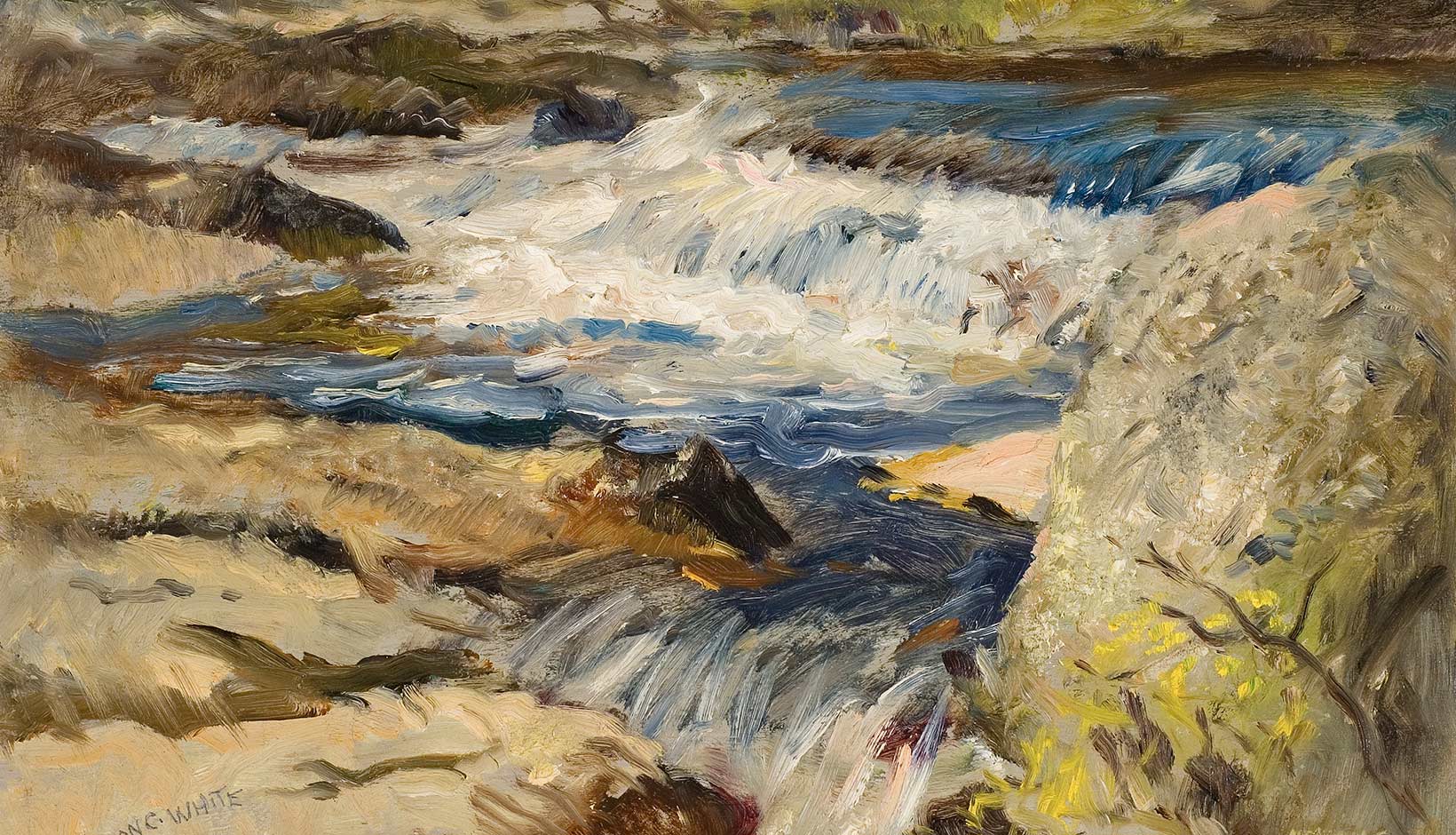
Nelson C. White (1900–1989), Streams and Rapids, n.d. Oil on wood panel, 12 in. x 16 in. Florence Griswold Museum, Gift of the artist