
Walter Griffin
(1861 – 1935)
HENRY RANKIN POORE (1859–1940)
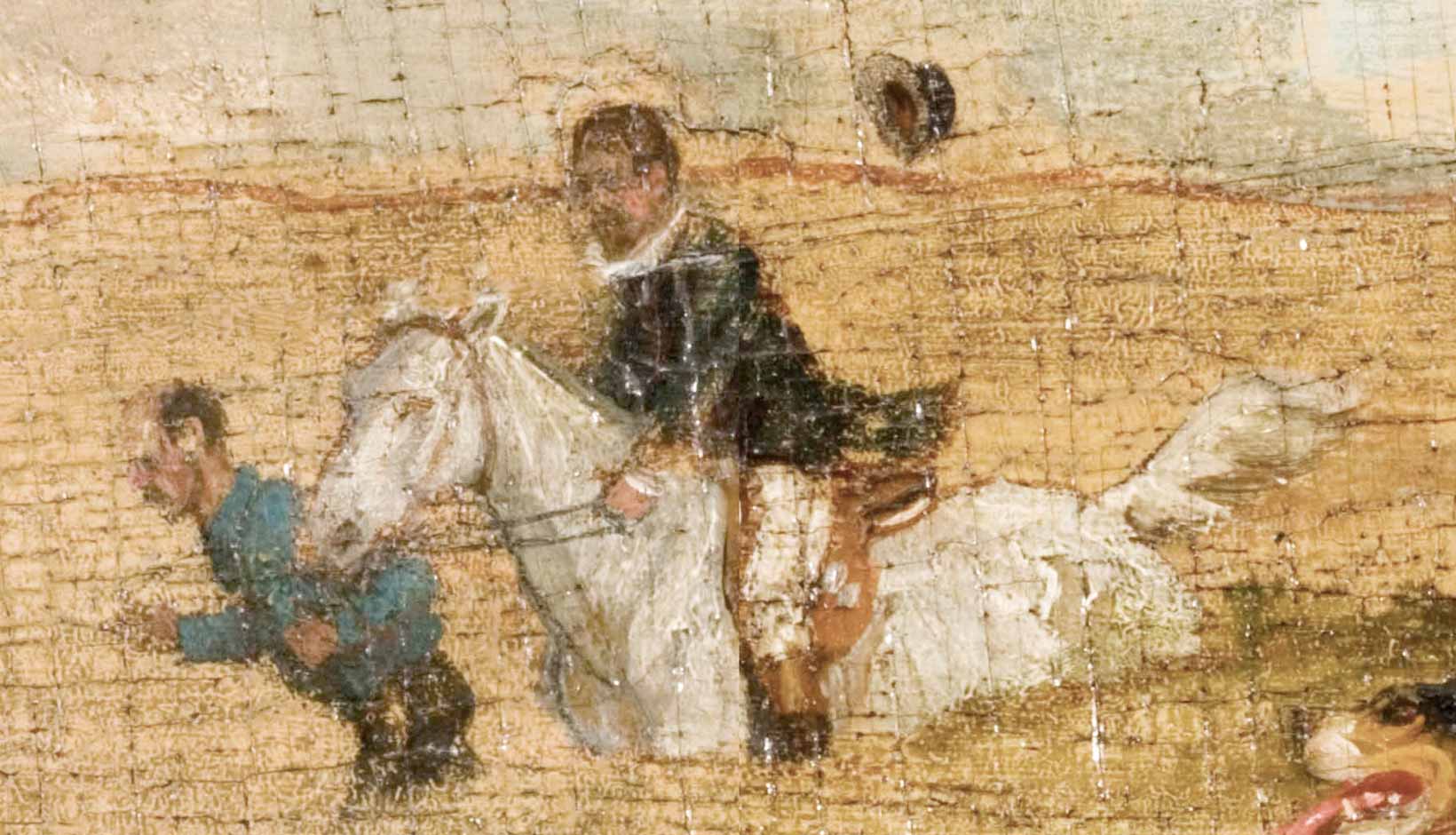
THE FOX CHASE (detail), 1901-1905; REVISED C. 1920
OIL ON WOOD PANEL
FLORENCE GRISWOLD MUSEUM
GIFT OF THE ARTIST
Born January 14, 1861, Portland, Maine
Died May 18, 1935, Portland, Maine
In Old Lyme, periodically, 1904-1908
Griffin came to Old Lyme as an Impressionist painter who mastered putting more than one color down with his brush at a time. He was one of the three artists who collaborated on a panel in the dining room. He is represented in the Knockers’ Club crest with an image of a gryphon, the mythological animal that combines the body of a lion with the head and wings of an eagle.
His painting style was perfectly aligned with the colony’s newfound interest in Impressionism. Griffin embraced the new style and had mastered his own “secret” approach to laying paint colors down on canvas. According to one of Griffin’s close friends, the painter would not mix his colors on the palette, but rather pick up two colors on the same brush and mix them on the canvas — a difficult painting technique to master, but the effects were stunning. Griffin was an accomplished draftsman and produced impressionistic landscapes in pastels as well.
The son of a craftsman who carved figureheads for the great sailing ships in Maine, Griffin was surrounded by art and woodworking from an early age. His interest and talents were nurtured through art classes in Boston and New York where he befriended several of the artists who would later make Old Lyme famous, such as Childe Hassam and Willard Metcalf. Like the others, he traveled to Paris and studied at the École Des Beaux-Arts and exhibited at the Salon of 1889. He traveled into the French countryside and painted in the area known as Barbizon, the very place that inspired Henry Ward Ranger to seek out Old Lyme for his American Barbizon.
When Griffin returned to America, he moved to Hartford, Connecticut, and began teaching art. By the end of the 1890s, he opened the Walter Griffin’s Summer Painting School in Quebec City, Canada, and taught painting in the open air where, according to the brochure, “special attention will be given to composition of the subjects undertaken before nature.”
Despite Griffin’s relatively late start with the colony, he settled in quite nicely. He becomes a member of the “Knockers’ Club,” the group of artists who would criticize or “knock” the work of the other painters (especially those who were not present). This club was made public by the creation of a fictional coat of arms that was painted on the brick over the fireplace opening in the dining room (pictured in the gallery below). Griffin is represented by the image of a gryphon, the mythical beast that combines the body of a lion with the wings and head of an eagle. In The Fox Chase (detail above) Griffin is shown galloping along on the back of Reuben, the white horse he bought for $4 to use as a model.
Directly across the dining room, Griffin is represented by an unusual painted panel. Unlike the other panels, Griffin works collaboratively with Henry Rankin Poore and Childe Hassam. This is the only panel to be created by more than one artist (below) and diplomatically combines the talents of two staunch impressionists and one tonalist. The panel features a brown cow reclining in a field on the edge of a forest and shallow pond, but the specific authorship of any of the elements is undetermined. Griffin also completes a solo panel that is installed next to the collaboration piece.
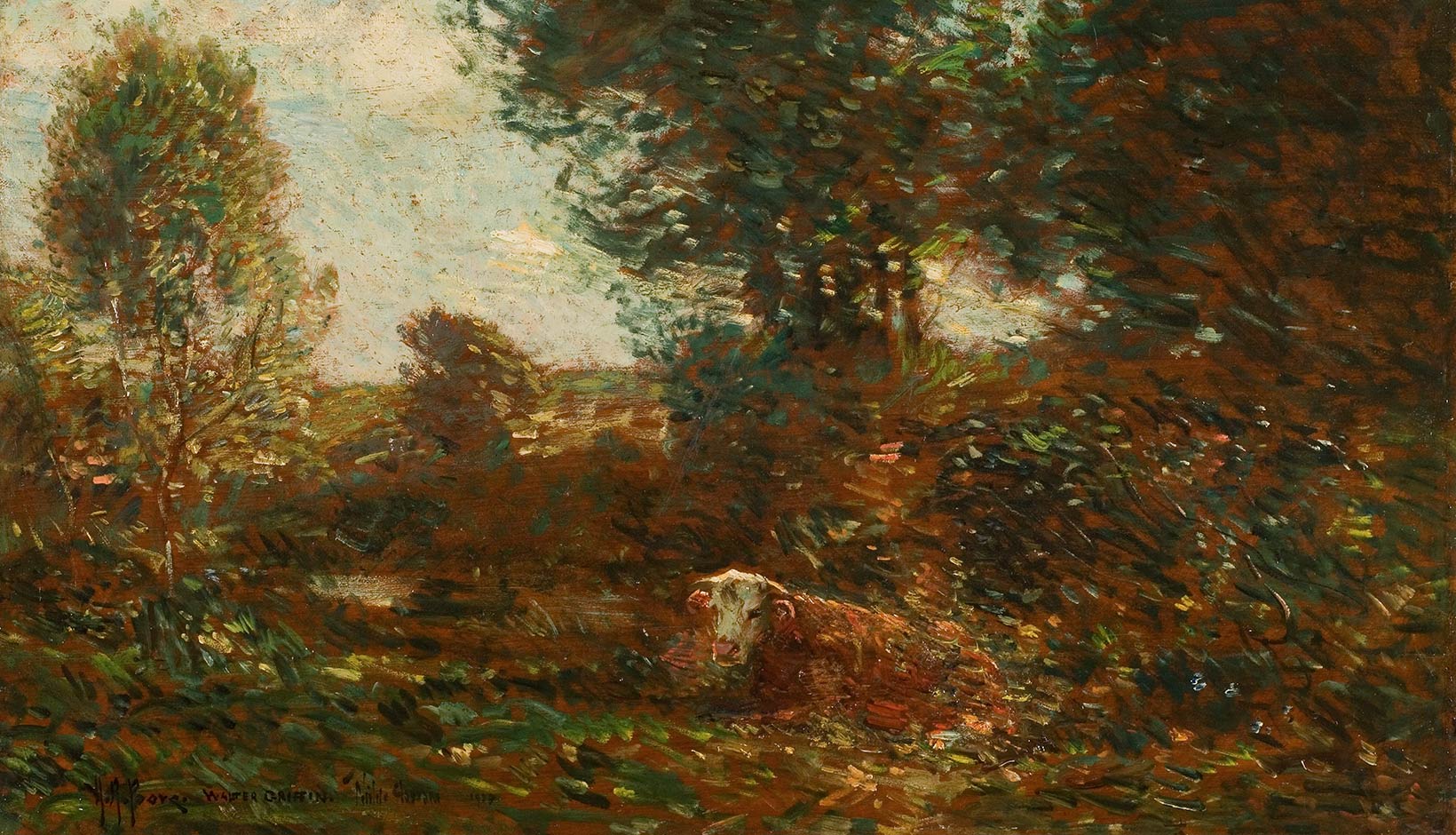
WALTER GRIFFIN (1861–1935), CHILDE HASSAM (1859–1935), HENRY RANKIN POORE (1859–1940), "LANDSCAPE WITH COW," 1907. OIL ON WOOD PANEL. FLORENCE GRISWOLD MUSEUM, GIFT OF THE ARTISTS
One of the great pleasures and benefits of an art colony, American artists discovered when they became acquainted with some in Europe, was the opportunity to discuss and exchange artistic ideas on a daily basis and to see the stages by which colleagues created works of art. It was serious business.
This panel, however, the collaboration of three men whose distinctive styles are not generally compatible, may have been done as a lark.
Surely it was the Tonalist Henry Rankin Poore who painted the reclining cow. His images of animals were well known; a number grace his Fox Chase mural over the dining room fireplace.
Was Poore mimicking Glenn Newell’s cow on a nearby panel – a cow of a different color but otherwise very much the same? This one lies not in a Dutch landscape, however, but in Old Lyme, where trees are all around as Walter Griffin found to his joy when he arrived in 1904. Griffin liked tall, thin trees with sinuous trunks and limbs, and in his hands tree leaves can seem to shimmer, partly because of his trick of shaping and modeling foliage with a brush loaded with two colors of paint. The tree at the left is surely one of his and so, probably, are the others.
The overlay of short, often parallel strokes in much of the rest of the painting looks like the work of Childe Hassam, a more daring Impressionist than Griffin, and thus the more compelling foil to Poore’s Tonalism. Hassam brushed dashes of sunlight into this scene, most cleverly above, over, and below the body of the cow, so that they highlight the animal like a spotlight. All three artists used the “baked apple” colors that Old Lyme Tonalists like Poore and Henry Ward Ranger were fond of, but sunny highlights, vibrant greens, and lively brushwork by Griffin and Hassam transport this Tonalist cow into an Impressionist landscape.
The “clash” of two popular ways of painting in Old Lyme and in America at the turn of the 20th century may be overdone here for a humorous effect, but many of the Old Lyme art colonists developed a subtle blend of Tonalism and Impressionism.
“Hassam, Poore and Walter Griffin painted the middle panel on the inside wall. It was started as a wedding present for a young about-to-be-bride in Old Lyme. One morning she happened to drop in and found the three of them munching cream cheese and chives in the dining room. She was quite disgusted and did not hesitate to tell them so. Provoked, they decided the painting was far too good for her and gave it to Miss Florence instead.” — Artist Harry Hoffman, 1954
Ladies at leisure, relaxing outdoors on a sunny day in meadows, woodlands, or by a river, was a subject often chosen by the artists at Old Lyme. Panels in the dining room by Robert Nisbet and Childe Hassam treat the theme (shown in the gallery below), as do easel paintings in the Museum’s collection. Griffin’s panel (below), however, is distinctive, not only because it includes more women and because it presents them in a friskier mood – as the leaping dog has sensed – but because these figures almost blend into the landscape.
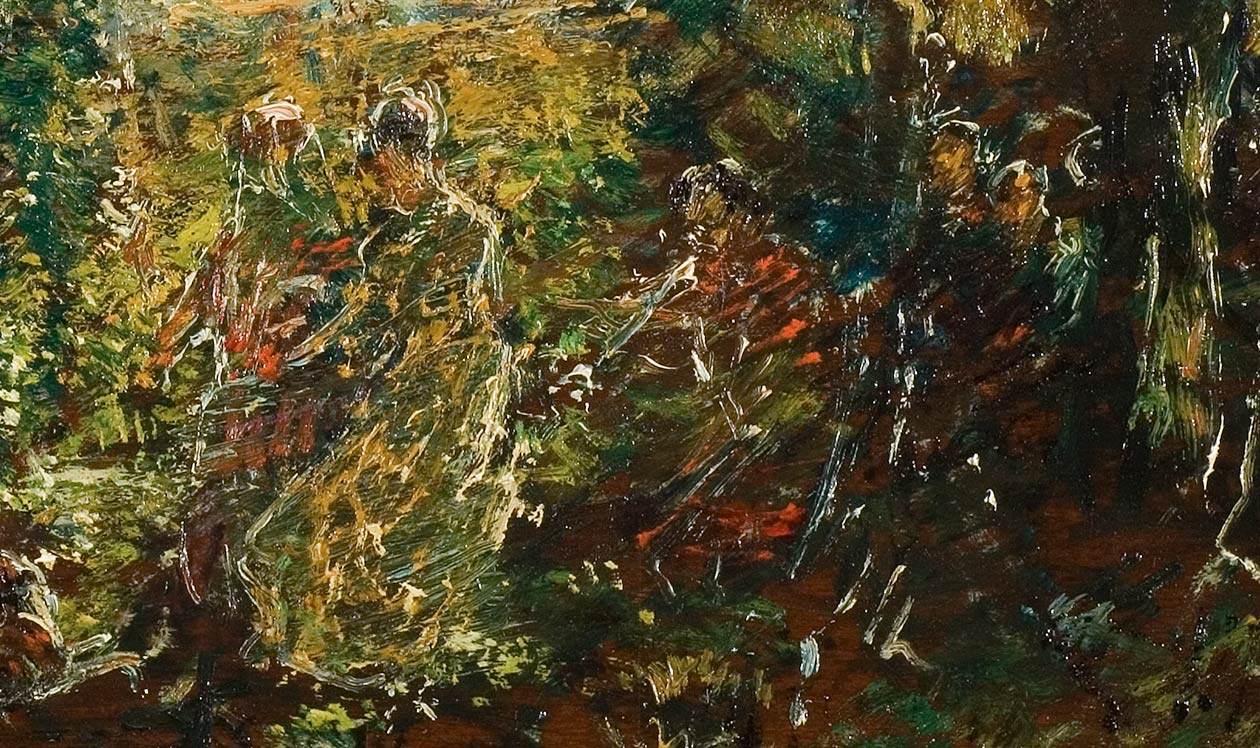
WALTER GRIFFIN (1861–1935), "LADIES IN THE WOODS." OIL ON WOOD PANEL. FLORENCE GRISWOLD MUSEUM, GIFT OF THE ARTIST
It is difficult to make out their very number, let alone details. Indeed, the white lines that outline and overlay them make these ladies seem ghostly and mysterious – like spirit figures seen only in a dream or in the imagination. Yet they are in a Lyme landscape with Griffin’s trademark shimmering trees. Those slender trees carry one’s eye to the top of the panel but are countered by the strong horizontal of the field of gold that stretches from side to side and by the strange creaminess of the sky. The ladies are pushed close to the picture plane, for their space in the foreground is narrow, bounded by the trees and a stream. Were it not for the rich colors, one might at once think of a Classic marble frieze, where a row of figures is carved in bas-relief. Griffin appears to have combined in this panel his era’s interest in the visual excitement of Impressionism, the calm of Neo-Classicism, and the traditional Western symbolism that connects women with nature.
At Old Lyme, Griffin devised his signature painting technique, apparent in this panel, which employs a brush often loaded with two colors at once, not only to apply color but to shape and model forms. His art would change later, in Norway, in France, and in Italy, where he lived on and off for years. He became one of the most highly regarded American artists of his time, and in 1935 the National Academy of Design honored him and his good friend, Childe Hassam, with a joint memorial exhibition. It has been said, however, that Griffin’s arts came alive at Old Lyme.
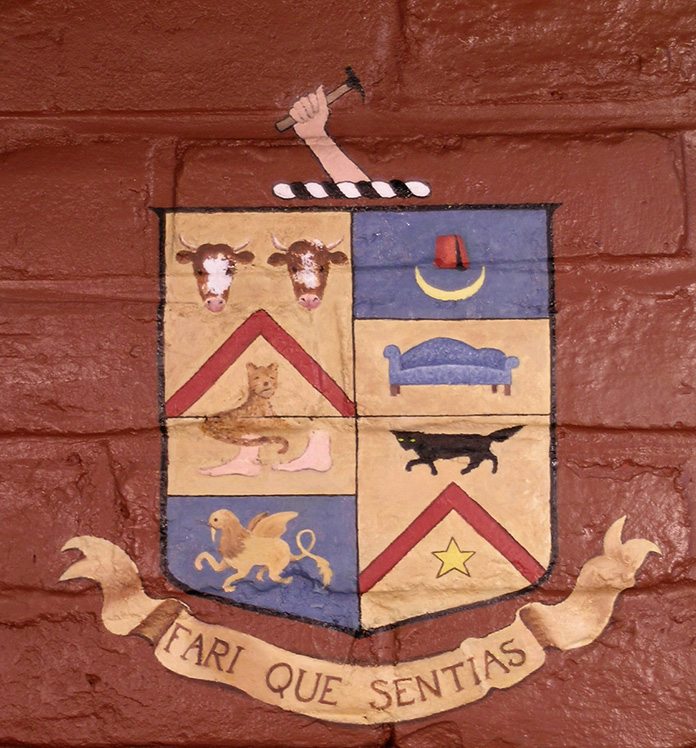
Willard Metcalf (1858–1925), Knockers’ Club Crest, c. 1906 (repainted 2006), Repainted by Angie Falstrom from historic photographs. Florence Griswold Museum
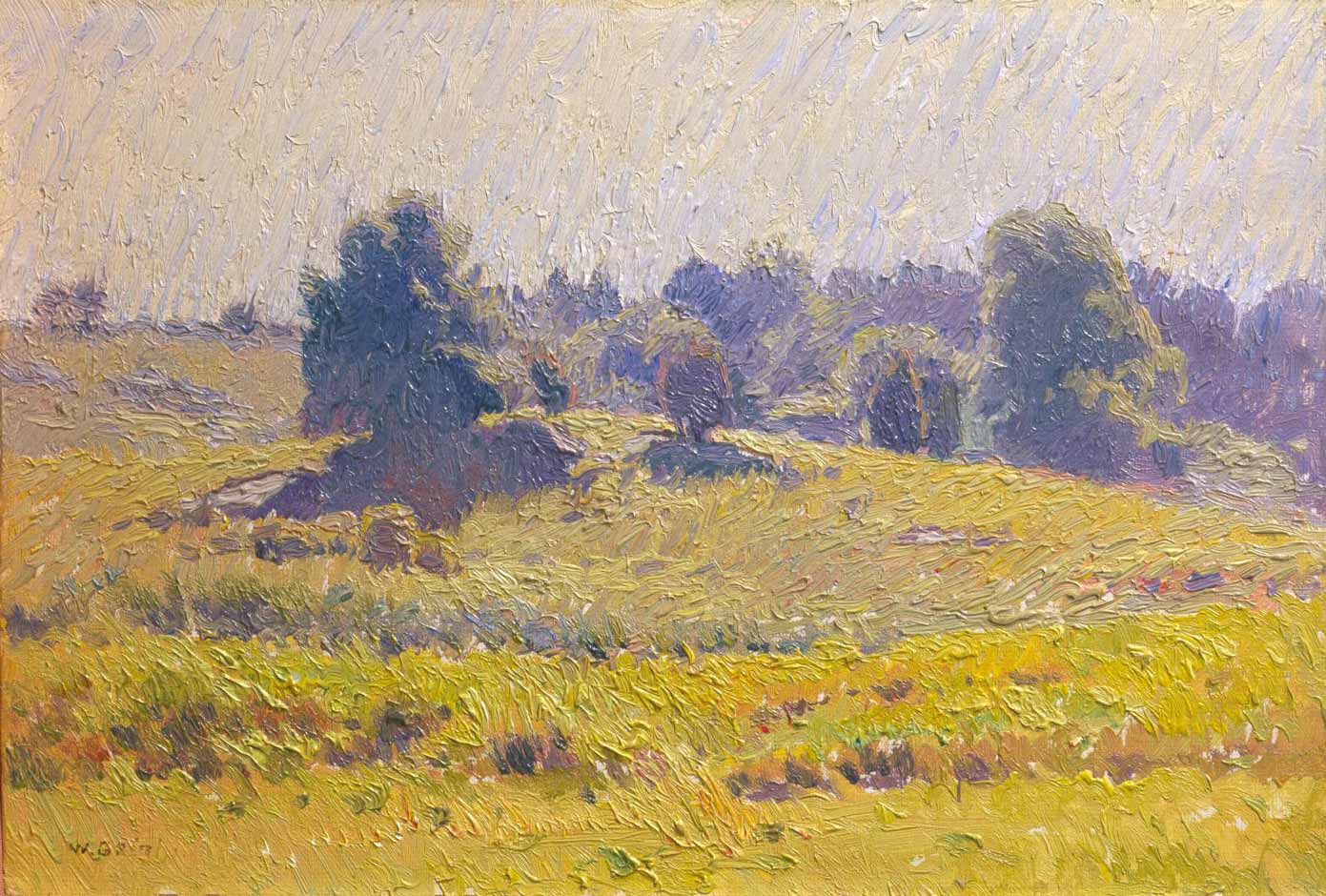
Walter Griffin (1861–1935), Summer Haze, Old Lyme, n.d. Oil on artist board, 8 1/16 in. x 11 7/8 in. Florence Griswold Museum, Gift of the Hartford Steam Boiler Inspection and Insurance Company
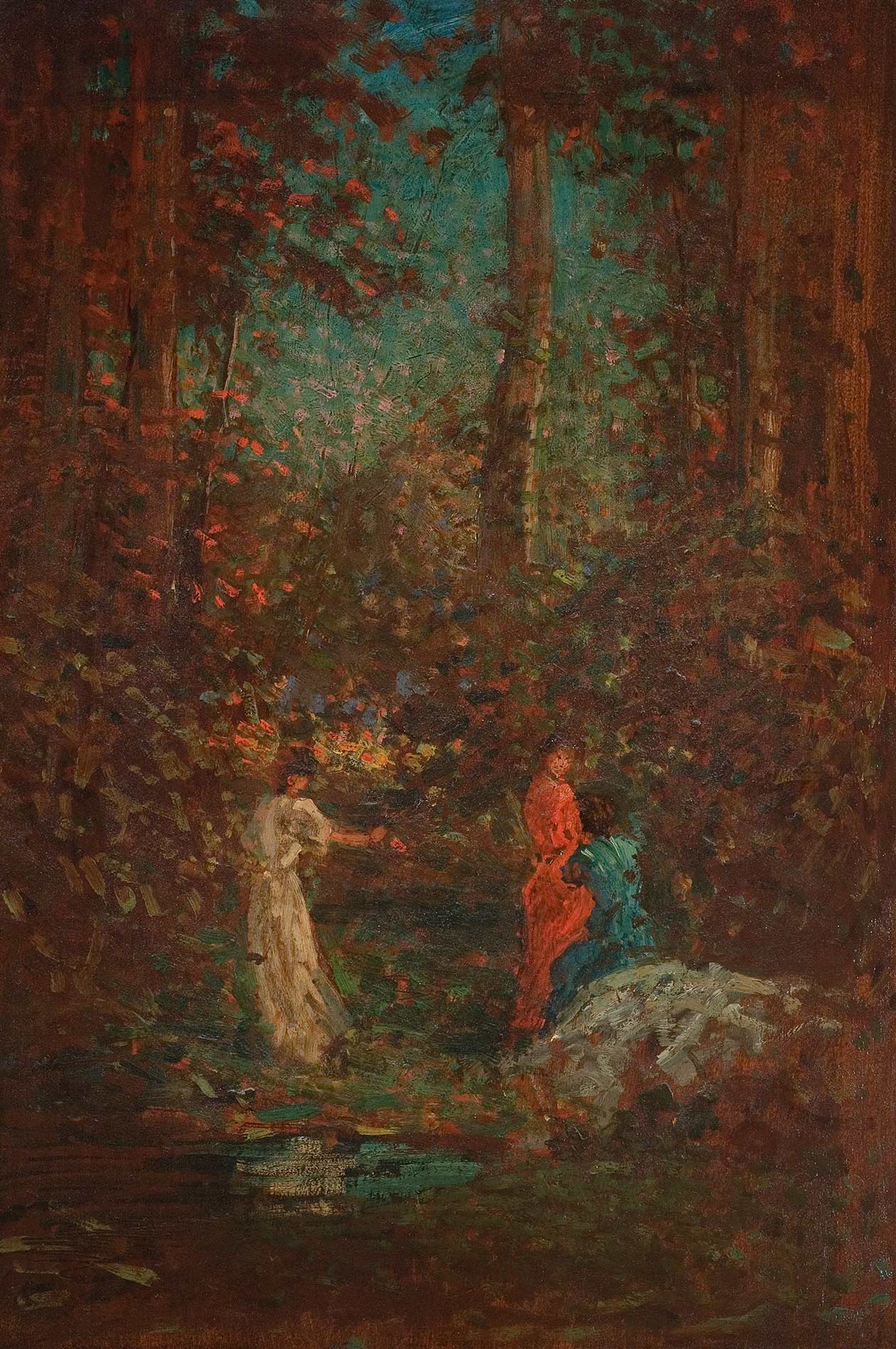
Robert H. Nisbet (1879–1961), Three Women in the Woods, n.d. Oil on wood panel, 19 1/2 in. x 13 1/4 in. Florence Griswold Museum, Gift of the artist
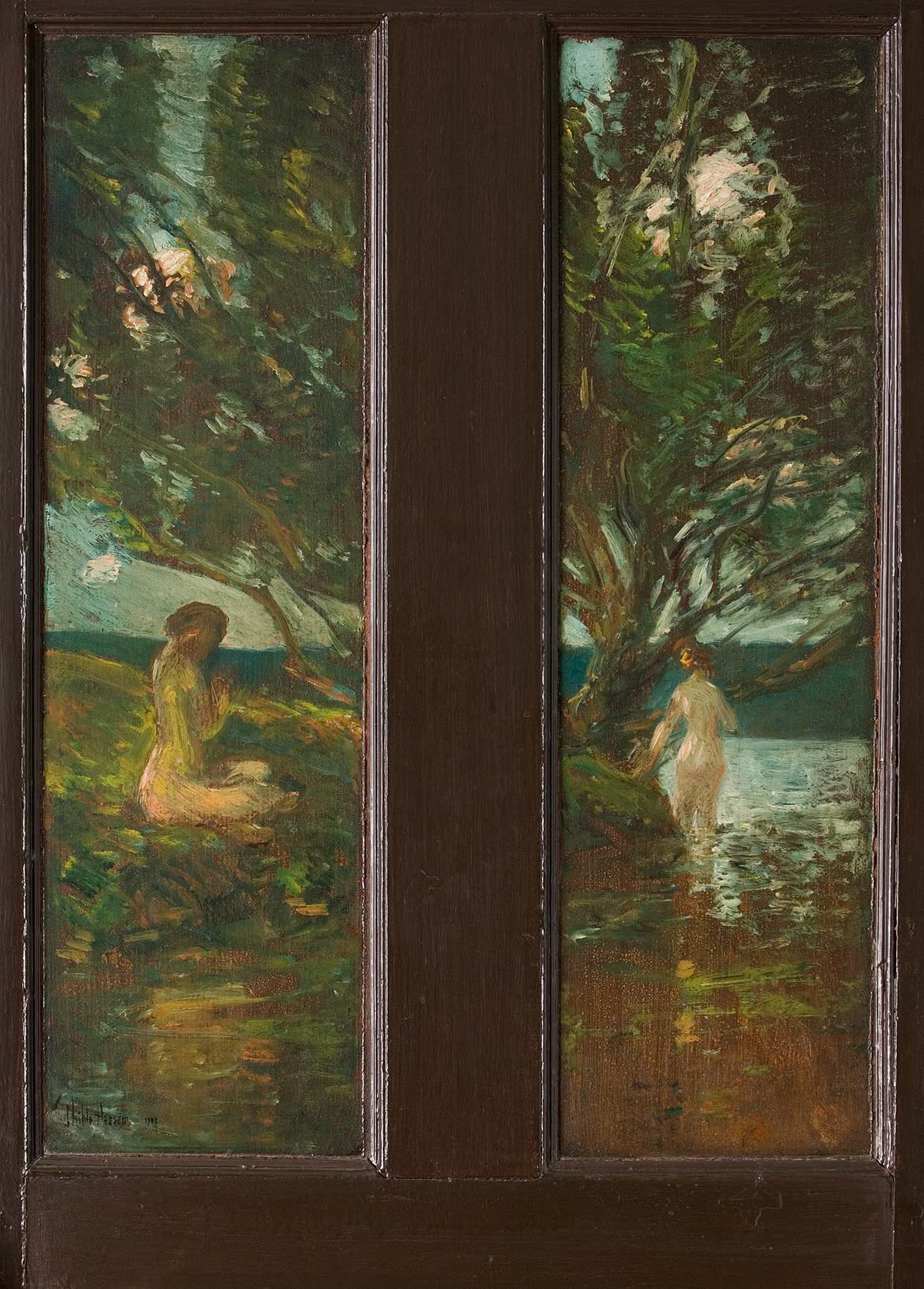
Childe Hassam (1859–1935), The Bathers, 1903. Oil on wood panel, 31 in. x 9 in. Florence Griswold Museum, Gift of the Artist
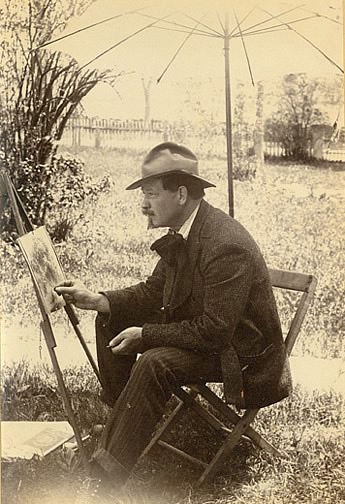
Walter Griffin en plein air
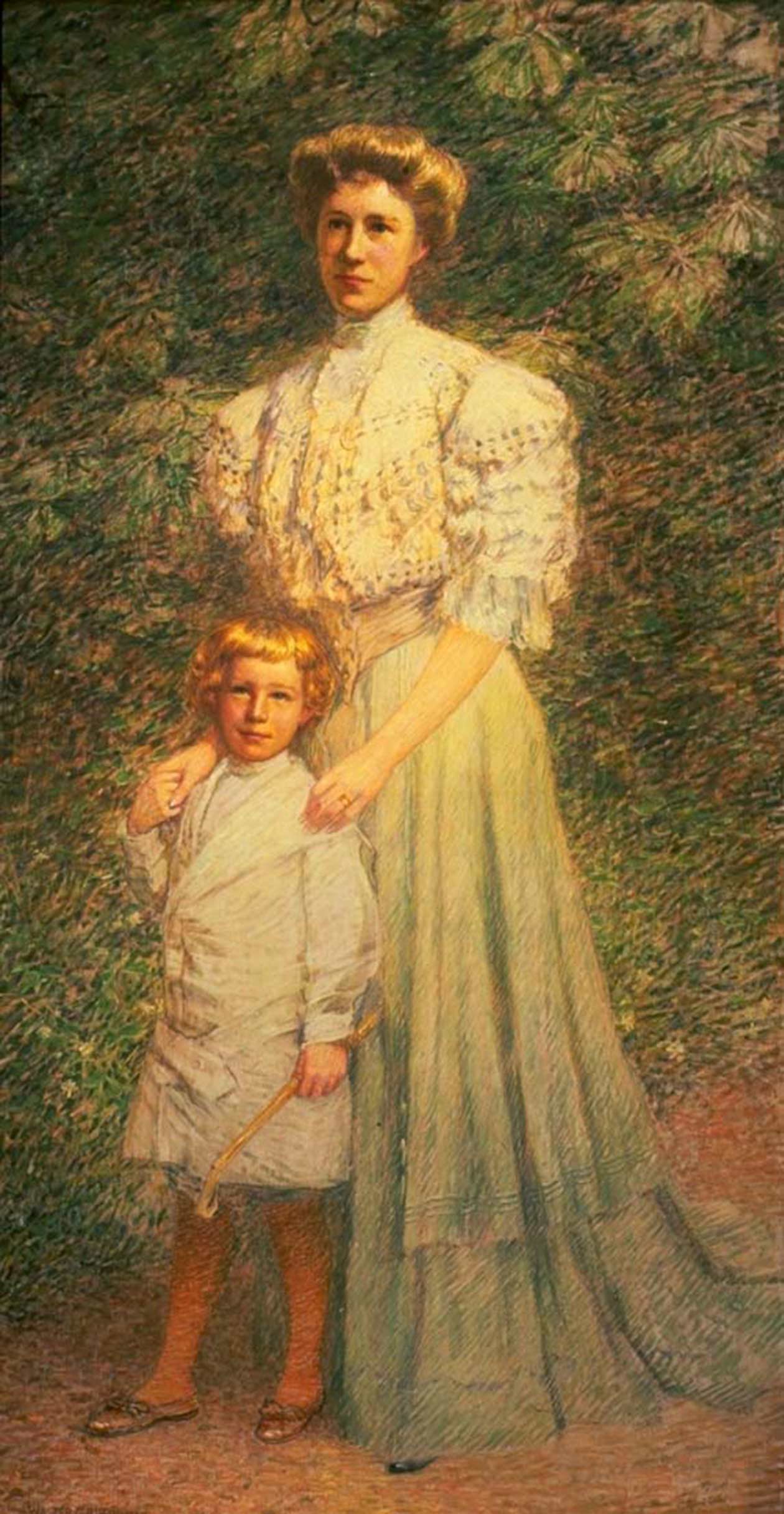
Walter Griffin (1861–1935), Portrait of Mrs. Brown and Her Son, 1907. Oil on canvas, 72 in. x 37 3/4 in. Florence Griswold Museum, Gift of Mrs. John R. Johnson
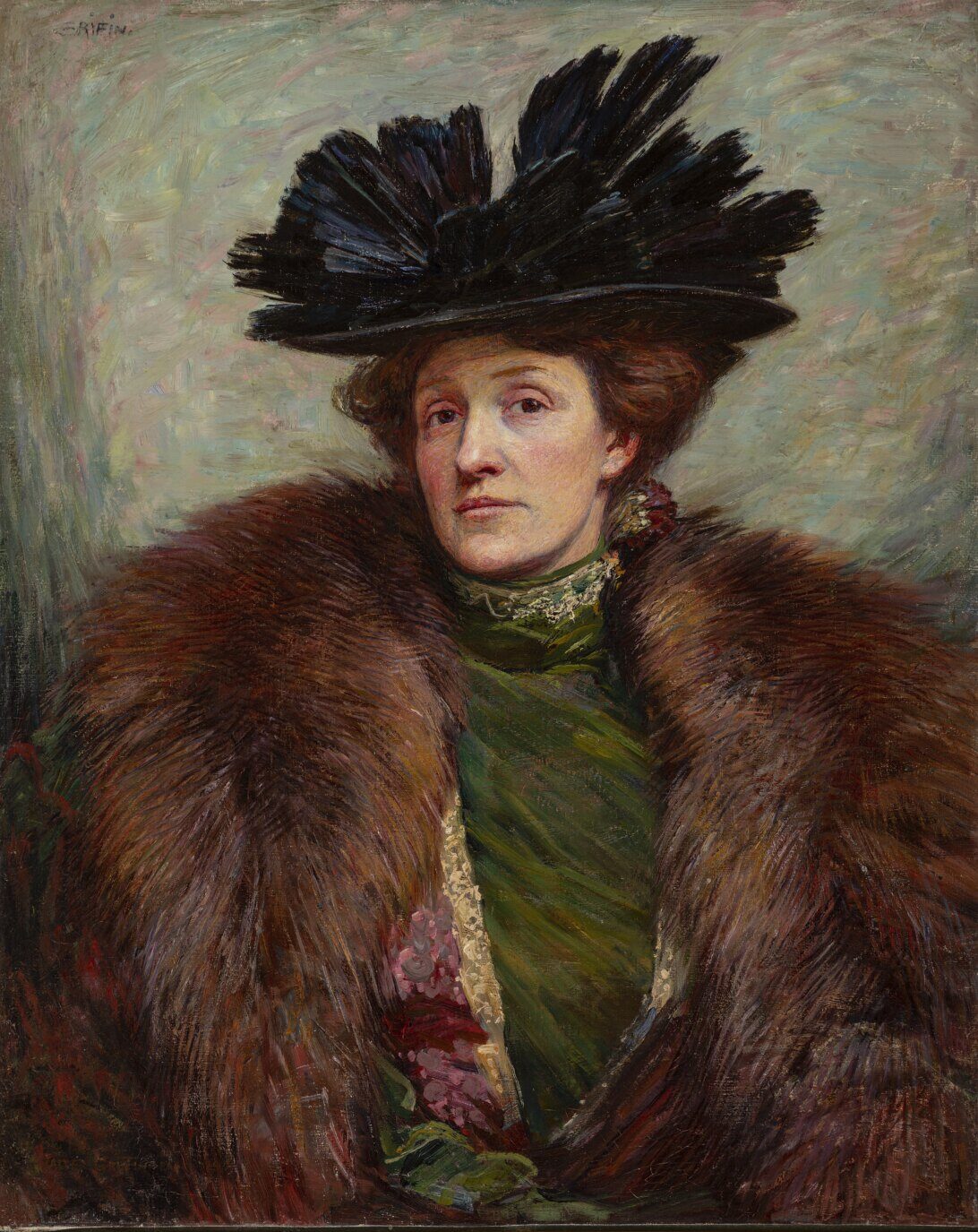
Walter Griffin (1861–1935), Portrait of a Lady, c. 1897. Oil on canvas, 36 in. x 28 3/4 in. Florence Griswold Museum, Gift of the Hartford Steam Boiler Inspection and Insurance Company