
Will Howe Foote
(1874 – 1965)
HENRY RANKIN POORE (1859–1940)
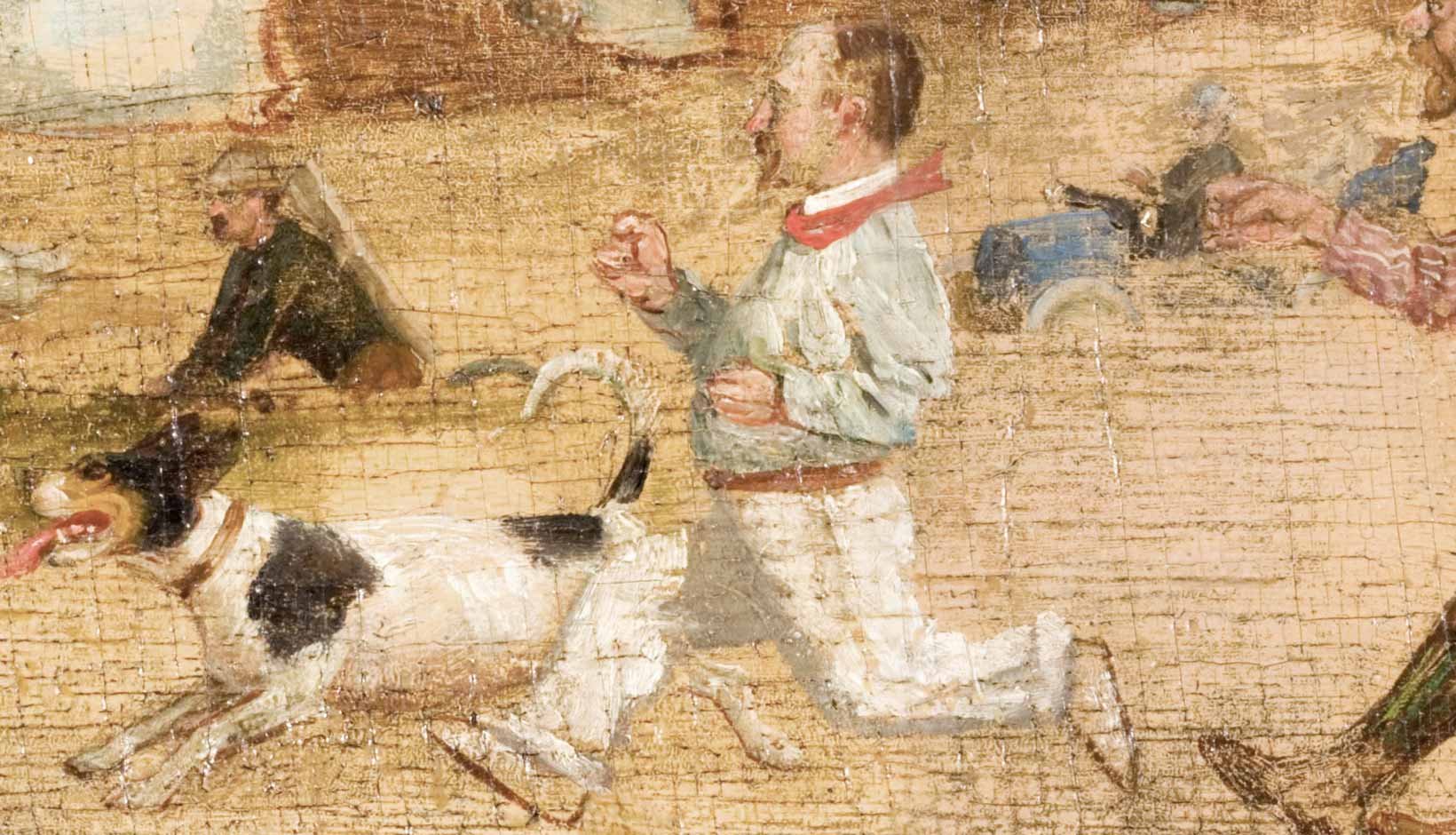
THE FOX CHASE (detail), 1901-1905; REVISED C. 1920
OIL ON WOOD PANEL
FLORENCE GRISWOLD MUSEUM
GIFT OF THE ARTIST
Born June 29, 1874, Grand Rapids, Michigan
Died January 27, 1965, Sarasota, Florida
In Old Lyme, 1901-65; in Cos Cob, 1903
Foote came to Old Lyme with his uncle, William Henry Howe, the artist famous for painting cows. Together, they join the group of artists invited by Ranger to board at Miss Florence’s. Foote was clearly a fan of the wiggle game, the drawing game the artists played in the parlor in the evening. The Museum currently holds over 40 examples of wiggle drawings signed by Foote. Indeed, Foote returned to stay with Miss Florence every summer until 1909, when he and his wife built a house on the Lieutenant River, just up the road from the boardinghouse, complete with a studio and exquisite landscaping that featured formal gardens.
Born into a prosperous family with ties to the burgeoning furniture business in Grand Rapids, Michigan, Foote was encouraged to pursue his interest in art. He attended the Art Institute of Chicago and later the Art Students League in New York. In 1897, he sailed to London with his father and two art friends (one of whom was the noted American Impressionist Frederick C. Frieseke) and later traveled to Paris where he enrolled in the Académie Julian.
Foote returned to the United States in 1900, and came to Old Lyme the following summer. In 1902, he was hired as an assistant to Frank Vincent DuMond, the director of the Lyme Summer School of Art. Foote continued to teach privately in Old Lyme even after the art school moved to Woodstock, New York. One of his most prominent art students was Ellen Axson Wilson, President Woodrow Wilson’s first wife. In 1907, he married Helen Kirtland Freeman, an art student who came to Old Lyme to study with Henry Rankin Poore, the artist who painted The Fox Chase. His good friend, William Chadwick, another Lyme artist, was his best man. Being so youthful and fit, he won the foot race during one of the art colony’s field days competitions, and is depicted in The Fox Chase (detail above) breaking away from the pack of artists. In reality, however, he was very much central to the group of painters.
Being a perfectionist when it came to his art, Foote destroyed anything that he didn’t believe was his best. This, and the fact that he was not fond of working in greens, the color that dominates the Old Lyme landscape from early spring to midsummer, there are relatively few Connecticut scenes painted by Foote. His early work was linked to the tonalist painters who started the art colony such as his uncle, but with the arrival of Childe Hassam and Walter Griffin in 1903, his paintings began to take on a more impressionistic look. His color palette lightened, for instance, and he experimented with putting more than one color on with his brush at a time. In 1906, he painted A Summer’s Night (pictured in the gallery below) showing the front of the boardinghouse shrouded in sycamore leaves with Miss Florence standing on the porch looking towards the viewer over her shoulder. The year before, he painted the front of the house on a panel for the dining room. Indeed, both paintings predate the award-winning May Night (1907), a similar moonlit composition by Willard Metcalf.
When not painting in Old Lyme, Foote could be found on either the rivers or roadways that surrounded his adopted community. He brought his canoe with him during the early years and would spend early evenings exploring the marsh. He was also quite fond of his automobile and would drive around Lyme in search of paintable subject matter. Other days would find him swimming in Long Island Sound or playing a round of golf at the Old Lyme course. When he died at age 90 in Florida, he was brought back to Old Lyme to be buried next to his wife on the Artists’ Knoll in the Duck River Cemetery near several art colony friends including William Chadwick and Harry Hoffman. He was the final surviving member of the original Lyme Colony group.
Although several Old Lyme artists portrayed the façade of their beloved Griswold House in easel paintings, in 1905 Will Howe Foote painted the only panel in the dining room that does (pictured below).
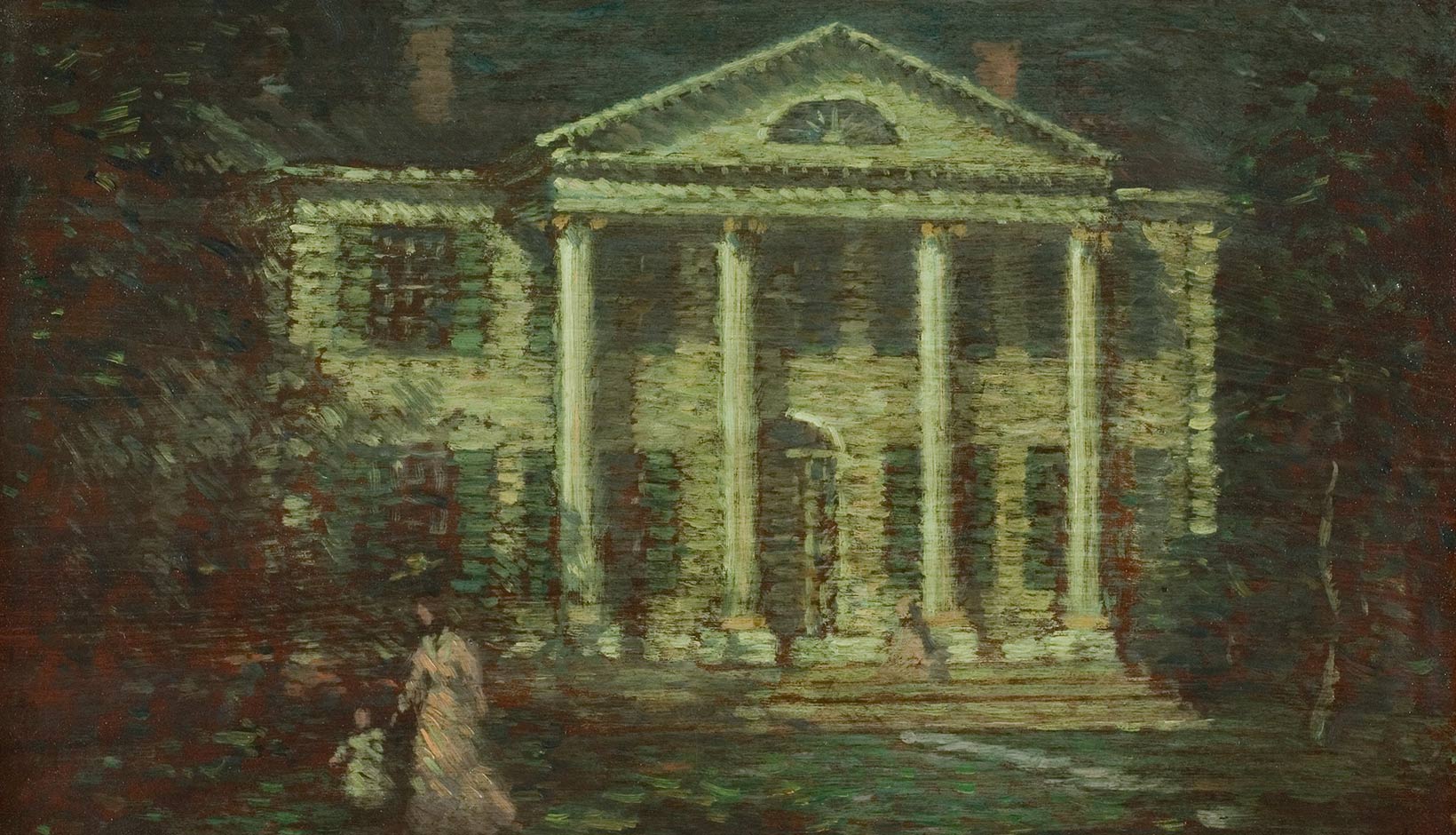
WILL HOWE FOOTE (1874–1965), "FLORENCE GRISWOLD HOUSE BY MOONLIGHT," 1905. OIL ON WOOD PANEL. FLORENCE GRISWOLD MUSEUM, GIFT OF THE ARTIST
Foote’s easel painting of the home’s grand portico, A Summer’s Night (c. 1906), is also in the collection of the Florence Griswold Museum. The best-known image of the house, however, is May Night, a painting done in 1906, which set Willard Metcalf on the road to artistic stardom.
While it is not known whether Foote and Metcalf ever discussed these paintings, in progress or afterward, the three images display some striking similarities. All three ignore the actual shabbiness of the old house in these years and make it look new again. All three include one or more female figures in long pink gowns. All three are nocturnal scenes in which bright moonlight makes the house glow and casts deep shadows on the lawn. The art colonists called such nocturnes “rainy day” pictures, because they were painted inside a house or studio in inclement weather. They portray images seen in an artist’s mind rather than from behind an actual plein-air easel.
Foote’s panel, however, has the distinction not only of showing more of the house (in a somewhat flawed perspective) and of including a child, but it has odd brushwork in a series of short horizontal strokes layered one above the other.
This romantic tonal scene, dark but for the light on the house and figures, thus has a textural “vibration” – a word used often about American Impressionism in the 1890s, when Childe Hassam was called “the arch vibrator.” The artists at Old Lyme found moonlight pictures to be a good way of uniting the atmospheric effects and limited palette of Tonalism with the themes and dashing brushwork of Impressionism. Foote’s early work in Connecticut reflects his interest in soft, atmospheric tonal scenes, but Hassam’s influence led him to lighten his palette, sometimes to a very high key. He constantly experimented with light and color, but his interest in form, mass, and simple geometric arrangements like those seen on this panel continued throughout his career.
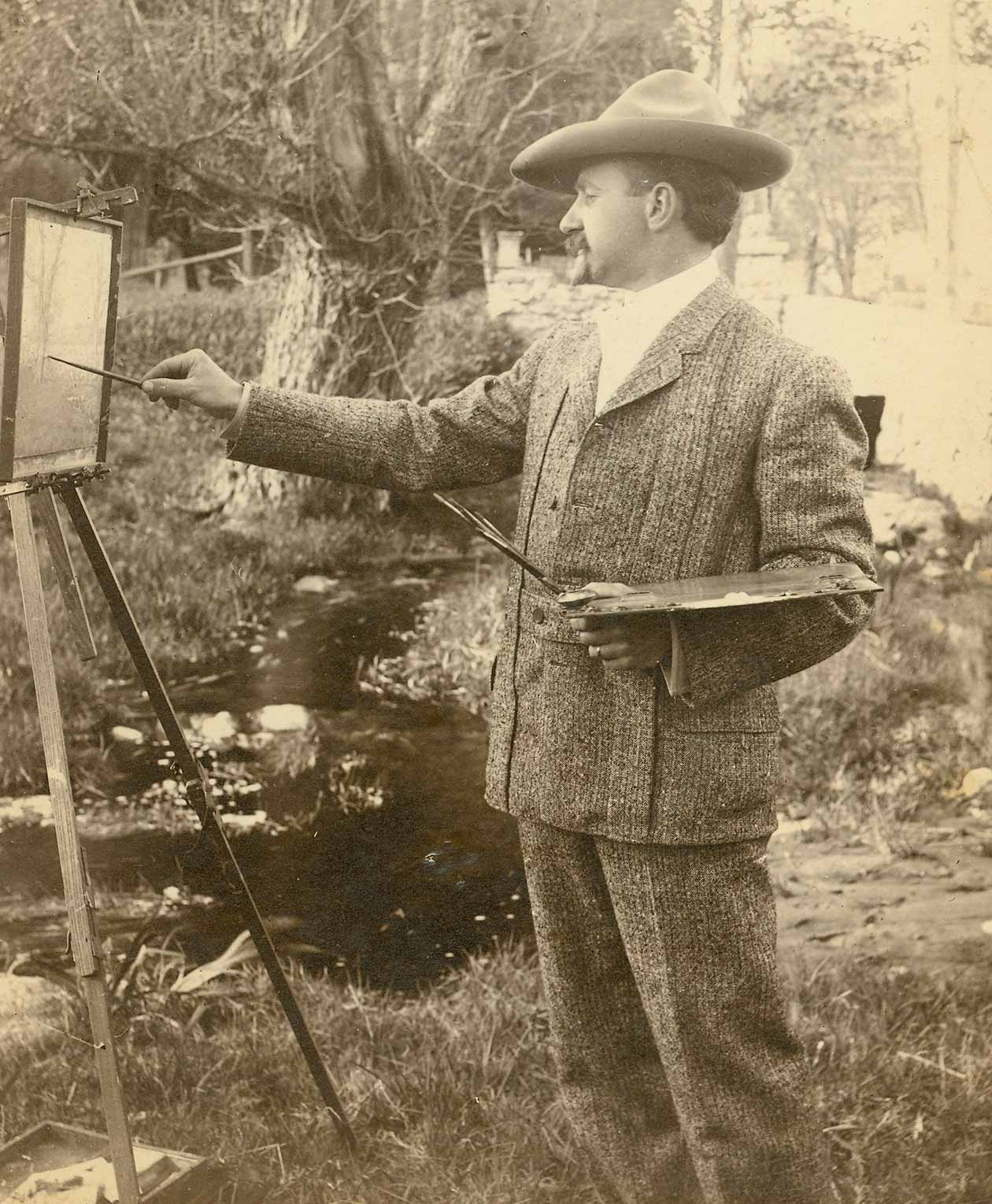
Will Howe Foote painting en plein air
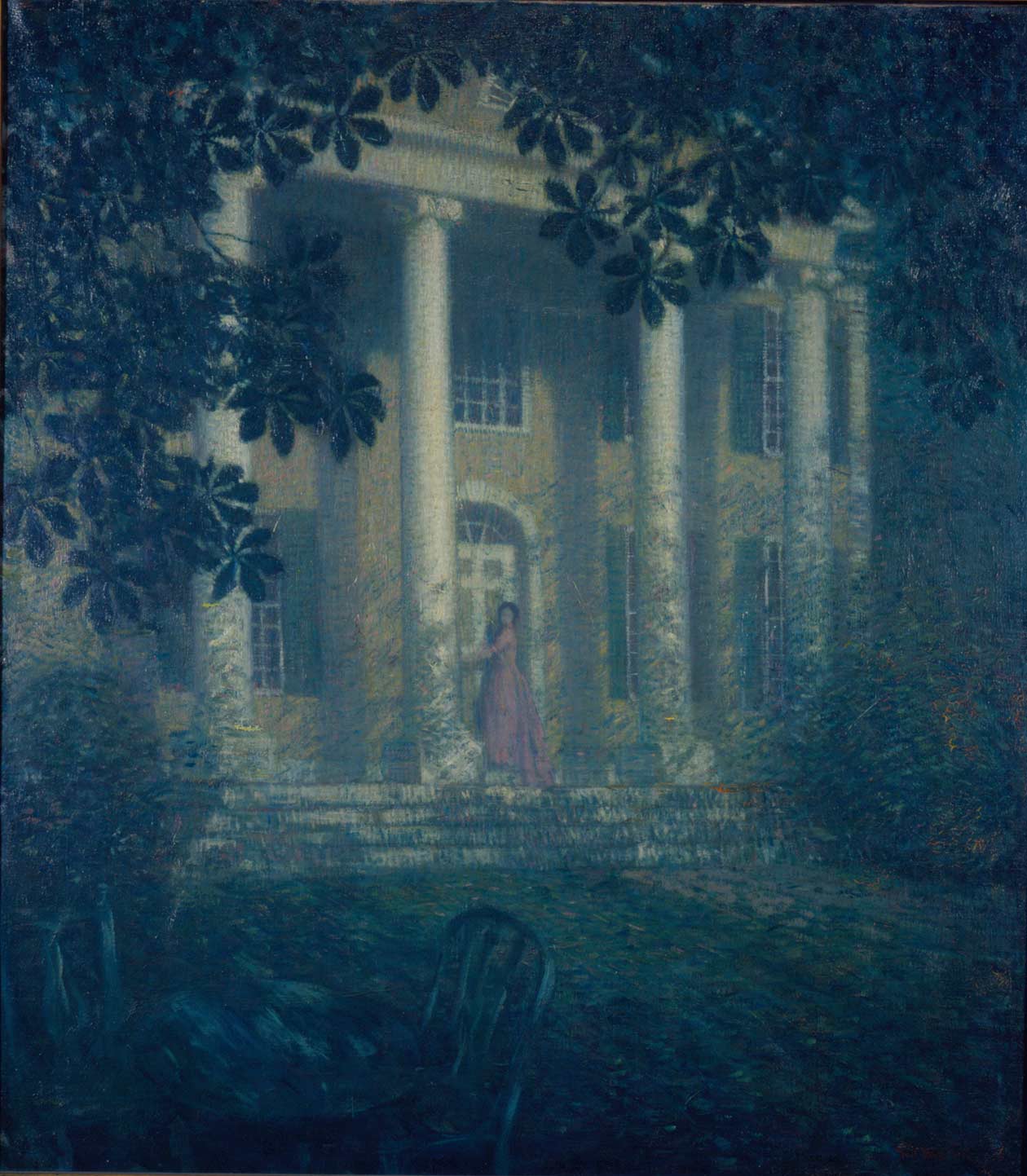
Will Howe Foote (1874–1965), A Summer's Night, c. 1906. Oil on canvas, 34 in. x 30 in. Florence Griswold Museum, Gift of the artist
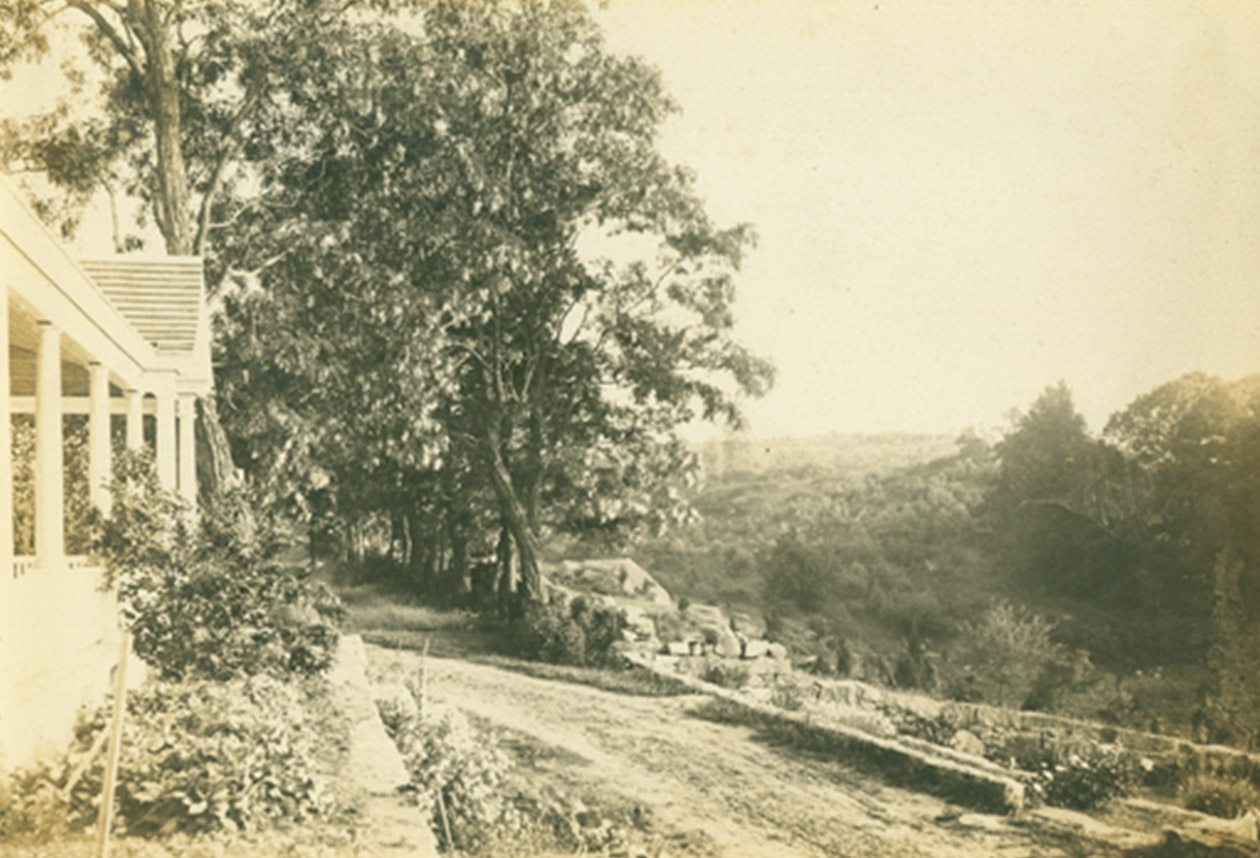
The view from Will Howe Foote’s house in Old Lyme, CT
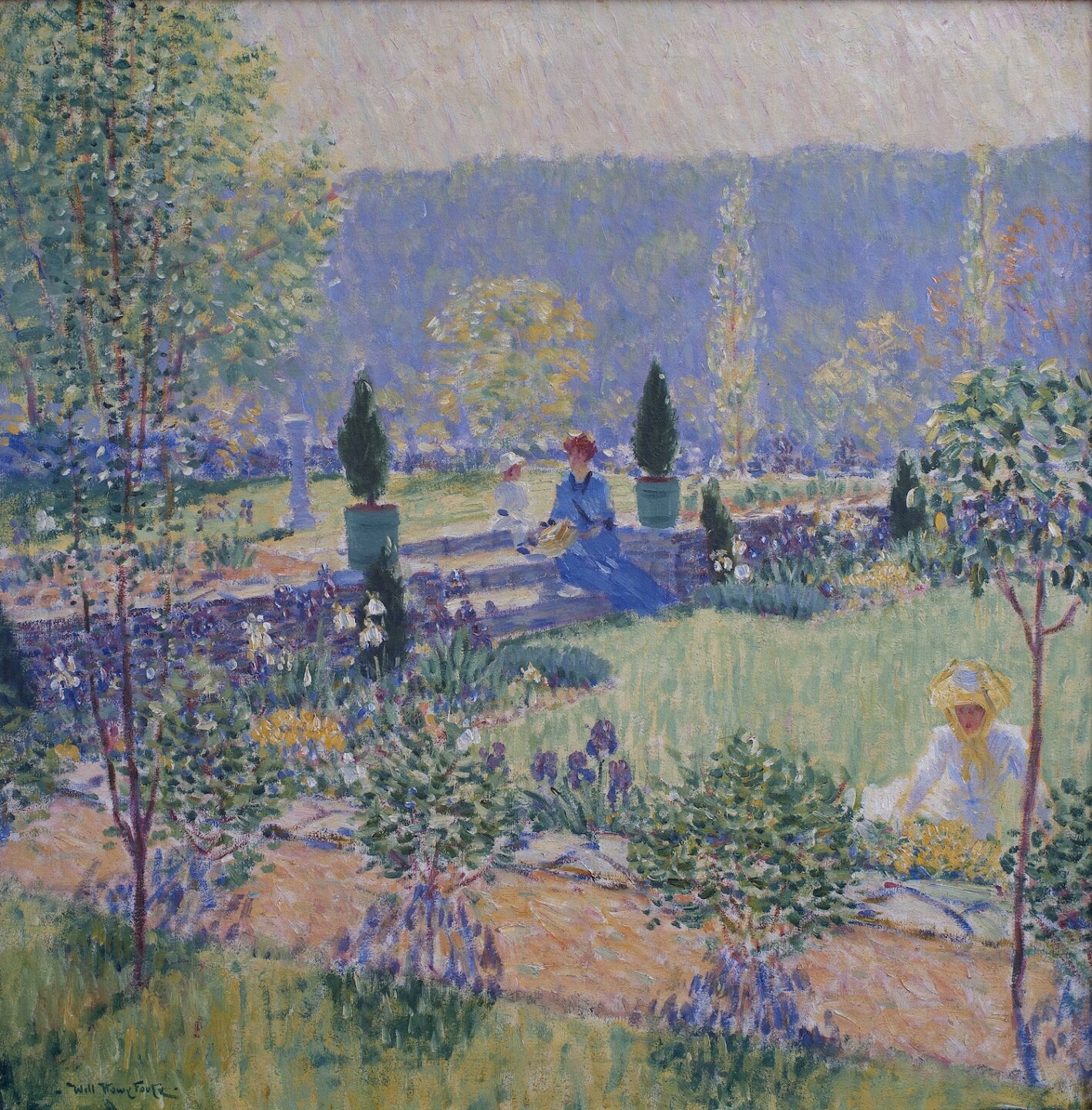
Will Howe Foote (1874–1965), Summer, c. 1913, c. 1913. Oil on canvas, 30 in. x 30 in. Florence Griswold Museum, Gift of Mr. & Mrs. Robert H. Krieble
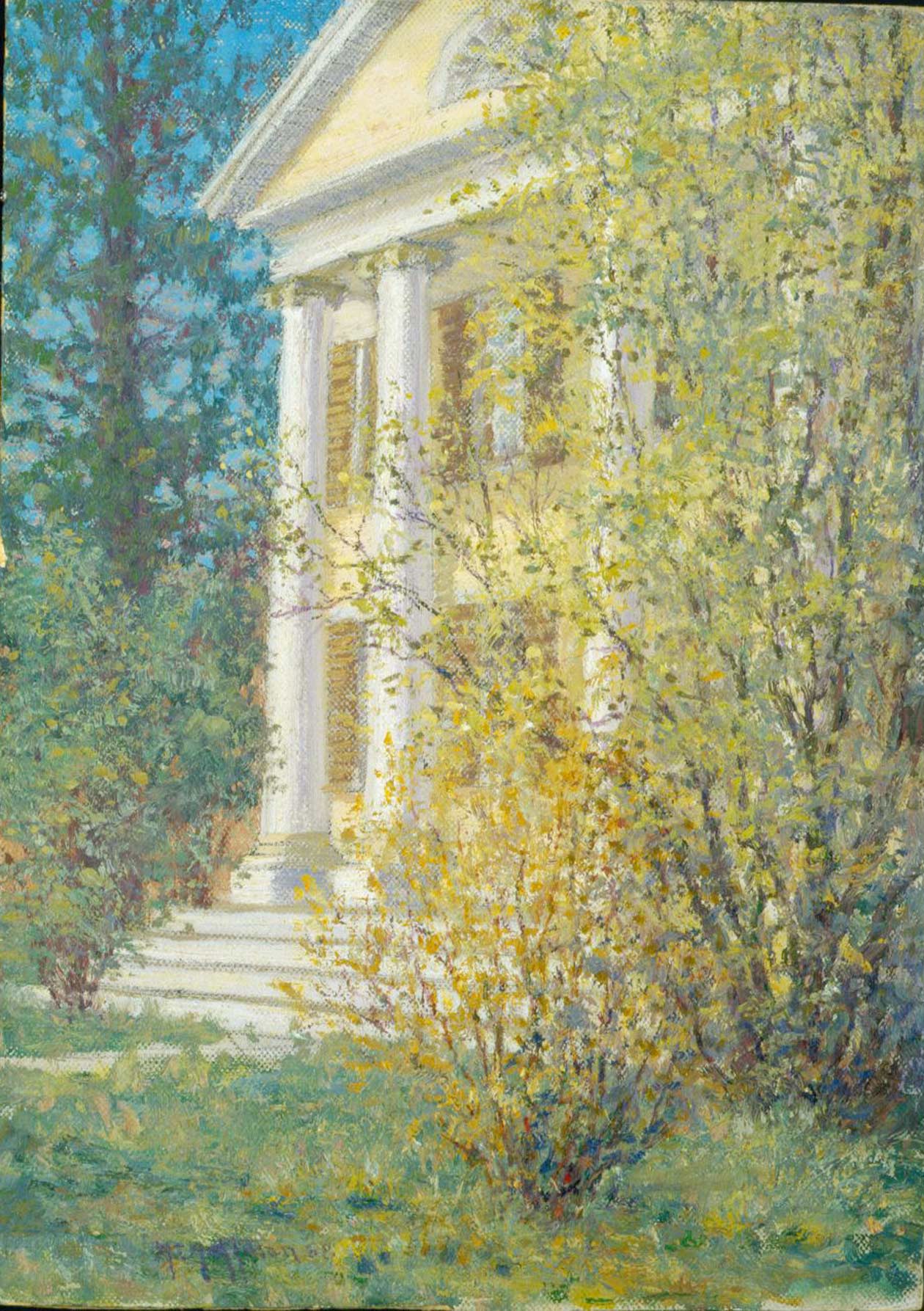
Harry Leslie Hoffman (1871–1964), View of the Griswold House, 1908. Oil on pressed board, 16 in. x 12 in. Florence Griswold Museum, Gift of the Family of Mrs. Nancy B. Krieble
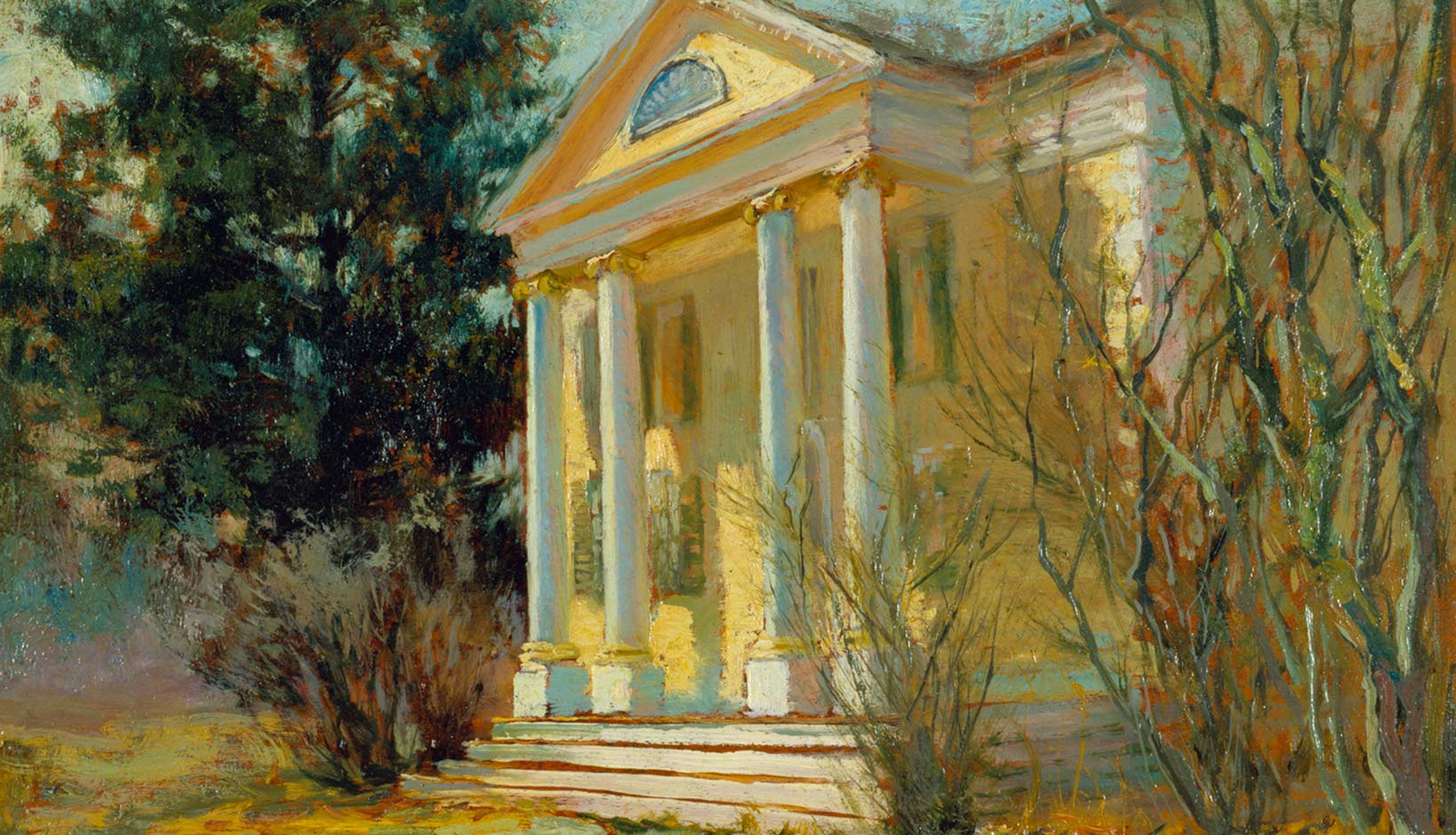
Matilda Browne (1869–1947), Miss Florence's, n.d. Oil on wood panel, 11 in. x 14 in. Florence Griswold Museum, Purchase
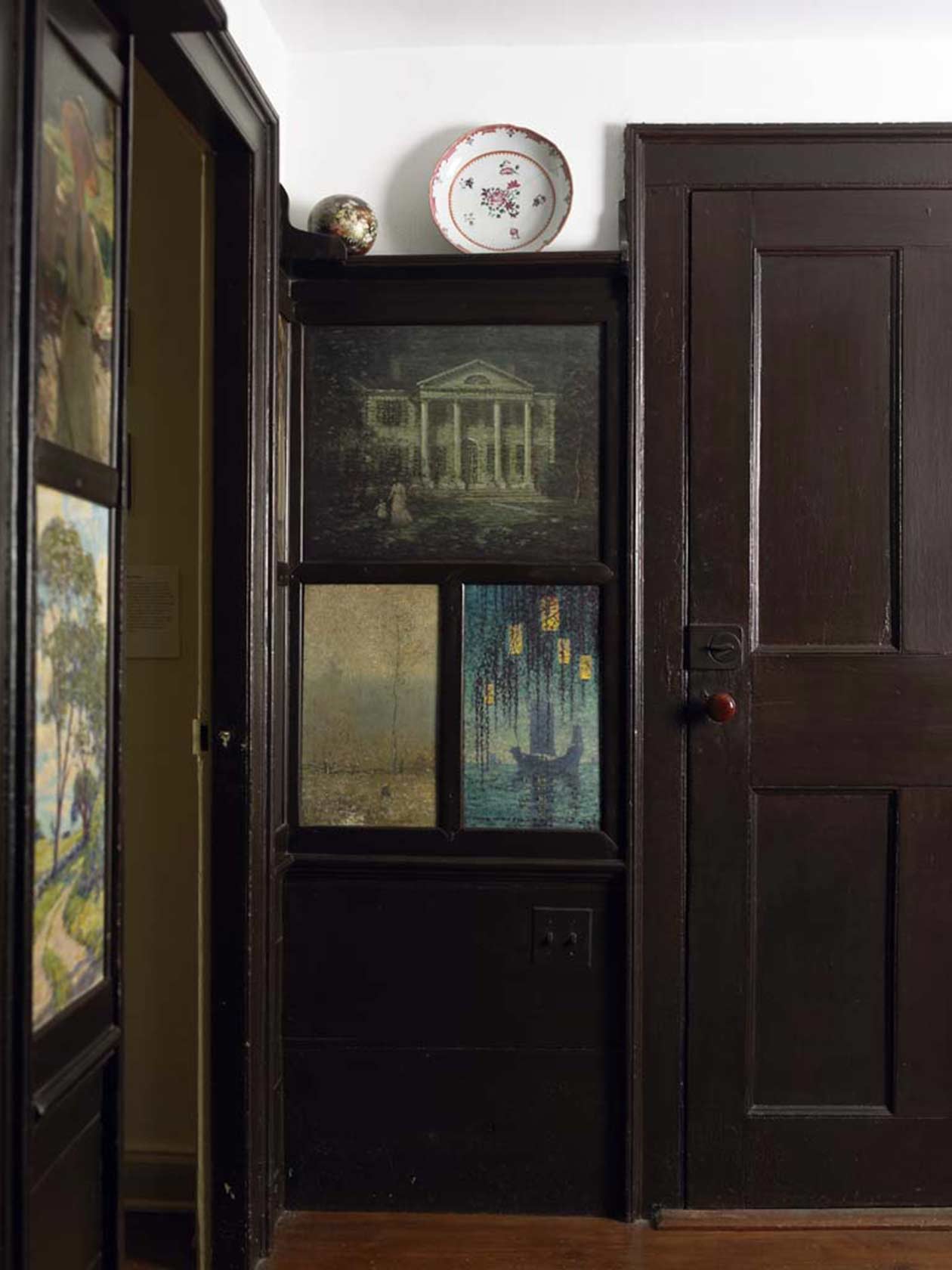
Southeast corner of the Florence Griswold House dining room
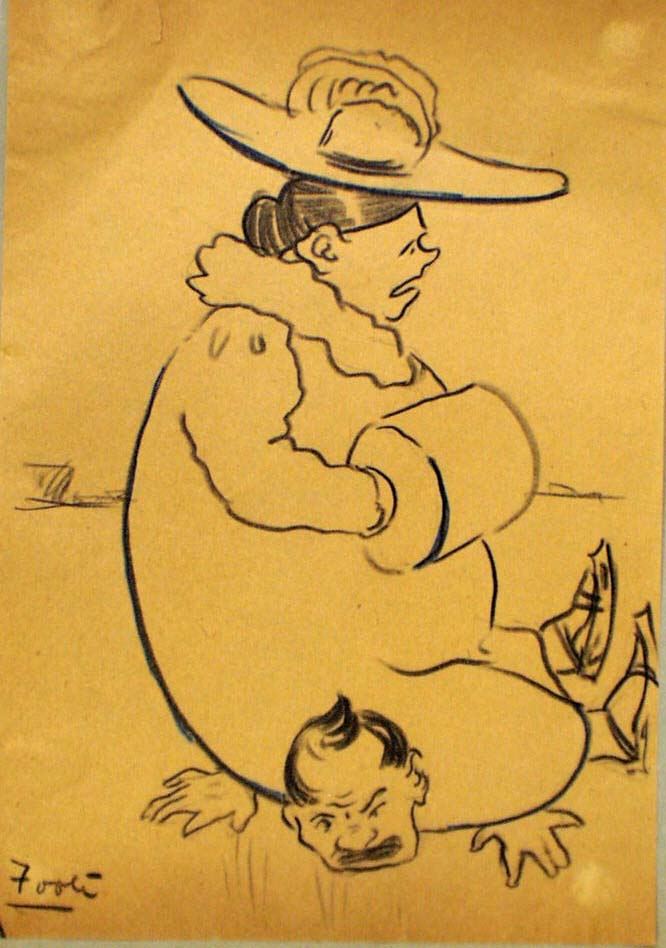
Will Howe Foote (1874–1965), Wiggle Drawing, n.d. Graphite on paper, 9 15/16 in. x 6 7/8 in. Florence Griswold Museum