
William Henry Howe
(1846 – 1929)
HENRY RANKIN POORE (1859–1940)
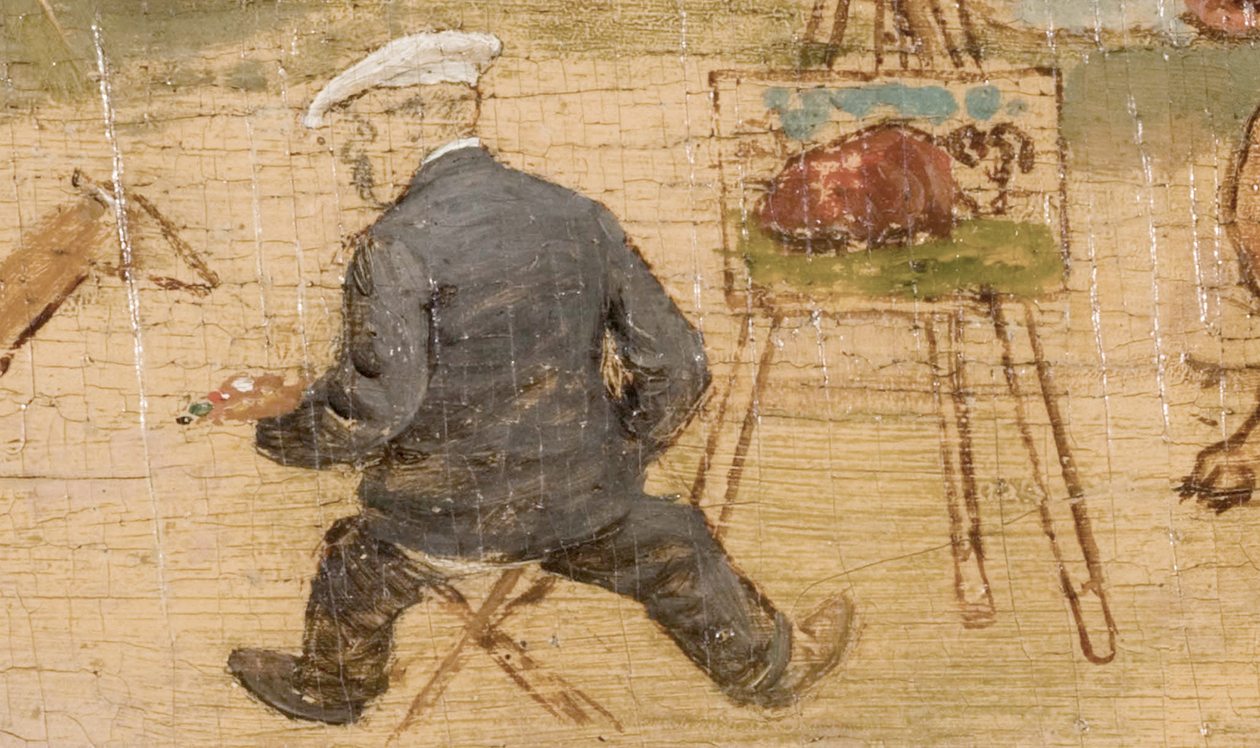
THE FOX CHASE (detail), 1901-1905; REVISED C. 1920
OIL ON WOOD PANEL
FLORENCE GRISWOLD MUSEUM
GIFT OF THE ARTIST
Born November 22, 1846, Ravenna, Ohio
Died March 16, 1929, Bronxville, New York
In Old Lyme, periodically, 1900-1920
The cow painter William Henry Howe is seated on his folding stool with his back to the viewer in The Fox Chase (detail above). He stops painting long enough to watch the race in pursuit. The fact that Howe’s friends referred to his paintings as “Howe’s Cows” sums up his main artistic focus. Howe trained as an animal painter in Paris beginning in 1881 and continued to paint cattle for the rest of his life. His interest in painting cows was perfectly suited to Henry Ward Ranger’s invitation to join him in the country to stay at the Griswold boardinghouse. He and his wife boarded with Miss Florence that first summer and many summers thereafter. Being one of the first artists to board with Miss Florence, he was able to paint on one of the coveted doors in her parlor. Filling two panels of the door (as if seen through a window), he painted Normandy Bull (Monarch of the Farm) (1901, pictured in the gallery below), a regally reclining cow in a stable filled with golden light.
According to one observer: “In appearance, he dressed like a minister down to the black shoes which he wore even in the field, but there was always a five cent cigar underway.” He was called “Uncle” by most of the younger artists and eventually encouraged his nephew Will Howe Foote, also an artist, to join him at the Lyme Art Colony. They both had studios in one of the barns across the road from the boardinghouse. Because of his age and great knowledge of animals, he was given the task of carving the meat at the dining room table. One evening, the younger artists hid a ring that Howe had lost at the beach inside a fish knowing he would find it while carving.
He was stunned when he heard the metallic clink of the ring against his knife. After a few moments of thinking this was the same fish that had swallowed his ring he became wise to the prank. Despite his love for painting animals, Howe chose to paint boats on the door leading from the dining room. “Howe painted his cows, bulls and oxen in their natural habitat and after some close calls with these unwilling models, he always saw to it that his easel was behind a stone fence.” — Salmagundi Club Papers, 1945
During the early years of the art colony, Howe’s paintings sold well and his work was accepted into the collections of several museums. He participated yearly in the end of the season exhibitions held at the library or later in the galleries of the Lyme Art Association and his paintings of cattle always received great praise. One reviewer wrote, “but his cows are not cows. They are Herculean animals with massive legs and corn-fattened bodies . . . and no one would ever think of calling one of them ‘bossie’.”
According to his biographer at the famed Salmagundi Club in New York, “His paintings were honest transcripts from nature, faithfully cooked up from many studies and sketches from objective observations, however he knew his cattle so well that France decorated him with the [Cross of the] Legion of Honor.” Nevertheless, as the 20th century pressed on, he sold less and less. In a letter to Florence Griswold in 1918 he laments, “I am blue as indigo. Have done nothing in the way of sales this winter and have no prospects.”
Howe was not merely one of the artists to appear in The Fox Chase, but also somewhat of an uninvited collaborator. After Howe’s dog Weeksie (also on the panel) died, Howe asked Poore to paint a rock over him, claiming the image of the dog made him too sad to eat. He also scratched out the face of fellow artist George H. Bogert with a penknife after learning he allegedly did not pay his board bill. Fortunately for Bogert, the original artist Henry Rankin Poore painted his face back in years later.
William Henry Howe decorated a door in the Griswold House parlor in the summer of 1901 with a Normandy bull lying in a stable (below).
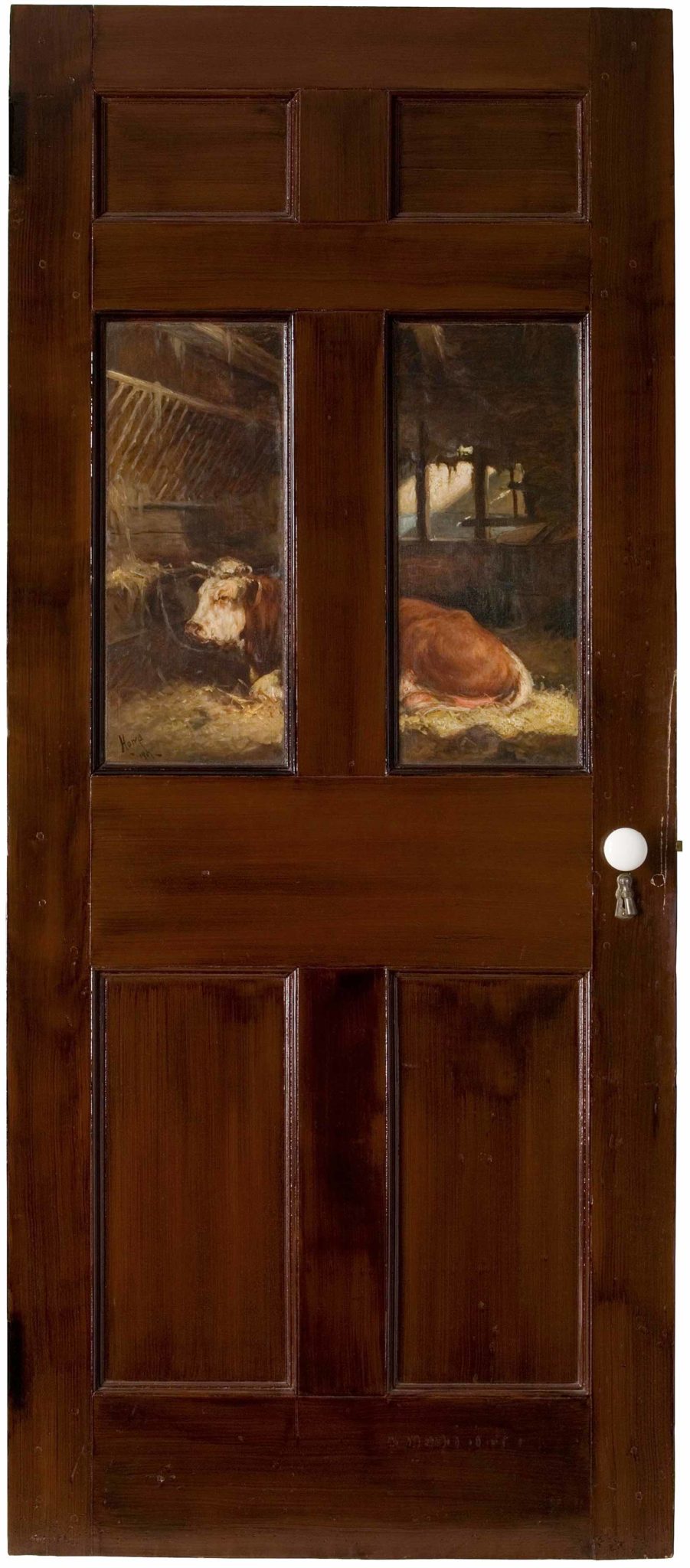
WILLIAM HENRY HOWE (1846–1929), "NORMANDY BULL (MONARCH OF THE FARM)," 1901. OIL ON WOOD PANEL, 25 IN. X 21 IN. FLORENCE GRISWOLD MUSEUM, GIFT OF THE ARTIST
Howe was so famous a painter of cattle that the other artists must have known he would portray a cow or bull, even though such an image was inappropriate for a formal living room. They may have been surprised, however, that he reproduced a painting he had shown ten years earlier at the Paris Salon. Monarch of the Farm had been so popular a work there that Howe must have liked the notion of painting it again in Old Lyme.
Howe’s panel “opens” the parlor to a stable with an opening of its own in the far end, which carries a viewer’s eye even deeper into space. The illusion of depth is furthered by the horizontal lines that delineate a wall of the stable in the manner of linear perspective, the traditional device of artists from the time of the Renaissance to give a sense of depth to a flat surface. We see the “monarch” in one of his peaceful moments, but the realistically detailed modeling of his form speaks of a powerful creature that one would never want to rile. We are glad to have a door between us, in case his mood changes. Howe himself made sure that he always painted a bull from behind a barrier like a stone wall. Since he finished his pictures in the studio, he could add any setting he liked. Notice his nice touch of having a shaft of light slant downward toward the bull’s white head.
After painting the majestic bull on a door in Florence Griswold’s parlor in 1901, Howe moved to the back of the house and at some point painted the door leading into the dining room. Perhaps because Matilda Browne had already portrayed two calves on a door nearby, Howe chose a scene like those he had witnessed in the 1880s in the Dutch village of Scheveningen on the North Sea (above), where the fishing fleet employed unusual flat-bottomed boats known as bomschuiten, which were dragged onto the beach to dock.
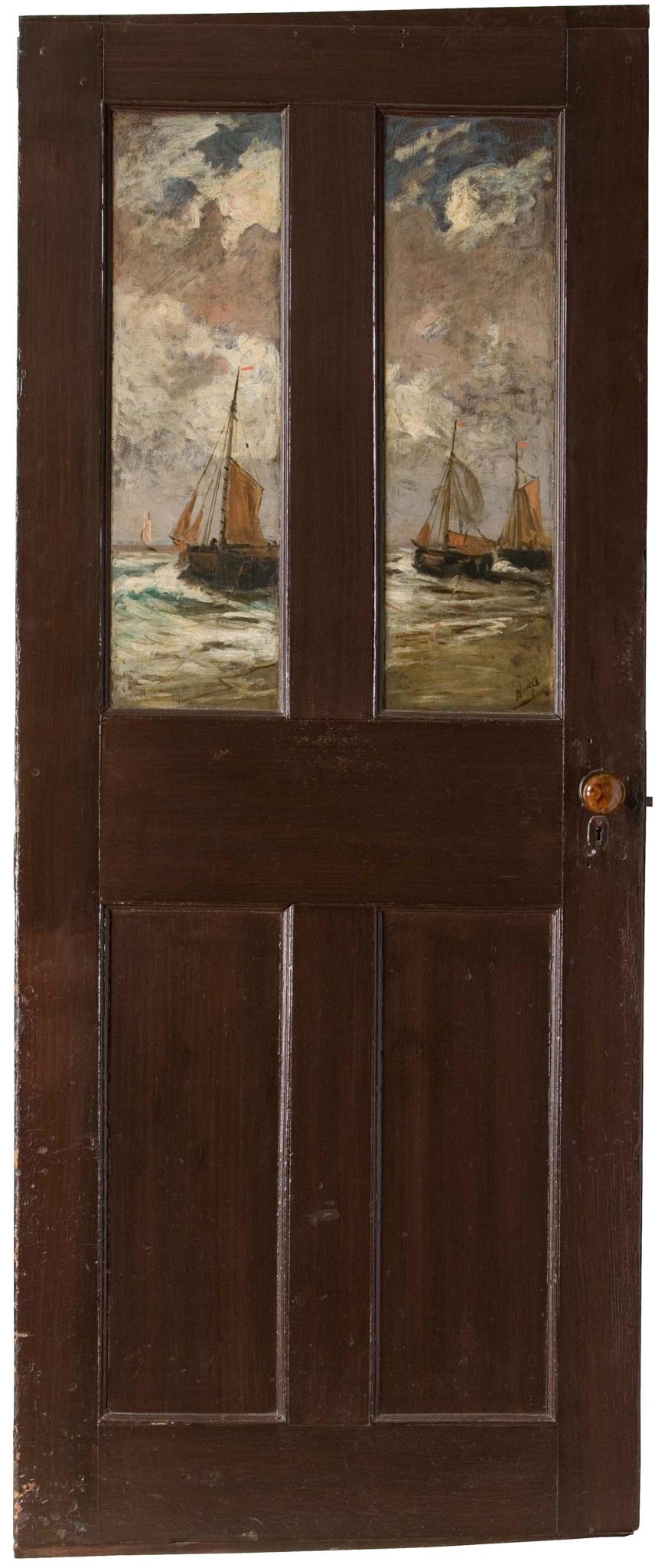
WILLIAM HENRY HOWE (1846–1929), "DUTCH FISHING BOATS OFF SHORE." OIL ON WOOD DOOR PANELS. FLORENCE GRISWOLD MUSEUM, GIFT OF THE ARTIST
Artists had been painting this picturesque village and its charming fishing boats for centuries. When this door is closed, the entire dining room is encircled in painted panels.
Howe transformed the flat panels of the door into a window that takes one out to open sea where boats are following one another in a kind of formation. Their sails are in various states, but the three vessels all seem intent on the same destination. With so much foam on the water and heavy dark clouds overhead, they could be heading to shore to escape a coming storm – note how the wind tears at the orange flags atop each mast. A tonalist painter, Howe has employed a limited palette of grays and browns, sharpened with patches of white from bottom to top, to create a scene with a dramatic flair. Tonalist landscapes usually have an air of melancholy or they inspire meditation, but this tonalist seascape, with its turbulent big sky and a sense of movement, has a more invigorating effect.
Howe’s marine scene adds a special flair to the art that adorns the dining room and demonstrates the versatility of this famous painter of cows. Perhaps he knew that these boats were about to become history, for a series of bad storms had convinced both the fishermen and the many bathers who flocked to Scheveningen’s beaches to build a protective harbor. On its completion in 1904, the bomschuiten were almost instantly replaced by more modern ships.
The culture and climate of northern Europe captured the imagination of other Old Lyme artists as well. Henry Ward Ranger painted a coastal scene titled Dutch Harbor (c. 1890) and Henry Rankin Poore painted a canal scene inspired by a northern European city (both pictured in gallery below). Howe’s exhibition history and prize list is long and impressive, dating from the early 1880s to about 1920. He had studied at the Royal Academy in Düsseldorf, Germany, and with several important artists in Paris. He was elected to membership in the National Academy of Design in the 1890s and was named a Chevalier of the French Legion of Honor. In his early years, before “Howe’s Cows” had become famous, he had also found time to be a businessman, engaged in cabinetry and wood turning.
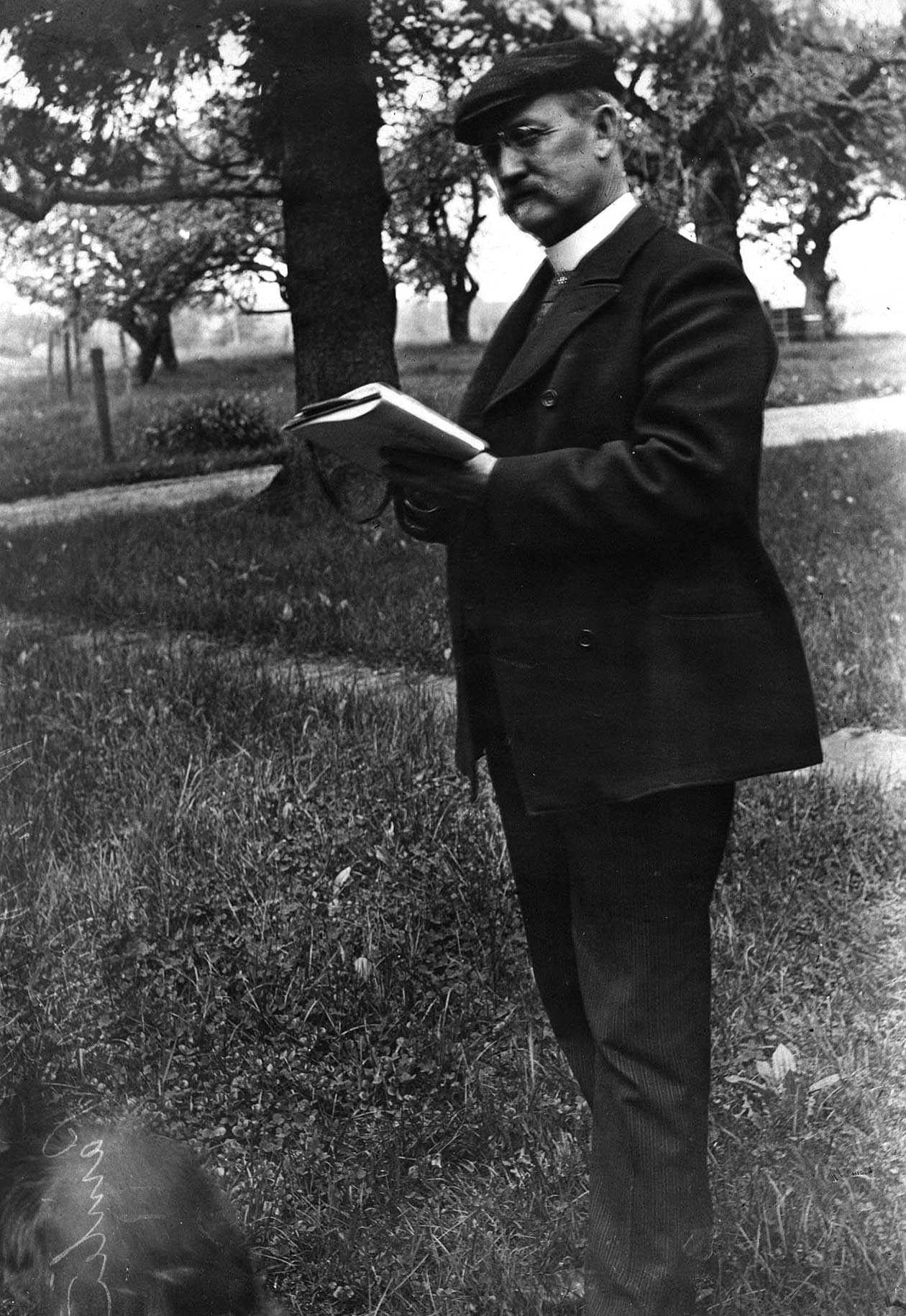
William Henry Howe sketching outdoors
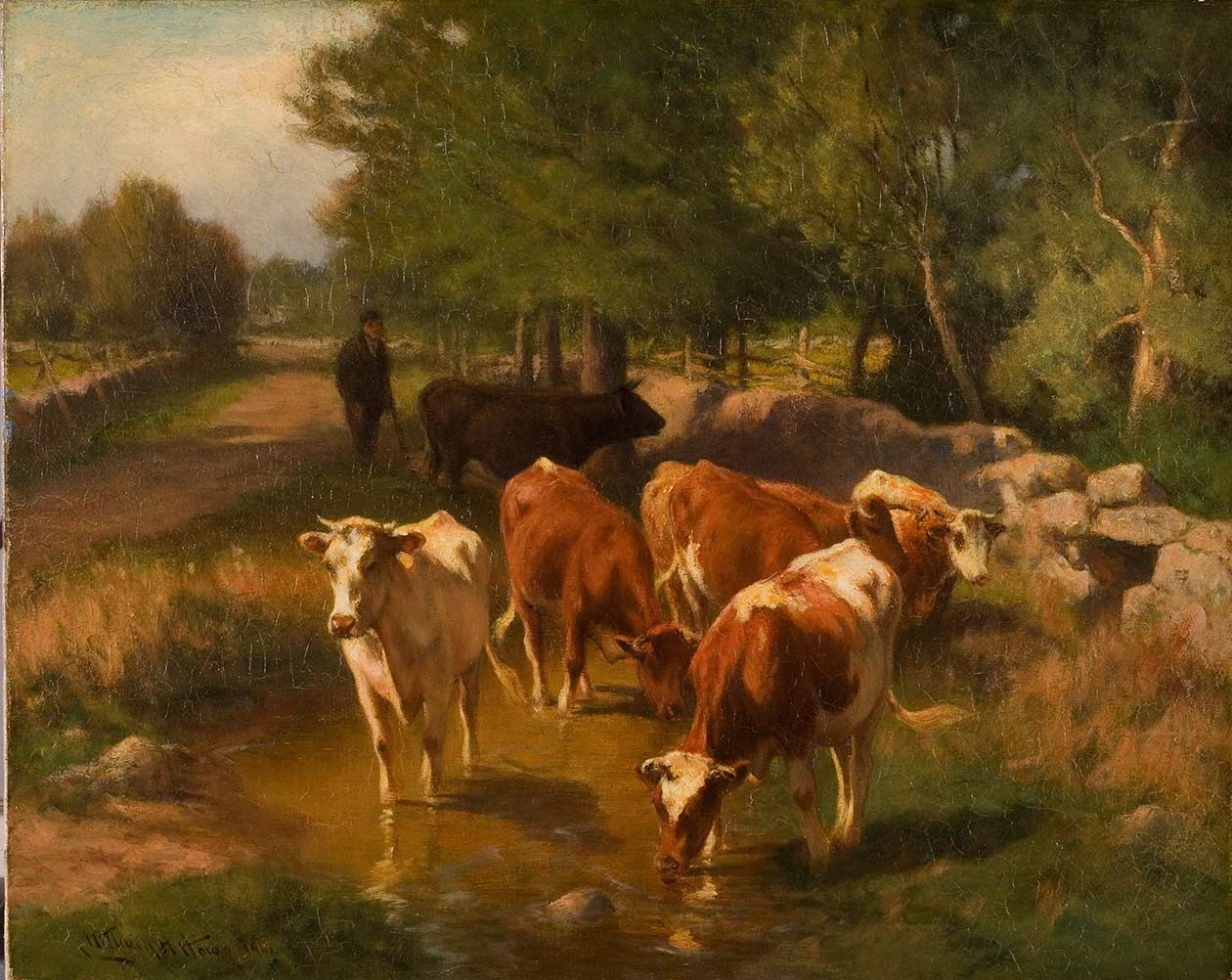
William Henry Howe (1846–1929), Untitled Pastoral Scene (detail), 1900. Oil on canvas, 16 in. x 20 in. Florence Griswold Museum
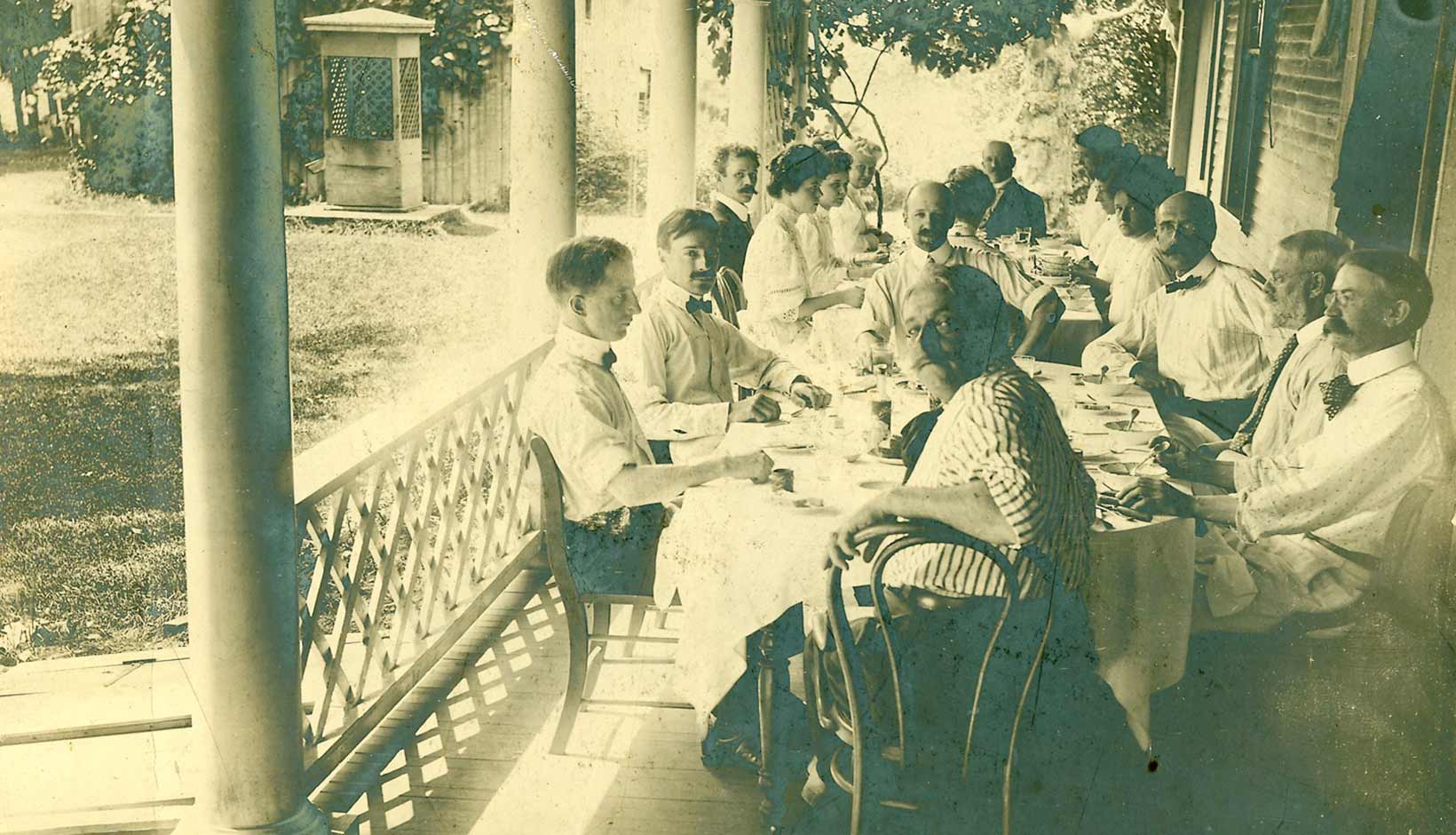
The artists of the "Hot Air Club" on the back porch of the Florence Griswold House
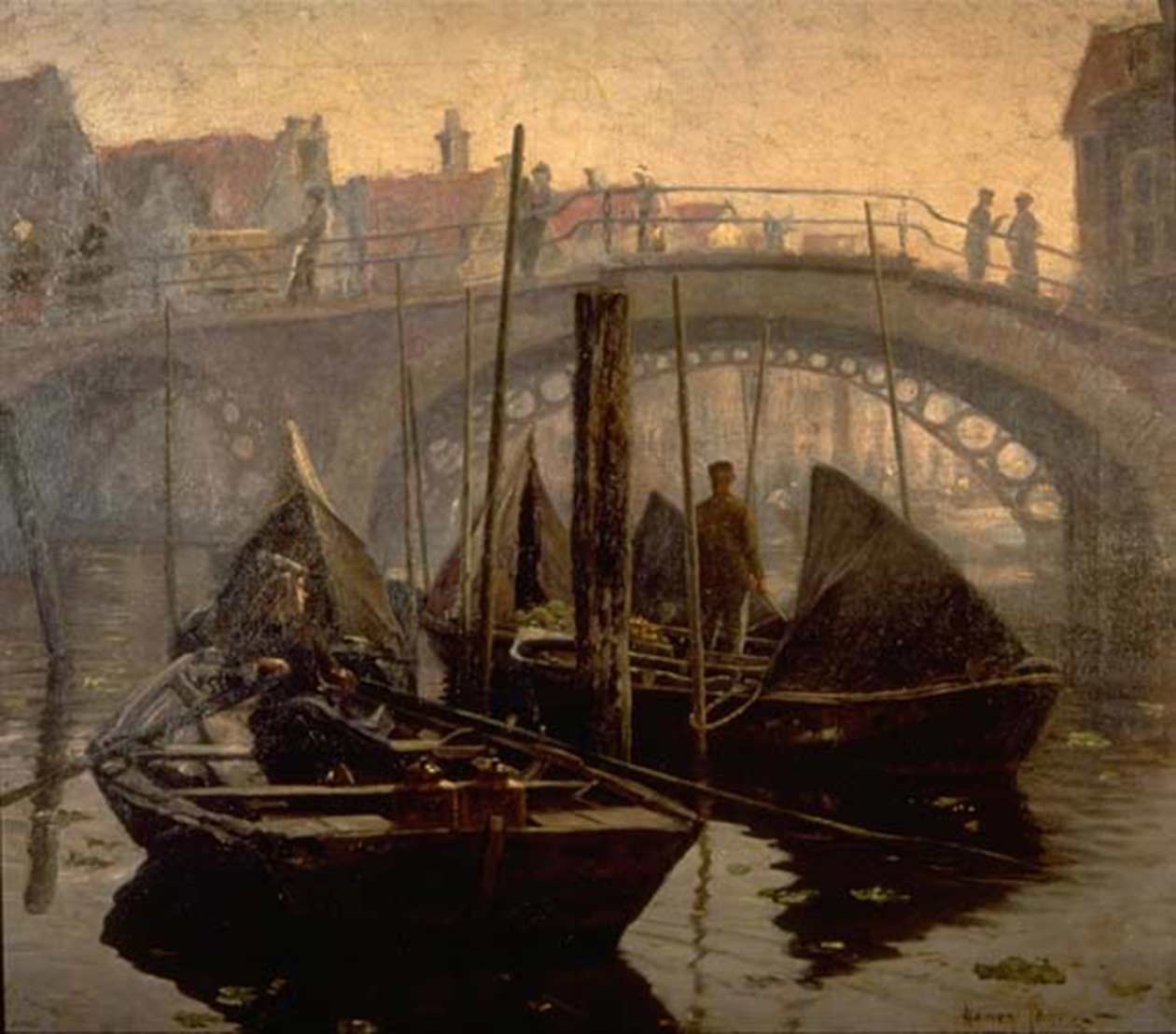
Henry Rankin Poore (1859–1940), Canal Scene, c. 1885. Oil on canvas, 23 1/2 in. x 26 in. Florence Griswold Museum, Gift of Dr. and Mrs. Gerald Freedman
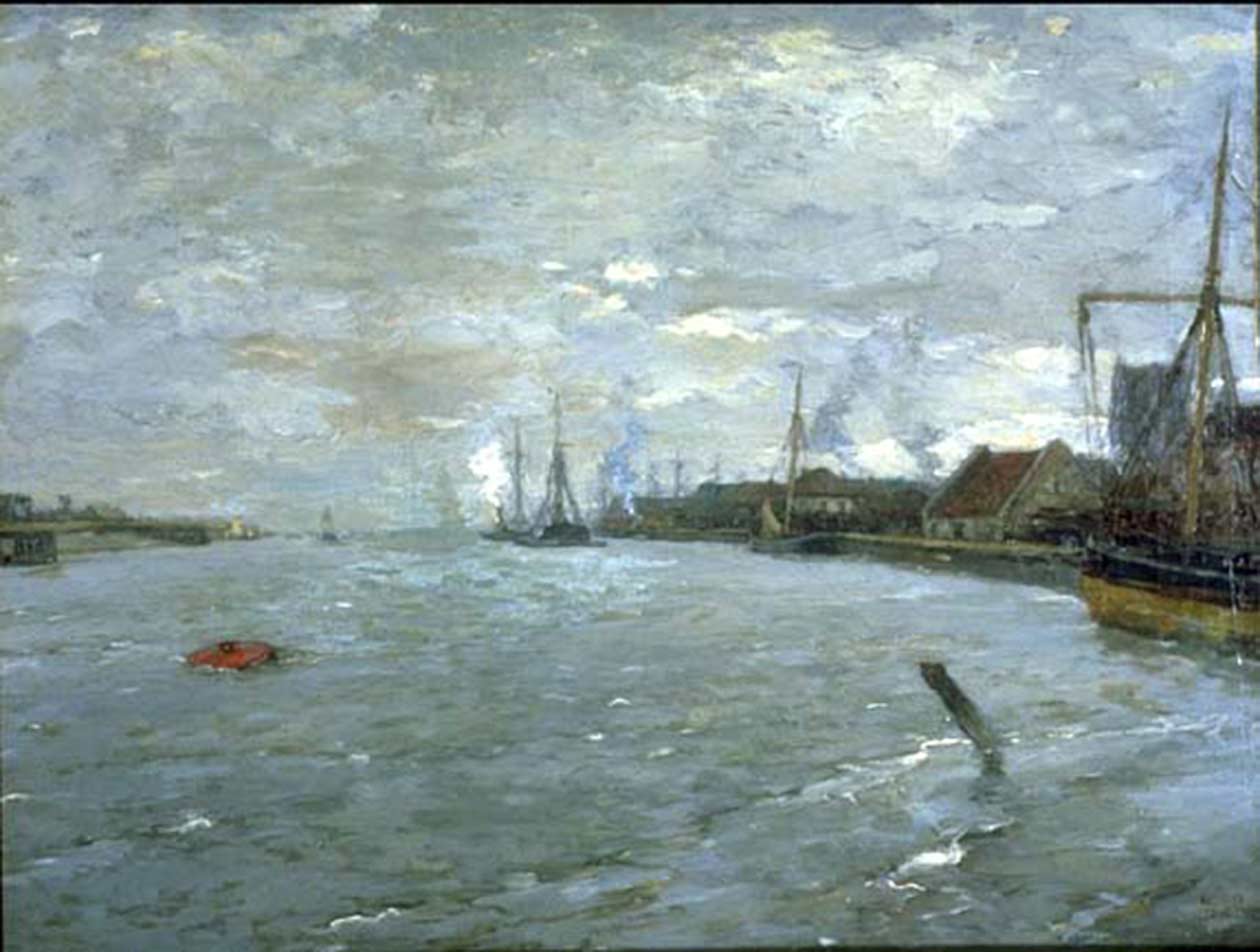
Henry Ward Ranger (1858–1916), Dutch Harbor, c. 1890, c. 1890. Oil on fabric (glue-lined), 24 in. x 31 in. Florence Griswold Museum, Purchase
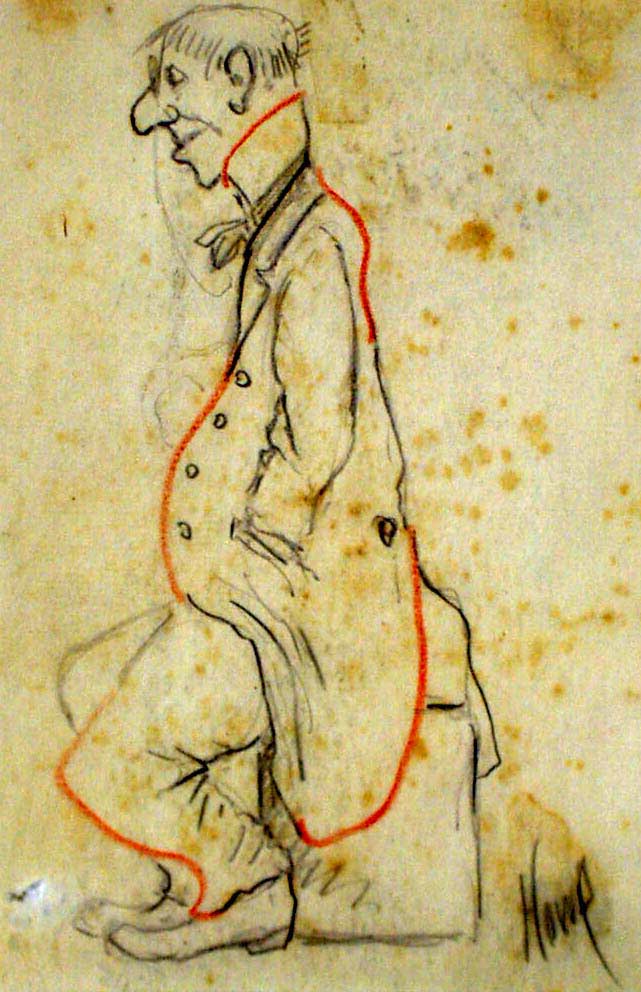
William Henry Howe (1846–1929), Wiggle Drawing, n.d. Graphite on paper, 4 15/16 in. x 7 13/16 in. Florence Griswold Museum, Gift of the artist
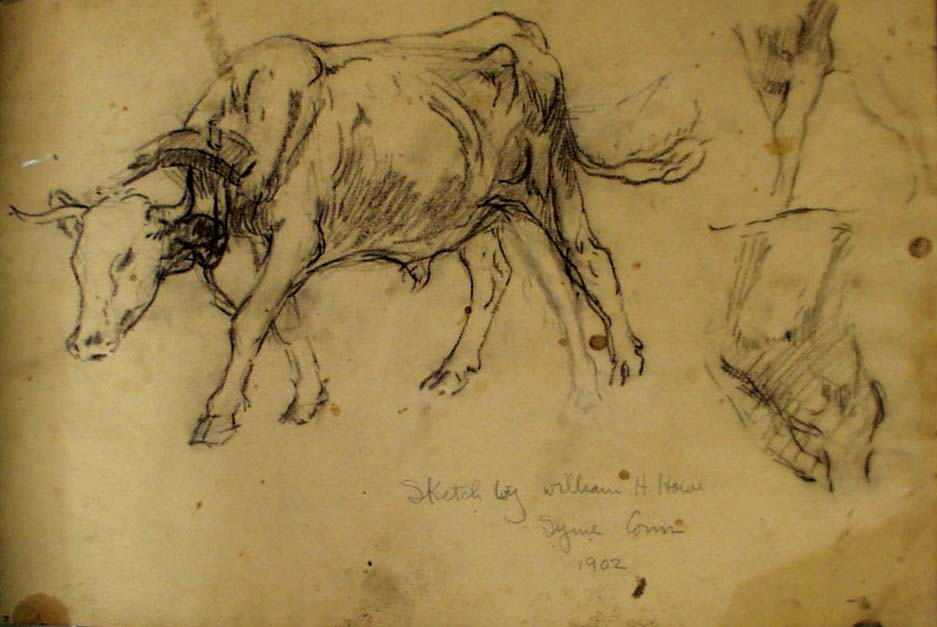
William Henry Howe (1846–1929), Cow Study, 1902. Graphite and black chalk on paper, 11 1/2 in. x 17 3/4 in. Florence Griswold Museum, Gift of Gifford Beal Jr. and William Beal