
William S. Robinson
(1861 – 1945)
HENRY RANKIN POORE (1859–1940)
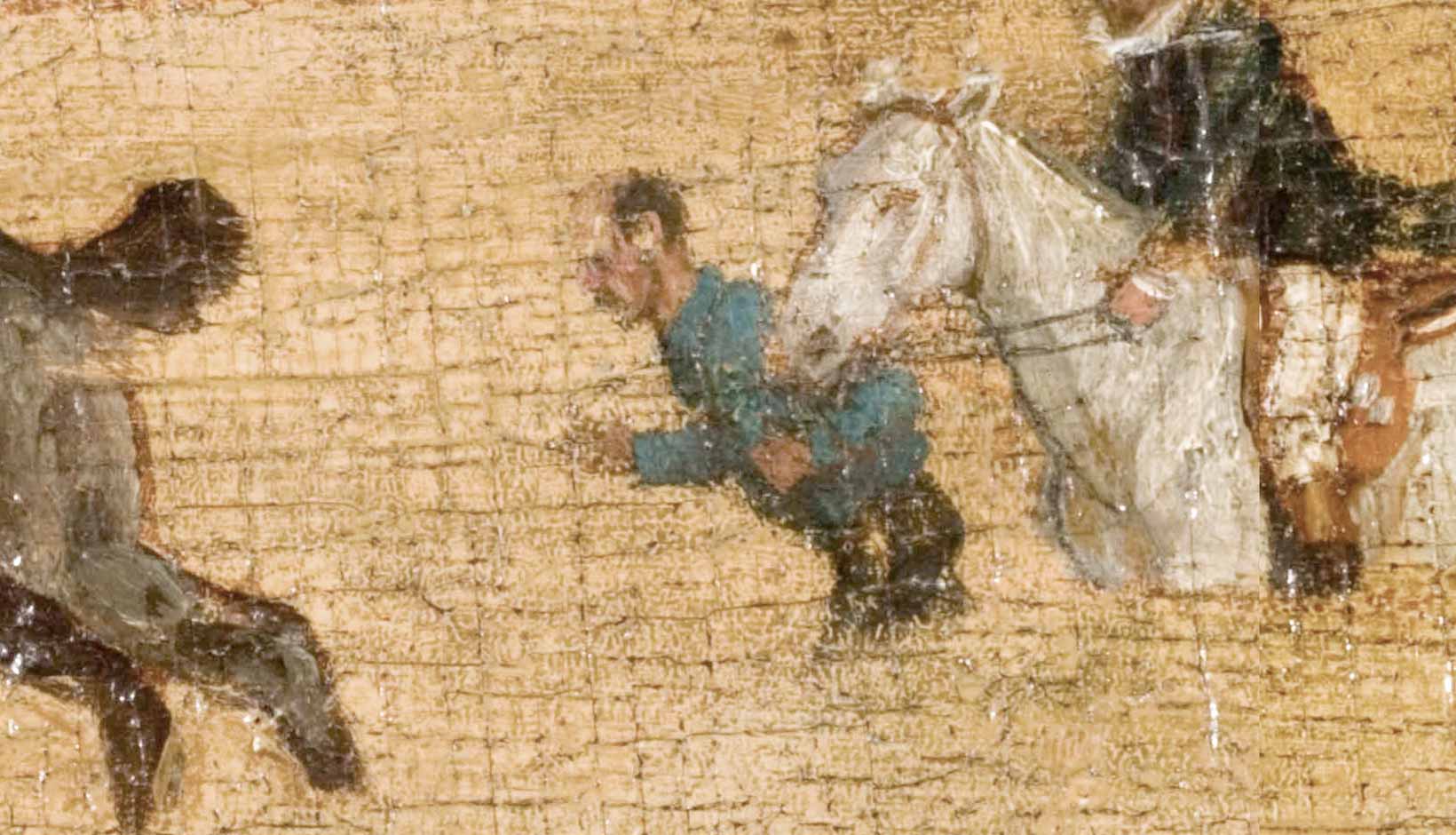
THE FOX CHASE (detail), 1901-1905; REVISED C. 1920
OIL ON WOOD PANEL
FLORENCE GRISWOLD MUSEUM
GIFT OF THE ARTIST
Born September 15, 1861, East Gloucester, Massachusetts
Died January 11, 1945, Biloxi, Mississippi
In Old Lyme, summer, c. 1905-20; permanently, c. 1921-37
Running in the background somewhat off by himself in The Fox Chase (above), the painter William Robinson appears determined and intrepid, Yankee characteristics that are true to his nature. Born in East Gloucester, north of Boston in Massachusetts, young William was the son of a fisherman whose early years were highlighted by meeting the famous artist Winslow Homer and famous writer Rudyard Kipling.
Robinson stayed in the boardinghouse off and on from 1905-1920, but moved in full time beginning in 1921 until Miss Florence died in 1937. He was one of the first members of the Lyme Art Association, and eventually was their president. Robinson had a long-term studio on the property very near the brook that ran between the boardinghouse and the Lyme Art Association.
His early art work focused on the sea, with paintings and drawings of boats. “William Robinson to us all was first and last a painter. He had few hobbies and did not seem to need any. He painted the beauty of the New England countryside, its harbors and vessels with devotion and knowledge accumulated through long years of study and acquaintance.” — Robinson’s biographer for the Salmagundi Club, Frederick Lester Sexton, 1945
Around 1890, he traveled to Paris to study at the Académie Julian. Upon his return to the United States, he began to exhibit his art and teach in both Philadelphia and New York. In 1905, Robinson traveled from New York to Old Lyme to stay at the boardinghouse of Florence Griswold. He worked in a studio near the brook that flows in the corner of the property. In 1921, Robinson moved into the boardinghouse and established a full-time studio on the grounds. During this same year, the new building for the Lyme Art Association, designed by Charles Platt, opened, and Robinson became a charter member—years later he was elected their president. Once sequestered in Old Lyme, his paintings revel in the surrounding landscape.
Robinson was one of the few people with Miss Florence when she died in the house in 1937. Shortly thereafter, the boardinghouse was shut down and all of her belongings sold in a public auction on the front lawn of the house. Robinson then moved to Biloxi, Mississippi, where he continued to create impressionistic landscapes. Instead of stoic New England homesteads and blossoming mountain laurel, however, he painted charming images of shrimp factories and southern shanties.
“His best pictures are not always of sailing vessels but more often of Connecticut hillsides and pasture lands, especially about Old Lyme where he lived for thirty-one years in the old Griswold House, working in a studio across the brook from the Lyme Art Association Gallery.” — Robinson’s biographer for the Salmagundi Club, Frederick Lester Sexton, 1945
In this late spring scene, Robinson’s contribution to Miss Florence’s dining room (below) the old white house, which is held in a kind of hug by the trees at its sides, seems a symbol of nurture, while the venerable oak in front speaks of strength, stability, and survival. If William Robinson’s fellow colonist Henry Rankin Poore is to be believed, this very house at some point became Old Lyme’s poorhouse, a refuge for local citizens who had no other place to live.
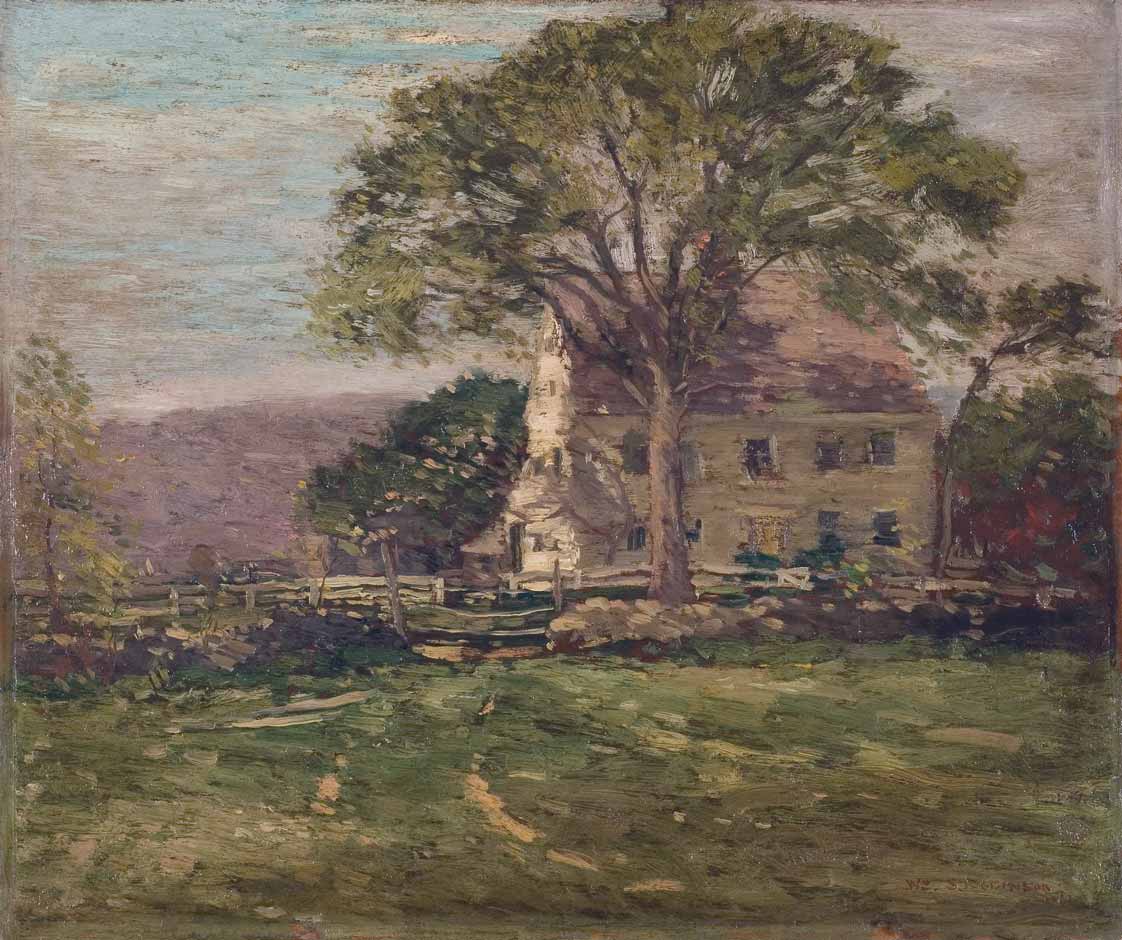
WILLIAM ROBINSON (1861–1945), "LANDSCAPE," 1905. OIL ON WOOD PANEL. FLORENCE GRISWOLD MUSEUM, GIFT OF THE ARTIST
If so, their shelter was in a home that had endured since the early years of the American republic. That in itself must have offered some hope that all might yet be well. Certainly the vibrant greens and lively brushwork in this painting suggest that this New England house and its surrounding countryside are going to be around for many more years.
Robert Thorson – an expert on New England stone walls – bases this observation on its condition and on the barway, the opening that would at one time have separated two active elements on a farm, such as fields. After the house was built, the owner installed a wooden fence, more effective a barrier than a crumbling stonewall. Fences along stonewalls were once a fairly common sight, but the fences have since deteriorated.
Robinson found his own comfort in Florence Griswold’s home. He summered there regularly for 15 years, then moved in year-round for 16 more, leaving only after his hostess died in 1937. When he first came to Old Lyme in 1902, perhaps at the invitation of Henry Ward Ranger, he had been a Tonalist painter, but when he returned in 1905, he found Ranger gone and the artists at the Griswold House excited about the Impressionism that Childe Hassam was promoting. Departing from the French Barbizon-inspired landscapes and Dutch fisherfolk scenes he was known for, Robinson enthusiastically embraced aspects of Impressionism at Old Lyme as he began to paint the surrounding New England landscape.
Although he included a cottage or two in paintings he had done earlier in Giverny, France, William Robinson’s decision to portray an old house for his dining room panel is surprising, for he was essentially a pure landscape and marine painter. Like many of the Old Lyme colonists, Robinson was a well-known and well respected artist when he arrived. He had won honors at national and international exhibitions and would soon garner more. In Old Lyme he found subject matter that interested him for the rest of his life.
He loved the local meadows, especially as they appeared in the autumn, and he never tired of painting the wild mountain laurel that bloomed profusely every June. Clearly, Robinson also noticed the time-honored qualities of the Colonial houses that were all around in Old Lyme.
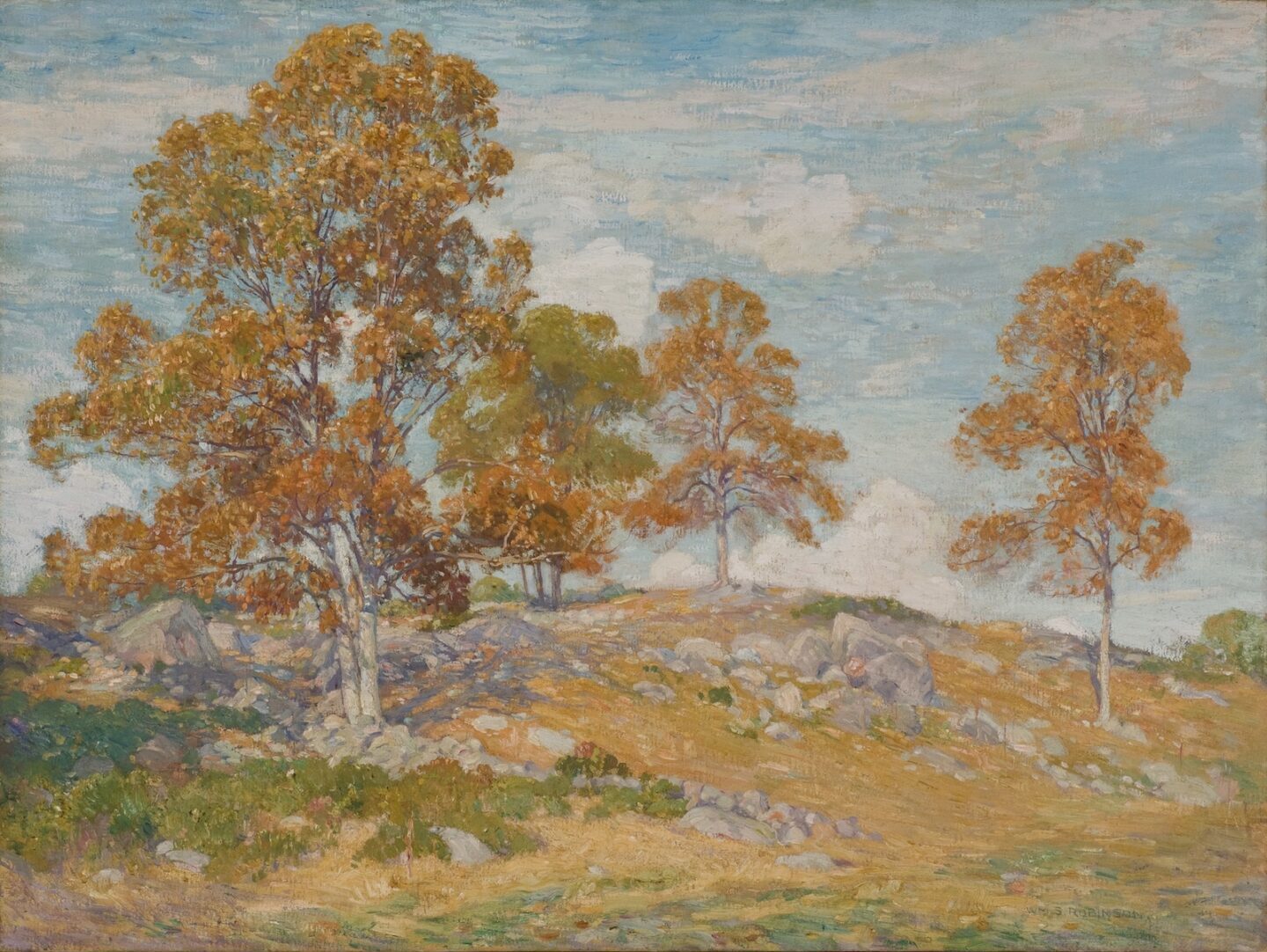
William S. Robinson (1861–1945), Autumn Landscape, n.d. Oil on canvas, 30 in. x 40 in. Florence Griswold Museum
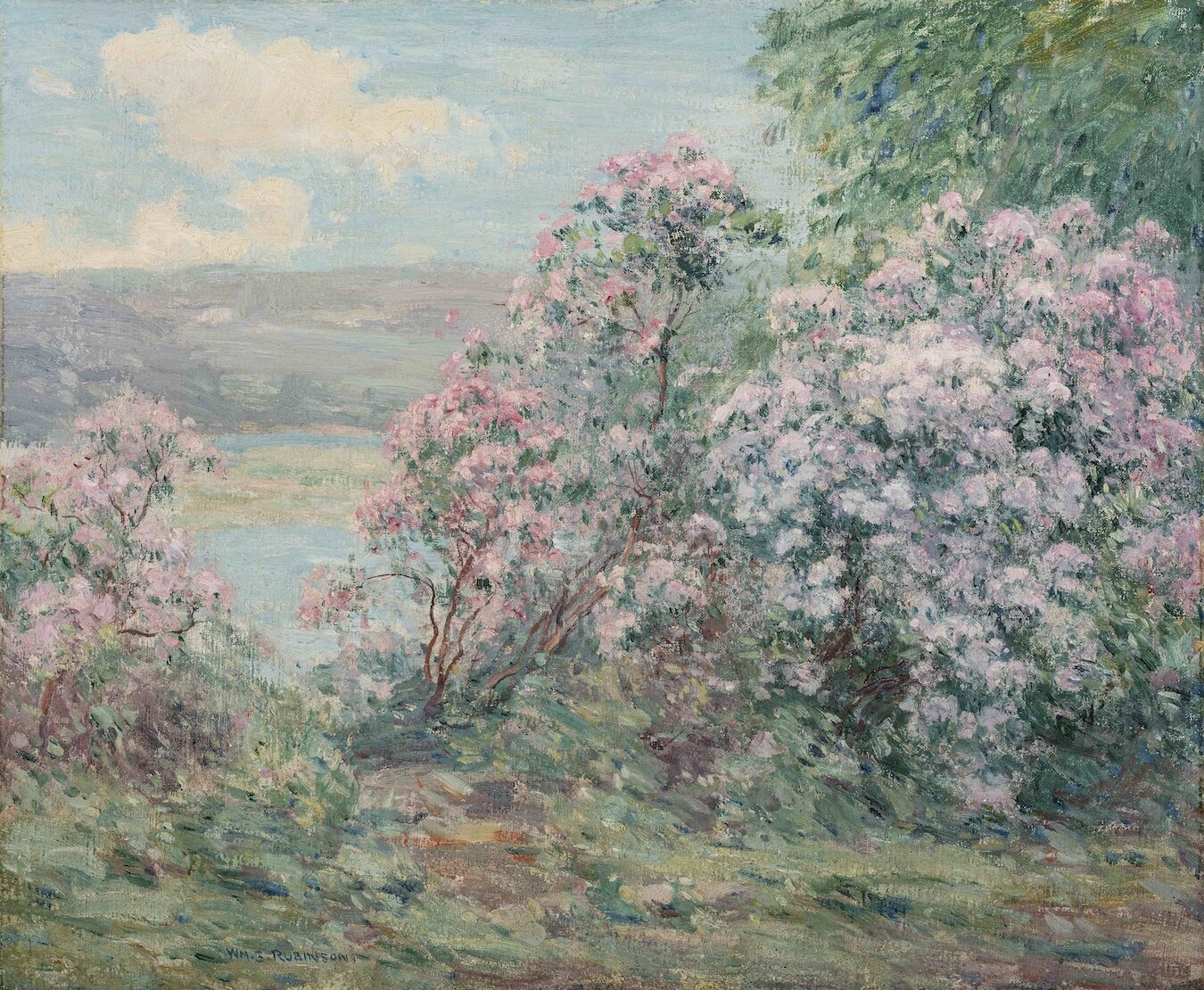
William S. Robinson, Laurel, c. 1921. Oil on canvas, 20 in. x 24 in. Florence Griswold Museum, Purchase
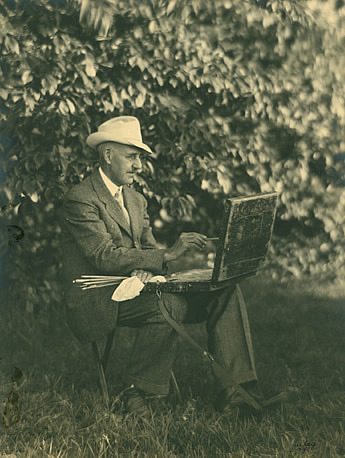
William Robinson painting en plein air
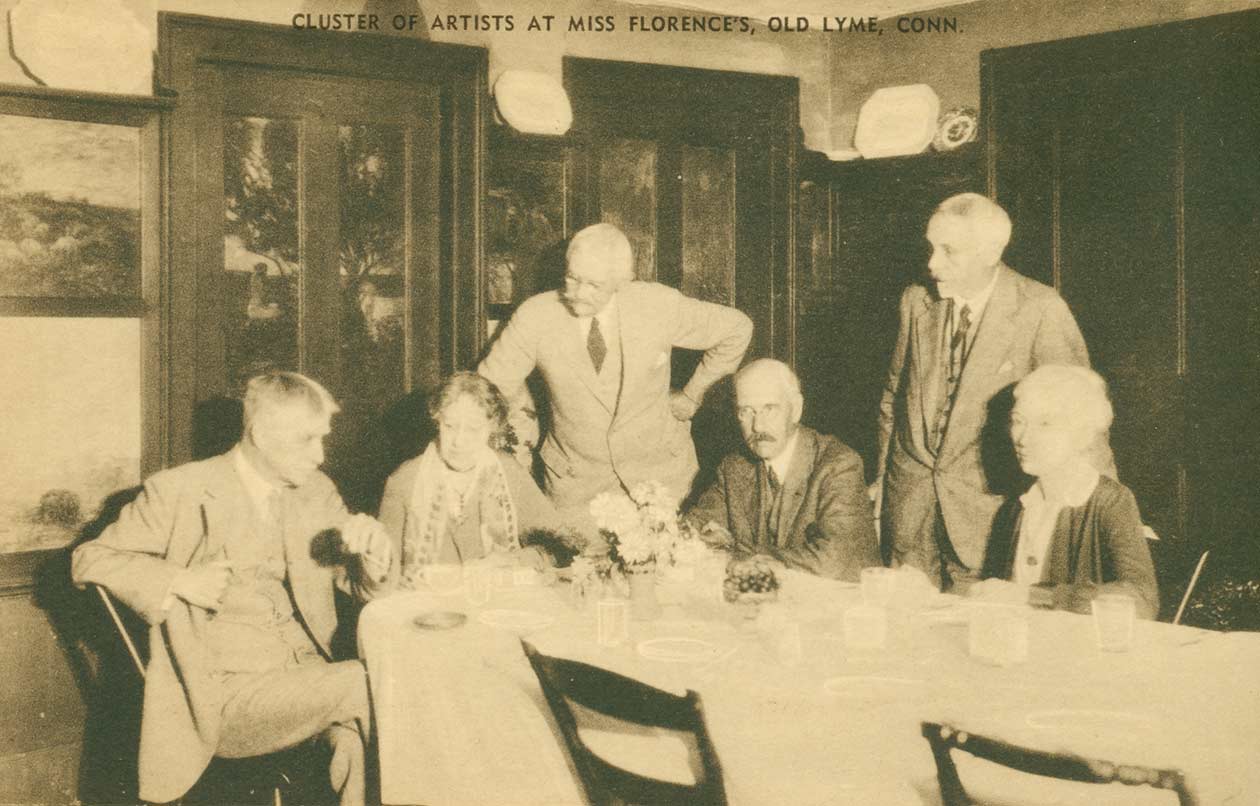
Miss Florence with artists in dining room, c. 1920-25. From left to right: Bruce Crane, Florence Griswold, Henry Rankin Poore, William Robinson, Ernest Albert, and Lydia Longacre.