Hartford Steam Boiler Collection
The paintings and sculptures in this exhibition are by artists who lived and worked in Connecticut from the late Colonial period to the early 20th century.
Connecticut has a distinguished artistic heritage, attributable in part to its location between the great cultural centers of Boston and especially New York. In many ways, its art has paralleled the course of American art, but artists have also responded specifically to Connecticut’s spirit of independence, its Yankee heritage, and the character of its landscape. Their visions have helped shape an identity of New England that lingers in the American mind.
Portraits came first in early America, but those in Connecticut were plainer than most, because sitters insisted. Landscapists bypassed Connecticut so long as romantic, grandiose views were the norm but came eagerly when rapid industrialization evoked sweet memories of America’s agricultural past. At the end of the 19th century, the sunny art of American Impressionism was pioneered in Connecticut. Artists came by the score to form art colonies, which flourished for nearly three decades. This exhibition takes Connecticut’s art history only that far, but artists in the state moved on to Modernism, Social Realism, and other newer modes.
The paintings on view are a gift to the Florence Griswold Museum from The Hartford Steam Boiler Inspection and Insurance Company. Over the course of two decades, this leading equipment breakdown insurer assembled 190 premier works of art by artists with Connecticut connections. In a magnificent act of corporate philanthropy, the company recently presented the collection to the Florence Griswold Museum – and thus to Connecticut and the nation. Less than half the collection can be exhibited now, but the entire collection of paintings, sculptures, and works on paper will inspire further exploration into the role of the American artist in Connecticut.
The Hartford Steam Boiler Inspection and Insurance Company is a global provider of specialty insurance products, inspection services and engineering consulting.
Its roots as a Connecticut corporation date to the 1850s when a group of Hartford engineers expressed concern at the disastrous consequences of steam boiler explosions, a frequent occurrence of that day. In the wake of the 1865 explosion of the Mississippi River steamer Sultana, the worst boiler explosion in American history with a loss of 1,238 lives, they formed a company that would both inspect and insure steam boilers. Founded in 1866, Hartford Steam Boiler is one of the pioneering American businesses devoted to industrial safety.
As the company grew and matured, it became recognized for supporting industrial innovation through insurance and the application of new technologies. Today, Hartford Steam Boiler is one of the largest equipment breakdown insurers in the world. Among its more recent innovations has been the formation of collections of American paintings and furniture.
Wilson Wilde, the company’s President and CEO from 1971 to 1994, formulated a plan for preserving Connecticut’s heritage by collecting the works of Connecticut artists and artisans. Over a fifteen-year period, Hartford Steam Boiler acquired 70 pieces of furniture and 190 works of art, diversely representative of America, but unified by their association with Connecticut.
In 2001, Hartford Steam Boiler announced that it would donate its entire American art collection to the Florence Griswold Museum. Richard H. Booth, President and CEO since 2000, stated that “the collection embodies the values that made Connecticut a leader in building the nation – hard work, craftsmanship and excellence. This gift assures that the public will have full access to these works of art.” The Florence Griswold Museum is honored at having been trusted with the ownership and care of this collection. We hope you enjoy The American Artist in Connecticut: The Legacy of the Hartford Steam Boiler Collection.
By 1700, native and foreign-born artists alike were working in New England, but Connecticut saw none of them until the 1760s.
Families more middle than upper class had by then gained importance in virtually every town in the state and were ready to order portraits. Rejecting the elegant English style favored elsewhere by aristocratic families, they wanted to be seen as strong individuals who had achieved eminence not by birth but by character and work.
The first professional artist in Connecticut was William Johnston, who came in 1762 for a few years from his native Boston, where the gifted Englishman, Joseph Blackburn, was one of several influences. Johnston’s Connecticut patrons did not mind his obvious technical deficiencies, for he gave them the straightforward likenesses they wanted.
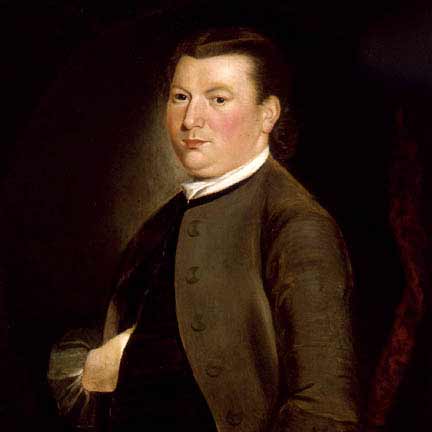
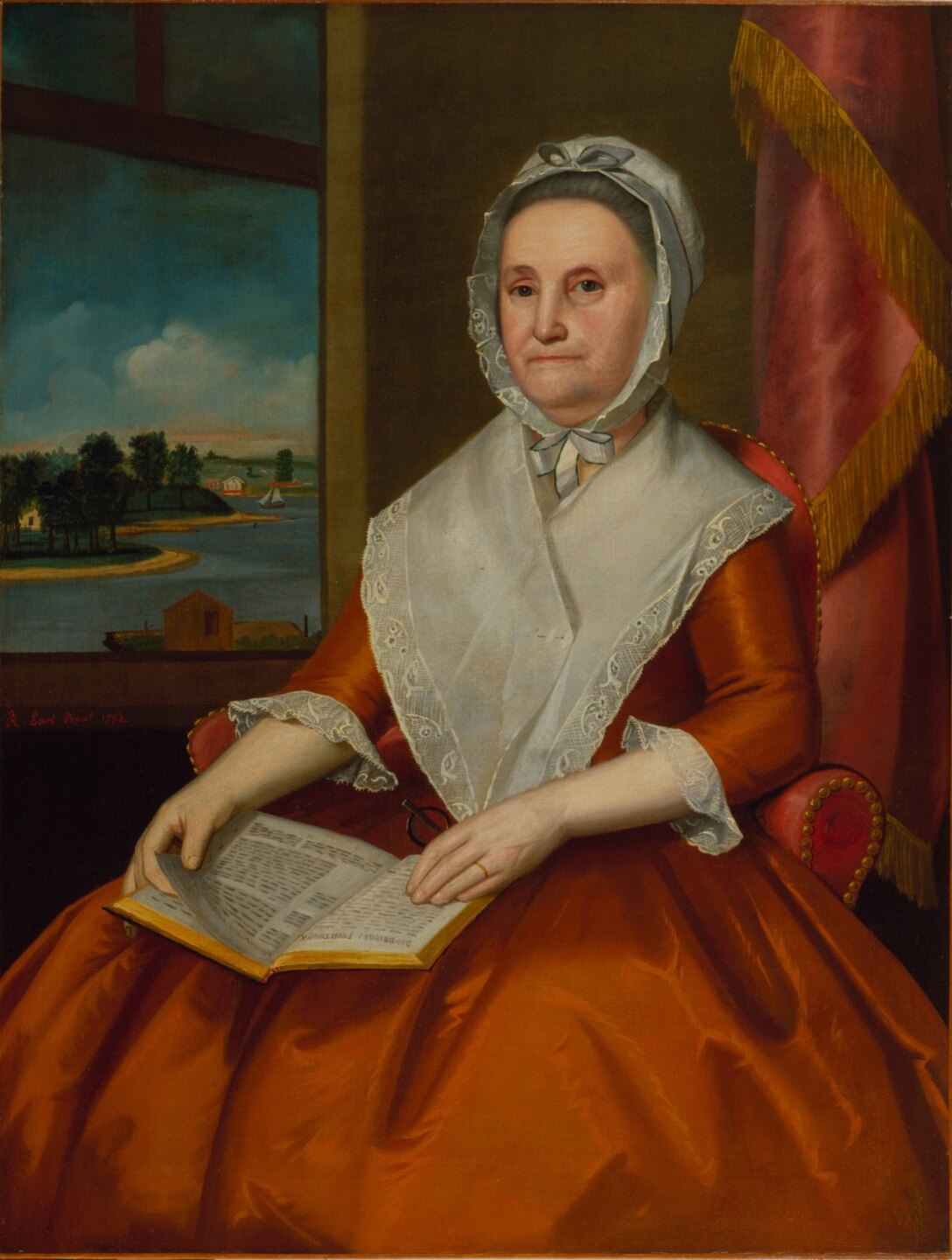
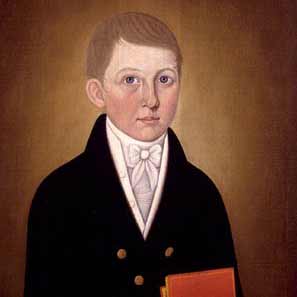
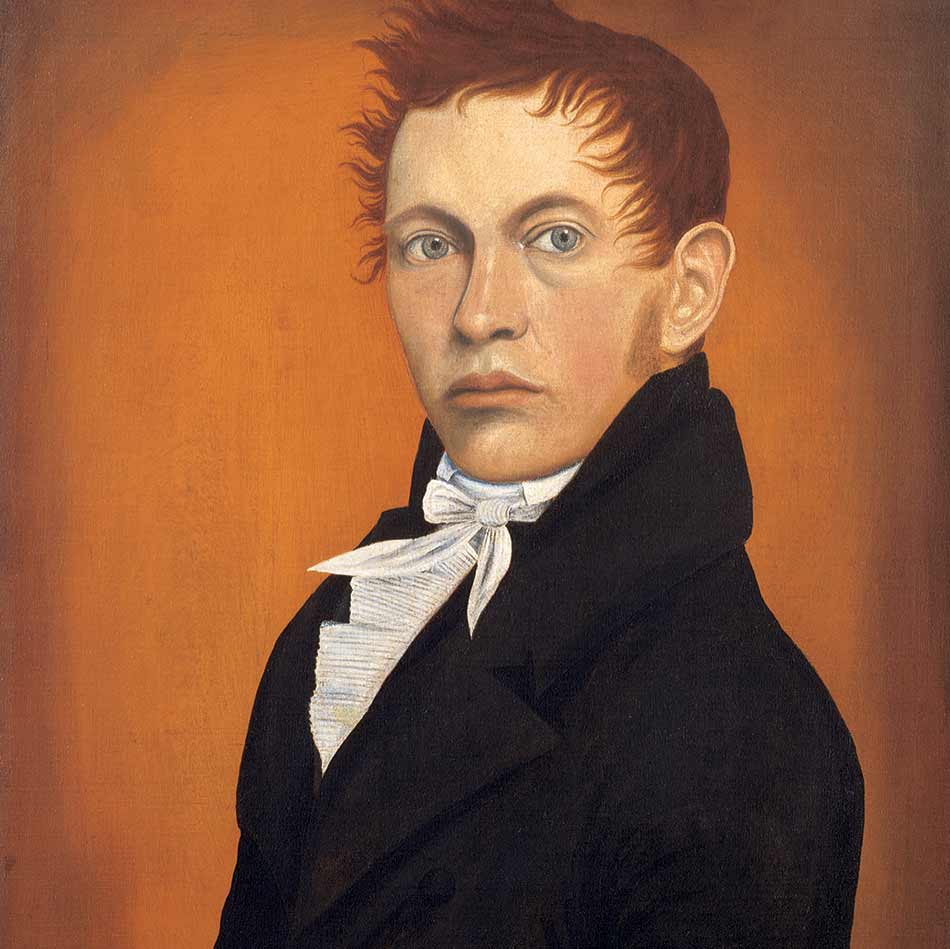
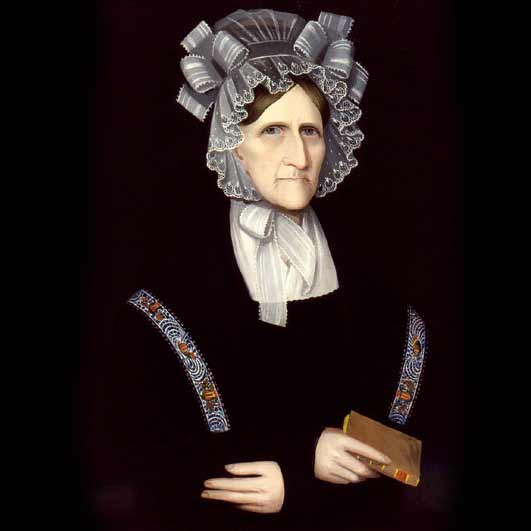
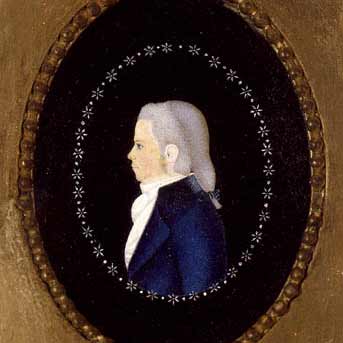
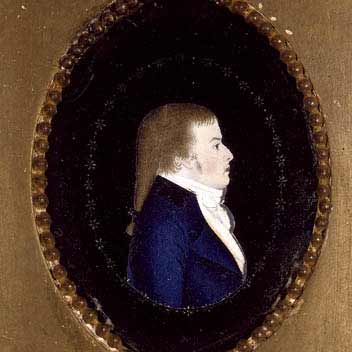
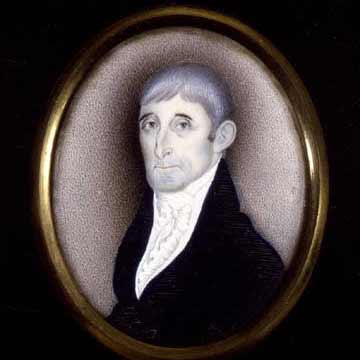
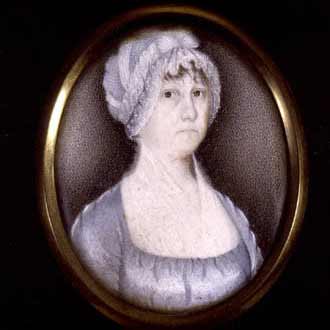
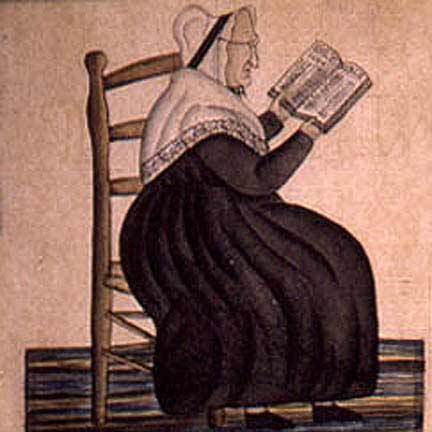
After the Revolution, the leading artist in the state was Ralph Earl, a Massachusetts native who visited several Connecticut towns in the late 1780s and early ‘90s and painted more than 100 portraits. To give his patrons the look of virtue, character, and industry they continued to demand, Earl tempered the refined style he had learned from Benjamin West in England while sitting out the American Revolution. His mix of primitive and sophisticated elements inspired local followers, who have become known as the Connecticut School. Among them are Mary Way, John Brewster, Jr., Harlan Page, and Ammi Phillips. Like Johnston and Earl, Brewster and Phillips had to travel from place to place in order to make a living, while Way and Page moved to New York City.
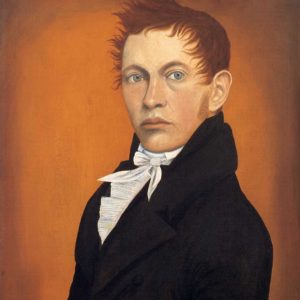
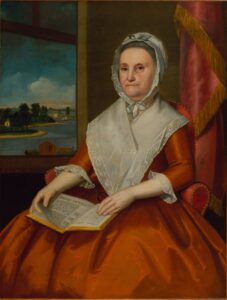
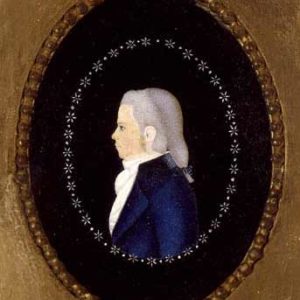
Images (L-R): Harlan Page (1791–1834), Portrait of a Man, c. 1815. Oil on canvas, 21 1/4 in. x 18 3/4 in. Florence Griswold Museum, Gift of The Hartford Steam Boiler Inspection and Insurance Company; Ralph Earl (1751–1801), Mrs. Guy Richards of New London, 1793. Oil on canvas, 43 in. x 32 3/4 in. Florence Griswold Museum, Gift of The Hartford Steam Boiler Inspection and Insurance Company; Mary Way (1769–1833), Portrait of Peter Richards, 1780s. Watercolor on silk with paper collage, 2 3/4 in. x 2 1/2 in. Florence Griswold Museum, Gift of The Hartford Steam Boiler Inspection and Insurance Company
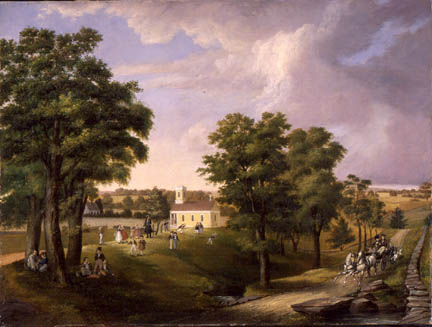
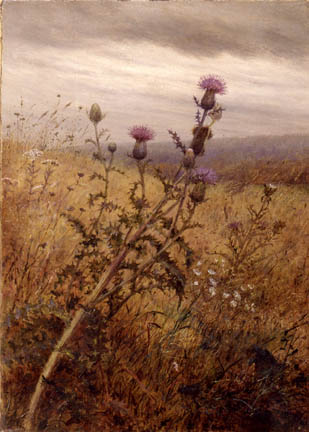
Most artists who worked in Connecticut in the 19th century were well trained and came from other places. Their landscape paintings celebrate a peaceful and unpretentious countryside. More than a bit of nostalgia was involved, however, for Connecticut was already on the way to becoming more suburban than rural.
In the 1830s, when American artists moved from topographical views to grand vistas, they sought out wilderness areas and sublime wonders such as waterfalls, virgin forests, and natural bridges. No matter what the site, this romantic and often symbol-laden art came to be called the Hudson River School. Rarely does it depict Connecticut. When artists began traveling to the spectacular American West, Connecticut’s gentle landscape, where wilderness had long since given way to farms and villages, continued to be ignored. After the Civil War, however, when the concept of Home entered the American psyche as never before, Connecticut came into its own.
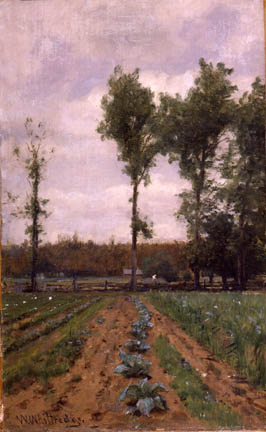
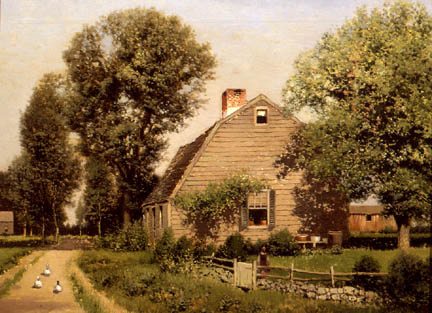
Connecticut’s domestication was now its charm. Its stone walls, fences, white church spires, old houses, roads, and streams are in the new landscape paintings. The state’s iconic tree, the Charter Oak, appears to abut common farmland in Frederic Church’s painting of it, for the artist chose to ignore a mansion at the downtown Hartford site. New Haven’s monumental West Rock, important in Colonial history, is a backdrop for agrarian scenes in paintings by other artists, such as Benjamin Coe, who was Church’s first teacher, and George Durrie. Moreover, artists painted views in Connecticut that were markedly different from the dramatic work they did elsewhere, as when Worthington Whittredge and George Loring Brown, leading chroniclers of the American West and of Europe, painted cabbages in Simsbury and oystering in Norwalk.
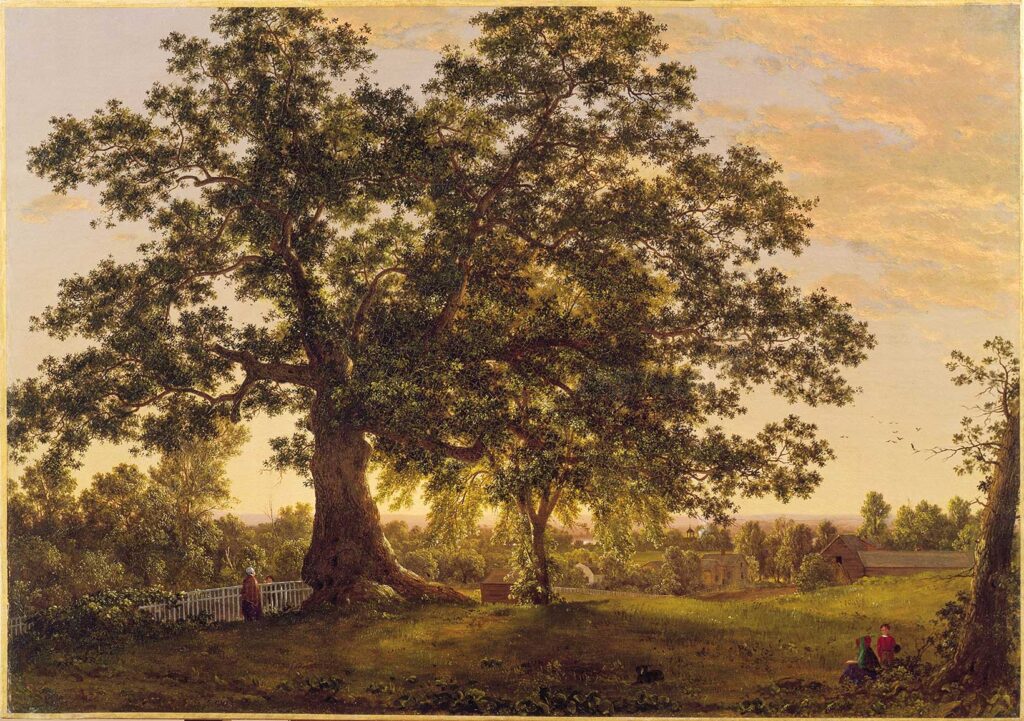
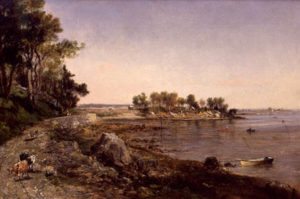
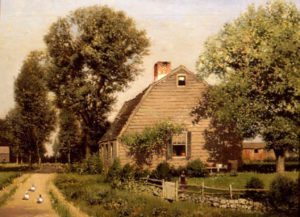
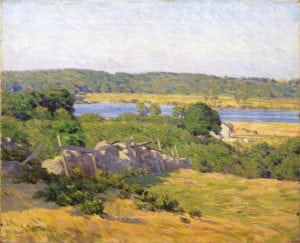
Images (L-R): Frederic E. Church (1826–1900), The Charter Oak at Hartford, c. 1846. Oil on canvas mounted on masonite, 24 in. x 34 1/4 in. Florence Griswold Museum, Gift of The Hartford Steam Boiler Inspection and Insurance Company; George Loring Brown (1814–1889), Norwalk Island, 1863. Oil on paper mounted on canvas, 14 1/2 in. x 21 in. Florence Griswold Museum, Gift of The Hartford Steam Boiler Inspection and Insurance Company; Henry Pember Smith (1854–1907), Old Homestead on the Turnpike, c. 1889. Oil on canvas, 12 in. x 16 in. Florence Griswold Museum, Gift of The Hartford Steam Boiler Inspection and Insurance Company
In the mid-19th century, still-life and genre paintings, with their everyday subject matter, were popular in America.
Several Connecticut artists specialized in them. Without the need to move about, as early portrait and landscape painters had done, they established “show” studios in order to display their paintings and develop a local clientele. Often that meant that they were not well-known outside the cities where they worked. Several artists of distinction, however, have been rediscovered in recent years.
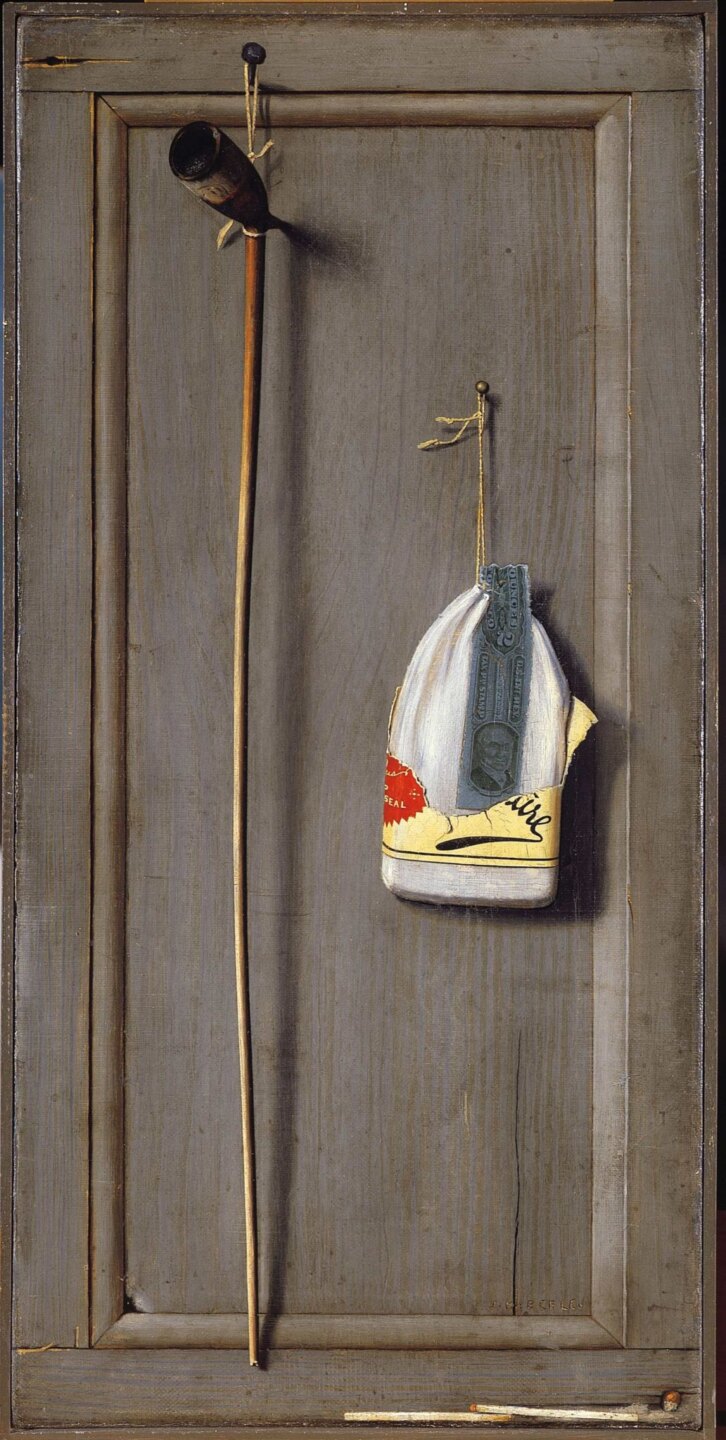
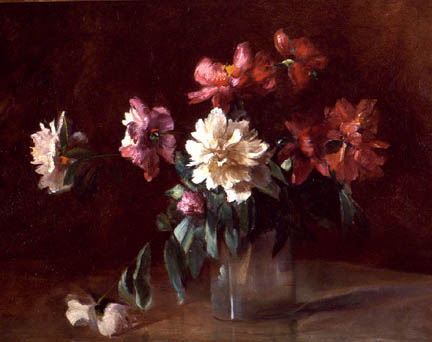
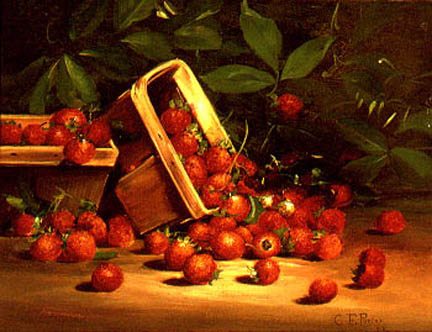
Hartford’s Gurdon Trumbull ignored the custom of painting a fisherman’s catch and portrayed instead fish who are fighting to live. John Haberle of New Haven incorporated humor and irony into his fool-the-eye still lifes. The art of Charles Ethan Porter, a fruit and flower painter, was admired by Mark Twain and Frederic Church, a major achievement in itself, but Porter was also an African-American. Despite the odds against it, he studied and exhibited at the National Academy of Design in New York and had a long career in Connecticut.
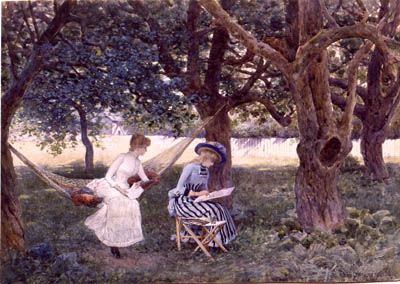
Edwin White and John Morton were painting genre scenes in this state as early as the 1840s. They were here only briefly, but George Durrie spent his life in New Haven painting landscapes that verge on genre. Lithographs of Durrie’s paintings, which were issued by Currier and Ives, helped create a lasting image of rural New England. In the village of Morris, Connecticut in 1885, William Lippincott saw American women as prettier and gentler than their Colonial predecessors, with leisure for art and literature. His painting foreshadows the theme of the contemplative woman, which was prominent in American art at the end of the century.
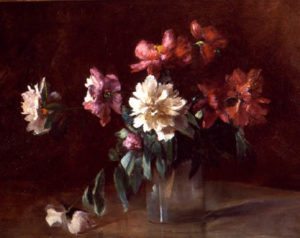
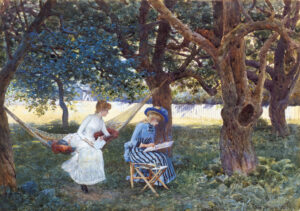
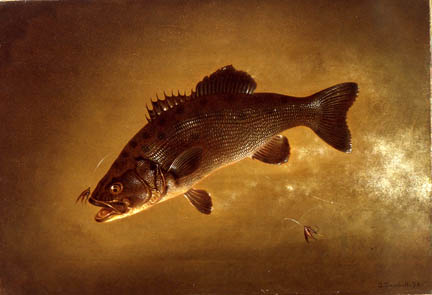
Images (L-R): Charles Ethan Porter (1847–1923), Peonies in a Vase, c. 1885. Oil on canvas, 19 3/4 in. x 23 1/2 in. Florence Griswold Museum, Gift of the Hartford Steam Boiler Inspection and Insurance Company; William H. Lippincott (1849–1920), Summer Afternoon, Morris, Connecticut, 1885. Watercolor on paper, 14 in. x 20 in. Florence Griswold Museum, Gift of the Hartford Steam Boiler Inspection and Insurance Company; Gurdon Trumbull (1841–1903), Black Bass, 1872. Oil on canvas, 17 1/2 in. x 25 1/8 in. Florence Griswold Museum, Gift of the Hartford Steam Boiler Inspection and Insurance Company
In the 1890s, Connecticut led the way in creating American Impressionism, chiefly because of John Henry Twachtman and J. Alden Weir, who worked together in Greenwich and Branchville. Their friends Childe Hassam, Theodore Robinson, and Willard Metcalf arrived soon after and did some of their best painting in Connecticut.
These five are undisputed masters of American Impressionism. Hundreds of other artists came to work and learn, primarily at Cos Cob, Old Lyme, and Mystic. Cos Cob was the first Impressionist art colony in America. Old Lyme became the largest and best-known.
Their French predecessors had celebrated modern life, but the artists who loaded paint boxes and easels onto trains in New York City were fleeing urbanism in times of disturbing change. They found refreshment in Connecticut’s civilized landscape and reassurance that the Yankee values of the country’s founders would endure. These American artists had trained in the best European schools and were inspired by painters as diverse as Hals, Velasquez, Millet, Manet, Monet, and Whistler.
They were excited by the decorative asymmetric designs of Japanese prints. Selecting and modifying freely, they sought to capture not so much a moment as character and essence. Working in the open air, they flooded their canvases with light, laid on bright colors, and abandoned techniques that had for centuries given the illusion of solidity and depth. Their portrayals of the Connecticut landscape were designed not as reproductions but as expressions of their innermost feelings. Boston artists would develop an Impressionism that centered on people. In Connecticut the focus was place.
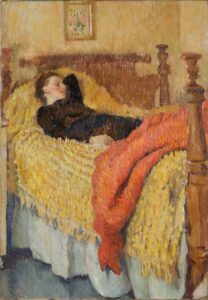
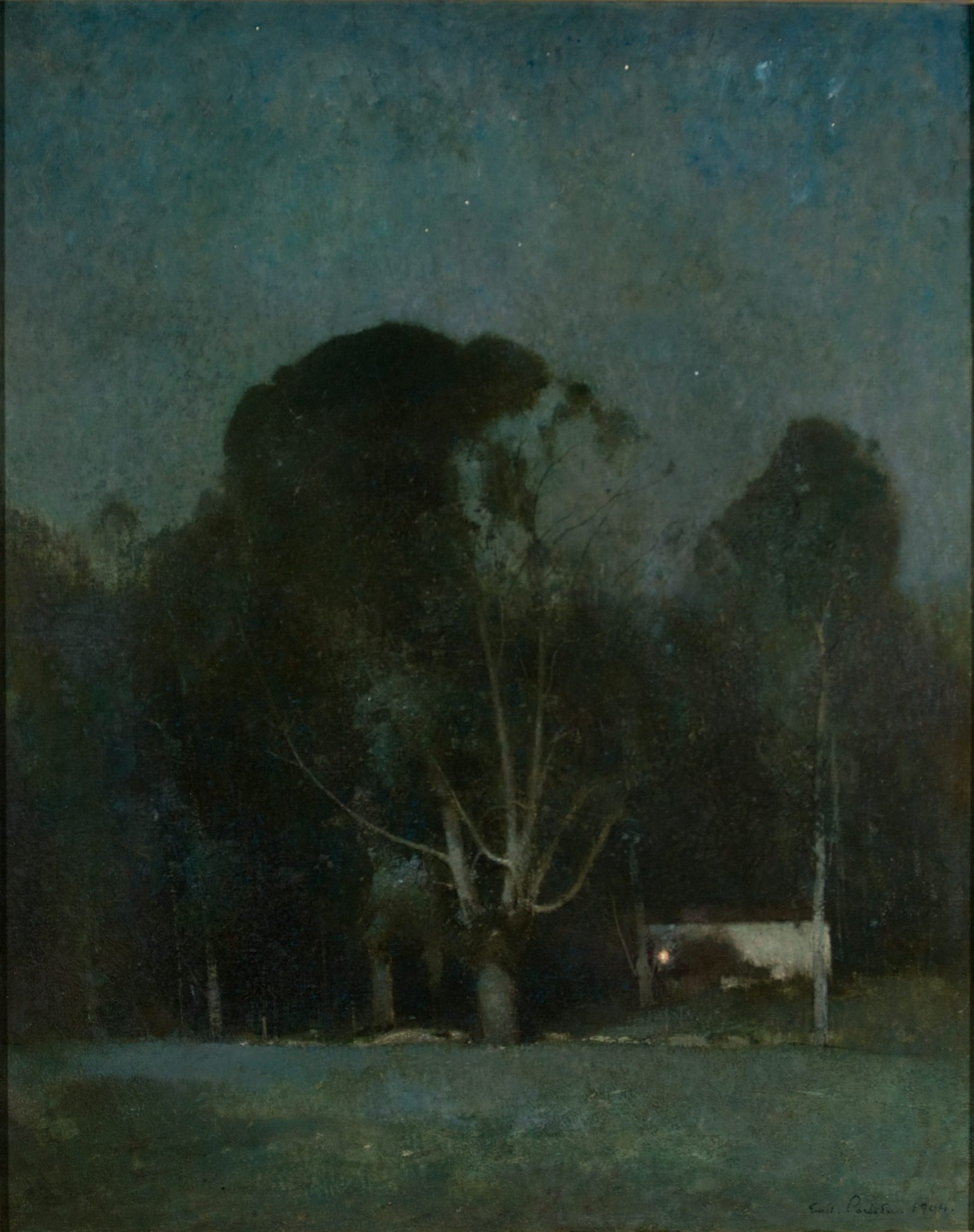
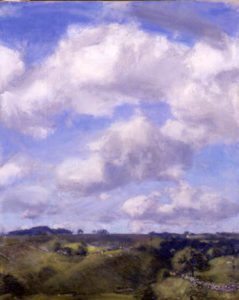
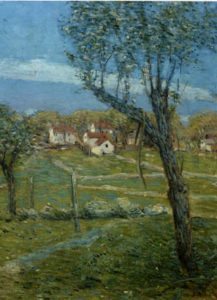
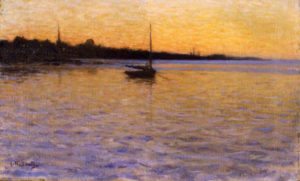
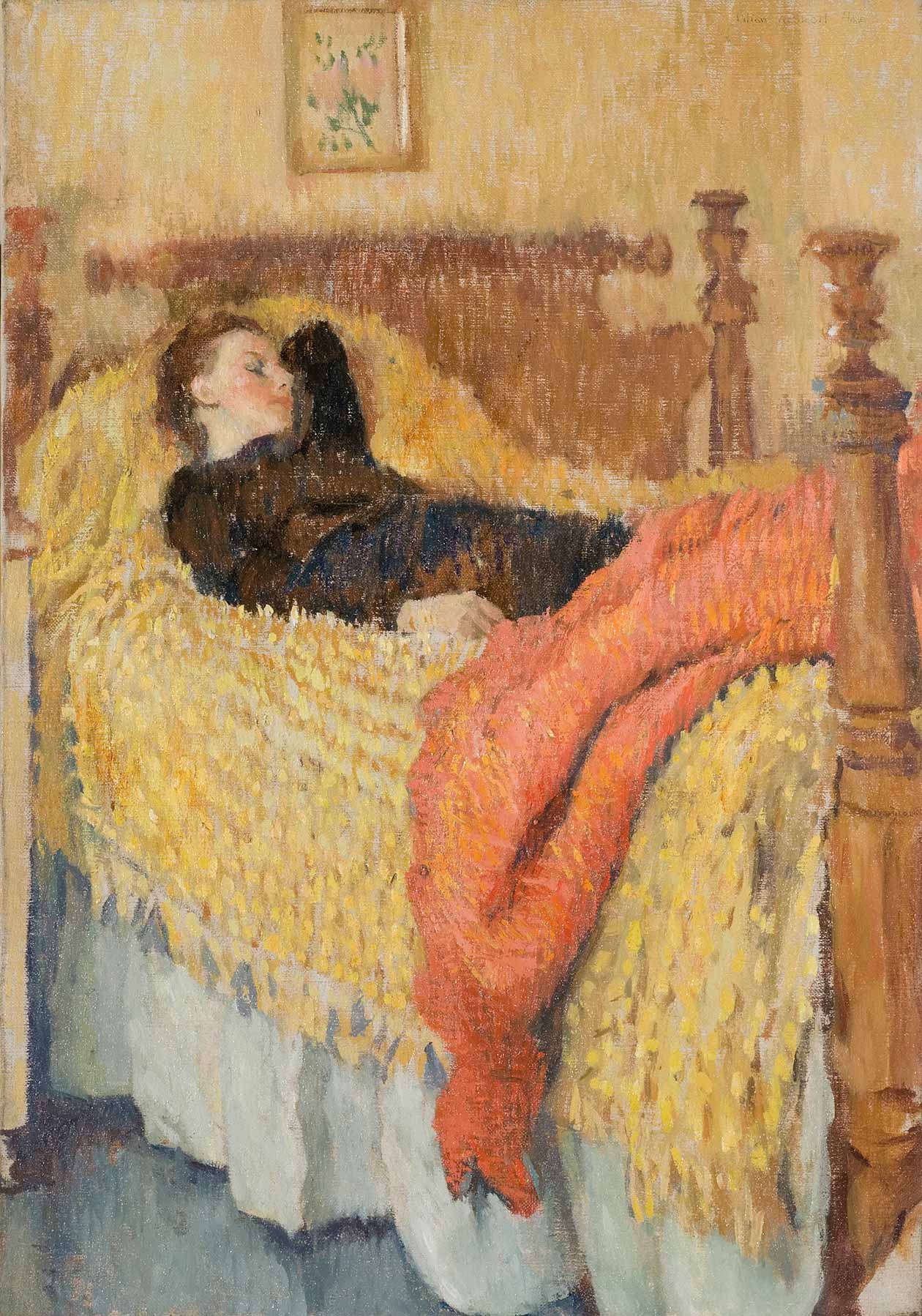
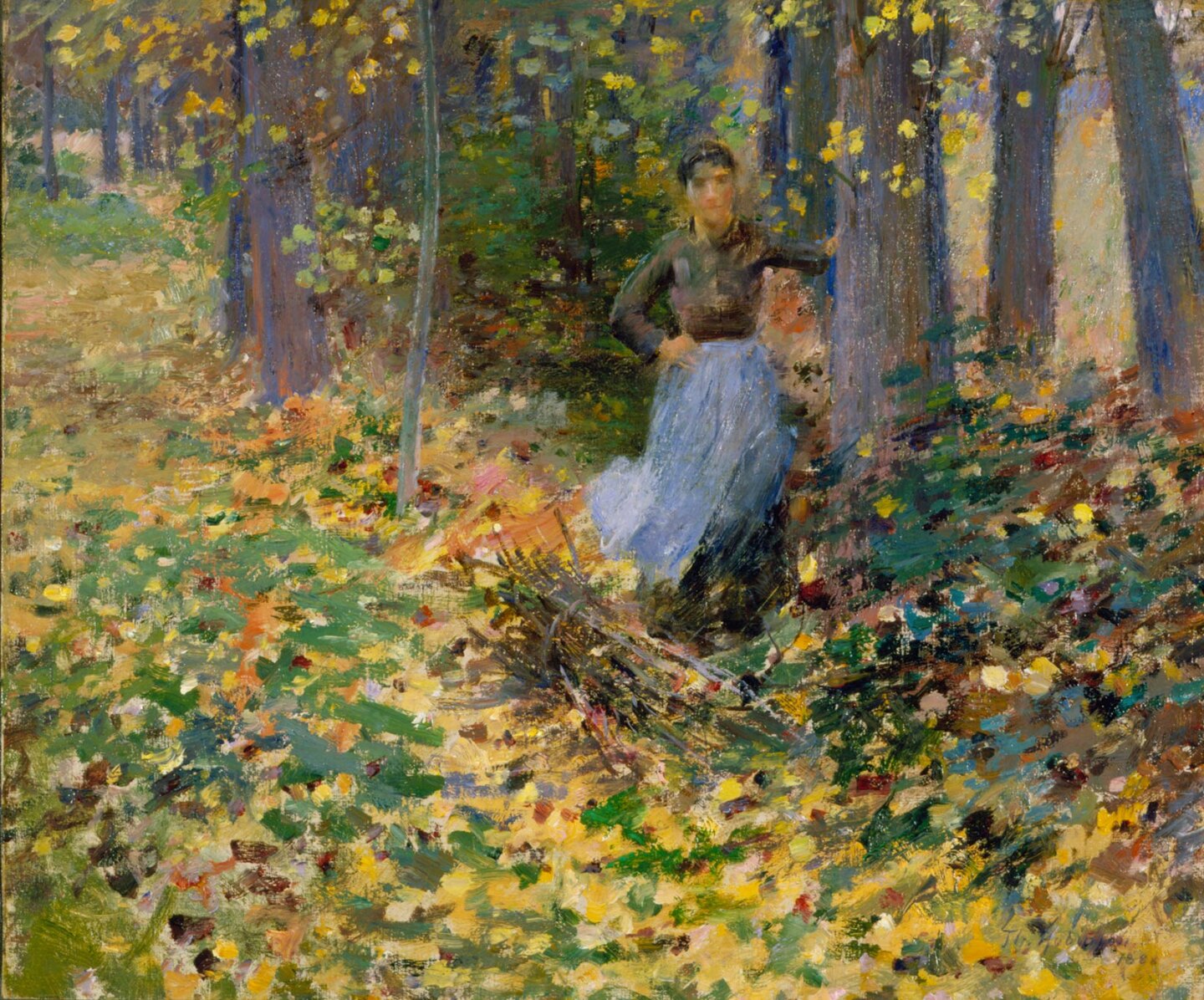
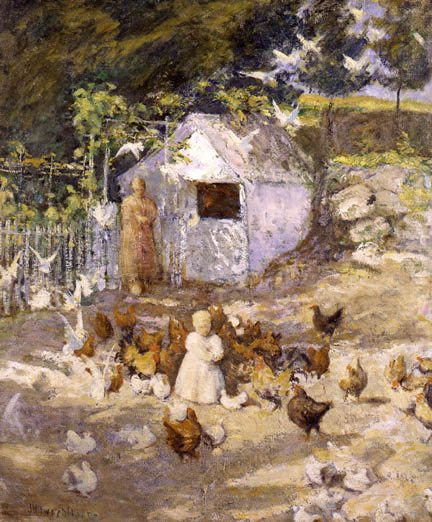
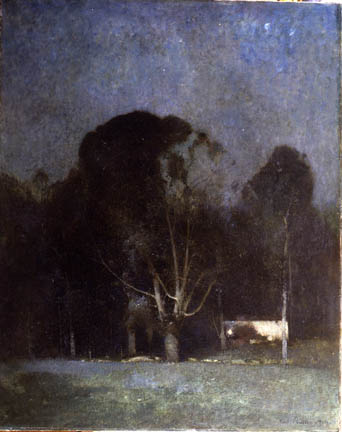
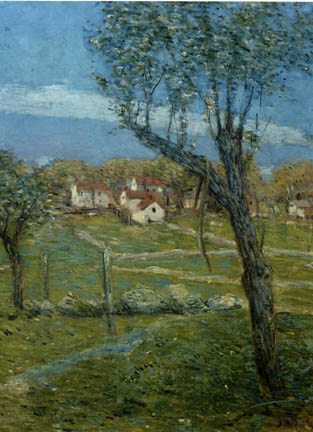
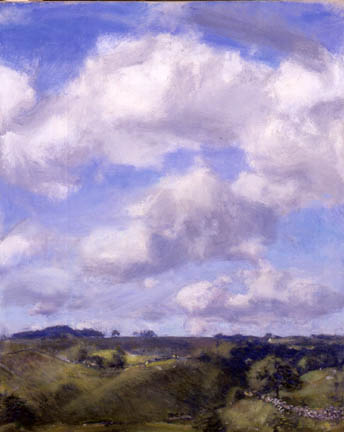
Images (L-R): Lilian Wescott Hale (1880–1963), Woman Resting, c. 1920s. Oil on canvas, 20 in. x 14 in. Florence Griswold Museum, Gift of The Hartford Steam Boiler Inspection and Insurance Company; Emil Carlsen (1853–1932), Night, Old Windham, 1904. Oil on canvas, 50 1/2 in. x 40 in. Florence Griswold Museum, Gift of The Hartford Steam Boiler Inspection and Insurance Company; Charles H. Davis (1856–1933), Summer Uplands, c. 1921. Oil on canvas, 36 in. x 29 in. Florence Griswold Museum, Gift of The Hartford Steam Boiler Inspection and Insurance Company; J. Alden Weir (1852–1919), Windham from Mullins Hill, c. 1895. Oil on canvas, 24 in. x 20 in. Florence Griswold Museum, Gift of The Hartford Steam Boiler Inspection and Insurance Company
In about 1890, John Twachtman, who had settled in Greenwich, began offering summer classes in landscape painting at a boarding house that welcomed artists.
It belonged to his friends the Holleys and overlooked the harbor in the Cos Cob section of town. J. Alden Weir visited from Branchville and sometimes shared the instruction. Theodore Robinson came from Giverny and twice stayed for weeks. Childe Hassam was in and out for nearly three decades. For several years, Genjiro Yeto was there to explain Japanese art and culture. By 1895 Twachtman’s Greenwich farm had become “a regular rendezvous for Impressionists,” and the Holley House (now the Bush-Holley House and a museum) was home to the first Impressionist art colony in America.
Artists loved the Cos Cob experience. Besides shore and sea views, there were woodlands, pretty roads, and backcountry farms. In the tiny village, the painters mixed with fishermen, shipbuilders, and farmers. Pre-Revolutionary houses, including a section of the Holley House itself, were clustered at the water’s edge.
Twachtman stopped teaching in 1899 but lived at the Holley House from the fall of 1901 until shortly before his death the next year. The colony might also have died then but for Elmer Macrae, a Twachtman student married to a Holley daughter, who kept things going for two more decades. The Greenwich Society of Artists formed in 1911. Altogether some 90 artists were active at Cos Cob, as well as dozens of students, but Cos Cob also attracted writers, like Lincoln Steffens, Ernest Thompson Seton, and Willa Cather, and performing artists. It made for a stimulating mix in a Connecticut town just sixty-some minutes from Broadway.
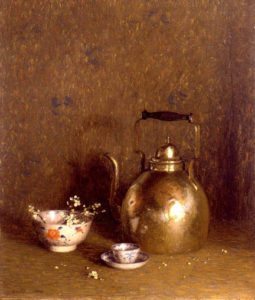
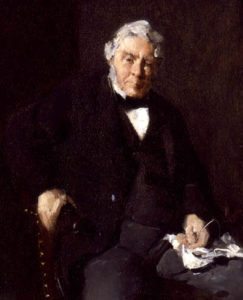
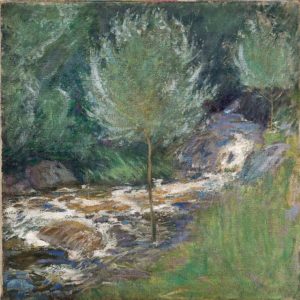
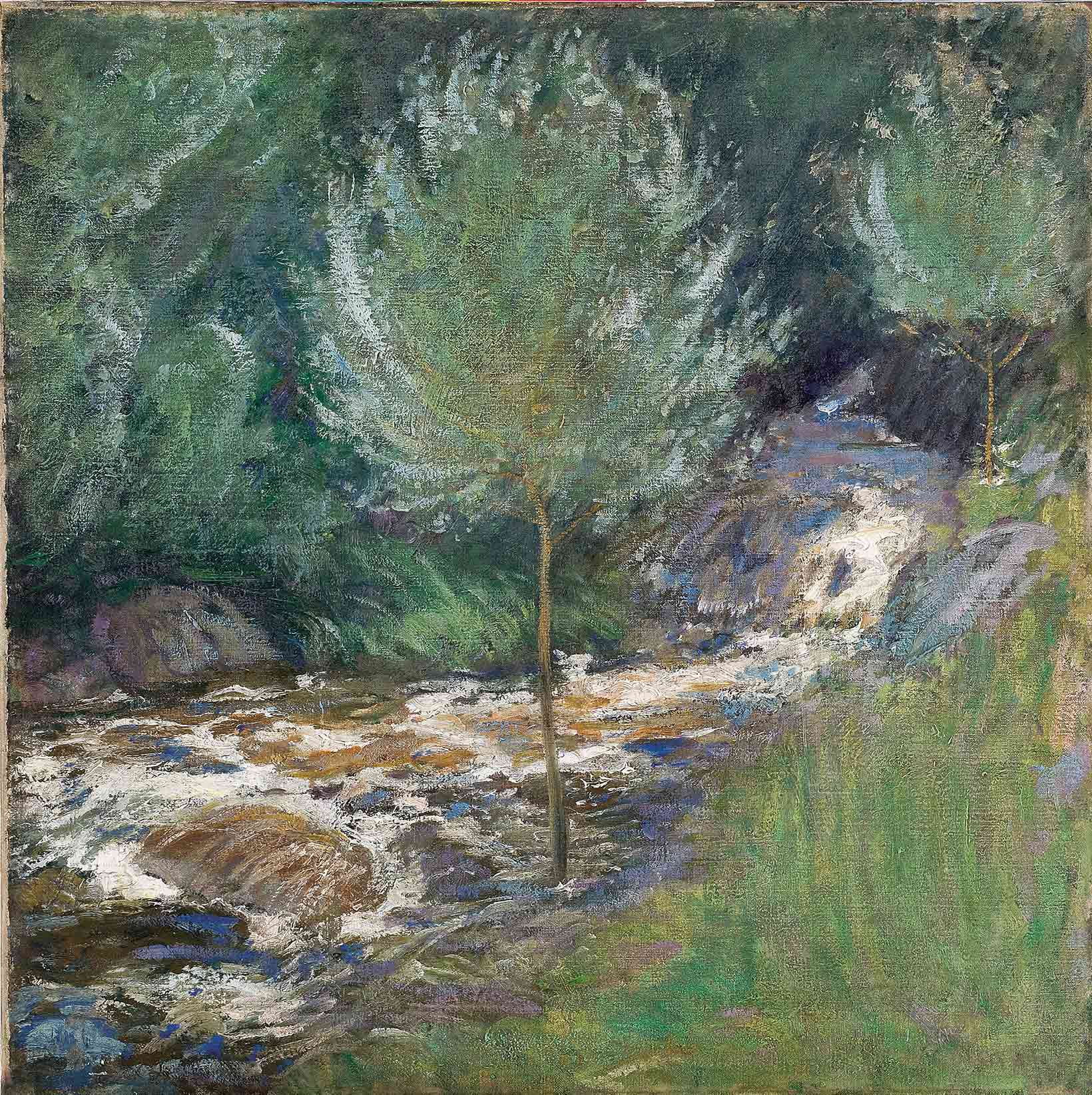
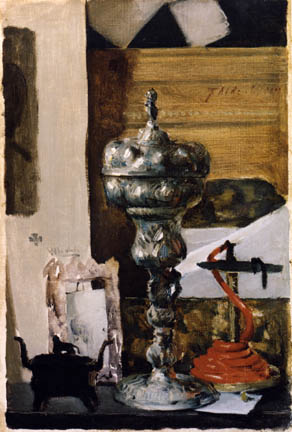
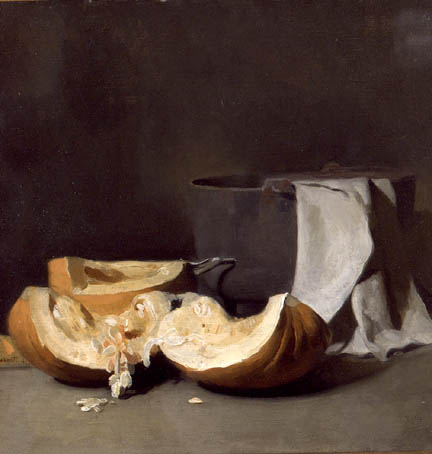
Images (L-R): Dorothy Ochtman (1892–1971), Still Life with Kettle, c. 1925. Oil on canvas, 28 1/4 in. x 24 in. Florence Griswold Museum, Gift of The Hartford Steam Boiler Inspection and Insurance Company; J. Alden Weir (1852–1919), Portrait of Robert Weir, 1878. Oil on wood, 10 1/4 in. x 7 7/8 in. Florence Griswold Museum, Gift of The Hartford Steam Boiler Inspection and Insurance Company; John Henry Twachtman (1853–1902), Horseneck Falls, Greenwich, Connecticut, c. 1890–1900. Oil on canvas, 25 1/4 in. x 25 1/4 in. Florence Griswold Museum, Gift of The Hartford Steam Boiler Inspection and Insurance Company
Art colonies grew because artists heard about them from friends or were impressed by paintings they saw. By the late 1890s Charles Davis had attracted a number of artists to Mystic, Connecticut: “The pallet [sic] and easel have become familiar sights along the river, and the village streets, and among the hills.”
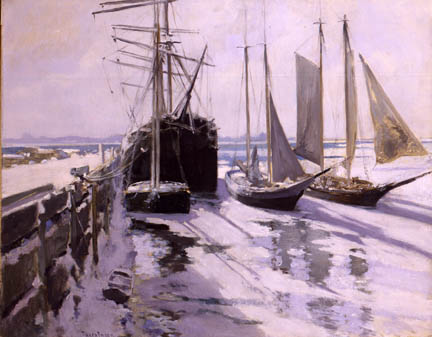
Artists who settled there include several who had studied together at the Pennsylvania Academy of the Fine Arts. Henry Ward Ranger moved from Old Lyme to Noank in 1904. This small fishing and shipbuilding village near Mystic had been attracting artist visitors, and several would decide to live there. The Mystic Art Association, which includes Noank artists, was founded in 1913.
In Silvermine, which spans parts of Norwalk, Wilton, and New Canaan, the sculptor Solon Borglum founded yet another art colony. The artists who came to live near him in the mid-1890s met weekly in his studio to critique or “knock” one another’s work. “The Knockers” began holding exhibitions in 1908. They became the progenitors of today’s Silvermine Guild of Artists, which was founded in 1922 and even then included painters, illustrators, architects, craftspeople, musicians, and writers. Painting styles in the early days of the Guild ranged from Impressionism to Social Realism to Modernism.
Artists also gathered in Westport, Norwalk, Darien, Wilton, Essex, Kent, and other towns. Trains had helped establish the art colonies at Cos Cob, Old Lyme, and Mystic. When automobiles became common, Connecticut’s art colonies developed into much larger art associations, which grew up in cities and towns throughout the state and did not need a core of artist residents in order to thrive.