
INSTITUTIONAL HISTORY
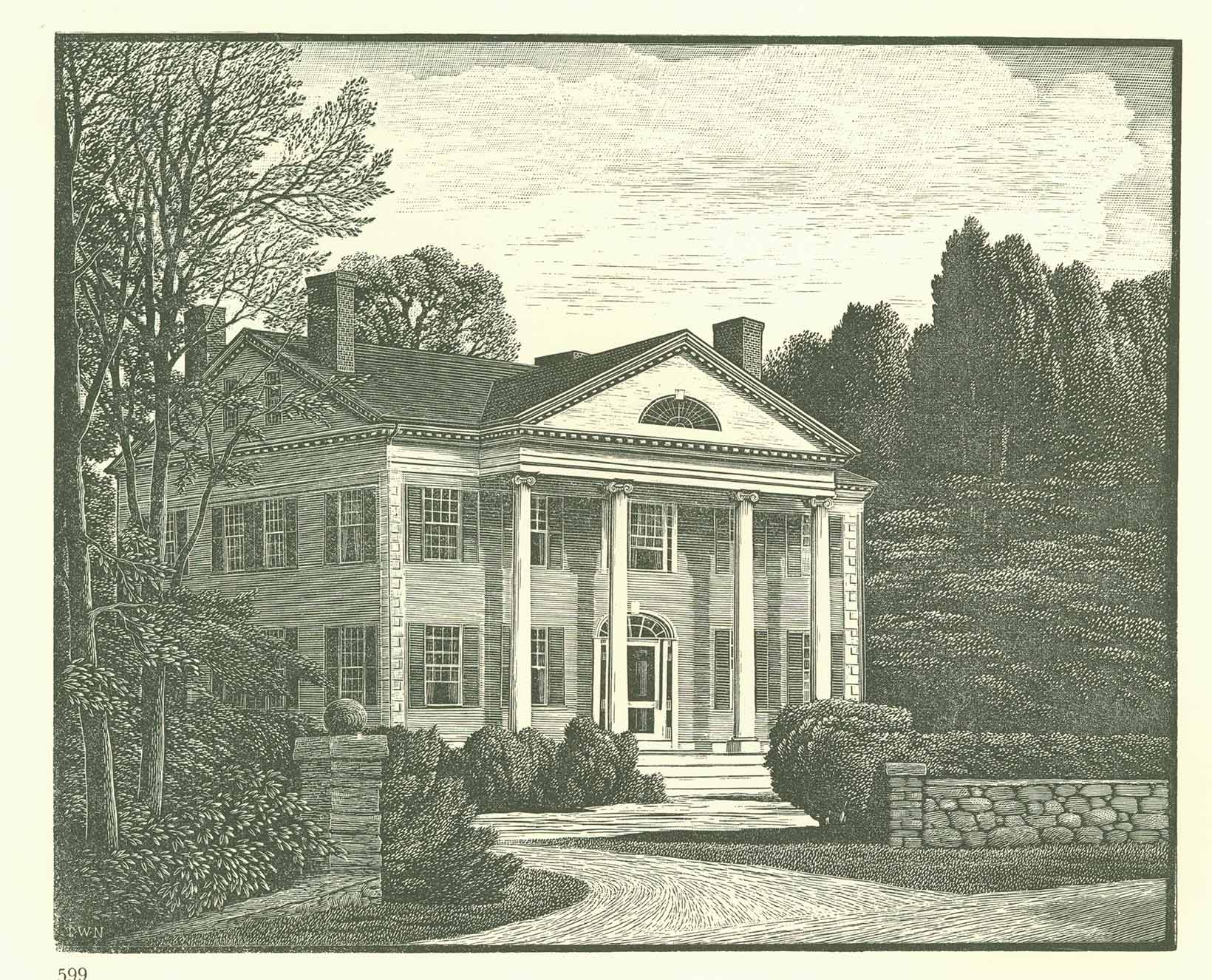
Thomas W. Nason (1889–1971), Griswold House, 1962. Wood engraving on paper, 8 x 10 in. Florence Griswold Museum, Gift of Mrs. Nelson White
MISS FLORENCE
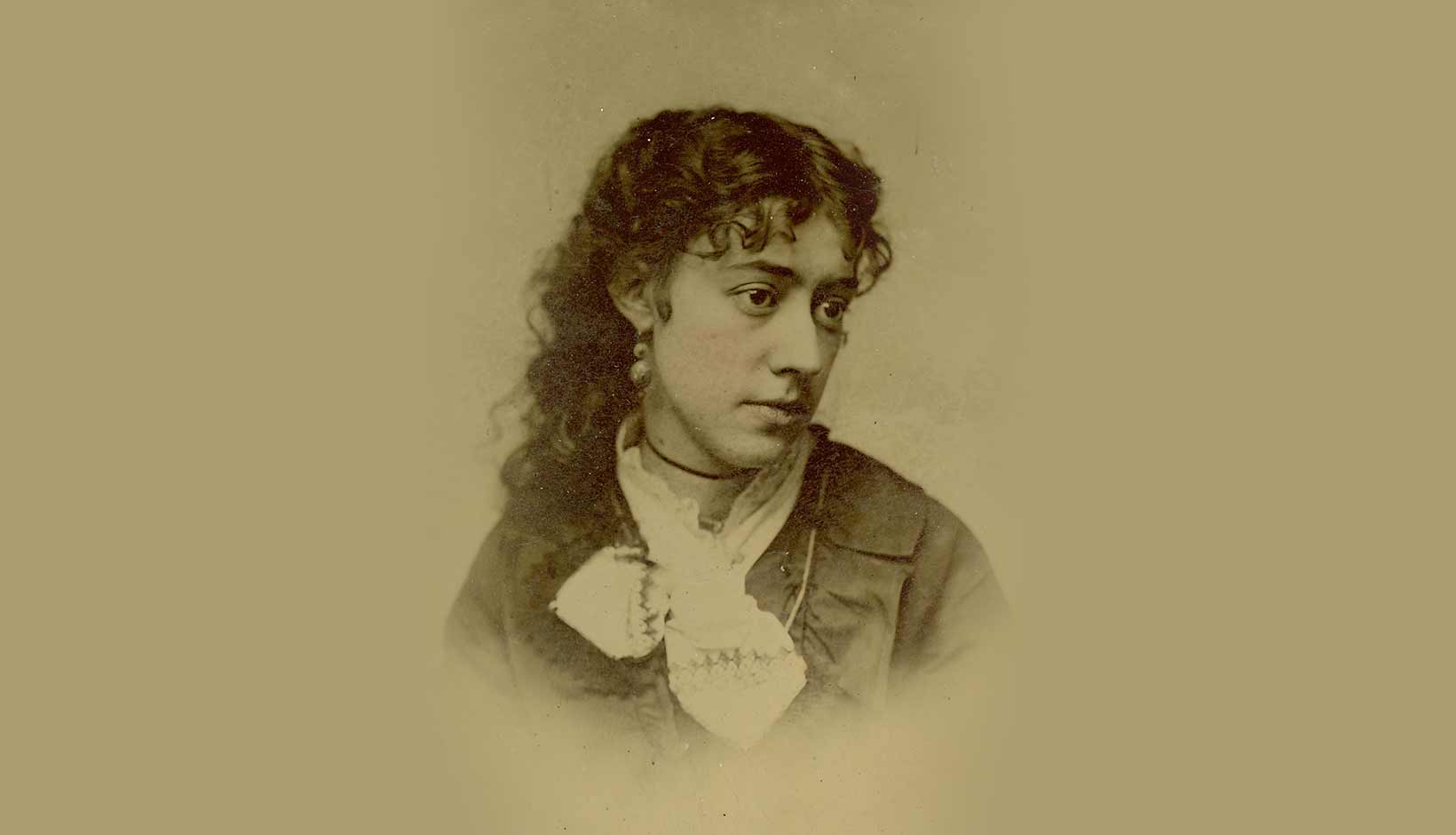
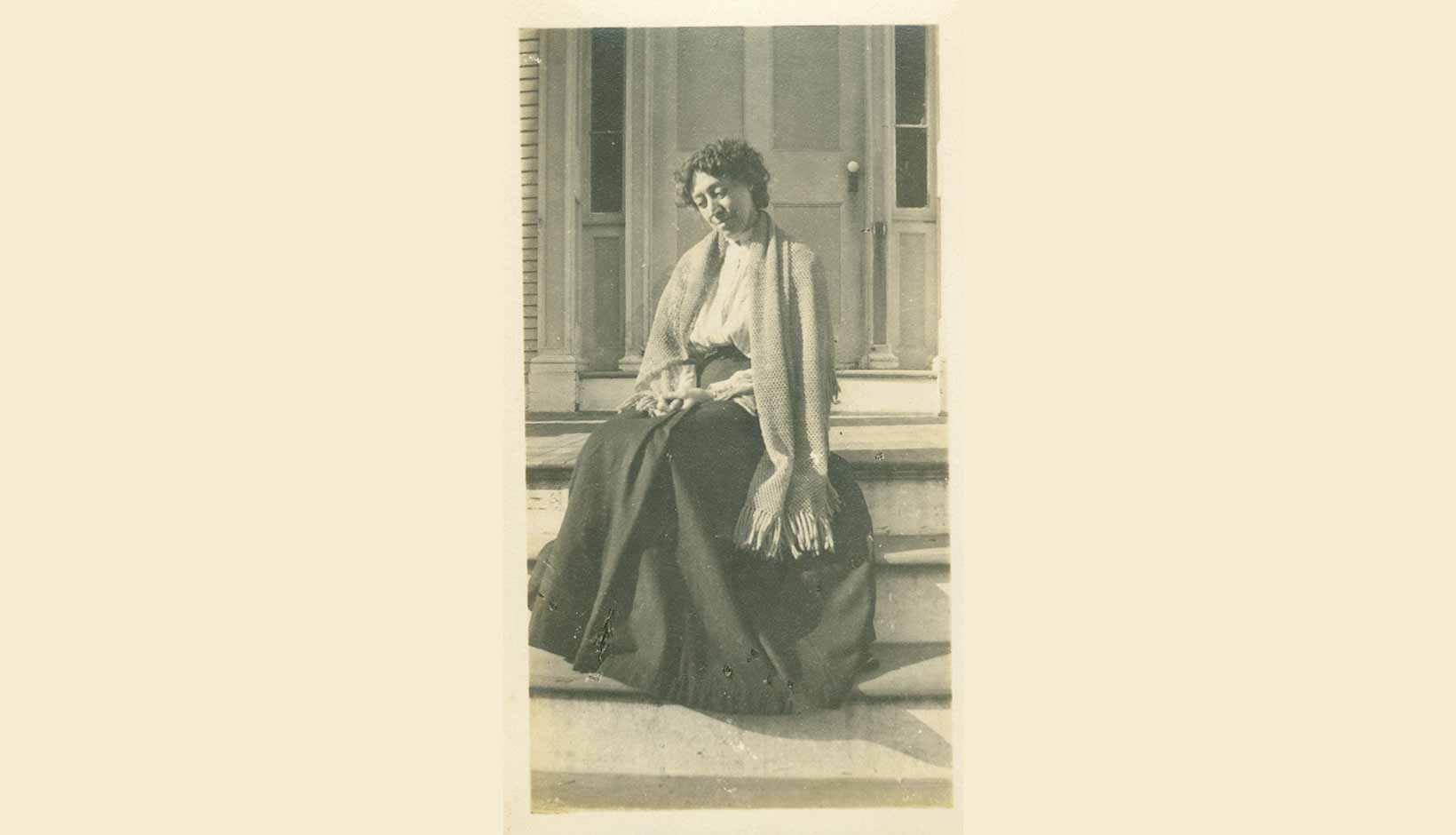
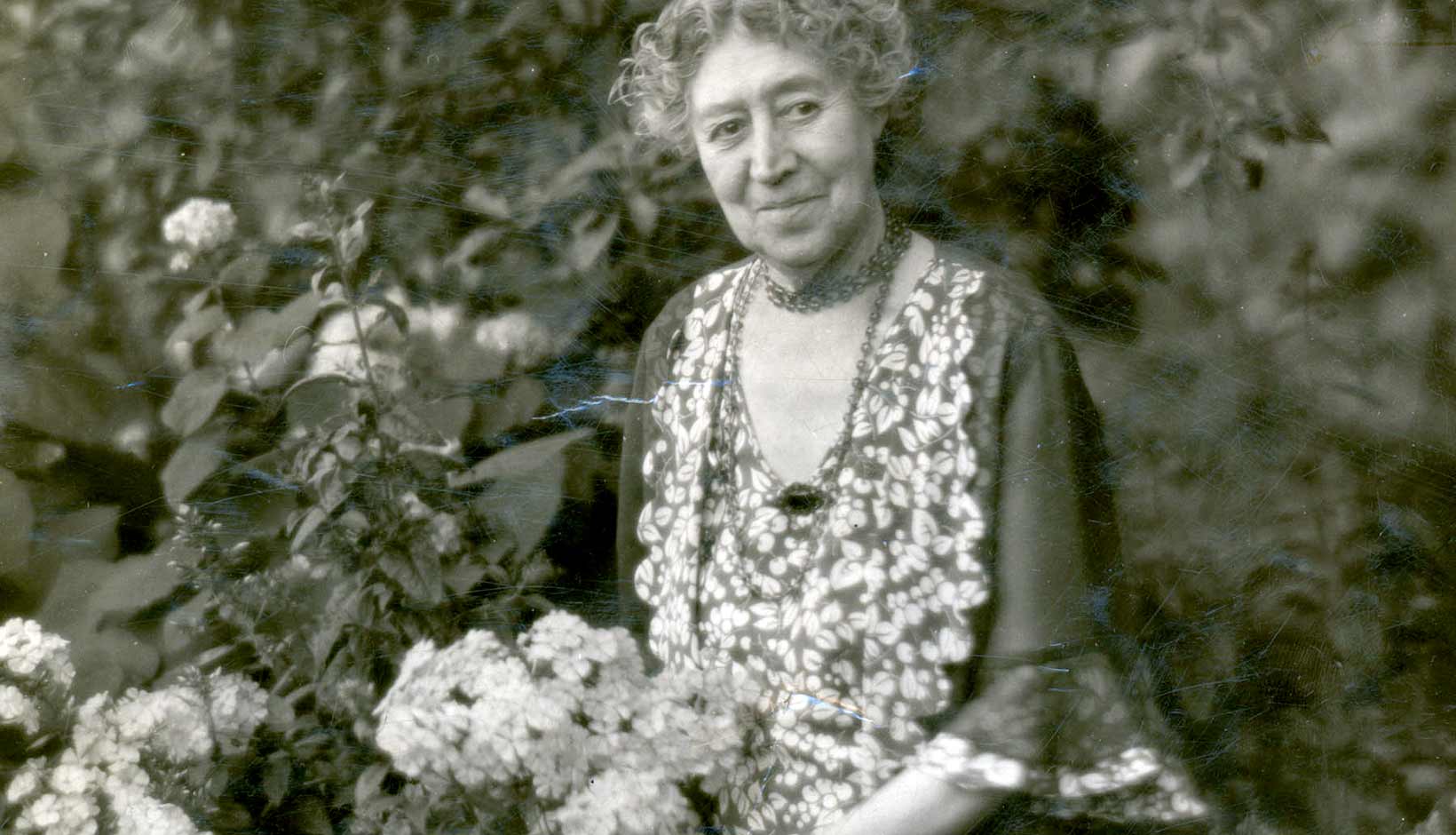
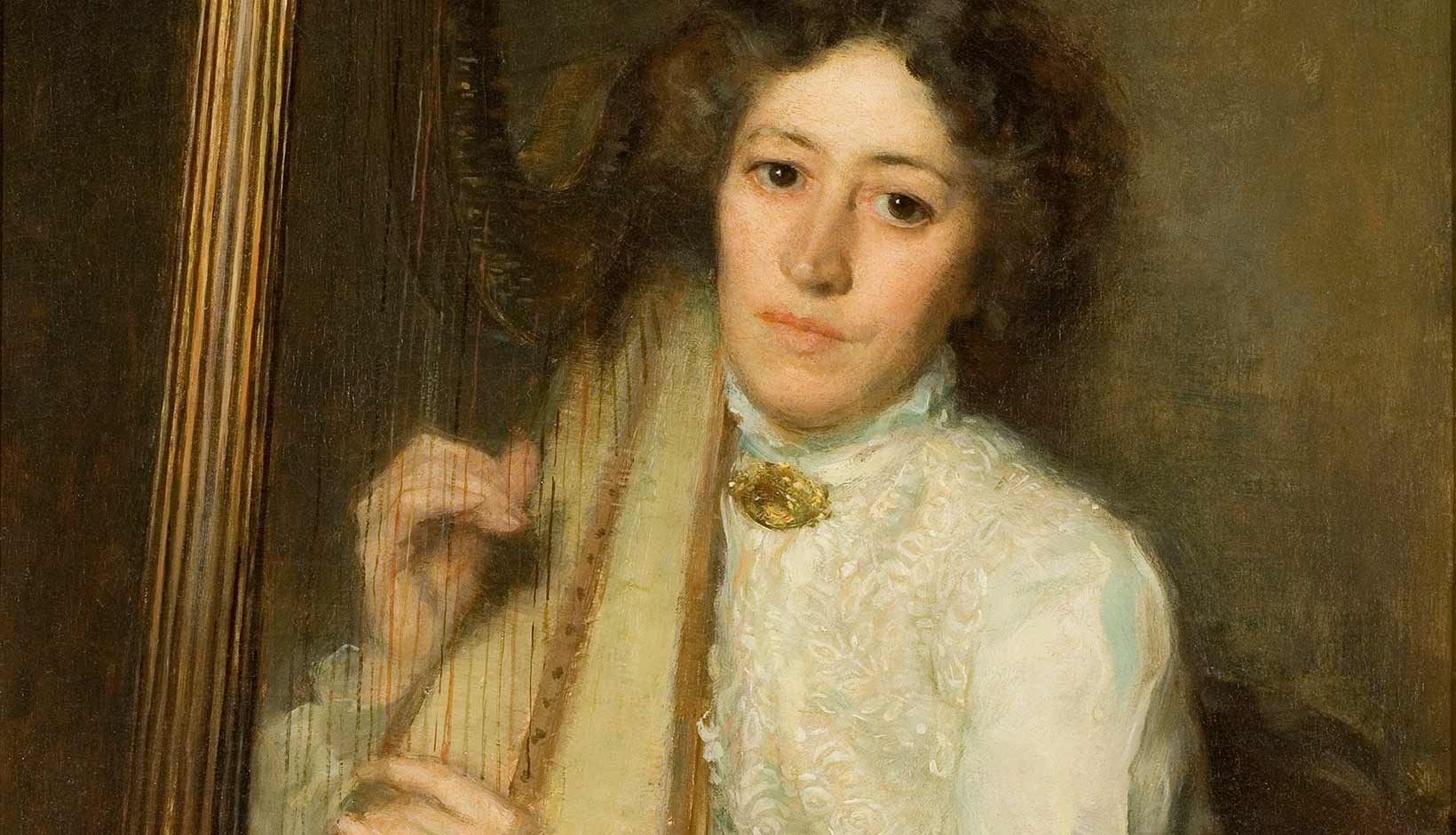
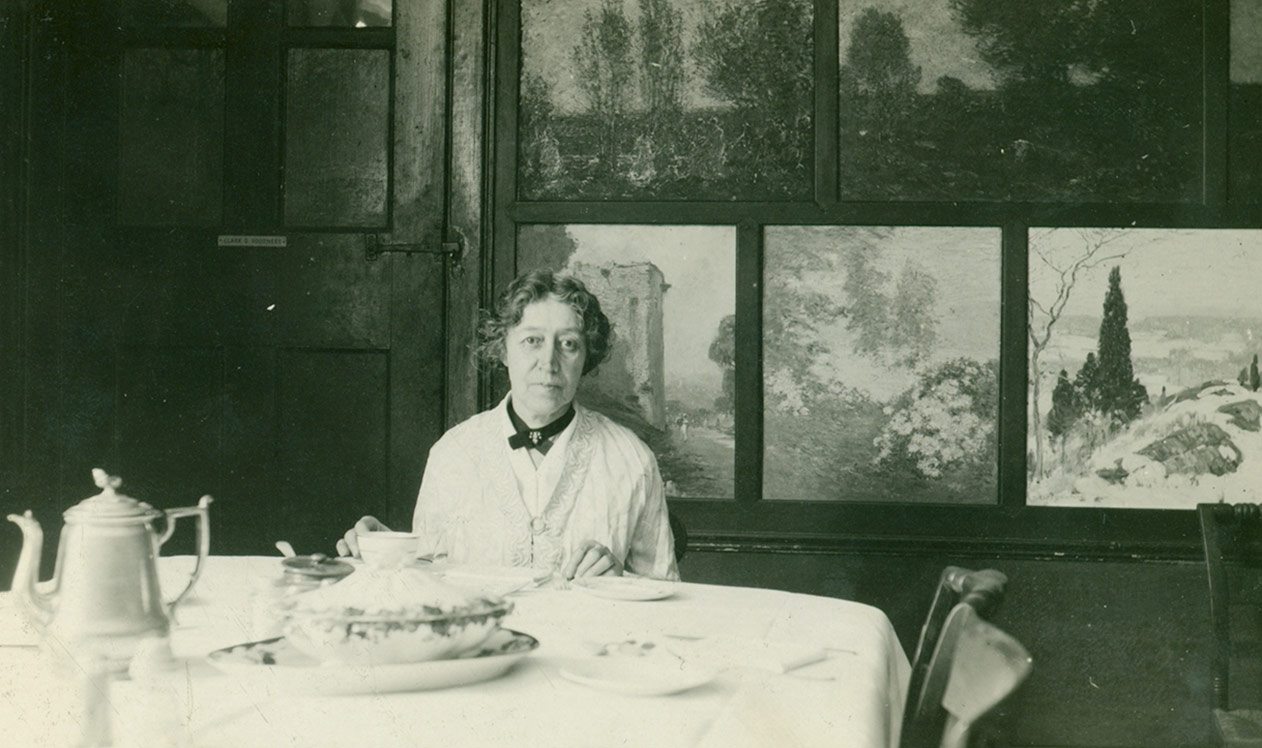
One of four children of a ship captain, Miss Florence was born on Christmas Day, 1850 and raised in the finest house on the main street of a thriving Connecticut town. Old Lyme, a center of shipbuilding and commerce, was established in the early 1600s and counted the Griswolds among the town’s oldest families. Their Late Georgian-style mansion, built in 1817 on a twelve-acre estate, was purchased by Captain Robert Griswold for his bride Helen Powers in 1841. The family’s and the town’s fortunes reversed, however, as a result of the Civil War and the invention of steam-powered vessels. To survive financially the Griswolds turned their home into a school and eventually a boardinghouse. By the late 1890s only Miss Florence was left to maintain the family homestead. Soon she, and the town, would transform and survive in unexpected ways.
Thanks in large measure to “Miss Florence” Griswold, what is known today as the Florence Griswold Museum has, for more than a century, been the home of the Lyme Art Colony, America’s center of Impressionism. In 1899, an artist came calling. Henry Ward Ranger, having recently returned from Europe, saw in Old Lyme an ideal setting for establishing a new American school of landscape painting. He found in Miss Florence’s home and hospitality the perfect place to settle. Other artists followed suit and the Lyme Art Colony was born. With the arrival of Childe Hassam in 1903, some of the country’s most accomplished artists gathered in her home. Florence Griswold was the very soul of the Colony. She retrieved lost brushes, praised good work and lent respectability to this bohemian group of painters’ good—natured high jinks.
Over the next decade, the House became the center of America’s best-known Impressionist art colony. Embodying generosity and optimism, Miss Florence stimulated a remarkable congeniality among a generation of America’s finest painters. By the time of her death in 1937, this uncommon woman had established a colony that changed the identity of a small coastal village and shaped the careers of many artists.
For her part in helping write a vital chapter in the history of American art, Florence Griswold was inducted into the Connecticut Women’s Hall of Fame in 2002. She joins nearly 100 Connecticut women who have broken new ground or emerged as leaders in their fields.
by Hildegard Cummings, independent art historian and curator
Florence Ann Griswold
Florence Ann Griswold was born on Christmas Day, 1850, to Robert and Helen Griswold in the shoreline town of Old Lyme, Connecticut. “I was never more pleasantly disappointed,” wrote the infant’s mother, announcing the new arrival to the father, who was sailing the Atlantic. Thus she reveals the preference for male heirs in 19th-century America. Because her mother, a dependent widow was living with her, she may have been especially aware of the limited opportunities that her era offered women. Had she known what was to became of her new daughter, she would surely have been amazed.
Florence Griswold had a distinguished ancestry, which assured her of a high social standing not only in her town but beyond. Matthew Griswold (1620-1694) was the founding settler of Old Lyme, and land on the eastern shore of the Connecticut River, granted him in the 1640s, is called Griswold Point. Among a number of his important descendants were two governors of Connecticut, including Florence’s grandfather, who was also a U.S. Congressman and a Connecticut Supreme Court judge. Florence Griswold’s immediate family, however, would be the poor relations in the large and wealthy Griswold clan.
Robert Griswold had begun well. In the early 19th century, two of his brothers ran a shipping line out of New York to the West Indies and China. After sailing those routes, Robert became a transatlantic packet boat captain on a ship owned by another brother. Some of his voyages were so treacherous that grateful passengers presented him with gifts and commendations for their safe arrival. In 1855, weary of the hardships of the sea and lonely for his family, Griswold retired, when he was only 49 and Florence was 5. He may have realized that ocean steamers would soon make sailing ships obsolete. He chose to invest heavily in an ox-and-horseshoe factory in Old Lyme, but it failed in the 1860s, and his family struggled financially from that time on. In 1877, Robert Griswold was not only in poor health but also had three mortgages, totaling nearly $4,000. Caring friends and relatives retired these debts in 1881, but Griswold died the next year, and genteel poverty continued to plague his family.
Florence and her two older sisters had, nonetheless, received the education of socially elite young women. After basic education in a local public school, they attended the Perkins School in New London, a private finishing school run by two of their aunts, where they studied music, painting, the needle arts, and foreign languages. Florence became fluent in French and proficient in piano, harp, and guitar, and she was skilled at English-style horseback riding. Such an education was meant to make a young woman eligible for a suitable marriage, but none of the Griswold sisters married. Instead, they needed to use their fashionable womanly skills in order to live.
In 1878 Helen Griswold and her daughters opened a girls’ school in their home, which ran with modest success until about 1892, with offerings that at times included English, history, French, German, Latin, Greek, ”the higher mathematics,” music, art, and “the rich and elegant styles of French embroidery, ancient and modern, not elsewhere taught in this country.” By 1891 a close friend believed that their only income was from a few seasonal boarders and from lessons in piano and needlework. Matters grew worse. Florence’s sister Louise, a piano teacher and church organist, died in a carriage accident in 1896. In 1899, Helen Griswold died of Bright’s Disease, and daughter Adele, the family artist, was already afflicted with the illness that required permanent commitment to a mental hospital in 1900. Helen and Robert Griswold’s only son had died in 1864 at age 16.
In 1898 Florence Griswold placed ads in a local newspaper, looking to sell (and deliver) pansy and rose plants she propagated in her garden. Even so slight a business venture stretched the limits of the domestic sphere that highbred females were bound by. The boldness of her action suggests that she was strong and self-reliant, but the artist Arthur Heming, who boarded with her in the early 1900s, said she was neither. Nor was she, by other accounts, always sensible. Florence Griswold was, nonetheless, destined to run a famous boardinghouse for artists. Artist Henry Ward Ranger discovered Old Lyme and the Griswold house in 1899 and returned with friends the following spring to create a Barbizon-oriented art colony. With a change in focus after Childe Hassam’s arrival in 1903, it would become the largest and best-known Impressionist art colony in America. Florence Griswold was a major force in making it all happen.
Whatever her shortcomings, character traits that Florence Griswold possessed in abundance made her supremely fit for accommodating artists in her home and creating an atmosphere in which they could flourish. She was by nature and training a gracious hostess, who could mingle comfortably with sophisticated, well-traveled artists. Her education had stressed the arts, and her home was filled with fine things her father acquired in his travels. Her music-making and embroidering had taught her something of the nature of creative work, so when artists came to her home in 1900, she already so deeply admired their talents that she was not at all bothered by any “bohemian” or eccentric tendencies they
might exhibit.
Florence Griswold was, moreover, extraordinarily kind, so tenderhearted that she catered joyfully to the needs of her boarders, friends, visitors, and the countless stray cats that flocked to her home. She charged such low rent that often she could not pay her own bills, yet she always extended credit to impecunious guests – even refusing Willard Metcalf’s offer of May Night in lieu of rent, because she thought the painting was the best he had yet done. (It launched his career.)
She packed and shipped paintings and other belongings that her boys, as she called them, left behind. She provided good food and lots of it even if it meant she had to buy on credit. She divided her attic into bedrooms, converted outbuildings into studios, and organized entertainments.
Arthur Heming may not have thought her strong, but he cherished her “lovely air and remarkable gift of making her guests feel that it was their home, and she was visiting them.” Her unfailing optimism also endeared “Miss Florence” to the artists. She became their friend and confidant. Her sunny outlook never wavered, even as her financial troubles multiplied. Eventually, like her father, she had several concurrent mortgages.
In the course of the many years that Miss Florence hosted artists, she evolved from an uncommon but still proper Victorian woman into a leader in Old Lyme’s art community and a participant in town affairs. In a gallery she created in her front hallway, she persuaded visitors to buy paintings. In old age she managed the new Lyme Art Association gallery next to her house.
She supported her town’s first fire department and vigorously, though unsuccessfully, opposed the introduction of a trolley. On a controversial national issue, she stood firm with others in her community, including some of her artists’ wives: she opposed women’s suffrage.
A woman who ran a busy boardinghouse, aggressively sold paintings, and took an active part in her town’s affairs might be expected to favor women’s rights, but Florence Griswold did not fit the stereotype of a suffragette, depicted in print and imagery of the era as athletic, spirited, and restive. Like these feminist “New Women,” she had defied precepts that restricted women of her class to a domain of genteel domesticity, but circumstances, not modern ideas, had shaped her life.
Raised to be a devoted homemaker and caregiver, she may have feared that suffrage would spoil the apolitical, behind-the-scenes power that such traditionally “feminine” women believed they had. Many artists, including several of “her boys,” depicted women of her social class in domestic interiors, seeing them as sedentary, sweet, refined, and contemplative. Such idealized images were as ubiquitous as those that portrayed the New Woman. Florence Griswold — energetic, aggressive, and unconventional, but also refined, domestic, and happily compliant — combined elements of both.
At her boardinghouse, Miss Florence saw two kinds of women. Her live-in domestic staff was largely Irish-American, with few options but to be bound to the service of others. Artists’ wives, temporarily free of their usual demanding domestic and social obligations, were at leisure in her home. They read, took walks, chatted, and shared in various entertainments. A few were artists themselves, and on occasion an unmarried woman artist boarded. No matter what their status, they were typical Victorian woman of the middle class, not feisty “New” women.
The final years of Miss Florence’s life were dismal but did not destroy her optimism. She had few boarders in the 1920s and ‘30s, her health failed, and her money troubles became overwhelming, even though friends and relatives helped out. The Florence Griswold Association was formed in 1936 and found a way for her to stay in her home, where she died in 1937 at the age of 86. Her passing was marked by an outpouring of appreciation for her considerable contribution to the history of American art.
by Hildegard Cummings, independent art historian and curator
In the summer of 1900 a boardinghouse for artists began operation in the quiet shoreline town of Old Lyme, Connecticut. For the next two decades Miss Florence Griswold’s house on Lyme Street was home to one of the most famous art colonies in America and critical to the development of American Impressionism. This is a special story, but boardinghouses, where people paid to live and eat with others, once affected the lives of many Americans.
The boardinghouse era, from about 1875 to 1920, came into being with the burgeoning of cities. By 1910 as many as one-third to one-half of urban Americans had been boarders at some time or lived in a home that had boarders. Young people who left farms and villages behind, and even newlyweds and families, sought inexpensive places to stay, where they could be guided in the ways of the city and sheltered from undesirable influences.
To meet this need, widowed or married women who had to earn money offered space in their homes. In an era when it was considered degrading for a woman to have a job, caring for boarders was seen as an extension of her domestic sphere, so was more palatable to the world at large.
Inspired by this model, textile-mill owners in Massachusetts and Connecticut housed women employees in boardinghouses aimed at keeping them healthy, safe, and moral. Immigrants often began their American life as boarders. Most boardinghouses, however, whether in cities or towns, were in middle-class homes, where a family atmosphere prevailed. Guests were accepted on the basis of referrals, recommendations, or interviews. In time, people with special interests or needs, such as lawyers, sailors, actors, or artists, gravitated to boardinghouses that catered to them. The low cost of boarding continued to be a draw. The bond of fellowship had become another.
An important variant of the American boardinghouse appeared at the end of the 19th century: the summer boardinghouse. These were in homes in rural areas that could be easily reached from a city by train or boat.
Disagreeable aspects of city life had created in urban dwellers of all social classes a yearning for nature, so those who could afford to flocked to seashores, mountains, and farms, seeking respite from city and work. They wanted fresh air, leisure, and fun.
Landscape artists were also looking for an inexpensive summer escape from the city but with a difference: they wanted to be able to work as well as play. They had for some years been painting en plein air — out of doors.
In the 1860s and 70s, they tended to travel — to the countryside alone or in small groups, finding housing where they could. One or two at a time might board in the spare room of a private home, while the more affluent stayed in hotels and the poorer in tents. By the 1880s, however, their studies abroad had introduced American artists to art colonies, such as those at Barbizon and Giverny in France, and now they too wanted to summer in a quiet country spot with fellow artists, apart from vacationers and tourists. Some rural American boardinghouses, in locales rich with natural beauty and the feel of an earlier, simpler America, provided such an experience.
The Griswold House in Old Lyme was not the earliest of these. Painters had been visiting Monhegan Island in Maine, for instance, since the 1850s, but they arrived in significant numbers only after a boardinghouse opened in the 1880s
In the Long Island village of East Hampton, Aunt Phebe Huntting’s place on Main St. and Annie Huntting’s “Rowdy Hall” were mainstays of what was from about 1875 to 1890 the most popular art colony in America. In Greenwich, first on a farm and then from about 1889 in the historic Bush House in the Cos Cob section of town, the Holley family hosted artists such as John Henry Twachtman, Childe Hassam, and Theodore Robinson. The Bush-Holley House became home to the earliest Impressionist-oriented art colony in this country. The Griswold House in Old Lyme became the center of the largest and best-known.
Florence Griswold exemplifies in large part the kind of woman who became a boardinghouse operator. She needed money.
She was a single woman with no regular income, living in a large family home that was once elegant but now rundown, and she was the sole support of a sister. In the 1880s, her stately Late Georgian house had been converted into a small school for girls, which she had run with her mother and another sister (both deceased by 1900) and her surviving sister (mentally ill in 1900).
Eventually it had failed. In the summer of 1899, a vacationer boarding at Florence Griswold’s house was Henry Ward Ranger, a respected landscape painter from New York City, who liked the place and its surroundings so much that he proposed to return the next spring with artists who would help him create an American Barbizon there. Florence Griswold readily agreed.
Miss Florence, as she was called, was especially suited to manage a boardinghouse for artists. She was unfailingly optimistic and enthusiastic, had been bred to be a gracious hostess, and could meet sophisticated, well-traveled artists on their level.
She knew French, literature, art, and music, yet had also of necessity learned to do demanding house and yard work. While others of her era might look down on artists as bohemian, unreliable, even rowdy, Florence Griswold admired their creative talents, enjoyed their diverse personalities, and relished the opportunity to contribute to their success.
The artists who came to her home in 1900 and afterward were men (and an occasional woman) with established or growing reputations in the American art world. Generally in their late thirties or early forties, their student days were behind them and they had already begun or were about to win prizes at major exhibitions and election to prestigious art societies. Most had studied abroad; a few had been born there.
The early arrivals called themselves the “School of Lyme” and were, under Ranger’s leadership, committed to transforming the poetic realism of French Barbizon painting into an American mode they called Tonalism.
To serve them adequately, Miss Florence obtained the help of a cook, a maid or two, and a farm manager. To provide for more of them, she set about dividing the attic of her house into bedrooms and converting outbuildings into studios. A private sorrow, however, was that her sister was now so gravely ill that in the fall of 1900 she had to be committed to a mental hospital. So at age 50, Florence Griswold began a new life – among artists. Though it was never stable, financially or otherwise, she would find it ever fascinating and fulfilling.
The arrival of avant-garde Impressionist Childe Hassam in 1903 and his friend Willard Metcalf in 1905 effected a change at Miss Florence’s house. A distinctly American form of French Impressionism soon dominated at Old Lyme.
Hassam was hailed, and Ranger moved on, leaving some Tonalists behind. No longer were all the artists like-minded. It was fortunate that Miss Florence had so sunny a personality, for challenges arose daily. Artists arrived with the bulky paraphernalia of their profession — canvases, easels, stools, and the white umbrellas that diffused the glare of outdoor light. The odors of paint and turpentine permeated the house, especially when bad weather forced the artists to paint indoors. Moreover, artist boarders came and went, from spring to late fall, sometimes leaving belongings for Miss Florence to pack up and send on. Some requested special bedrooms and studios, and all soon agreed that guests must win their prior approval and that no art students be allowed (although an exception was made for Woodrow Wilson’s first wife, Ellen).
Like all boardinghouses, the Griswold House operated on a schedule, although an uncommon one. Three daily meals were provided, not just dinner. Artists had to be called to lunch from whichever stream, marsh, meadow, rustic bridge, or old house they were painting; at one time a maid known as “Whistling Mary” blew a horn to alert those beyond shouting distance. Painting was often interrupted for impromptu picnics, canoeing, wagon rides, or games, which Miss Florence happily organized, pulling provisions from her larder as treats.
Dinner was in the dining room or, in hot weather, on the side porch. Meals were simple but ample: roasted meats, home-grown vegetables, pies from the orchard’s fruits. Room service was merely a kerosene lantern at night and a pitcher of water in the morning, until 1910, when electricity and plumbing were installed.
As in the liveliest of family gatherings in the era, evening activities ranged from card playing, to charades, to informal musical and theatrical performances, to the wiggle game, in which artists drew onto paper a few lines that others had to transform into caricatures. Always there was good conversation.
Woodrow Wilson was impressed by it, and the artists were stimulated by the exchange of ideas. The hospitality, the love, that Florence Griswold extended to “her boys,” as she called them, was deeply appreciated. Allen Butler Talcott described his experience in her house as having “all the charm of being a guest with the freedom of being at home.” Willard Metcalf marveled that “every day is so in line with work.” No wonder the artists called her home the “Holy House” and painted pictures on its doors and dining room walls as a lasting thank-you.
THE LYME ART COLONY
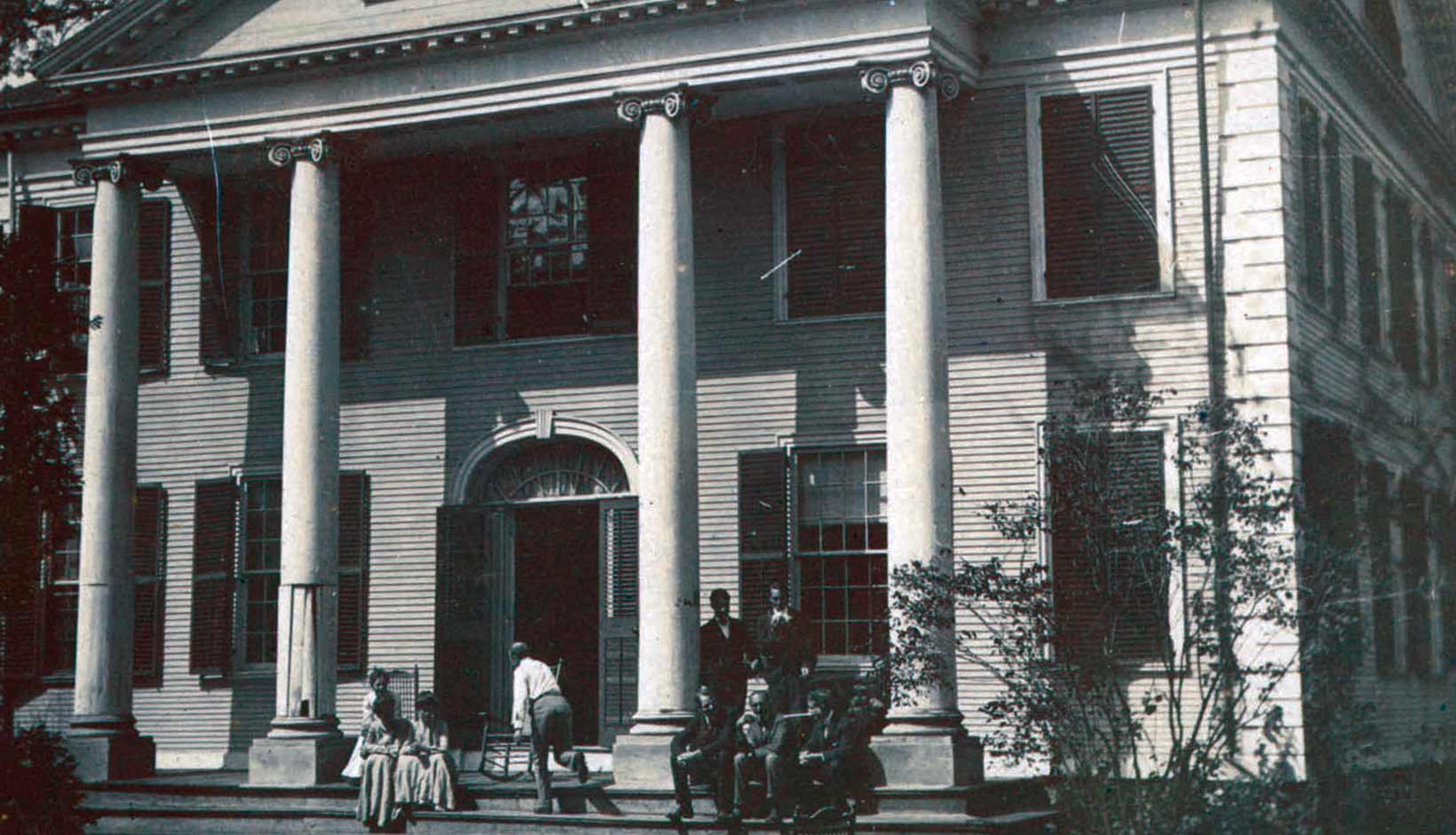
By happy circumstance, the prominent landscape artist Henry Ward Ranger arrived in 1899 shortly after Miss Florence had decided to take in boarders to lighten the financial burden of caring for her family home.
Ranger, having recently returned from study in Europe, was eager to start a colony modeled on the French Barbizon. He saw in Old Lyme the ideal setting for establishing a new American “tonal” school of landscape painting. He found Miss Florence’s home the perfect place to settle. The Griswold House offered features found in the influential art colonies of France and Holland: a stimulating environment, artistic camaraderie, inexpensive lodging, and picturesque scenery. Conveniently located between the cultural hubs of Boston and New York in the lush countryside of Connecticut, Lyme soon attracted a flourishing colony of artists.
Under Ranger’s leadership, Old Lyme was, for a time, designated the “American Barbizon.” With the arrival of Childe Hassam in 1903, the colony’s focus shifted from Tonalism to Impressionism and became known as the most famous Impressionist colony in America, the “American Giverny.” In the years to come, other artists such as Willard Metcalf, Matilda Browne and William Chadwick would transform the stately Late Georgian house into the home of the Lyme Art Colony.
Inspired by the beauty of the New England countryside and charmed by Miss Florence’s gracious hospitality, the Colony flourished for over three decades. As Hassam put it, this was just the place for “high thinking and low living.” Here some of the most noted names in American Impressionism would create many important paintings. Annual exhibitions of their work gave birth to the “summer annual” in America. Wide press coverage contributed to the popularity of the work of the artists.
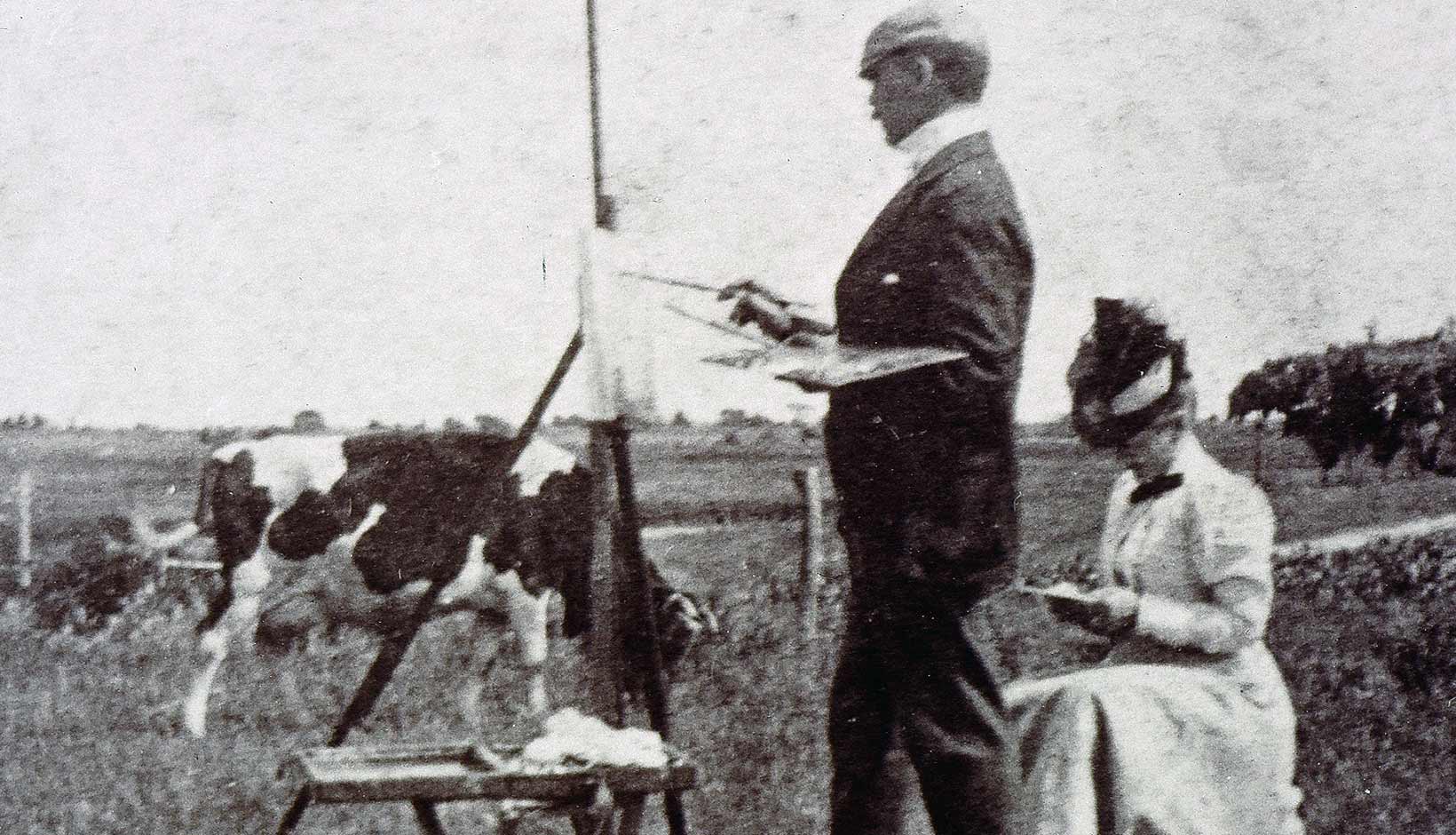
Members of the Colony, preferring to work from nature, spent the day in the presence of their subjects, often painting “en plein air” — in the open air. Canvases were sun-soaked or moonlit depending on the weather. Nature’s cycle dictated themes and subjects.
Weathered old farmhouses. White clapboard churches. “Old-fashioned” gardens. Granite ledges. Salt marshes. Wooden trestle bridges. Grazing cows. The intrinsic linkage of artist to locale defines the work of the Lyme Art Colony painters. Capturing the local and specific in a highly personal manner, the painters of this period created a sense of permanence and continuity in a rapidly changing America. They commemorated aspects of rural life reminiscent of New England’s origins and celebrated the essential spirit of place.
Visitors to the Museum are treated to a rare opportunity. Not only do they see where and how these early 20th century artists lived and worked, the Museum’s outstanding collection offers the chance to see their paintings in the context of the Connecticut landscape and village where many of the works were created – imagine viewing Edward Rook’s masterpiece and then walking to the site it was painted.
by Jeffrey Andersen, Director of the Florence Griswold Museum
Introduction to the Lyme Art Colony
During the first two decades of the 20th century, the village of Old Lyme, Connecticut, was the setting for one of the largest and most significant art colonies in America. Centered in the boardinghouse of Miss Florence Griswold, the colony attracted many leading artists — Henry Ward Ranger, Childe Hassam, and Willard Metcalf among them — who were in the vanguard of the Tonalist and Impressionist movements. Drawn to Old Lyme by its natural beauty, they discovered an “old” New England setting that was, as one observer noted, “expressive of the quiet dignity of other days.” Here was a country retreat where, as Metcalf put it, “every day is so in line with work.” Interacting with each other and with the community, the artists of the colony produced an impressive body of work, which achieved renown in its day and still calls attention to the enduring – and fragile — qualities of the rural New England landscape.
From its beginnings in 1899, the Lyme Art Colony was shaped by a strongly held group identity. Calling themselves the “School of Lyme,” the first artists who came, at the urging of the colony’s founder Henry Ward Ranger, believed they were forming a new school of painting in America. In the ensuing years, as more artists came and went, the colony’s stylistic focus shifted from Tonalism to Impressionism, but its identity as an artists’ colony held fast and grew in reputation. The constant behind this was the central figure of Florence Griswold (1850-1937), affectionately referred to as “Miss Florence” and often described as the colony’s “patron saint” or “mistress.”
Her efforts to nurture and sustain the colony can hardly be overstated, but she was aided immeasurably by a small circle of artists who chose Lyme as their place of permanent residence. Working together, they fanned the colony’s flames and produced two firsts: the birthplace of the “summer annual” exhibition in America and the opening of the country’s first artist-financed cooperative gallery. Both innovations would later become regular features at such artist communities as Woodstock, Provincetown, Taos, Ogunquit, Laguna Beach, and Carmel.
The physical and emotional locus for the Lyme Art Colony was the home of Florence Griswold, now the Florence Griswold Museum. The unmarried daughter of a prominent ship captain and a descendant of one of Lyme’s founding families, Florence found herself in middle age with only her property and family possessions to her name. She turned her stately but somewhat rundown home into a boardinghouse for summer vacationers. Searching for new sketching grounds, the painter Henry Ward Ranger stayed there in 1899. Completely taken with the “gorgeous” countryside “where pictures are made,” he proposed the idea of a colony of painters. Soon the Griswold House was filled with artists.
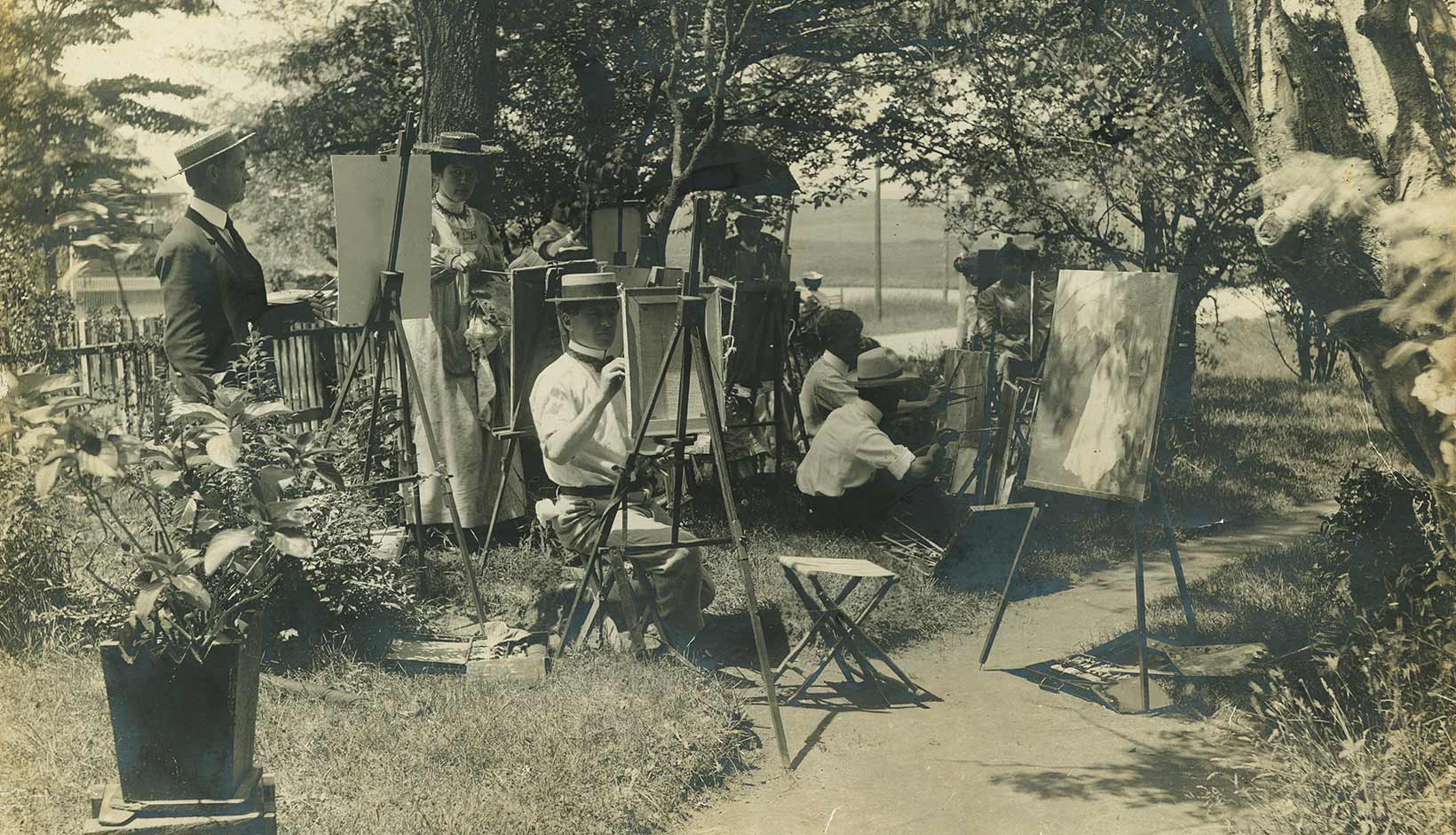
Painters set up their portable easels on the grounds, capturing the gardens and orchards as well as a tidal stream and marshes that ran through the property. Barns and outbuildings found new life as makeshift studios and, at the age of 50, Florence Griswold was reborn as the “keeper of the artist colony,” presiding at her always generous table, which was filled with lively conversation. Bred to be a gracious hostess and optimistic in nature, each year she proclaimed, “I’m going to have a wonderful season this summer.” Many times it was.
The Griswold House and the Lyme Art Colony were at their most prominent between 1900 and 1920. During that time, dozens of artists, including many leading figures in the American art world, stayed in the Griswold House or at guesthouses in town. The colony also attracted public figures, including Woodrow Wilson and his wife, the artist Ellen Axson Wilson, and their daughters. The Wilson family spent the summers of 1908 to 1911 at the Griswold House, where they developed a lifelong friendship with Florence Griswold and many artists.
Reserved largely for professional artists, a stay with Miss Florence was so esteemed that the house was irreverently nicknamed the “Holy House” by the many art students who arrived each summer and took lodgings in private homes nearby. The practice of painting on the walls and doors of the Griswold House – begun by Ranger and carried out over a number of years by more than thirty of the colony’s artists – became such a singular feature that a member of the press was moved to report that: “Every stranger within the gates of Lyme wants to see it – and to see it is to admire it.” The complete ensemble, which is preserved today within the Museum, not only documents the colony’s artistic strategies but also illustrates the lengths artists went to to create their own legacy as the “School of Lyme.”
Against the stimulating artistic backdrop of the Griswold House, the colony fostered the testing of new ideas and subjects in their art. With Childe Hassam’s arrival in Old Lyme in 1903, followed shortly thereafter by fellow Impressionist Willard Metcalf in 1905, the colony’s stylistic identity gradually shifted from Tonalism to Impressionism. Frequent reappearances by these two over the next several years drew scores of like-minded Impressionists to the colony, contributing to its reputation as “the most famous Impressionist-oriented colony in America.” Old Lyme’s identification as a major outpost of Impressionism was significantly enhanced by the success that Hassam, Metcalf, and others had with pictures of Lyme subjects in national and even international exhibitions. One newspaper noted in 1907 that this success “made Lyme sound like Standard Oil, and with no less enthusiasm than the gold hunters of ’49, the picture makers have chosen Lyme as the place to swarm.”
Coming together, largely under one roof, this experiment in communal living was life changing for many of its participants. Deep friendships were created or renewed, future spouses met and courted, and, not surprisingly, occasional rivalries and scandals surfaced. Throughout it all, an Edwardian sense of deportment prevailed, accompanied by a lively sense of humor and bon amie. Visiting the colony was, as Hassam said, like a “little excursion into Bohemia.”
But beneath the surface there were serious ambitions at play. Association with the colony had many benefits for an artist, not the least being part of an informal but extensive network of artists and dealers that extended to New York, Boston, and beyond. The colony provided regular opportunities for its artists to exhibit their work in Lyme, where they might be rewarded with sales, prizes, and critical recognition; where they could meet prospective patrons; and, perhaps most surprisingly, gain entrée into Old Lyme’s elite local society, where pedigree mattered more than money and career.
Many of the “Lyme” artists knew one other before coming to Lyme. Several had met in Boston, New York, and, especially, France. Virtually all of the painters associated with the first generation of the colony shared the common experience of training in Europe, principally in Paris at the Académie Julian. Summers abroad brought exposure to famed artists’ haunts, such as Barbizon and Grez-Sur-Loing near the Forest of Fontainebleau, Giverny in Normandy, or Laren in Holland. The lively environment of these international colonies – all of which offered friendships with other artists, inexpensive lodgings, and picturesque scenery close at hand – formed an important part of their experience abroad. It made these artists deeply committed to plein-air painting (painting out-of-doors directly from nature) and partial to joining art colonies upon their return to America.
Old Lyme re-created many of the features found abroad and was, for a time, identified in the popular press as the “American Barbizon” or the “American Giverny.” A stay at the Griswold House provided an artist with affordable lodgings, good food and company, the availability of studio space, and varied subject matter for plein-air painting. But Old Lyme offered something more – a retreat from the hurried pace of the city to a town that time had largely forgotten.
It had once been a thriving maritime town. Between 1784 and the mid-1800s, nearly 200 sailing vessels built for coastal and foreign trade were launched from Old Lyme shipyards. Prosperous families built elaborate houses along “The Street,” as the main avenue was called, including the one that Florence Griswold and her family lived in. By the late 19th century, however, the steamship had long ago replaced the sailing vessel, and the wharves, shipyards, and warehouses that lined the Lieutenant and lower Connecticut rivers had fallen into disrepair. With little else to rely on, Old Lyme gradually reverted to an economy based on farming and cottage industry. Turning inward, it became a largely forgotten byway, clinging to its glorious past.
Thus Old Lyme was particularly ripe for discovery and renewal. For the American artist so inclined, it provided a landscape steeped in historical associations and nostalgia. “You see, everything savors of the past,”
Florence Griswold said. Here was a place where painters could reconnect with their American, and, in many cases, New England roots. Its gentle, cultivated landscape, worked by generations of farmers, stirred deep feelings in the minds of the artists and, not coincidentally, their patrons.
To a considerable degree, the art of the Lyme Art Colony expressed a sense of permanence and continuity in the face of a rapidly changing America. In doing so, it shared common ground with all American Impressionists, who, like the Lyme painters, were devoted to interpreting what they regarded as the “native” characteristics of a place in highly personal ways. The paintings of the Lyme Art Colony express fresh ideas and new attitudes about man’s relationship to the American country landscape of the early 1900s.
Place names change over time as boundaries move, communities diverge, and identities shift. The places variously called Lyme acquired different names whenever the town’s geographical outlines were reconfigured. At first the expanse of woodland, meadow, and salt marsh across the Connecticut River from the Saybrook Colony’s original settlement was referred to simply as the “Quarter on the East Side of the River.” The separate town of Lyme resulted from an amicable agreement, known as the “Loving Parting,” that set what had previously been East Saybrook apart on February 13, 1665.
A century later when Ezra Stiles (1727-1795), a minister and academic who became president of Yale, drew a map of Lyme in 1768, the town had divided into four distinct ecclesiastical societies.
Further separations occurred as the population dispersed and the needs of the occupants changed. In 1819 Salem became an incorporated town, followed by East Lyme in 1839. Finally in 1855 the 27 square miles south of Lord’s Hill, formerly the First Ecclesiastical Society, was set apart and called South Lyme. That name was shortlived.
That a petition be brought before the General Assembly now in session praying that the name of this Town be changed from South Lyme to Old Lyme and that Daniel Chadwick Esq be appointed an agent to prepare and present said petition to the General Assembly provided the expense of so doing be not more than Twenty five dollars. — Voters at a Town Meeting on May 6th, 1857
The petition was quickly granted, and the earliest settled section of Lyme thereafter became officially known as Old Lyme.
Popular usage did not shift quickly. The name “Lyme” had been firmly established for almost two centuries, not just as a geographical and political designation but also as a mailing address and a community identity.
Newspapers started devoting separate columns to the newly differentiated towns of Lyme and Old Lyme, but well into the 20th century postcards continued to identify what had once been the First Ecclesiastical Society as “Lyme.”
The overlapping use of place names did not stop in 1928 when the post office on Lyme Street finally adopted the name “Old Lyme.” Both the Lyme Art Association, which opened its gallery in Old Lyme in 1922, and the Lyme Historical Society retained the town’s earlier place name.[1]
[1] The early history of the town and its ecclesiastical societies can be traced in: J. David Little,Revolutionary Lyme, A Portrait, 1765-1783 (Old Lyme, 1976), pp. 13-16; Susan Hollingsworth Ely, et. al., History of The First Congregational Church of Old Lyme, Connecticut, 1665-1993 (Old Lyme, 1995), pp. 3-8; Olive Tubbs Chendali, East Lyme: Our Town and How It Grew (Mystic, 1989), pp. 91-93. Also see Old Lyme Town Meeting Book, p. 12.
by Caroline Fraser Zinsser, scholar and author for the Museum’s 75th Anniversary (2011)
In 1936 “Miss Florence” Griswold was in danger of losing her house. Over the years starting with the arrival of Henry Ward Ranger as a boarder in 1899, it had emerged as the center of America’s most famous Impressionist art colony. The 1817 Georgian-style mansion, with its wide front hallway lined with paintings, its convivial front parlor, its dining room panels decorated with artists’ works, its quaint bedrooms extending up into the attic, and its vine-shaded porch for outdoor eating, had fostered the creativity and friendships that nourished the Lyme Art Colony. Miss Florence, of course—hospitable, charming, and supportive—had made it all possible. It was she who had animated her beautiful family home to become the ideal congenial setting for the growth of American Impressionism.
But by the 1930’s Miss Florence’s house was no longer as active as it once was. At the age of 86, she still led hundreds of visitors through the house each year. But now, in the midst of the Great Depression, whose devastating effects reached every American community, she found herself in constant debt. Although she lived as simply as possible, the income from her remaining three boarders was not enough to meet the expenses of running her house, including taxes and mortgage interest. She had always been generous, “forgetting” to charge her artist boarders when they were out of funds and extending them credit between sales of paintings, but now she depended upon the generosity of others. She did what she could—she even sold her garden vegetables for a pittance—but her position was untenable.Miss Florence was the last of her immediate relatives, but she was also a member of the extended Griswold clan, the foremost family in Lyme.
Six cousins had begun to contribute to Miss Florence’s upkeep in small amounts on a regular basis, but realizing the inadequacy of their resources, especially since some of them had nearer relatives who were equally hard up, they petitioned the probate court to appoint a conservator who would take control of Miss Florence’s estate on the grounds that she was an “incapable person.” Lucius Horatio Biglow, a lawyer from Deep River whose credentials were as impressive as his name, was chosen for the job. Starting with his appointment on May 20, 1936, Biglow took charge of all moneys received and expended on behalf of Miss Florence and saw that all claims were fully paid. Word must have spread in the village that the credit that sympathetic merchants had extended to a lady in distress might now be redeemed.
In the following weeks Biglow paid an overdraft at the bank, an old bill from the Connecticut Light & Power Company, some overdue payments on an Electrolux, returned checks for ice cream and merchandise at Saunders gasoline station, and past-due bills to the laundry, the butcher, and the plumber.
Biglow also began paying all household expenses and for Miss Florence’s minimal personal needs (a pair of shoes, a visit to the dentist, more ice cream) as they occurred. It was immediately clear to Biglow that Miss Florence’s greatest asset was her house on Lyme Street and its surrounding ten acres leading down to the banks of the Lieutenant River. This would have to be sold to pay off her two mortgages and to provide an adequate income to support her for the remaining years of her life.
Accordingly, he placed the entire property on the market and very soon received a large offer (for the times) of $15,000 from an unexpected source—not from the ranks of the ancestrally prominent along Lyme Street but from the socially prominent along Park Avenue in Manhattan.
Robert McCurdy Marsh, a law partner in the firm of Delafield, Marsh, and Hope, and a New York State Supreme Court Justice, and his wife, Charlotte Delafield Marsh, wanted to build a country house along the Lieutenant River. Biglow duly informed Dr. Matthew Griswold, who represented the Griswold family. As conservator, Biglow explained, he would be obliged to accept the Marsh offer unless he received an equal or better one. The decision would be made on August 10.
This raised the alarming and distressing—in fact, almost unthinkable prospect—of Miss Florence in her final years being evicted from her lifelong family home. In an amazing coming together of relatives, artists, and townspeople, it was decided to attempt what appeared impossible: to raise $15,000 in less than a month—and in the midst of the Great Depression.
But the continuing Depression had touched all lives, the righteous and the unrighteous, the strong and the weak. What happened to one’s neighbor might well happen to oneself. Seemingly disparate groups drew together to help the now vulnerable Miss Florence. In a village known for its secluded serenity—described during that same summer by an art critic at the New York Times as “sweet and untroubled…where art may drowse at rest nor fear the curt rough challenge of reveille”—the speed with which a Florence Griswold Association (FGA) was immediately organized was impressive.On July 16, 1936, the FGA was incorporated in the State of Connecticut. Its purposes were to purchase and maintain the homestead as an example of early New England architecture; to provide a home for Miss Florence for the rest of her life; to operate the corporation on a non-profit basis; to make the corporation and art museum purely educational, historical, and charitable; and to use the real estate exclusively for carrying out the purposes of the corporation. Its proposed officers represented the various constituencies of art, family, and community, who overcame whatever differences they may have had in the past to unite in their common cause.
Dr. Matthew Griswold, “Dr. Matt,” agreed to serve as president. One of the most respected figures in Lyme, Dr. Griswold was a skillful and civic-minded physician who cared for Miss Florence as a patient and friend. “Raising money is new and hateful to me,” he wrote to a prospective donor, “I prefer to stick to my last. But I’ve been persuaded to be president of the Florence Griswold Association Incorporated, and am so.” In a note to his mother he explained his new position, writing, “I dislike these extracurricular activities (I’m the figurehead of Lyme—also president of the Taxpayers’ League) but knew this was feasible, having been collecting from the family all winter and paying her bills, so was glad to help put it over.”
The artist Harry Leslie Hoffman took on the challenging job of treasurer. He had come to Lyme as a young man, boarding at Miss Florence’s and becoming a fast friend. He later married, and he and his photographer wife, Beatrice Pope, settled in Lyme.
Once, during his boarding days, when he had fallen behind in paying Miss Florence, he sent her a contrite letter:
…First of all I shall pay you what I owe you. Not this minute for I had to pay for my automobile just this morning!…But I expect to be able to forward to you in the near future that amount you have so patiently and kindly waited for. I assure you that I’ll get even with you. I don’t forget favors.— Harry Hoffman
Hoffman more than made good on his promise. He not only served as treasurer of the Association during the crisis but continued on for many years afterward. The proposed vice president, Thomas R. Ball, was in real estate, a member of the state legislature, the son of the artist Thomas Watson Ball, and a Griswold cousin. Grace Cramer Clime, the wife of the artist Winfield Scott Clime, would serve as secretary. She and her husband also lived in Lyme, where she had headed the Red Cross drive. Other trustees were Lucien Abrams, an artist; Joseph Bulkley, a lawyer; and Mrs. Charles Ranlet, a Griswold cousin. It was a slate carefully selected for a balance of interests that would serve the Association well.
The FGA began its work by issuing an eloquent flyer entitled “A General Appeal:”
“The Florence Griswold house at Old Lyme is about to be sold under order of her conservator to satisfy the demands of her creditors, and unless funds are forthcoming at once Miss Griswold will be forced to leave her home.
The gracious and charming personality of “Miss Florence” has been an inspiration to thousands who have visited her home. The greater part of her life has been devoted to the promotion of the arts in Old Lyme, and the development of the art colony and the extent of its influence could never have been accomplished without her unbounded enthusiasm and support…
Many of her friends feel very strongly that Miss Griswold should be permitted to remain in her house for the rest of her life, and that at her death it should be preserved as a memorial.
However, this cannot be accomplished without substantial subscriptions at once, and the pledge of smaller contributions in the future.
If this appeal is unsuccessful the property will be sold August 10th, the opportunity for its preservation lost forever and Miss Griswold will be obliged to leave the home that she has loved and cherished and in which she has lived over eighty years. Such a break in her life would very probably have an effect on her health which is now none too robust.”
Printed pledge cards were widely distributed to be filled out and returned “at once” to Harry L. Hoffman, treasurer.
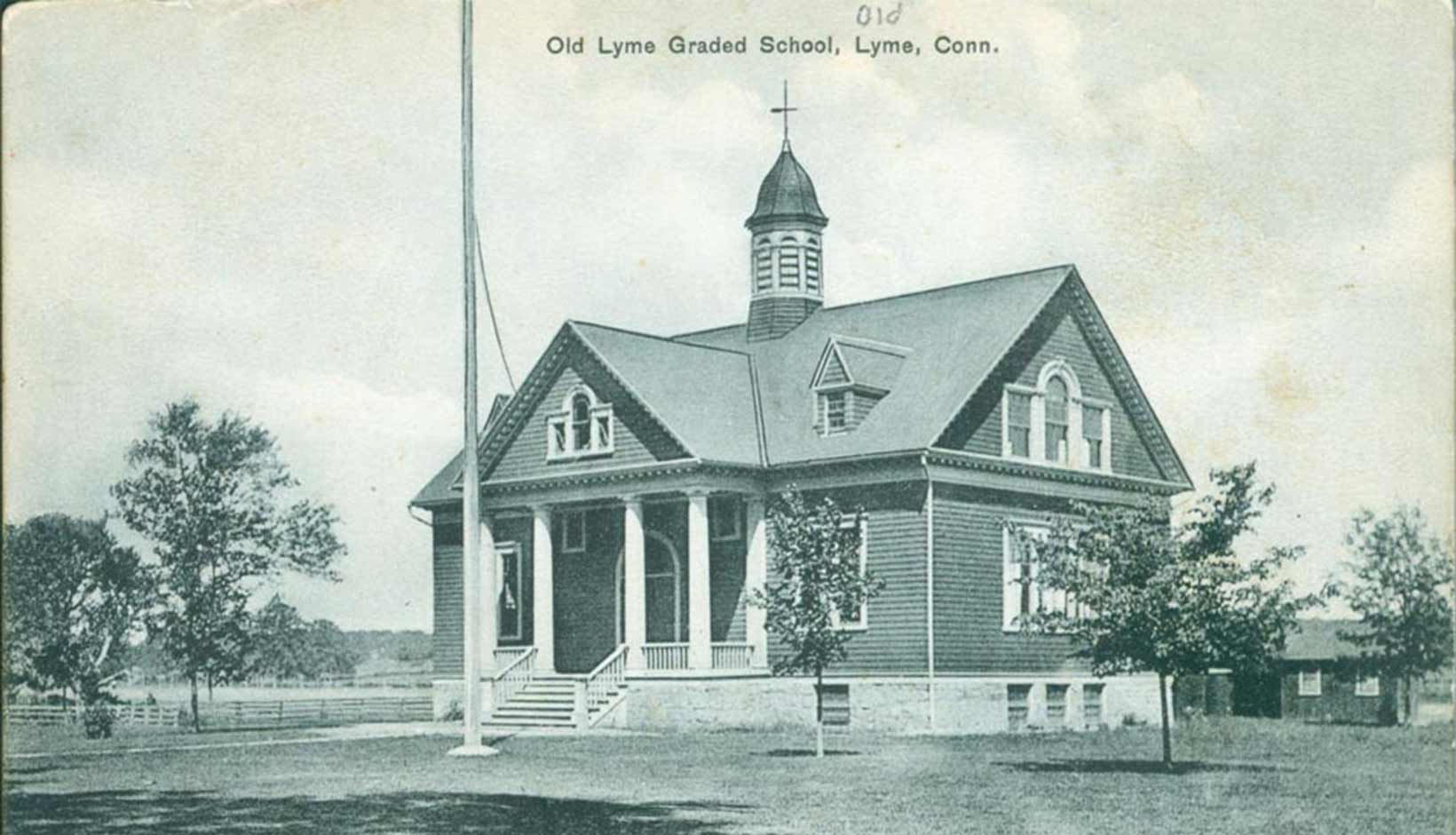
The first official meeting of the FGA was on July 20 in the auditorium of the Old Lyme School. The Rev. W. Dixon Hoag, minister of the Old Lyme Congregational Church, spoke first describing the aims of the Association. Dr. Griswold then explained that unless $15,000 could be raised by the Association, the conservator’s plan was to pay off debts and mortgages and to provide for Miss Florence to live either at the Old Lyme Inn or at a nursing home.
The “General Appeal” was widely circulated, and the prospect of their revered and dignified Miss Florence being evicted from her home and forced into a hotel across the street was unimaginable to those who heard the news.
Eventually the Association would enroll 100 members, who pledged in various categories of commitment, starting with Life Members. “Summer people” joined with year-round residents and with friends who had moved away. Small donations were also welcomed and each was duly recorded. Door-to-door solicitations raised $2.00 from the Colonial Wine Cellars, 50 cents from “a barber,” 25 cents from the Hoxie Store, and 19 cents from an anonymous donor (probably emptying a change purse). A lady who canvassed houses found that people were eager to give what they could and reported “one small boy giving six cents and an old man literally digging one dollar out of his sock.” A neighbor with newspaper connections alerted the New York Herald Tribune to Miss Florence’s plight, and the paper sent a reporter and photographer to cover the story, which was featured on August 8 under the headline “Artists Rallying To Repay ‘Saint’ At Old Lyme.” The Tribune had a wide readership and other newspapers picked up the story so that it that reached former residents and even strangers who were willing to help.
Donations came from Louisville, Ky.; Saranac Lake, Fla.; Coral Gables, Fla.; Orange, N.Y.; Worcester, Mass.; Kennebunk, Me.; Santa Monica, Calif.; Elkhart, Ind.; Asheville, N.C.; and Cape Breton, Nova Scotia. Local people donated their services. Annette Burr sent the $5.00 she received for a lecture at Old Lyme’s Boxwood School entitled “Artists and Their Palettes,” Dr. W.L. Smith sent $30.00 from a lecture he delivered at the American Museum of Natural History. A “tenant of Miss Mary Chadwick” offered a benefit concert. Frank Saunders, a housepainter, wrote: Will pledge $10.00 worth of painting per year as long as I am physically able to perform. Hope this will be accepted. If several Painters & Carpenters and Plumbers would do likewise it would help a lot. There will always be rooms to paint Steps Windows and many details that could be done by contributions of work from the various trades in town. Hope you will be able to get them all interested so that we may have a friendly contest of who will do the most.
It had been Miss Florence’s wish to leave her house to the artists.But they had agreed that they could not accept it as a home because, as she well knew, it was impossible to make a boardinghouse pay. It was their plan that the house, after Miss Florence’s death, would become a museum.
Meanwhile, the artists did what they could.
Fifteen of the 100 Association members were artists, some as Life Members. The Association, however, realistically decided to concentrate on raising money before making further plans for a museum. Since the appraisal of the house had not included the paintings in the dining room, Dr. Griswold suggested that the Association meet any offer made for them in order to keep them in the house. Another suggestion was that the artists of the Lyme Art Association who were not represented by panels in the house might paint additional ones to add to the value. Finally it was decided that the panel works had been made as gifts to Miss Florence and should be considered part of the house.
No more paintings were added, but when Edward D. Jones of Columbus, Ohio, wrote that “in honor of the charming woman who is the patron saint of Old Lyme,” he would buy for $100 “a picture” by any one of the artists of the Old Lyme group, the painter William S. Robinson offered to donate one of his works. Jones then specified that the picture “should be typical of his interpretation of an aesthetic message—a message to a certain audience in central Ohio.” Robinson’s painting was duly shipped off to Jones.From the first, organizers of the Association had considered selling plots of land to the south and west of the historic house. Dr. Griswold explained to its members that their “only hope of saving Miss Florence’s house for her was in selling off this land.” Once the Association gained title to the entire property, an artist community of homes and studios could be established. A real estate committee was formed and a map drawn up showing ten proposed lots, seven along the river and three further inland. A thirty-foot drive giving access to the lots was designed to wind around the back of the Griswold house and then south to a turnabout. A narrow lane would lead from the drive to a communal wharf.
The sculptor Bessie Potter Vonnoh, now a widow, was the first to sign on, choosing three of the most desirable lots along the river. She and her husband, the painter Robert Vonnoh, had lived in Lyme and had long been members of the Lyme Art Association. In her enthusiasm for saving the property, Vonnoh began work on a bas relief medallion, portraying Miss Florence on the front and the façade of her house on the back, as a gift to all subscribers to the FGA. Robinson chose three more lots—two on the river and one directly across the drive. He was a widower and current boarder who had summered with Miss Florence for over thirty years and now, at 76, was planning to be remarried in the fall. Anna Jeannetta Gannett, a patient of Dr. Griswold, chose the river lot between Vonnoh and Robinson. The Christian Science Church was considering buying for its new church the lot adjoining Miss Florence’s and the only other one with access to Lyme Street.Down payments from lot subscribers were made to the Association, but no offers had been made for the two southernmost lots, which were close to Saunders Garage, which Dr. Griswold admitted (despite its ice cream) was “an active, noisy, smelly affair right on the Boston Post Road.” On the eve of Biglow’s deadline, it appeared that the real estate project had stalled.
We are so very glad that your gift allows us not to sell it to the Christian Science Church; they put up nice churches, but it does seem as if Congregational Meeting Houses are the most congenial on the main street of a New England village. — The Florence Griswold Association, to George A. Ball upon receiving his donation
Amazingly, rescue was at hand. George A. Ball, vice president of the Ball Brothers Company of Muncie, Indiana, telephoned Dr. Griswold’s home on August 9, one day before the Biglow deadline, and offered to send a check for whatever amount was needed to reach the Association’s goal of $15,000. Ball and his wife were interested in preserving historic houses, and when, on vacation in New Hampshire, they read the article in the Herald Tribune, they decided immediately to telephone Old Lyme. After discussing the situation with Dr. Griswold, Ball agreed to contribute $6,700 to the FGA, including his buying the three unsold lots.
Ball Brothers was a family business famous for manufacturing the glass jars used in canning to preserve food. This was surely one company whose business had thrived during the Depression when home canning was taken up by a nation of housewives as a thrifty way to reduce grocery bills. For the Association it was a silver lining to the Depression’s cloud.The Christian Science Church could now be notified that the lot it had considered next to Miss Florence’s was off the market.
To announce the good news, a special Association meeting was called immediately after the dramatic telephone call. As the meeting was adjourned, jubilant members toasted the Balls in sparkling burgundy.
Two days later the Association met again to announce that Judge Marsh had withdrawn his offer. This good news was reported to the New York Times, which quoted Biglow as feeling “certain” that the probate court would accept the Association’s bid within the next few days. Plans could now move ahead for the Florence Griswold Museum with Miss Florence as curator. During the meeting a call was put through to the Balls in Muncie to say that “everything was in order” for taking over the property.
It was also announced that Judge Marsh had now offered $4,000 to the Association for the three lots Bessie Vonnoh had selected. But members felt a loyalty to Vonnoh, and no one spoke in favor of Judge Marsh’s offer. The meeting continued onto other items on the agenda, with no one apparently recognizing the growing determination of the Marshes to buy the beautiful stretch along the Lieutenant River on which they had set their hearts.
Ten days later, on August 21, another special meeting was called to discuss dismaying news. Judge Marsh had made a new offer to Biglow of $16,000 for the entire property. A fruitless attempt to reach an understanding with Judge Marsh followed. Both sides hardened their positions, with Judge Marsh claiming that he had not been offered a chance to buy any of the lots, and Dr. Griswold stating that at this point the Association was honor bound to the Vonnoh arrangement.
Negotiations were resumed, and September 8 was set for deciding on the sale. That morning officers of the Association and Judge and Mrs. Marsh met in the office of the probate judge at Town Hall, along with Biglow, acting as conservator, and two judges who would advise him as needed. Two offers in writing were presented: one from Judge Marsh offering $16,000, the other from the Association offering $15,000 plus occupancy of the house for the remainder of Miss Florence’s life rent-free. Biglow and the two judges then withdrew for about fifteen minutes.
Biglow returned to announce that the Association’s offer was the better of the two in its provisions for Miss Florence. Judge Marsh then read a second letter in which he offered to give Miss Florence and a servant the use of her house for five years. Again, Biglow and the judges withdrew for consultation. This time they reported back that Judge Marsh’s offer was accepted. Dr. Griswold then made an offer of $16,500. Judge Marsh countered with $16,600.
Opposing bids were then exchanged in increments of $100 and then $50 until the Association’s eighth bid of $18,500 was topped by Marsh’s of $18,550, forcing Dr. Griswold to concede that the Association had no further bids to make. Biglow then announced the sale of the property to Judge Marsh for $18,550, including the use of the house by Miss Florence for her lifetime.
The Association’s main objective of saving the house for Miss Florence had been accomplished “though not in the manner we had wished.” Reactions to the Marshes’ victory were bitter. On the day after the sale, Judge Marsh said he would be glad to enter into negotiations with the Association, but the sense of the members was that they “should have no further dealings with Judge Marsh.” One newspaper reader was so incensed by the outcome that he referred to the judge as a “contemptible, low-down, and unethical.” Dr. Griswold, speaking for the Association, was more balanced in appraising the situation. The plans for a museum had to be dropped, he explained, but the Association’s main objective of saving the house for Miss Florence had been accomplished “though not in the manner we had wished.”
In the following year, the Marshes built their handsome house facing the river while Miss Florence continued to live in the Griswold house facing on Lyme Street, as she always had. The house was rent-free (though Judge Marsh retained the use of two rooms).
On December 6, 1937, Florence Griswold died at the age of 86, at home, in her own bed, with Dr. Griswold, artist Gregory Smith, and her favorite cats at her side—and in familiar and well loved surroundings. The Florence Griswold Association returned the money advanced on real estate by the various prospective buyers, but decided not to disband hoping that the house could eventually be acquired for use as a museum—the original plan suggested by the artists whose works would be displayed there and one that had been enthusiastically supported by everyone who had contributed to the amazing efforts of 1936.
Those hopes came to fruition on December 6, 1941, when the Association was able to purchase the house and three-fifths of an acre of adjoining land from Judge Marsh for $5,750. The course of the entire nation changed the next day with the Japanese strike at Pearl Harbor, and wartime activities took precedence over all else. But by 1947, with the war at an end, the house was finally ready for its opening day as a museum. In a letter to the Hartford Courant, a visitor wrote that she was “thrilled by its beauty every minute that we spent in the lovely colonial home…The charming portrait of Miss Florence pictures a lovely gentlewoman, whose influence seems still to linger in each room, and this museum is a fitting memorial to her.”
Sources: Research for this paper came from the archives of the Lyme Historical Society, Florence Griswold Museum: LHS Association Papers, 1936-1950, Box 1 and 2, and Florence Griswold Papers, Box 1 and 2. Additional biographical details came from digitized archives on the website of The New York Times. The September 9, 1936, article in the New York Herald Tribune is reproduced on microfilm at the New York Public Library.
by Hildegard Cummings, independent art historian and curator
Artists whom we call American Impressionists came to Connecticut in significant numbers at the turn of the 20th century. They found in this state a landscape that was intimate, rural, and soothing at a time when America had become urban, industrial, and restive.
The themes they explored were those first seen in the aftermath of the Civil War, when an intense longing for order and stability led artists to favor quiet, peaceful views over awesome wilderness vistas. Connecticut, with its longtime domesticated landscape and pre-Revolutionary history became then, for the first time, a significant place for making art other than portraiture.
The last of the Hudson River School painters abandoned mountains and gorges for Connecticut’s gentle hills and valleys and were soon joined by painters enamored of the evocative rural realism of French Barbizon art. Then the American Impressionists arrived and transformed a newer, more sensational French form into a thoroughly American art.
Images that spoke of comfort and hope to American artists and their public were still easy to find in Connecticut in 1900. Meadows, marshes, rocks, trees, rivers, and a sheltered shoreline; as well as historic New England buildings, homely dirt roads, well-worked farmlands, and old-fashioned gardens. Budding American Impressionists, keenly aware from their city life of the onrush of modernity, may have appreciated an intimate countryside even more than their predecessors, knowing, as they did, that much of it had already disappeared. Ironically, the intrusive technology of rail service, electricity, and plumbing made it easy for them to come and absorb the timeless qualities that remained.
Connecticut’s rural charms, however, might not have been enough to attract the hundreds of artists who painted landscapes here from the 1890s into the 1920s had it not been for an art collector named Erwin Davis in 1882. He so badly wanted a picture owned by artist J. Alden Weir that he offered him a farm in the Branchville section of Ridgefield. Weir accepted, and when his friend John Twachtman joined him there in the summer of 1888, the two pioneered a new way of seeing the landscape. Their outdoor experiments were aimed at translating the spontaneity and delicacy of watercolors and pastels into the oil medium and at incorporating the colors and flattened perspectives of Japanese woodblock print designs. Etching experiments also prompted them to rethink the expressive possibilities of line.
When the two exhibited together in New York the following winter, critics saw that they had cut loose from traditions of the previous two decades and predicted that people would find it hard to accept “the shorthand summary of these ultra impressionists.” In 1893 the two exhibited jointly again, this time in direct competition with art in an adjoining gallery by Claude Monet and Albert Besnard.
Twachtman had settled on a farm of his own in Greenwich by 1889, within visiting distance of Weir, and in about 1891 began teaching summer classes in the Cos Cob section of town. Whether he intended it or not, he had found in the small maritime village one of the prime requirements for the development of an art colony like those he and his friends had experienced abroad: a pleasant, inexpensive place in the country for a group of like-minded artists to live, with landlords who fostered an atmosphere conducive to fruitful discussion and work. Thus a boardinghouse run by Edward and Josephine Holley became the center of an art colony led by Twachtman, in association with J. Alden Weir, Theodore Robinson, and Childe Hassam. These artists, hailed today as masters of American Impressionism, participated in shaping an art inspired by French Impressionism that was not only intensely personal but deeply rooted in American landscape traditions and in the national reverence for nature. Fellow artists and art students learned from these mentors, embraced their experimental spirit, and disseminated their views to others.
The art colony at Old Lyme began in 1900.
Centered in the boardinghouse of Florence Griswold, founder Henry Ward Ranger wanted it to be an American Barbizon, but the focus changed to Impressionism after the arrival of Childe Hassam in 1903. He stayed only until 1907, but Willard Metcalf, Allen Talcott, Walter Griffin, Frank DuMond, Will Howe Foote, and others, whose reputations were made in large part by their Old Lyme paintings, would continue to lure artists to the town. In 1902, fourteen Old Lyme pictures were in New York’s National Academy of Design annual. Moreover, the colony instituted that year an annual summer exhibition, a first for an American art colony.
by Thomas Andrew Denenberg, Chief Curator and William E. and Helen E. Thon Curator of American Art, Portland Museum of Art, Maine
The Colonial Revival remains one of the most persistent and persuasive influences in 20th-century American life. A cultural movement as much as an aesthetic style, this reinterpretation of colonial forms provided (and continues to offer) designs and behaviors that shaped architecture, painting—even rituals like holidays and the family vacation—for countless Americans. Nowhere is the phenomenon more important than in the art colony of Old Lyme, Connecticut—an archetype of the New England village that became a national icon in the decade that bracketed the turn of the century. As urbanization, industrialization, and immigration changed the way Americans lived over the course of the 19th century, many sought comfort in the quiet and seemingly timeless landscape of an idealized “old” America. Writers and artists explored the historic haunts of their ancestors and provided imagery that made a virtue of the past for the modern era. Specific communities such as Plymouth, Deerfield, and Salem, Massachusetts were accorded mythic status in the American imagination. Other towns, such as Litchfield, Connecticut, literally remade themselves as colonial towns—backdating Main Street by removing 19th-century structures and altering others to resemble Georgian architecture.
On the Connecticut shore—an easy trip from the metropolitan center of New York—Florence Griswold’s boardinghouse in Old Lyme became a gathering spot for artists seeking to escape the hustle and bustle of modern life for the peace and quiet of an imagined historic past. With a critical mass of talent, including the painters Henry Ward Ranger (1858-1916), Childe Hassam (1859-1935), and Willard Metcalf (1858-1925), who were translating the landscape at Old Lyme onto canvas, the town became a village for the nation.
By the 1930s, Hassam’s vision of the Congregational Church in Old Lyme could be almost any Main Street in people’s minds. As the United States developed into an urban nation, a population shift moved the emerging middle class from small town to city. Individuals worked for ever-larger organizations, and as daily life became a series of interactions with corporations and institutions rather than individuals, nostalgia for the personal economy of the New England village became rampant. So, too, did reverence for New England ancestry.
The romance of pre-industrial small-town life initially took hold in literary circles on the eve of the Civil War. Poets such as Henry Wadsworth Longfellow (1807-1882) and John Greenleaf Whittier (1807-1892) as well as novelists like Harriet Beecher Stowe (1811-1896) made local historical myths seem real and disseminated the ideal of hearth and home to the growing nation.
In an age that witnessed the construction of planned mill towns, such as Lowell, Massachusetts, and Willimantic, Connecticut, the historical imagery of Whittier and Longfellow provided a form of rhetorical cover for the new patterns of labor.
Textile production, by then located in the mills, was represented by the poets as a timeless activity for colonial women. Spinning wheels–obsolete domestic equipment of an earlier generation–were brought down from the attic and placed in the Victorian parlor to serve as mementos of female ancestral virtue.
Americans celebrated the past in public rituals during and after the great sectional conflict. “Olde Tyme” colonial or New England kitchens were focal points at fundraising fairs organized by the United States Sanitary Commission (a precursor to the Red Cross) during the Civil War. Historical re-creations of domestic hearth scenes, these public displays of filial piety often included women in period dress engaged in activities associated with their grandmother’s generation: spinning, weaving, and open-hearth cooking.
So popular were these theatrical vignettes that they were staged again at the great national celebrations that marked the Centennial of 1876 and the World’s Columbian Exposition of 1893. Separate installations displayed colonial relics, including 17th-century cradles, Revolutionary uniforms, and bandy-legged old chests. As the United States stepped onto the international stage as an industrial power at these great world’s fairs, it celebrated myths that fueled a full-scale colonial revival.
New England, home to relics and myths, became the nation’s attic in the waning two decades of the 19th century.
Collecting antiques, an eccentric pastime in the decades before the Civil War, became a normal hobby in the years after the Centennial of 1876. Colonial relics, such as a chair owned by the 17th-century governor of Massachusetts Bay Colony or the sword of Miles Standish, were once gathered for their historical associations.
By the 1880s, burgeoning demand for American furniture fueled a new market for “antiques.” Sophisticated critics, such as Clarence Cook (1828-1900), recommended antique silver, china, chairs, and chests for the home of good taste. The urban middle class, settling into a routine of vacationing at the mountains and the coast in New England, learned to patronize pickers and dealers while on holiday and returned to the city with an iconic Windsor chair, blue China plate, or silver tea pot for display in the parlor.
Artists mediated the distance between modern life in the city and historical culture in New England. Indeed, painters and photographers played a key role in the transformation of the colonial revival from a 19th-century literary culture to a visual language in the early 20th century. Painters such as Hassam and Metcalf chronicled hoary old houses and New England town centers for their wealthy patrons. Hassam, a denizen of summer colonies up and down the coast, employed a brushy style to render recognizable architectural monuments in a universal manner. His brooding depiction of the Fairbanks House in Dedham, Massachusetts—understood to be the oldest wooden house in America—captured popular belief about the stoic lives of the 17th-century Puritans.
His paintings of meetinghouses—most famous of which are the multiple versions of the Church at Old Lyme—served as a catalog of these iconic structures. Metcalf’s Captain Lord House, Kennebunkport, Maine is a quintessential visual statement of the colonial revival on canvas. Bathed in light, the stately Federal mansion-house represents the golden age of trade in the young nation. Identified by title as a shipmaster’s house, the three-story structure provided a narrative about the virtues of commerce for an era of expansion.
The delivery system for such imagery into popular culture often came in the form of imitative photography. Wallace Nutting (1861-1941), a Harvard-trained Congregational minister, took up photography in the last years of the 19th century and turned this hobby into a business by providing an inexpensive alternative to easel paintings for the growing middle class. His A Colonial Three Decker, for example, bears a striking resemblance to Metcalf’s Captain Lord House but cost a small fraction of the price of the original.
A prolific author as well as a talented shutterbug, Nutting published some 26 books and a large handful of articles on American furniture and the beauties of colonial America before his death in 1941. Nutting also branched out to own a chain of house museums and a reproduction furniture company that provided high-end colonial revival furniture for those who could no longer afford the real thing or preferred “new” antiques. By the time of Wallace Nutting, consumer culture had caught up with the colonial revival. Large furniture companies in Boston, Massachusetts, High Point, North Carolina, and Grand Rapids, Michigan offered “colonial” lines at all price points. The rise of suburbia added fuel to the fire. The historicizing impulse of the small house movement in the 1920s and 1930s ensured that the American dream would be located in countless capes, saltboxes, garrisons, and other colonial house types from coast to coast. Indeed, for every modern house built in America, an exponential number of colonial revival homes dot the landscape to this day.
The colonial revival holds sway in the United States to this day. Trading upon the mythic image of “old” New England, this national recycling of historic architecture, decorative arts, and even landscapes guaranteed a place for the past in modern life. A humorous high point to the story of the colonial revival and small town Connecticut came in 1948 when Cary Grant and Myrna Loy starred in the film Mr. Blandings Builds His Dream House. The quintessential harried New Yorker, Jim Blandings (played by Grant) flees to Connecticut, “the land of steady habits,” to restore an old house. Blandings, like so many who came before him and followed thereafter, traveled a well-worn path created by artists, writers, and architects who looked to towns such as Old Lyme to provide models for the nation in the 20th century.
TIMELINE
Henry Ward Ranger arrives at Florence Griswold’s home attracted by a landscape just waiting to be painted. Other prominent artists follow and, together, they found the Lyme Art Colony.
1903
Childe Hassam arrives, heralding an identity of the Colony with American Impressionism. The Second Annual Colony Exhibition includes eight female artists, students of the Lyme Summer School of Art.
1905
Woodrow Wilson visits Old Lyme with his wife and daughters. They visit again in 1908, 1909, and 1910, staying at the Florence Griswold House. Wilsons first wife Ellen Axson Wilson enjoyed art and took lessons from members of the Lyme Art Colony.
1906
Willard Metcalf paints May Night, a moonlit view of the Griswold House. He offers it to Miss Florence to pay his bill. She refuses saying, “It’s the best thing you have ever done.”
1907
The Congregational Church at Old Lyme, made famous by Lyme artists, burns to the ground. Three years later, with the help of artists and the community, the church is rebuilt.
1914
Members of the Colony form the Lyme Art Association. Four years later, Miss Florence sells a parcel of her land to the Association.
1921
The Lyme Art Association Gallery opens and Miss Florence becomes its first manager.
1936
Due to Miss Florences failing health and deteriorating finances the Florence Griswold Association is formed by townspeople, friends, and family. Its goals are to provide for Miss Florence by purchasing and maintaining her family home and eventually operate as an art museum. However, the FGA loses the bid to purchase the property to Judge Robert McCurdy Marsh. He allows Miss Florence to live in the house.
1937
On December 6, Florence Griswold dies at the age of 86, at home, in her own bed, with Dr. Griswold, artist Gregory Smith, and her favorite cats at her side—and in familiar and well loved surroundings. Within a year, her belongings are sold at auction.
1941
The Florence Griswold Association purchases the house and less that one acre of land from Judge Marsh for $5750.
1947
The Florence Griswold Museum opens to the public, at first for summers only.
1955
The Florence Griswold Association and the Lyme Historical Society merge on the 100th anniversary of the incorporation of Old Lyme. When the Association Historical Society merged, the trustees recognized that the mission of this combined institution, now known publicly as the Florence Griswold Museum, must be grounded in both art and history.
The Museums first full-time professional director is hired. Seven years later, the Museum will hire its first full-time curator.
1973
The name of Florence Griswold Association is changed to the Lyme Historical Society.
1974
The Marvin Huntley House and one acre of land are purchased for $75,500 and the house is renamed the Huntley-Brown House in honor of Mrs. John Crosby Brown.
1977
The Museum launches its first endowment fund.
1978
A 501(c)(3) organization, the Florence Griswold Museum has continuously maintained accreditation by the American Association of Museums since 1978.
1980
The landmark exhibition, Connecticut and American Impressionism, presents the first in-depth look at the Lyme Art Colony.
1982
In Open Air: A Portrait of the American Impressionists is filmed by the Smithsonian. Old Lyme: The American Barbizon exhibition is called by The New York Times “a considerable achievement, wide-ranging, scholarly and scrupulously fair…beautifully installed in the Florence Griswold Museum.”
1986
The Museum launches The Campaign for the Florence Griswold Museum which exceeds its $1.1 million goal.
1987
Two major exhibitions, Edward F. Rook: American Impressionist and Childe Hassam in Connecticut, attract critical and public acclaim.
1989
The Museum purchases an extensive collection of Thomas Nason wood engravings. Two years later the Nason family donates other works on paper and the contents of his studio.
1991
The Museum holds the first annual celebration of holiday traditions. The Lieutenant River and Lymes Heritage Cookbook are published.
1992
The original Chadwick Studio acquired as part of the Historic Land Acquisition Campaign, is moved onto Museum property and restored for public viewing and use by contemporary artists.
1993
The Florence Griswold Museum is designated a National Historic Landmark.
1995
The Samuel Thorne Memorial Lecture Series is inaugurated. The Lieutenant River Society is launched to honor those who remember the Museum through a planned gift.
1997
The Museum acquires five key acres of the original Griswold estate. Trustees adopt a centennial master plan that extends the Museums capacity to serve growing audiences.
1998
The Museum announces The Centennial Campaign to raise $8.3 million.
1999
The Museum celebrates the centennial of the Lyme Art Colony with special exhibitions and programs, and heralds the arrival of the new century. The Kelly Bill and John W. Hartman Education Center opens.
In the early 2000s, the Museum invested more than $16 million in a series of sweeping capital improvements designed to preserve the legacy of the Lyme Art Colony and the Museum’s important collections of American art and artifacts, while widening the public’s access to and interaction with these collections through technology and innovative programming.
2001
The Hartford Steam Boiler and Inspection Company gives its entire holding of American art — 188 paintings and two sculptures— to the Museum. The collection showcases Connecticut’s importance to American art history from the late 18th to the early 20th centuries. As a result, the Museum broadens the scope of its acquisitions and exhibitions to encompass Connecticuts role in the history of American art.
2002
The Museum opens the Robert and Nancy Krieble Gallery. Overlooking the Lieutenant River, the addition provides 10,000 square feet of space for exhibitions, visitor services, and art storage.
2005
The Griswold House closes for restoration. The project includes stabilization of the exterior features of the house and upgrades to its climate controls, electrical, lighting, and fire protection systems. The refurbished interiors will capture the timeworn charm of a staid family home turned into a boisterous communal living space.
2006
After 14 months of restoration, the Florence Griswold House reopens as a country retreat for artists. The $2.5 million project preserves the National Historic Landmark and allows visitors to fully immerse themselves in the culture and daily life of an American art colony unlike anywhere else in this country. The House is accurately furnished to its appearance circa 1910, when the colony was the center of Impressionism in America.
2008
The Museum is the first venue for Impressionist Giverny: Americans Painters in France, 1885–1915, an exhibition of over fifty works organized by the Musée d’Art Américain, Giverny. The exhibition tells the story of the expatriate colony founded by American artists in the village of Impressionist master Claude Monet.
2009
In 2009 a historic 19th century barn immortalized in many art colony era paintings was transformed into the Dyanne and John Rafal Landscape Center for educating the public on the role of the local landscape in the identity of the Lyme Region. The Center features The Landscape of Lyme, an exhibition that highlights the history and significance of the regions landscape. In addition, the building includes program space for workshops and a work area for the Museums garden volunteers.
2010
Café Flo opens.
2011
The Museum celebrates the 75th Anniversary of its founding in 1936.