The Great Americans: Portraits by Jac Lahav
February 9 through
May 12, 2019
Who are our national heroes? Benjamin Franklin? Rosa Parks? Albert Einstein? Lahav’s nearly seven-foot-tall paintings of 30+ famous figures are a celebration of America layered with references to history, lore, and imagery that shape our understanding of these larger-than-life icons. Through his psychologically complex and cheeky treatment of iconic figures from politicians to celebrities, Lahav explores the nature of cultural identity.
Organized by the artist and the Museum’s Curator Amy Kurtz Lansing, The Great Americans explored the ideas of who we consider “great” and the cultural underpinnings of our perceptions (whether fact or fiction). Lahav created several new works for his series to reflect the evolving canon of American heroes.
Born in Israel in 1978 and educated at Wesleyan University and Brooklyn College’s MFA painting program, Lahav was inspired to begin The Great Americans portraits after watching a 2005 Discovery Channel series that asked viewers to select who they thought were America’s most notable figures, past and present. His portrait series, Lahav says, reflects “the push and pull between who are the people that we see as being great Americans and who actually achieved greatness.” Lahav’s work centers on oversized images of famous figures, whose updated costumes incorporate references from history, legend, art, and advertising that have shaped our collective perception of each person—or push against those perceptions. At the heart of the series is Lahav’s question to viewers about the validity of any canon, with their inherent value judgments and exclusions.
Gathering ideas and images everywhere from American folklore to Wikipedia, Lahav explores the painted portrait as a fabricated image, purposely including the sources we draw on for our cultural associations, whether factually accurate or not – ultimately asking what we can know about famous figures from their portraits and how much of it is true. Lahav’s artistic approach echoes the way that notions about historical figures can change over time—with new information effacing old legends and lore. The internet, especially Google’s top image search results, factors heavily into Lahav’s process and highlights the way that biography has been both shaped and distorted in the internet age.
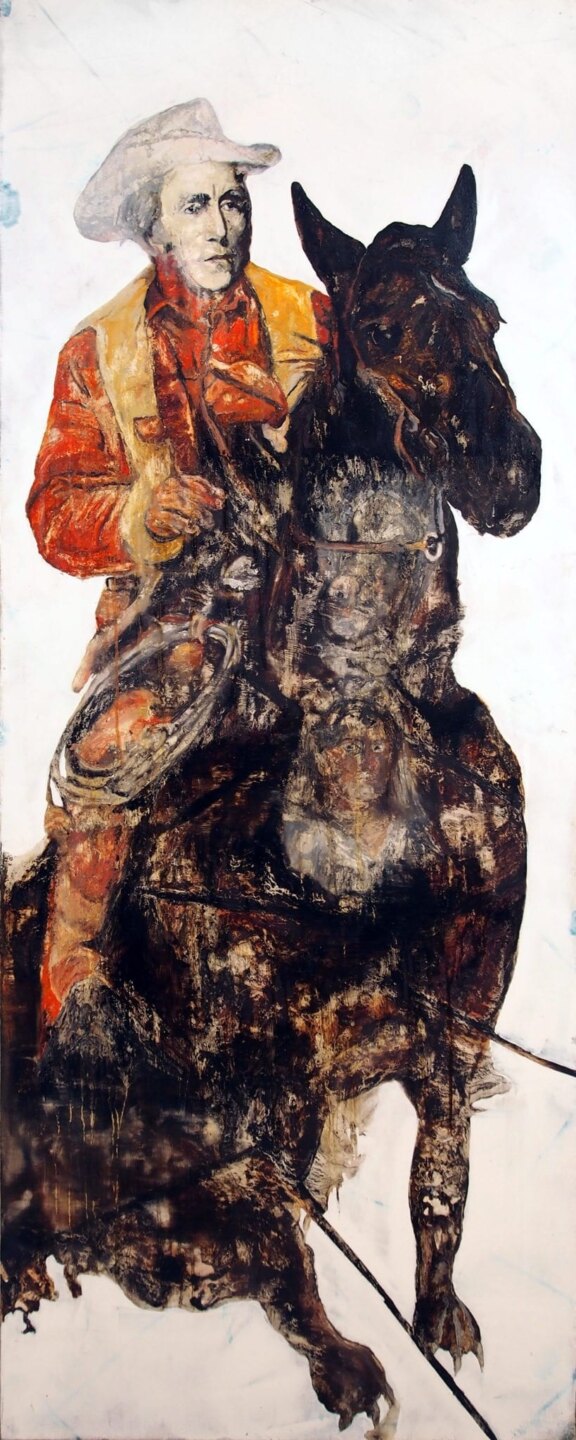
Jac Lahav, Andrew Jackson—A Cowboy’s Ghost, 2017. Courtesy of the artist.
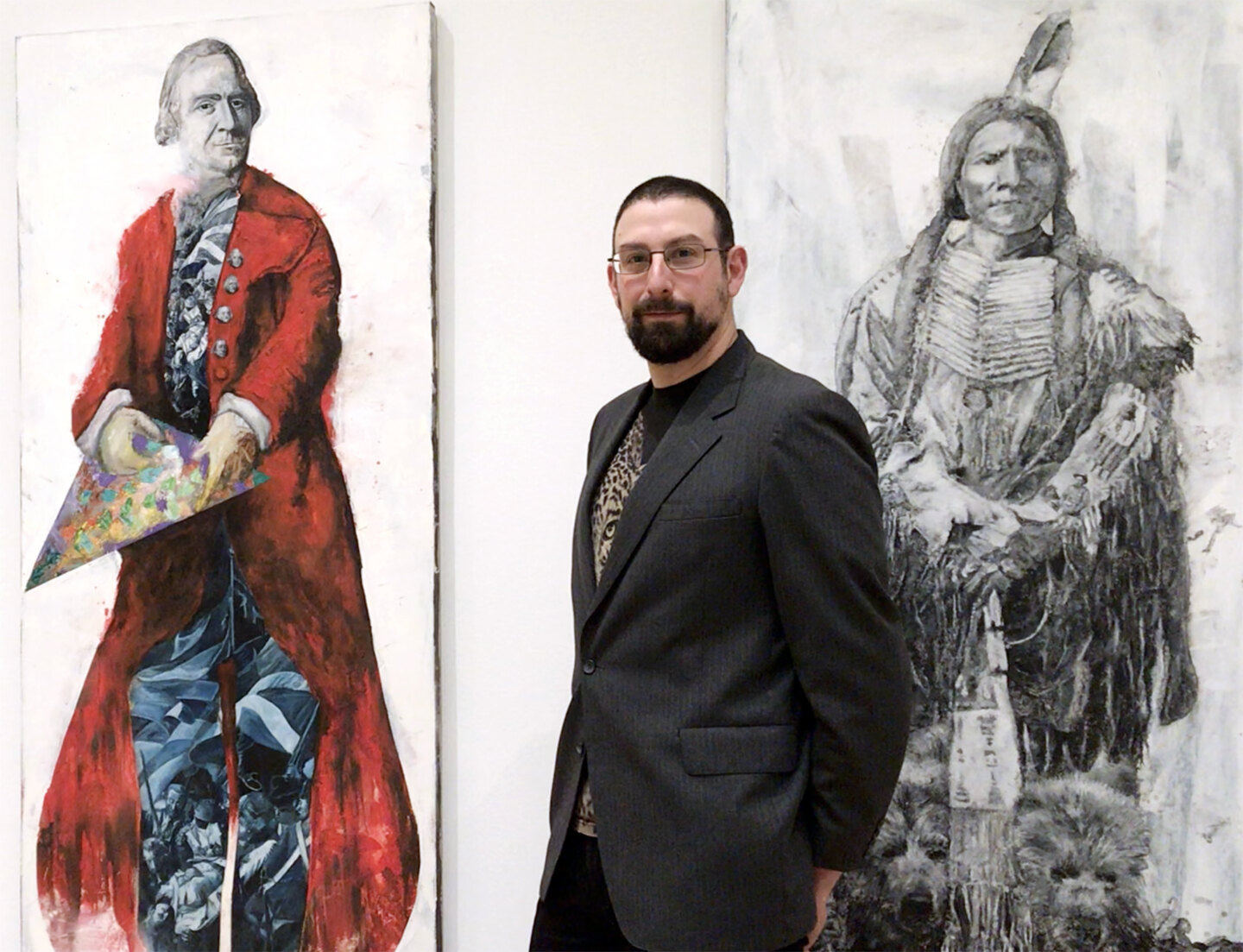
Artist Jac Lahav
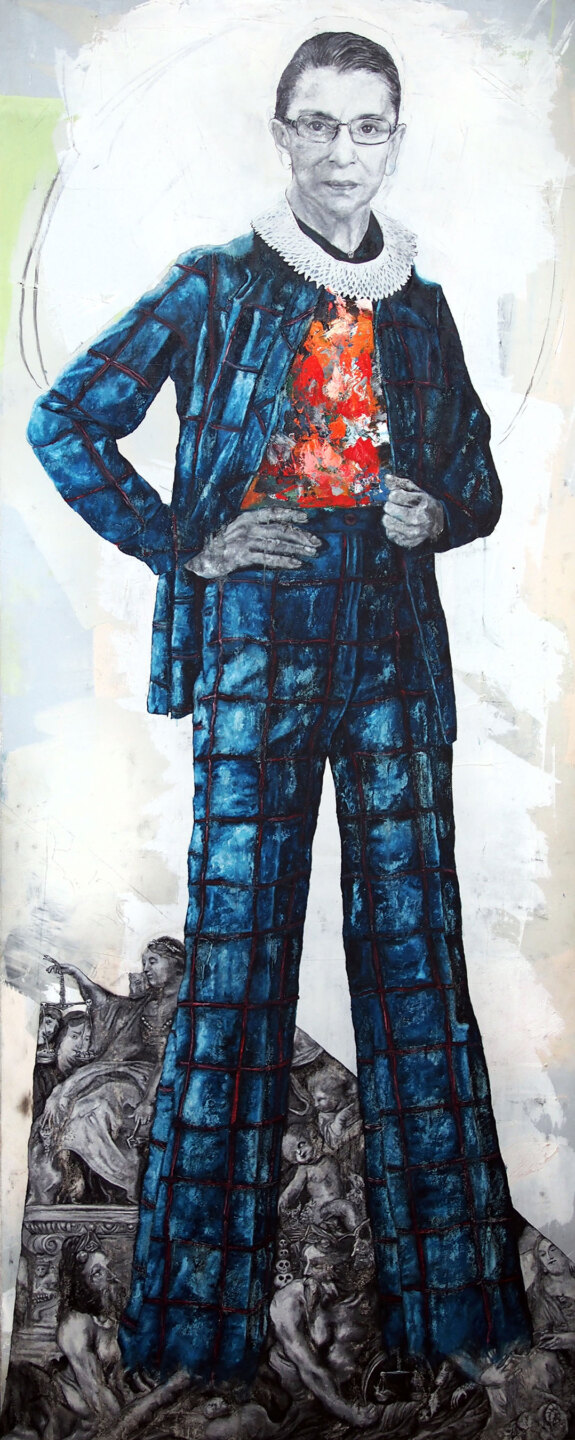
Jack Lahav, Ruth Bader Ginsburg—Justice, 2018. Oil on canvas, 80 x 32 inches. Courtesy of the artist.
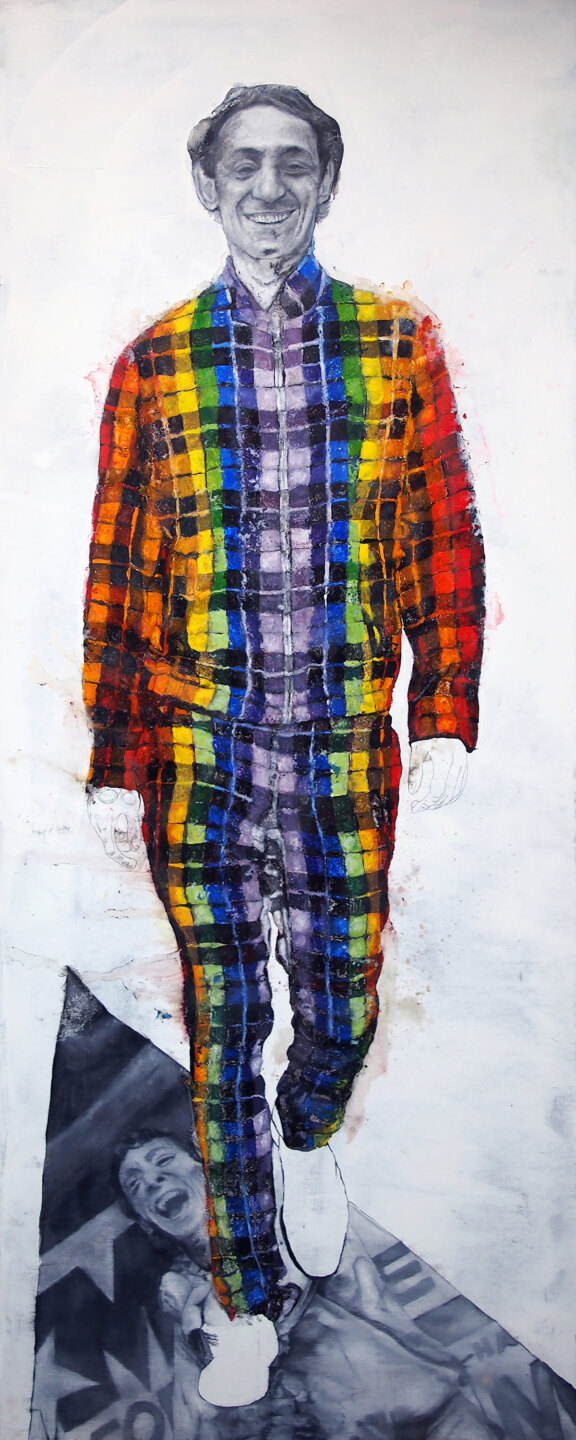
Jac Lahav, Harvey Milk—Primary Celebration, 2018. Courtesy of the artist.
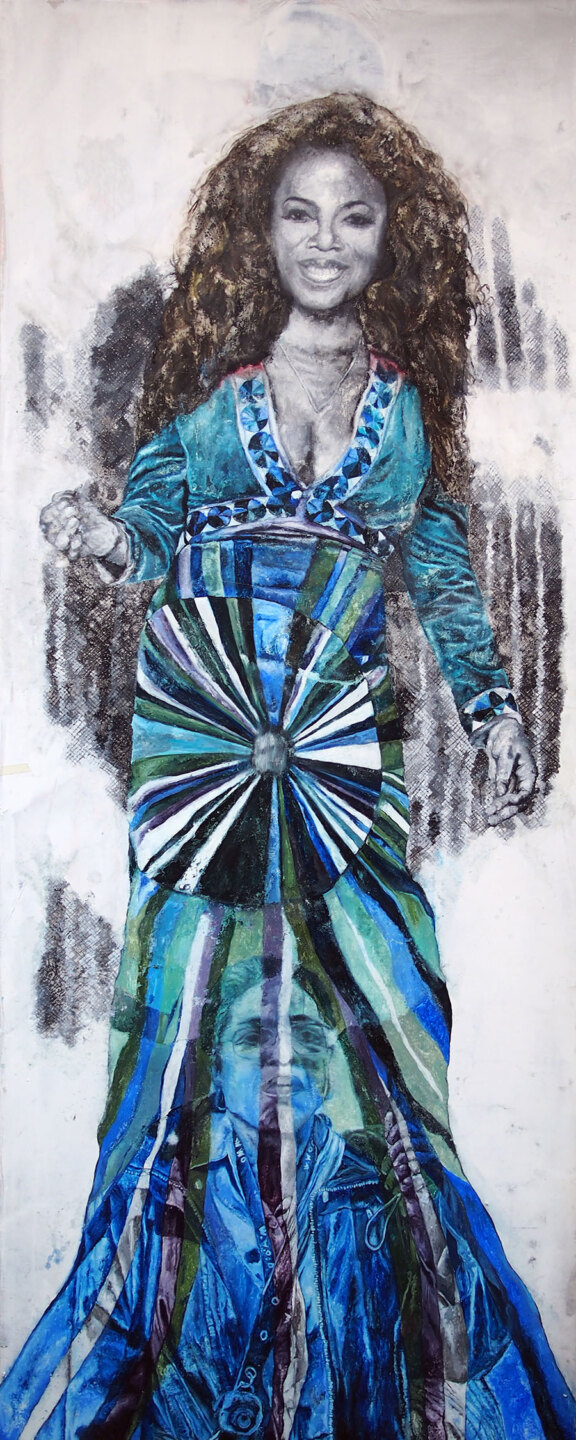
Jack Lahav, Oprah Winfrey—Cut of Cobalt Cloth, 2018. Oil on canvas, 80 x 32 inches. Courtesy of the artist.
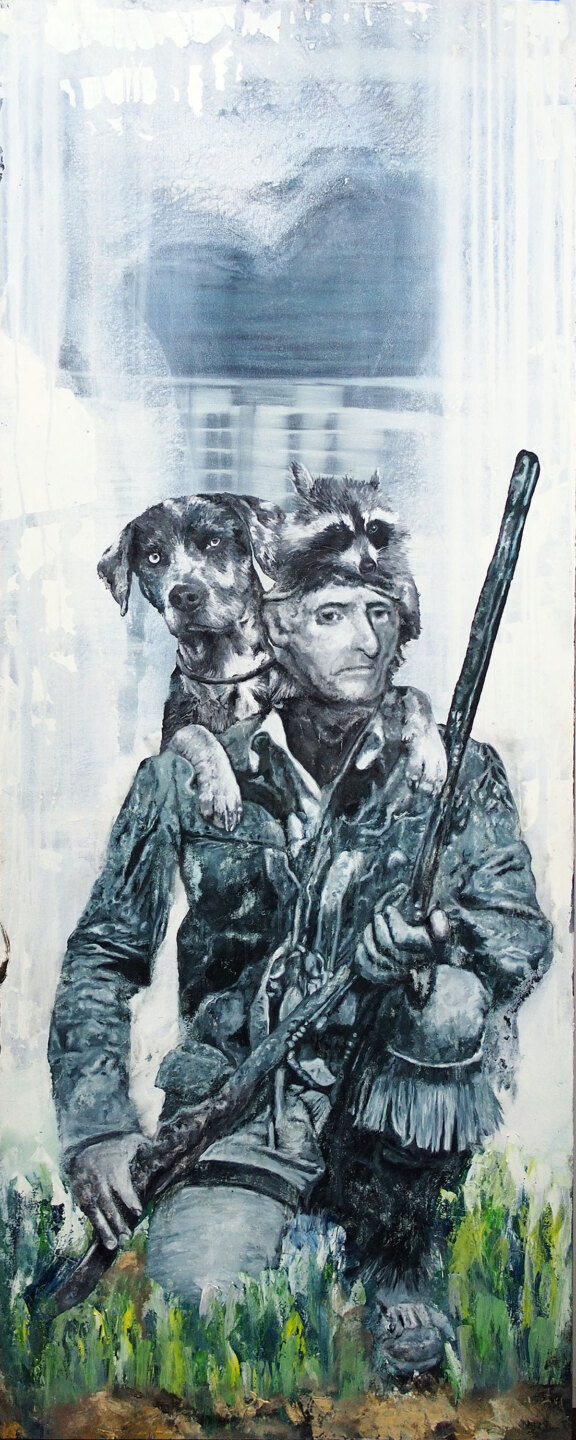
Jac Lahav, Daniel Boone—At Natural Altars We Kneel, 2018. Courtesy of the artist.
The Great Americans was made possible with the generous support of the Connecticut Department of Economic and Community Development, Connecticut Humanities, The Hartford Steam Boiler Inspection and Insurance Company, and Bouvier Insurance. Additional support has been generously provided by a group of Exhibition Fund donors, as well as donors to the Museum’s Annual Fund.