Thistles and Crowns: The Painted Chests of the Connecticut Shore
June 7 through
September 21, 2014
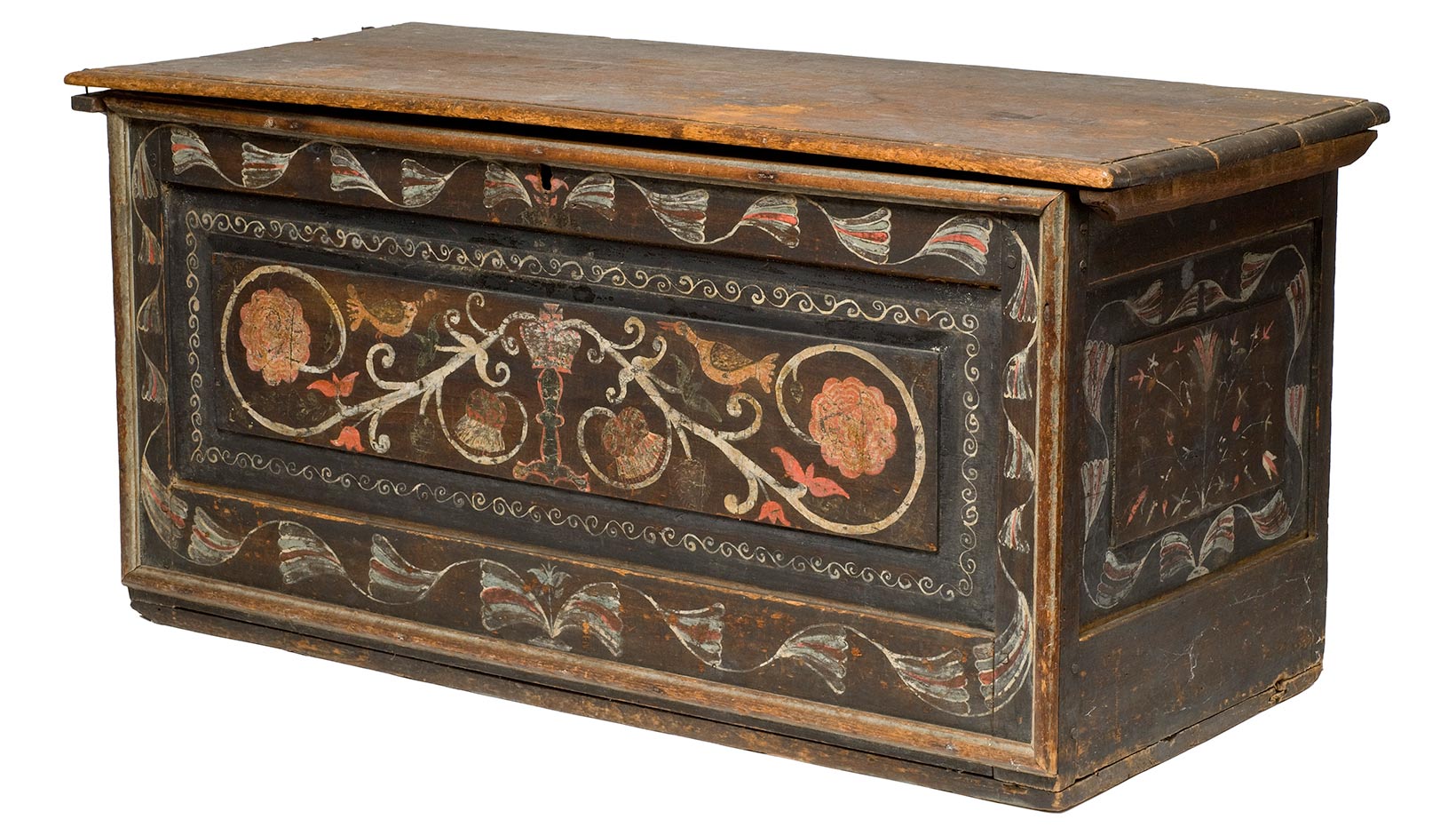
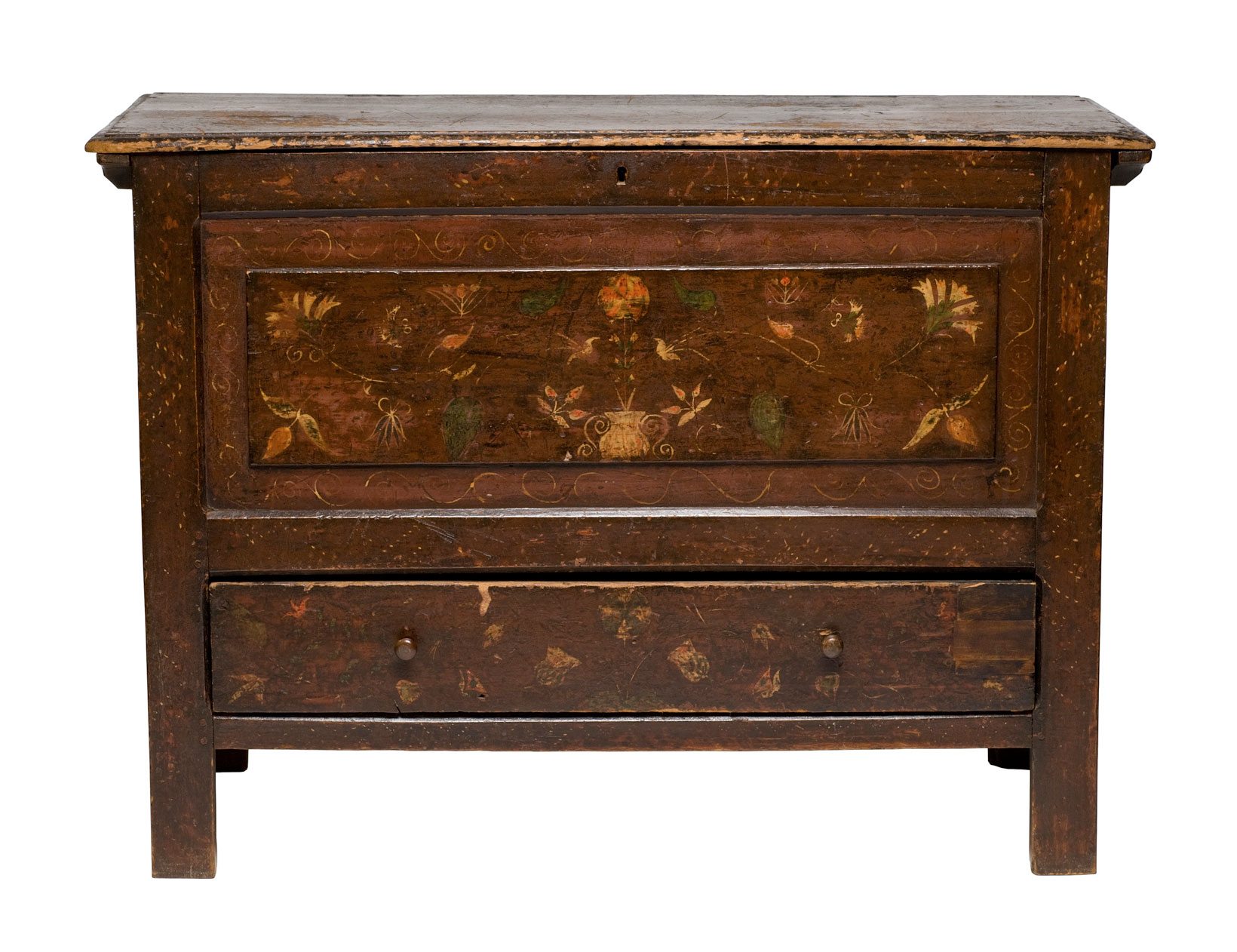
Thistles and Crowns: The Painted Chests of the Connecticut Shore was the first exhibition since the 1950s to offer an in-depth look at a fascinating tradition in eighteenth-century Connecticut furniture.
Between 1700 and 1740, a small group of craftsmen created a distinctive group of painted wooden chests in Saybrook and Guilford, Connecticut. Roughly two-dozen examples survive, six of which were featured in the exhibition. Thistles and Crowns highlights the richness of this Connecticut tradition and the complexity of its history.
Although these chests have been beloved icons of American vernacular design since the early-twentieth century — the Metropolitan Museum acquired two examples in 1909 — their early scholarship was marred by misinformation and misidentification. New research and analysis allowed for a more complete story to be told about who may have made these chests and why they look as they do. Thistles and Crowns examined the way these chests were made, the meaning behind their sophisticated decoration, their functions in eighteenth-century Connecticut homes, and their modern legacy.
Simply joined of North American woods like oak, pine, and tulip poplar these chests, in a variety of forms — small boxes, large chests, chest with drawers, high chests, and chests of drawers — were constructed to serve useful functions for both storage and security in the homes of their owners. “Colonial chests hold wildly romantic associations today as wedding, dowry, or bridal chests,” said Florence Griswold Museum Assistant Curator Benjamin Colman, “but in reality they were made for practically minded New Englanders. Homes were not as private in the eighteenth century as they are today, so a locking chest was important to keep valuables safe from prying eyes and sticky fingers.”
The accompanying catalogue, Thistles and Crowns: The Painted Chests of the Connecticut Shore, written by Assistant Curator Benjamin Colman, provides permanent scholarly contribution to the field and encourages further study of this overlooked tradition in Connecticut’s material culture. The book outlines a larger group of chests beyond those that were included in the exhibition. The 72-page softbound catalogue with 74 full-color illustrations can be purchased in the FloGris Shop or online here.