Smuggling in Lyme
Reflections on Revolution
The Revolutionary War brought economic hardship as well as family tragedies and social upheaval to Lyme. To supply the Continental Army Connecticut embargoed exports of produce, and to deprive the enemy of revenue the state prohibited profitable trade between Connecticut and British-held territory. Some Lyme residents responded by turning to smuggling, while others sought to suppress illicit trade. This article – the third in the Florence Griswold Museum’s series Reflections on Revolution – draws on newspaper accounts, diary entries, legal documents, and legislative and court records to explore tensions between smugglers and those seeking to uphold legal order during turbulent times.
by John E. Noyes
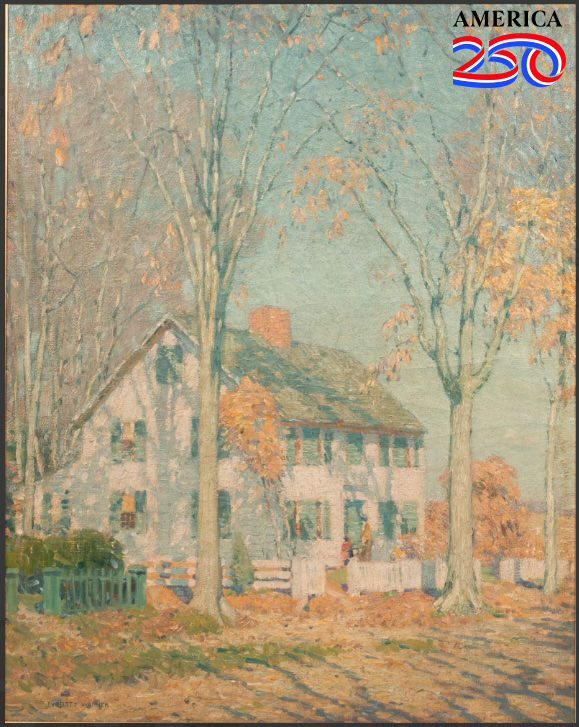
Featured image: Lyme impressionist artist Everett Warner’s painting October Sunshine, ca. 1912 (private collection), shows the home of Judge William Noyes where, during the Revolutionary War, over 25 smuggling trials were held. The house, now known as the Noyes-Beckwith House, was moved from the site of the Florence Griswold Museum to its current location at 32 Lyme Street during the winter of 1816-1817.
After nightfall on March 31, 1782, a whaleboat loaded with illegally imported British goods – linen, chintz, lace, silk handkerchiefs, women’s stockings, tablecloths, bags, and a portmanteau – landed in Lyme on a “Bank Near Saybrook ferry.” One of the smugglers, Jeremiah Pemberton of New York, later confessed that one Hinney and he had transported the goods from British-occupied Long Island, promising a whaleboat commander named Brown twenty dollars to row the goods from Long Island and return with his crew. After landing in Lyme, Hinney and Pemberton took the goods to Daniel Chadwick’s home on today’s Four Mile River Road, and Hinney there provided horses to carry the goods to the “head of the River.” Another man, Ebenezer Price of Farmington, said he was hired to help carry the goods after he “accidentally fell in company with” Hinney at Daniel Chadwick’s. Shortly after the smugglers left Chadwick’s home Captain Elisha Wade, who had served in Connecticut’s 6th Regiment under Colonel Samuel Holden Parsons from Lyme, seized two “laded horses” and took Pemberton and Price prisoner; Hinney, the apparent ringleader, and a fourth man escaped with two horses and some of the smuggled goods.[1]
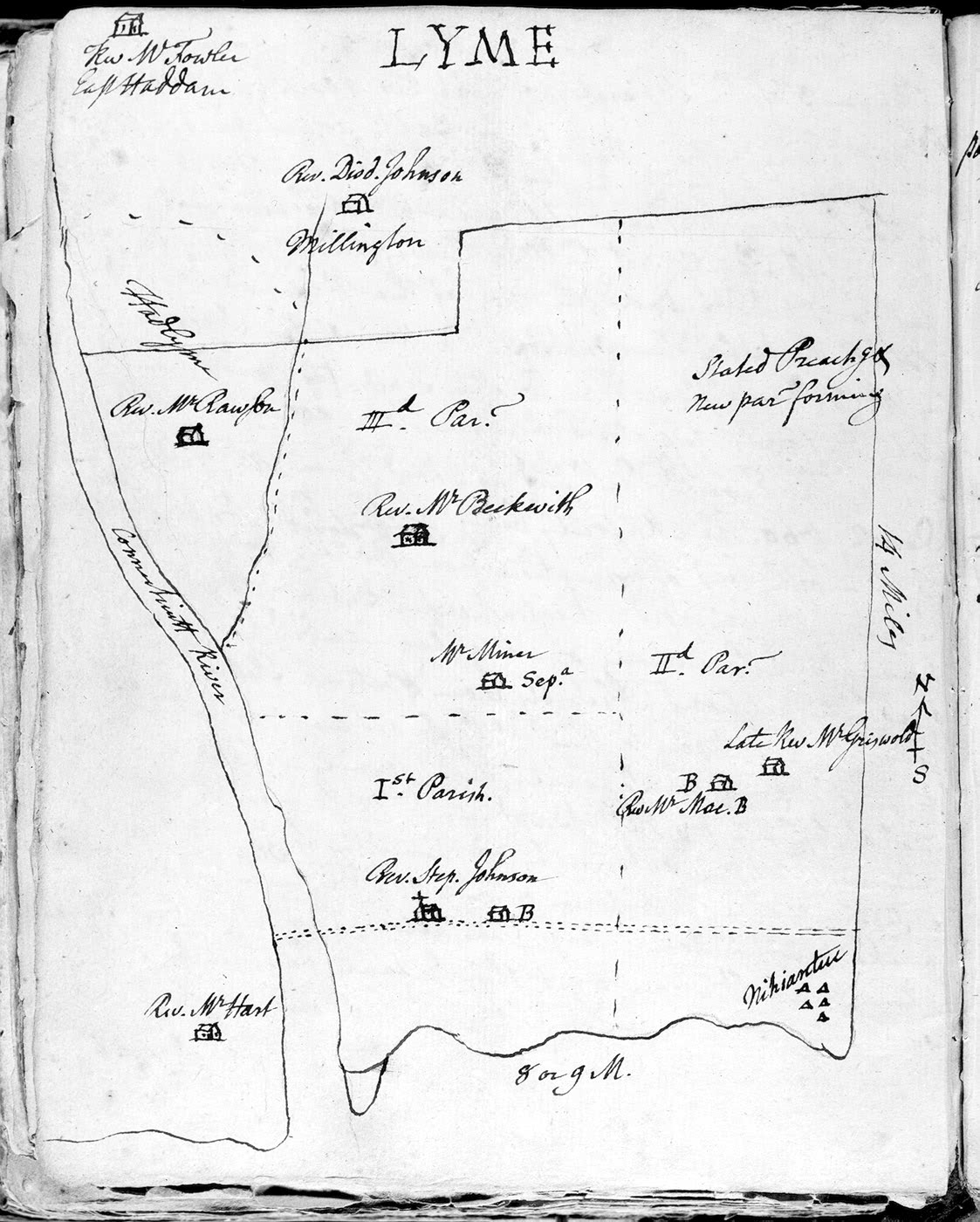
Map drawn in 1768 by Rev. Ezra Stiles, later the president of Yale College, shows some of the many indentations along Lyme’s then desolate coastline. Beinecke Rare Book and Manuscript Library, Yale University
This smuggling episode is but one of many in Lyme during the Revolutionary War (1775-1783). According to historian Bruce Stark, “conditions for smuggling in Lyme were ideal” because of the town’s “long, sparsely populated, inadequately patrolled coastline on [Long Island] Sound and the Connecticut River and numerous small inlets.”[2] A few local residents transported or stored illicitly traded goods, while several others seized smuggled goods in Lyme or on Long Island Sound. Still other Lyme residents adjudicated court cases involving illicit trade, approving judicial awards for those who captured such goods.
Smuggling Risks and Rewards
Connecticut had a long history of smuggling before the Revolutionary War, when British laws required that goods be shipped to its colonies only on British vessels and that those imports be taxed. For much of the colonial period, enforcement of these laws had been lax, but tighter enforcement leading up to the war increased colonists’ costs and heightened anti-British sentiment.[3] This colonial smuggling was a political and an economic act – a protest against the British system of regulating trade with the colonies as well as a way to avoid the economic burden of taxes.
Smuggling continued during the Revolution, but smugglers now tried to evade Connecticut laws outlawing illicit trade rather than to escape British taxes. Some Connecticut laws sought to ensure that state produce and livestock would be reserved for the use of the Continental Army. In April 1775, even before the “United Colonies” declared their independence, Connecticut imposed an embargo on the export of foodstuffs. Penalties for violators were severe: those sending provisions to British warships or military forces could face up to three years in prison and forfeit their entire land holdings.[4] In October 1776, a statute authorized the death penalty for treason, defined to include furnishing the enemy “with arms and ammunition, provisions or any other articles for their aid or comfort.”[5]
Later Connecticut laws outlawed all unlicensed trade between the state and enemy-held territory, seeking to deprive Britain of revenue and thus damage its war effort. A 1778 state statute noted that “sundry ill-minded persons have and do continue to carry on a clandestine trade and commerce with the enemies of the United States, to the great danger of the liberties and safety of the good people of these States.” It authorized the seizure and forfeit of “any wares, goods or merchandize” transported from British territory, as well as the seizure of exports from Connecticut bound for the enemy.[6] A 1780 statute expanded the authority of private individuals as well as public officials to seize illicitly traded goods and allowed them to claim a judicial award of half of those goods, with the other half going to the county treasury. Vessels used in illicit trade could also be “proceeded against, tried, condemned and disposed of in the same manner and before the same courts as the goods transported or shipped therein.”[7]
Penalties for individuals who violated the 1778 and 1780 illicit trading laws went beyond the seizure and forfeit of smuggled goods and the boats transporting them. Smugglers, along with unlicensed travelers to British territory, could be criminally convicted and fined, imprisoned, or prohibited for three years from “resid[ing] or go[ing] within twenty miles of the sea or of any navigable river within this State.”[8]
Smugglers faced risks in addition to the penalties set out in Connecticut law. Royal Navy frigates and British privateers – private vessels that the British government commissioned to capture enemy ships – seized American ships and cargoes. British frigates also blockaded and bombarded Connecticut ports, creating additional dangers for those moving goods by sea.[9] Many nevertheless deemed the rewards of smuggling worth the risks.
Some of those engaged in illicit trade were Tory sympathizers who had fled from Connecticut to British-controlled New York when the war broke out. Others were Patriot refugees from British-held territory who, having left their farms and livelihoods behind, took up smuggling in an effort to survive.[10] The prospect of significant profits motivated illicit traders of all backgrounds. American consumers had long valued British manufactured goods, and demand did not disappear when war broke out. Smugglers either sold illicitly imported British goods or traded them for food and provisions to sell to the British.[11]
Smugglers in Lyme and elsewhere along the shoreline employed a range of tactics to evade capture. Smuggled goods might be mixed with legally licensed imports. Or customs officials might be bribed to turn a blind eye toward illicit traffic entering ports. Many smugglers, including those captured by Elisha Wade in 1782, shipped goods in small boats at night to avoid detection, unloading them on remote stretches of the coast.[12]
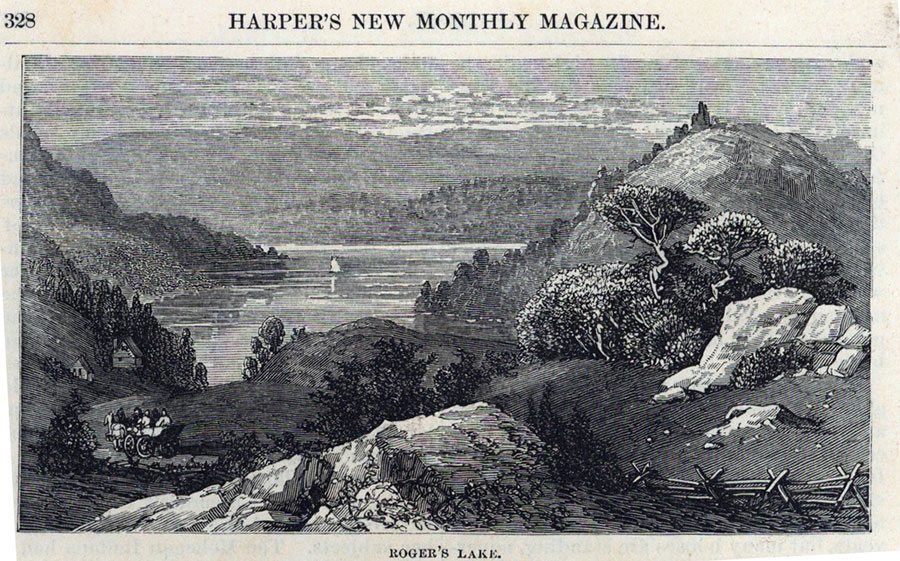
According to legend, Lyme’s history of smuggling dated at least to the 17th century when Captain William Kidd hid smuggled treasure in this craggy region of Lyme. Attributed to Charles Parsons, Roger’s Lake, 1876. Harper’s New Monthly Magazine.
Lyme Historical Society Archives at the Florence Griswold Museum
Coastal patrols in Lyme nevertheless managed to intercept some illicit imports. Sylvanus Griswold, who lived near Bride Brook in East Lyme, noted in his diary entries for 1781 that the “Elisit trade [with] Long Island was carred on to excess” and that “gards were Stationd Along the Sea Costs for the purpose of taking them & money[.] Some [boats and smuggled goods] takin and made prizes of.” On one occasion Griswold, then 18, and Robert Lattimore spied “a Sciff Coming to Land” but had to run half a mile “to Alarum my father [Samuel Griswold] and the others” and then another mile to where the goods had been unloaded. In the ensuing skirmish, Sylvanus Griswold wrote, he “wounded 1 man in the thigh with my bayonet” and fired at Nathaniel Huntley, one of the locals involved, with “an old Buckeneer Loaded with Ball & Buck Shot … the Contents of Which past through [Huntley’s] Shoulder” and injured his hand. The encounter also “Cost our enemies Dear by way of a number of Law Suits,” and Samuel Griswold “recovered 100 dollars for the goods.”
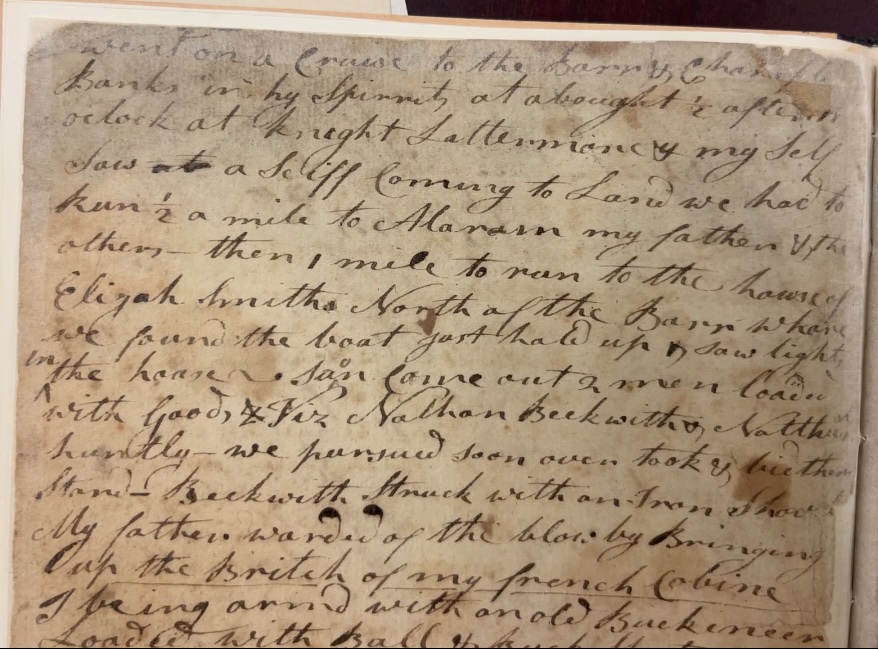
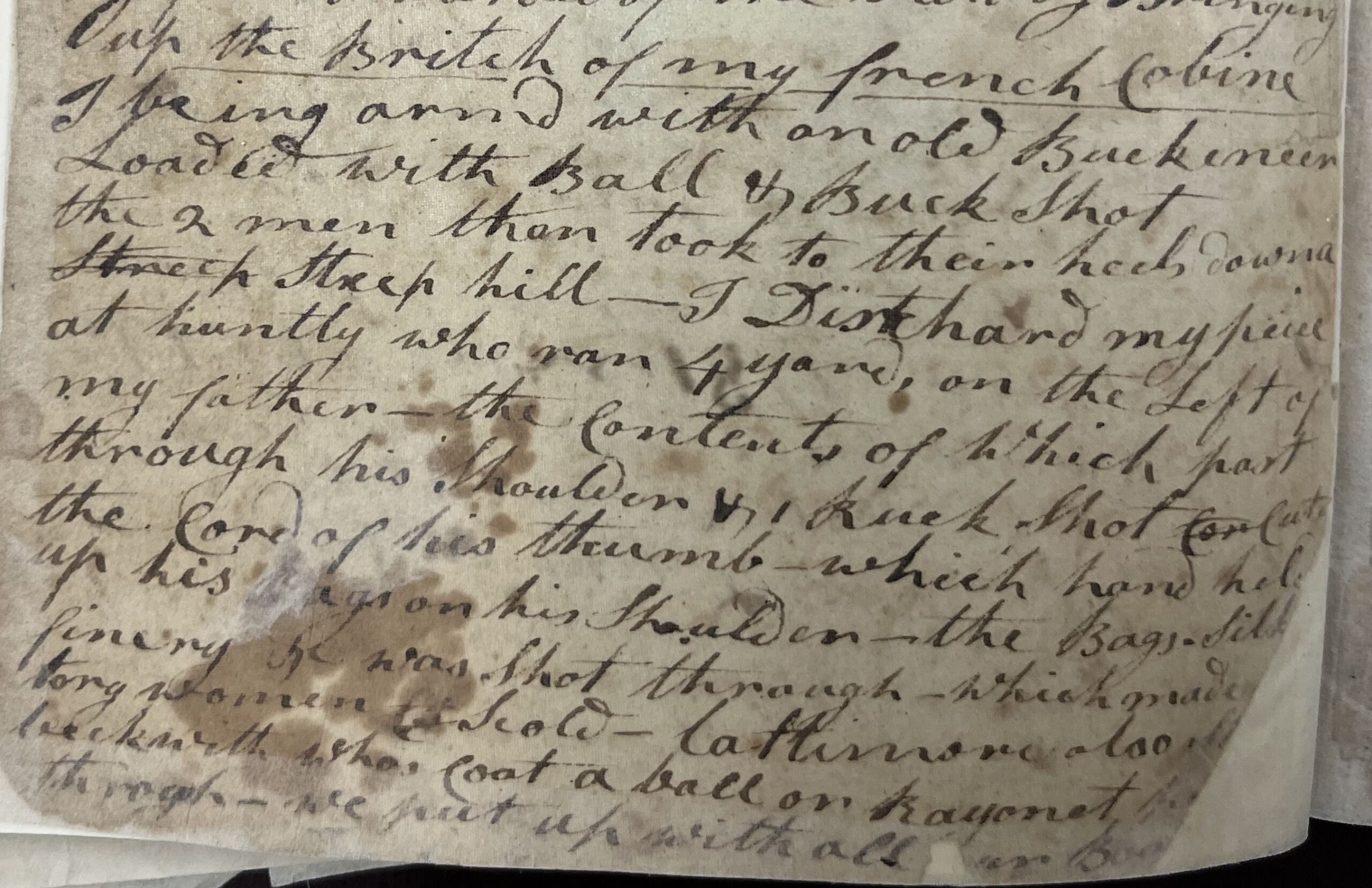
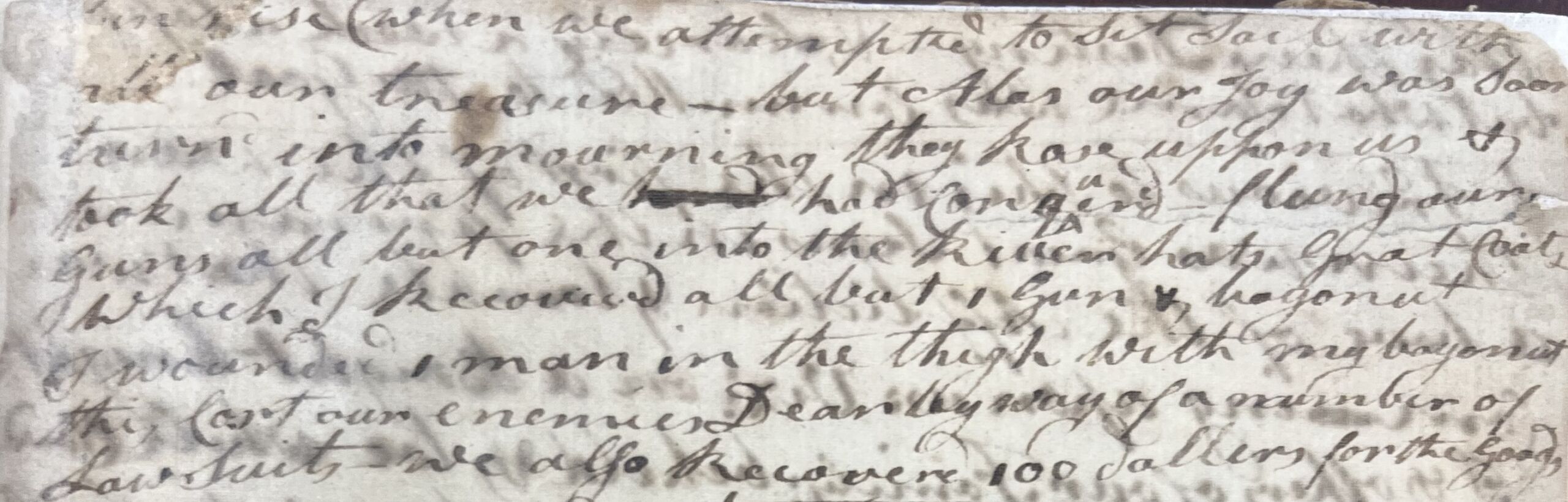
Excerpts from Sylvanus Griswold’s diary describing skirmish with smugglers in 1781. Diary of Sylvanus Griswold of East Lyme (Born 1763 at Lyme), pp. 1-3, Connecticut State Library Archives, ref. 920/G8891.
Smuggling Cases and Penalties
Many Connecticut court cases involved the disposition of seized goods, illustrating some of the risks that illicit traders faced in New London County during the Revolution.[13] Connecticut adapted its County Courts, which heard a range of criminal and civil cases, to serve as Maritime Courts to rule on the legality of seizures and the disposition of captured goods and vessels.[14] Maritime Court jurisdiction extended to cases involving seizures of goods transported by sea and captured on land, as well as seizures of vessels and cargoes at sea. When Elisha Wade captured smuggled goods, he filed a case in the New London County Maritime Court seeking his statutory half share of the goods. His case, called a “libel,” was technically filed against the goods themselves, rather than against the smuggler or the owner of the goods.[15]
Beginning in 1777 the Connecticut General Assembly appointed William Noyes (1728-1807) of Lyme as a Justice of the Peace and Quorum, one of four appointed for New London County. The bench in Maritime Court cases included three Justices of the Quorum and a presiding County Court judge, so Noyes heard many such cases, traveling by horseback to court sessions in Norwich or New London.[16] He sometimes became involved with illicit trade cases even before they were filed in court. After Elisha Wade seized smuggled goods, for example, he immediately sought out Noyes to take his deposition about the incident. Noyes then appointed Joseph Sill of Lyme to appraise the seized goods – two horses with their saddles and bridles as well as British cloth, home goods, and clothing – which Sill valued at 136 pounds, 17 shillings, and 6 pence (over $30,000 today). Judge Noyes documented his pre-trial services, which included not only the preparation of legal papers, but assistance with the appraisal, transport of a prisoner to New London, storage of the seized goods, and care for captured horses from the end of March until the Maritime Court heard the case seven weeks later.[17]
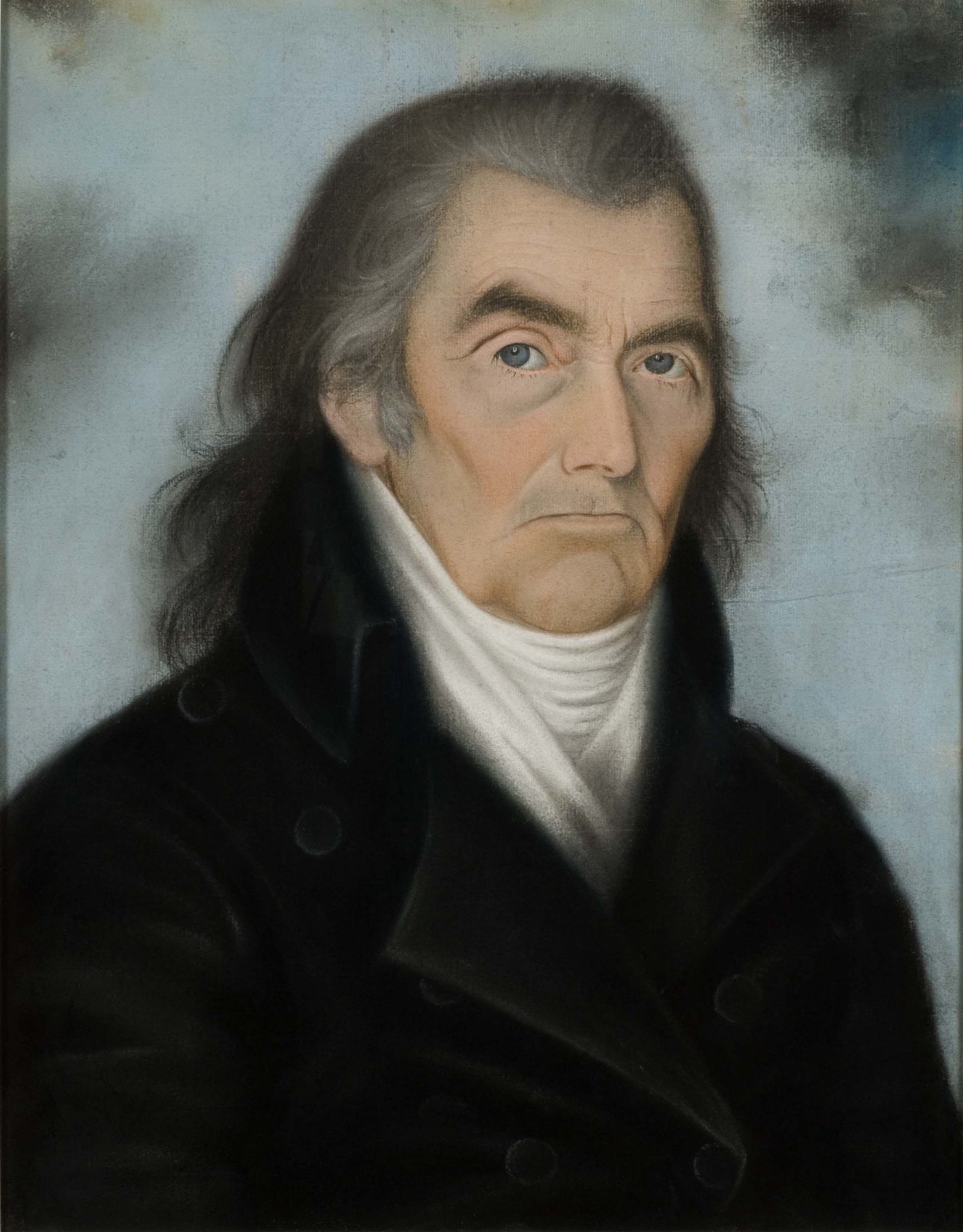
Attributed to James Martin, Judge William Noyes, ca. 1798. Pastel on paper. Florence Griswold Museum, purchase with contributions from Geoffrey Paul, David Dangremond, John and Werneth Noyes, and Gay Myers, 2002.4.1
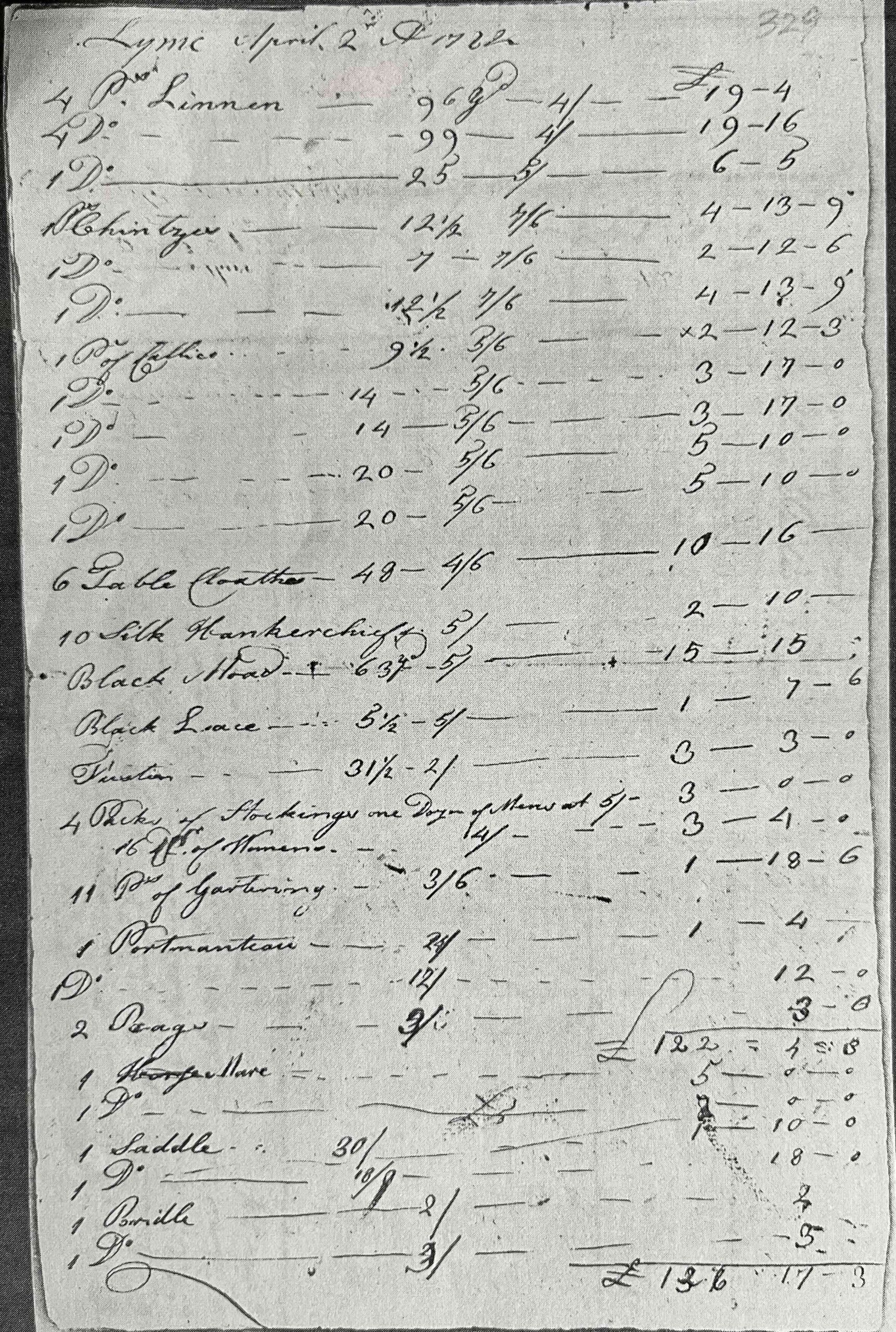
Inventory of seized smuggled goods, Elisha Wade & Sundry Goods &c, No. ∆ Libel (May 1782), New London County Maritime Court Records, 1781-1784, Connecticut State Library Archives, Box 656, File 15, p. 329.
Several other smuggling cases also featured Lyme connections, including captures at sea of vessels commanded and crewed by Lyme residents, seizures in Lyme of British imports, and seizures in town of supplies bound for British territory.[18] One of these cases, which was heard in the New London County Maritime Court, involved the Fanny, a 30-ton sloop taken in the Connecticut River in Lyme on March 20, 1782. The sloop and its cargo – white pine boards, other planks, clapboards, and shingles – were allegedly proceeding to British territory when local constable Lee Lay, who had marched from Lyme to Lexington in 1775, took control of the vessel. William Noyes, one of the judges who heard the case, then appointed two men from Lyme, Marshfield Parsons and Josiah Burnham, as appraisers; they valued the ship and its cargo at slightly over 300 pounds. At the trial, twelve jurors found “there is a probability that” the Fanny “was bound within the Enemy’s Lines and that said Sloop Cargo Boat and Tackle is lawful Prize to the Libellants” – Joshua Griffith and Joshua Cook – who had instituted the case and the vessel seizure process. The judges then ruled that, after deducting court expenses, the prize was “forfeit one Moiety [half] to” Griffith and Cook “and One Moiety to the Treasurer of the County of New London for the use of said County.”[19]
Some smuggling cases were adjudicated through expedited, less formal means. The 1780 Connecticut statute on illicit trade provided that so-called small causes could be tried in a simplified procedure from which no appeal was available. Two judges – one Justice of the Quorum and one other Justice of the Peace – could hear cases where the value of the goods did not exceed 30 pounds (approximately $7,000 today), an amount that would “not defray the expense of condemnation before the maritime courts.”[20] Private individuals as well as public officials could file these small causes, which would be heard in private homes or inns – convenient and inexpensive locations for local claimants, judges, and witnesses.
Small causes involved both illegal imports and exports. Exports intended for British-held Long Island were primarily food and farm supplies. Cases concerned exports of grain, “a Quantity of Butter and Cheese,” “a quantity of Beef,” “two cattle and sundry sheep,” and “sundry axes.” One legal announcement was for a libel “against a Horse, Saddle, and Bridle, taken in said Lyme, said to be transporting to the Enemy.”[21] House trials also involved such seized British imports as “sundry Silk Handkerchiefs, Knives and Forks, and Pins,” “Wearing Apparel,” “Press Papers,” and “Tainter-Hooks,” which were used in making wool cloth.[22] Many of the small causes involved libels against the boats used to smuggle goods as well as against the goods themselves.
Between July 1780 and February 1783, according to legal advertisements published in the Connecticut Gazette, Judge William Noyes together with a Justice of the Peace heard over 50 of these cases in Killingworth, New London, Saybrook, and Lyme. Noyes often picked John Lay 2d, and occasionally Richard Wait or Eleazer Mather – each from Lyme – as the second required judge in Lyme-related cases, over two dozen of which were tried in Noyes’s own home on what is now the site of the Florence Griswold Museum. Dr. Mather’s home on today’s Bill Hill Road served as the venue for four trials. Most cases tried in Lyme had some connection to the town. It was where goods were seized, where goods captured on Long Island Sound were brought ashore, or where those who seized goods lived. Lyme’s Captain Josiah Burnham was responsible for bringing six small cause captures to court; Andrew Griswold, Benjamin Lord, Jr., and Zechariah Marvin, Jr. three each; John Griffin two; and Edward Dorr, Benjamin Higgins, Daniel Lord, Lay Lord, Elisha Merrow, Joseph Smith, Ichabod Spencer, and Jonathan Warner one each.[23]
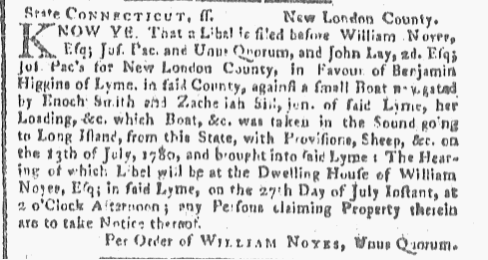
Legal advertisement for a smuggling trial at the home of Judge William Noyes.
Connecticut Gazette, July 21, 1780, p. 3.
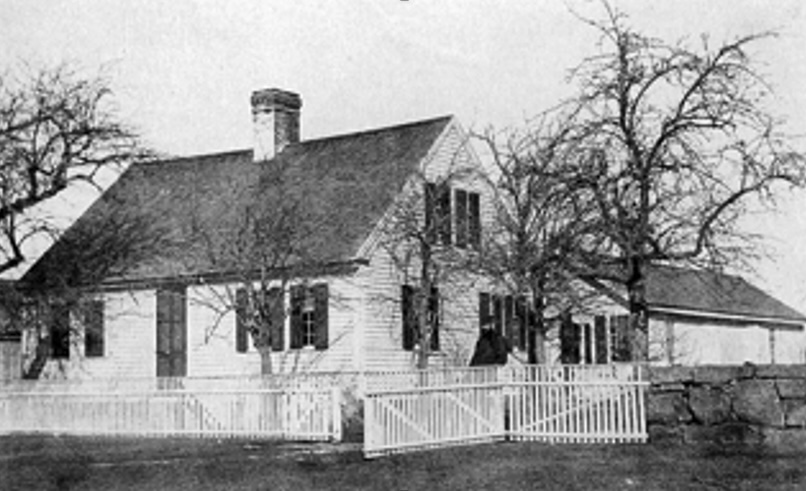
Dr. Eleazer Mather lived in this house on Bill Hill Road during 1761-1798. During the Revolutionary War, it was the site of four smuggling trials. Courtesy of Lyme Public Hall Archives
When smugglers were captured, they faced criminal penalties. The most serious crimes, involving treason or other offenses punishable by banishment or loss of life or limb, were tried in Superior Court, while the County Courts tried cases involving fines or prison sentences for smuggling. The judges on the New London County Court were the same as those on the New London County Maritime Court – one County Court judge and the four county Justices of the Peace and Quorum, all appointed annually by the General Assembly – so Lyme’s Judge William Noyes dealt with criminal cases against smugglers as well as with maritime cases concerning seized goods.[24]
Convicted smugglers sometimes petitioned the General Assembly for equitable relief, seeking to have their sentences reduced or overturned. For example, on January 10, 1778, Samuel Rogers of Lyme, then in jail in Norwich for illicitly trading with British-occupied Long Island, asked for redress. He claimed that he was loyal to the Patriot cause, had not been aware he was violating the law, and was “Suffering in a Coald and Loathsome Goal [sic],” with his “Circumstances Verry Indigent and Low.” His arguments went for naught; the General Assembly did not act on his petition.[25]
Smuggling and Privateers
During the Revolutionary War the Continental Congress or any state could commission private armed vessels, known as privateers, to seize enemy ships and cargoes. Connecticut licensed an estimated 200 to 300 privateers.[26] Several men from Lyme, including Stephen Lee, Samuel Mather, Jr., Sylvester Mather, John McCurdy, Silas Miller, and Benjamin King, either commanded or had financial interests in privateers. Benjamin King’s sloop Washington captured at least two British ships, one of them carrying 105 hogsheads of rum, and he, like any privateer, had to file a libel in Maritime Court and obtain a judicial ruling that the seized property was a lawful prize.[27]
Connecticut privateers attacked smugglers as well as enemy vessels. Some privateering commissions authorized privateers to seize any vessel, British or American, carrying illicitly traded goods. Many of the smuggling cases noted above involved captures at sea by commissioned private armed vessels – often open whaleboats about thirty feet long with a crew of six to ten, fitted with sails and swivel cannons.[28]
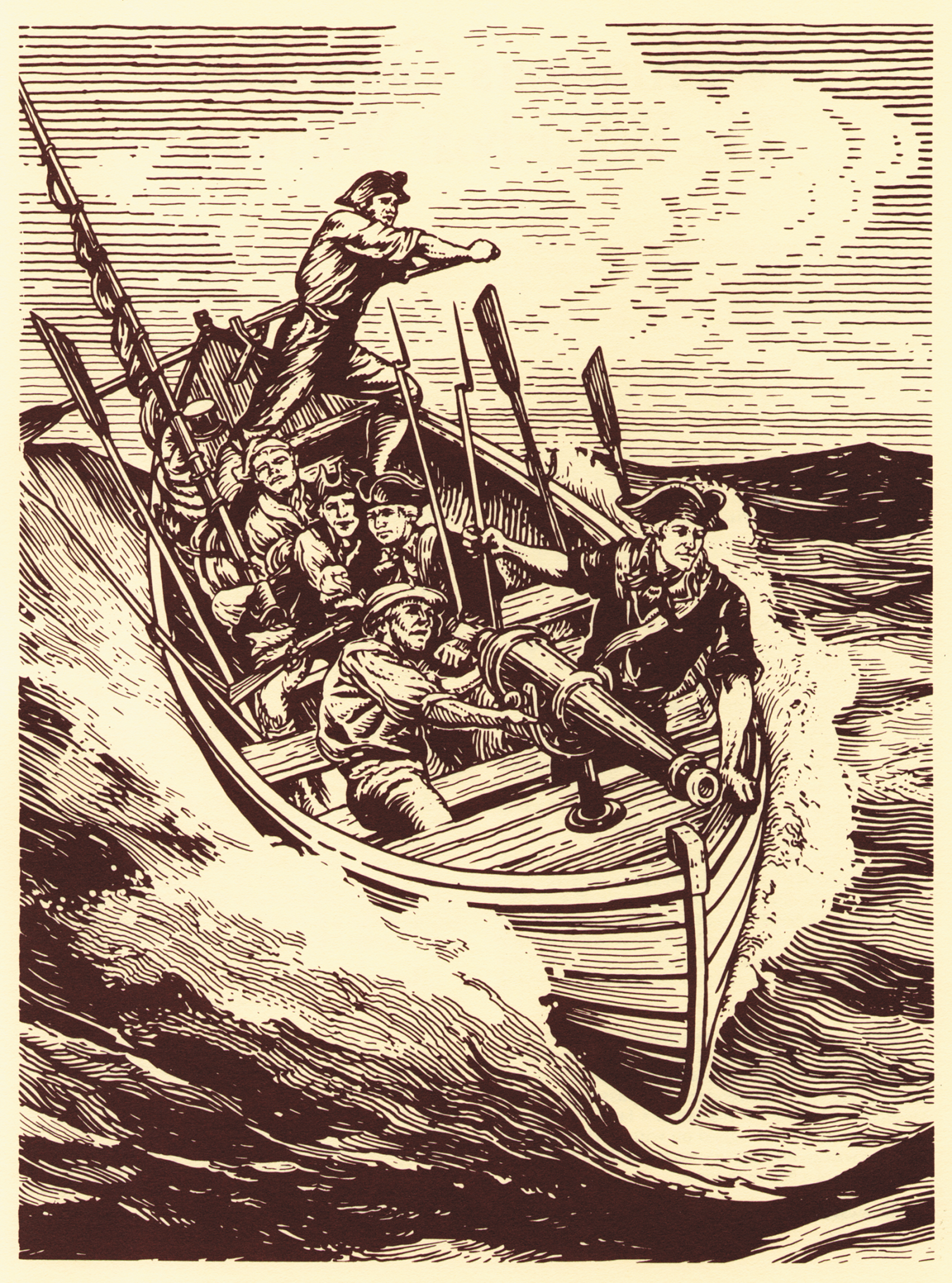
Artist’s rendering of an armed whaleboat, n.d. Reproduced from Bill Bleyer, “Whaleboat Soldiers Launch First Amphibious Assault,” Naval History vol. 14, no. 4 (August 2000).
Some licensed privateers, tempted by the prospect of increased profits, seized goods outside the scope of their commissions. Transporting such illegally seized goods between Connecticut and British-held territory constituted illicit trading. Just three months after Lyme resident Stephen Lee received a state privateering commission in January 1782 to command the schooner Fair Play, his ship was arrested for smuggling. Lee may have turned to smuggling because his small privateer had trouble finding vessels safe to capture; Fair Play crew member Enoch Lay of Lyme described lying near Plum Island and Sag Harbor, where those on board “neither saw nor heard of any thing that we thought would be a Prize to us.”[29]
Another privateer – the Success, commanded by Benoni Shipman of Saybrook – tracked the Fair Play from Sag Harbor on Long Island into the Connecticut River before seizing her. The New London County Maritime Court held a jury trial in May 1782 to assess whether the schooner and its alleged cargo of “Sundry Packs of Pins[,] Sundry Cannon and a Number [of] other articles of Merchandise” were lawful prize. Affidavits and testimony on Lee’s behalf asserted that the Fair Play and her guns were Lee’s “own proper estate,” that the schooner had only transported a few passengers back and forth between Connecticut and Long Island, and that she had not been used for illicit trade. Sworn statements from Shipman and crew members of the Success and the Fair Play, however, painted a different picture: for two months prior to her arrest the Fair Play had been transporting provisions to Long Island, returning with cargoes of British goods; on her last round trip the schooner had carried fresh salmon and perhaps barrels of “Sider” to a tavern in Sag Harbor; and packs of pins had been retrieved from a beach on Long Island and put on board the Fair Play before her return voyage. The jury found that the facts in Shipman’s court filing were true and that “therefore … the Said Schooner Fairplay” was “Lawfull Prize to the Libelants – together with her tackle[,] Apparrell and British Goods found on board.”[30]
Some Connecticut commissions authorized armed boats “not only to cruise on the high seas against the enemy but to land on Long Island and there take all public property.” Some of these boats abused their commissions: instead of taking public property, the crews plundered private property from Long Island residents, including Patriots loyal to the United States. Numerous owners of private property as well as New York’s Governor George Clinton and the Continental Congress complained about these thefts. In 1781, seeking to limit the plundering and resulting smuggling, Connecticut revoked armed boat commissions that allowed seizures on Long Island itself.[31]
Smuggled Goods
Many smugglers managed to avoid capture. Smuggled goods were sold and profits made, and enforcement was often lax. Writing in February 1781, George Washington complained that “the Traffic with New York is immense” in “specie and provisions … going to the Enemy for Goods,” noting that Tories were not the only smugglers: “Men of all descriptions are now indiscriminately engaging in it …. By its being practised by [speculators], in a Manner with impunity, men, who two or three yrs ago would have shuddered at the idea of such connexions, now pursue it with avidity, and reconcile it to themselves (in which their profits plead powerfully) upon a principle of equality with the Tory.”[32] Connecticut fought the illicit trade not only by criminalizing smuggling and rewarding those who seized goods from smugglers, but by authorizing the seizure of smuggled goods “in the hands of any pedlar, hawker or petty chapman” and by capping the prices of imported goods.[33] Despite the state’s efforts, however, many instances of smuggling escaped judicial scrutiny.
When Connecticut courts awarded a libellant half of seized smuggled goods, those goods could legally be sold; both the libellant and consumers eager to buy scarce products benefited. Vessels and goods judicially condemned as prizes were often sold at auction. For example, on April 9, 1782, a “public vendue” of a variety of British goods was held at the home of Marvin Wait of New London.[34] An auction ensured transparency in the disposition of illicitly traded goods, providing funds for the county’s half share as well as for a successful libellant’s half share, which might have to be shared with others who assisted in capturing smuggled goods or with investors who financed an armed boat that seized such goods.
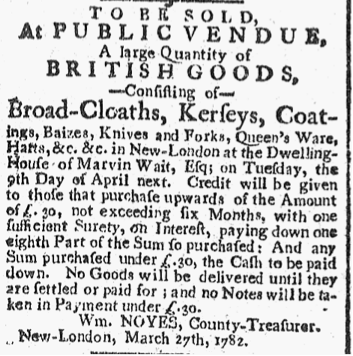
Advertisement for auction of British goods.
Connecticut Gazette, Apr. 5, 1782, p. 4.
The Revolutionary War brought underappreciated hardships to Lyme and other small coastal communities. The town’s history of smuggling reveals the economic struggles of merchants and consumers, as well as the temptation to profit at the expense of the new nation’s war effort. This history also shows a legal system responding to threats during times of crisis – countering illicit trade by punishing offenders, incentivizing citizens to seize smuggled goods, and creating new roles for courts.
The author thanks Ann Brubaker, Amy Kurtz Lansing, and Carolyn Wakeman for their help with images and editing, and Mel Smith and the staff of the Connecticut State Library for their assistance locating archival resources.
[1] Elisha Wade & Sundry Goods &c, No. ∆ Libel (May 1782), New London County Maritime Court Records, 1781-1784 [NLCMCR], Connecticut State Library [CSL] Archives, Box 656, File 15, pp. 315-317, 320-321, 324-332, and Box 658, File 59, pp. 1082-1083.
[2] Bruce P. Stark, Lyme, Connecticut: From Founding to Independence (1976), p. 102.
[3] Statutes embodying Britain’s mercantilist policies and taxing imports to the American colonies included the Navigation Acts dating from the 17th century, the 1733 Molasses Act, the 1764 Sugar Act, and the 1767 Townshend Acts.
[4] Public Records of the Colony of Connecticut, vol. 14, pp. 415-416; vol. 15, pp. 14, 119, 136, 314, 413. After independence, Connecticut continued to impose embargoes and penalize violations of them.
[5] An Act for restraining and punishing Persons who are inimical to the Liberties of this and the Rest of the United Colonies, and for directing Proceedings therein, Dec. 1775, Public Records of the Colony of Connecticut, vol. 15, pp. 192-195, at pp. 192-193; An Act for the Punishment of High Treason and other atrocious Crimes against the State, Oct. 1776, Public Records of the State of Connecticut, vol. 1, p. 4.
[6] An Act more effectually to prevent Illicit Trade, Feb. 1778, Public Records of the State of Connecticut, vol. 1, pp. 528-531 [hereinafter 1778 Act to Prevent Illicit Trade]. Connecticut also penalized travel to or from British-held Long Island and other enemy territory without a license. Ibid. pp. 528-529. See also Act in Addition to the Act entituled [sic] An Act more effectually to prevent Illicit Trade, May 1779, Public Records of the State of Connecticut, vol. 2, p. 270 [hereinafter 1779 Act to Prevent Illicit Trade].
[7] Act in further Addition to and in Alteration of the Act entituled An Act more effectually to prevent Illicit Trade, May 1780, Public Records of the State of Connecticut, vol. 3, pp. 15-19 [hereinafter 1780 Act to Prevent Illicit Trade].
[8] 1778 Act to Prevent Illicit Trade, op. cit., p. 529; 1780 Act to Prevent Illicit Trade, op cit., p. 18. For discussion of criminal prosecutions, see notes 24-25 and accompanying text below.
[9] British bombardments of ports and attacks on shipping – excepting ships carrying provisions from Connecticut, which the British were glad to receive – caused great physical damage and human suffering. For accounts focusing on New London County, see Kimberly R. Goodling, Privateering in the American Revolution: Its Effectiveness, Its Annoyance, and the British Assault on Connecticut (Ph.D. dissertation, University of Houston, 2021), pp. 128-158, https://uh-ir.tdl.org/server/api/core/bitstreams/8a3646d6-0247-42fd-a362-0eca36a0389c/content; Battle of Groton Heights & the Burning of New London Sept. 6, 1781, https://battleofgrotonheights.com/the-aftermath (2020). For discussion of Connecticut privateers, see notes 26-28 and accompanying text below.
[10] Peter Andreas, Smuggler Nation: How Illicit Trade Made America (New York, Oxford University Press, 2013), p. 57.
[11] The government issued some licenses to import goods legally, but those were typically reserved for ships transporting provisions for the Continental Army or personal goods owned by refugees from New York, rather than goods to sell on the open market. Connecticut initially allowed either the General Assembly or local governments to grant licenses allowing refugees from Long Island to return there to bring their own property to Connecticut, but in April 1779 the General Assembly revoked all local licenses and removed the authority of local officials to grant them. The Assembly explained that local licenses had “been abused for the purpose of carrying on a clandestine and illicit trade with the enemies of the United States.” An Act in Alteration of a Law of this State entituled An Act more effectually to prevent Illicit Trade, Apr. 1779, Public Records of the State of Connecticut, vol. 2, p. 222.
[12] Sometimes would-be smugglers even colluded with those capturing their goods; after a court declared them legitimate prizes, the seized goods became legal to sell. For discussions of how illicit traders avoided government sanctions, see Andreas, op. cit., pp. 54-60; Faye M. Kert, Privateering (Baltimore: Johns Hopkins University Press, 2015), pp. 65-69; Frederic Gregory Mather, The Refugees of 1776 from Long Island to Connecticut (Albany: J.B. Lyon Co., 1913), pp. 210, 212.
[13] Diary of Sylvanus Griswold of East Lyme (Born 1763 at Lyme), pp. 1-3, CSL Archives, ref. 920/G8891. Griswold recorded these events well after they occurred, and he did not provide exact dates. The lawsuits to which he referred probably included criminal trials as well as claims against the smuggled goods. Coastal guards also provided some protection against British attacks. On at least one occasion, a Lyme coastal guard thwarted a British plundering party. Connecticut Gazette, Nov. 30, 1781, p. 3; Norwich Packet, Nov. 29, 1781, p. 3. See also Stark, op. cit., pp. 102-105.
[14] In May 1776, Connecticut affirmed the jurisdiction of County Courts, “by jury or otherwise,” to adjudicate all cases involving maritime “captures that have or shall be taken and brought into said counties,” applying “the civil law, the law of nations, and the resolutions of Congress.” Public Records of the Colony of Connecticut, vol. 15, pp. 280-281. This authorization implemented a November 25, 1775 recommendation of the Continental Congress. Journals of the Continental Congress, 1774-1789, Vol. III (Washington, DC: Government Printing Office, Worthington Chauncey Ford ed., 1905), pp. 373-374. 1780 statutes clarified that no appeals were allowed from decisions of the Maritime Courts. 1780 Act to Prevent Illicit Trade, p. 17; An Act respecting Appeals on the Statute of this State entituled An Act more effectually to prevent Illicit Trade, Nov. 1780, Public Records of the State of Connecticut, vol. 3, p. 233. See also note 28 below.
[15] Maritime cases about the disposition of seized vessels and illicitly traded goods had no named personal or corporate defendant because a vessel owner or smuggler often was not present in court after a seizure. Such “in rem” cases against the seized vessel or goods followed the well-established model of privateering cases involving captured enemy vessels and cargoes. See, e.g., 1778 Act to Prevent Illicit Trade, op. cit., p. 18.
[16] From 1773 through 1776 the General Assembly annually appointed William Noyes as a Justice of the Peace for New London County, one of some 50 or 60 men in the county authorized to hear cases involving minor criminal infractions such as breaches of the peace, drunkenness, uses of profanity, and Sabbath breaking, as well as minor civil disputes not involving title to land. See Dominic Francis DeBrincat, Yankee Jurisprudence: The Court and Legal Culture of Colonial New London County, Connecticut (Ph.D. dissertation, University of Connecticut, 2012), pp. 40-41, https://www.proquest.com/docview/1033787613; Dwight Loomis & J. Gilbert Calhoun, The Judicial and Civil History of Connecticut (Boston: The Boston History Co., 1895), pp. 155-156, 167. From 1777 through 1804, Noyes was annually appointed as a Justice of the Peace and Quorum. In that capacity, he could still act as a Justice of the Peace but also held additional responsibility. The term “quorum” indicated that the presence of a judge with that title was required to conduct trials in the county maritime courts and in “small causes,” discussed below. It is not possible to determine exactly how many cases Noyes heard in the New London County Maritime Court: the presiding judge did not always announce the names of the Justices of the Quorum who comprised the bench; Maritime Court records burned in the September 1781 British attack on New London; and many later case files are incomplete. However, Judge Noyes is explicitly identified in several cases, and with three of the four Justices of the Quorum in New London County required to hear each Maritime Court case, the mathematical odds are high that Noyes served as a judge in most New London County Maritime Court cases. Noyes’s appointments by the General Assembly as Justice of the Peace and then Justice of the Peace and Quorum are reported in volumes 14-15 of The Public Records of the Colony of Connecticut and volumes 1-12 of The Public Records of the State of Connecticut.
[17] Elisha Wade’s April 1, 1782 deposition was taken by William Noyes’s son John, “No Proper officer Being to be had,” but any legal deficiencies with that deposition were cured by later court filings. Elisha Wade & Sundry Goods &c, No. ∆ Libel (May 1782), op cit. The currency conversion figures are based on Eric Nye’s “Pounds Sterling to Dollars: Historical Conversion of Currency,” https://www.uwyo.edu/numimage/currency.htm.
[18] E.g., Connecticut Gazette, Jan 16, 1781, p. 4, and Nov. 29, 1782, p. 3; Benoni Shipman of Whale Boat Success vs. Schooner Fairplay, No. 5 Libel (May 1782), NLCMCR, CSL Archives, Box 658, File 58, pp. 1078-1100; Elisha Marvin, Jun’r vs. Smal [sic] Armed Vessel Libel (Oct. 1782), Box 659, File 74, pp. 1460-1475; Elisha Marvin, Jr. vs. Sloop of Cattle, No. 7 Libel (Nov. 1782), NLCMCR, CSL Archives, Box 659, File 85, pp. 1645-1669; and various “small causes” noted below.
[19] Sloop Fanny &c No. 5 (Apr. 1782), NLCMCR, CSL Archives, Box 656, File 27, pp. 582-632. The probability standard was set by statute. 1779 Act to Prevent Illicit Trade, op. cit., p. 270; 1780 Act to Prevent Illicit Trade, op cit., p. 16.
[20] 1780 Act to Prevent Illicit Trade, op cit., p. 17.
[21] Connecticut Gazette, Sept. 15, 1780, p. 4; Jan. 2, 1781, p. 4; June 29, 1781, p. 3; Jan. 24, 1783, p. 3; Feb. 7, 1783, p. 3.
[22] Ibid., Sept. 1, 1780, p. 3; Jan. 2, 1981, p. 3; Dec. 7, 1781, p. 3. Several legal advertisements simply noted the seizure of “sundry British goods” or “a quantity of British goods.”
[23] The numbers, derived from a search through issues of the Connecticut Gazette, may not be exact: records of the actual small cause trials are unavailable, and the legal advertisements are sometimes ambiguous. For example, when an ad mentions seizing two boats, it is often unclear whether the boats were taken in two different operations (leading to two legal cases) or were taken during a single operation (handled as one case); this article resolves such ambiguity by treating the seizures of two boats as two separate cases. The following list includes legal advertisements of small causes where the libellants were from Lyme or where trials were held in Lyme. Parentheticals include a number if an advertisement refers to more than one libel; include the initials of libellants from Lyme (e.g., IS for Ichabod Spencer and EMe for Elisha Merrow); and indicate “at WN” or “at EMa” if the trials were held at the Lyme homes of William Noyes or Eleazer Mather: Connecticut Gazette, July 21, 1780, p. 3 (BH at WN); Aug. 4, 1780, p. 3 (JG at WN); Sept. 1, 1780, p. 3 (at EMa); Sept. 15, 1780, p. 3 (2+ at WN); Sept. 15, 1780, p. 4 (JS at WN); Jan. 2, 1781, p. 3 (2, JG & ED at EMa); Mar. 30, 1781, p. 3 (at WN); June 29, 1781, p. 3 (2, JB at WN, IS probably at EMa); Aug. 3, 1781, p. 3 (2, 1 AG, both at WN); Oct. 5, 1781, p. 3 (2, both AG); Dec. 7, 1781, p. 3 (2, both JB at WN); Dec. 28, 1781, p. 3 (ZM at WN); July 5, 1782, at 3 (2, both JB at WN); July 26, 1782, p. 3 (EMe at WN); Aug. 16, 1782, p. 3 (2, at WN); Aug. 30, 1782, p. 3 (JW at WN); Sept. 27, 1782, p. 3 (JB at WN); Oct. 25, 1782, p. 3 (DL at WN); Oct. 25, 1782, p. 3 (2, both BL at WN); Nov. 15, 1782, p. 3 (at WN); Dec. 27, 1782, p. 3 (LL at WN); Jan. 24, 1783, p. 3 (2, both ZM at WN). William Noyes was the Justice of the Quorum in all the legal advertisements listed above except the one dated October 5, 1781, which named Lyme’s Andrew Griswold as the libellant. These brief ads typically did not note the identity of smugglers, though in one Enoch Smith and Zacheriah Sill, Jr. of Lyme were named as navigating a “small Boat … taken in the Sound going to Long Island … with Provisions, Sheep, &c.” Ibid., July 21, 1780, p. 3. The ads also did not indicate the precise location of seizures; the only legal requirement to hold a trial in a particular county was the that the goods be seized in or brought into that county. Most ads that did specify Lyme as the place of seizure simply gave the town’s name; only a few provided a general idea of the location of the seizure: “Four-mile river,” “Black-Hall river, in Lyme,” or “the Parish of Had-Lyme in Lyme.” Ibid., June 29, 1781, p. 3; July 5, 1782, p. 3; Aug. 30, 1782, p. 3.
[24] See, e.g., ibid., Aug. 31, 1781, p. 4. For background on the County Court, established in 1666 and discontinued in 1855, and the Superior Court, established in 1711, see DeBrincat, op cit., pp. 239-240, 299; Loomis & Calhoun, op cit., pp. 130-131, 155-156.
[25] CSL, Connecticut Archives 1629-1820, Connecticut Archives Records Online, Revolutionary War, Series 1, vol. XIII, p. 193, https://libguides.ctstatelibrary.org/hg/ctarchives; see Stark, op. cit., p. 95.
[26] Journals of the Continental Congress, 1774-1789, Vol. III, op. cit., p. 373. The percentage of prizes allocated to privateers varied depending on whether their vessels were fitted out by the vessel owners or the government, and on whether the prize was a merchant vessel or a British warship. Ibid., pp. 374-375. The estimate of 200 to 300 Connecticut-licensed private armed boats is from Byrna O’Sullivan, “‘Legalized Piracy’: Connecticut’s Revolutionary War Privateers,” https://connecticuthistory.org/legalized-piracy-connecticuts-revolutionary-war-privateers/ (Mar. 17, 2025). For analyses of privateering during the Revolutionary War, see Eric J. Dolin, Rebels at Sea: Privateering in the American Revolution (New York: Liveright Publishing Corp., 2022); Kylie A. Hulbert, The Untold War at Sea: America’s Revolutionary Privateers (Athens, GA: University of Georgia Press, 2022); Robert H. Patton, Patriot Pirates: The Privateer War for Freedom and Fortune in the American Revolution (New York: Pantheon Books, 2008). The young United States, which turned to privateering because its navy was small, continued to rely on privateers into the 19th century. After the U.S. Constitution was adopted in 1789, however, the authority to license privateers and to try privateering cases resided exclusively with the federal government.
[27] See Stark, op. cit., pp. 88-90. For discussion of Benjamin King’s privateering commission, issued by the Continental Congress, and captures by the Washington, see Lewis F. Middlebrook, History of Maritime Connecticut During the American Revolution, 1777-1783 (Salem, MA: Essex Institute,1935), vol. 2, p. 240. For an account of large American privateers from New London County, some of them operating in the Caribbean, see D. Hamilton Hurd, History of New London County, Connecticut (Philadelphia: J.W. Lewis & Co., 1882), pp. 182-184. Complex issues could arise in privateering cases relating to the interpretation of commissions, the neutral status of captured ships or their cargoes, recaptures, or the allocation of awards when multiple privateers contributed to a capture; King’s privateer Washington, for example, teamed with other ships to make captures.
[28] The smuggling cases discussed in this article that involved seizures at sea by licensed privateers appear to have been tried under Connecticut’s illicit trading statutes rather than under privateering law, but the dividing line was not always clear. Maritime Court privateering decisions could be appealed – a lengthy and expensive process – to a committee created by the Continental Congress or, beginning in January 1780, to the Federal Appellate Prize Court, the first federal court. The states, although not formally bound under the Articles of Confederation to comply with federal judicial opinions, often carried them out. In one case, however, after the Federal Appellate Prize Court reversed a decision of the New London County Maritime Court, that Court refused to implement the federal judgment because the Federal Prize Court had found that the case involved privateering while the New London County Maritime Court deemed it to involve the illegal importation of goods. See Henry J. Bourgignon, The First Federal Court (Philadelphia: American Philosophical Society, 1977), p. 227. For more on the Federal Appellate Prize Court, see, in addition to Bourgignon’s book, Hulbert, op cit., pp. 108-135. For discussion of whaleboats, see Jackson Kuhl, “The Whale-boat Men of Long Island Sound,” Journal of the American Revolution, Nov. 1, 2013, https://allthingsliberty.com/2013/11/whale-boat-men-long-island-sound/ ; Patricia Q. Wall, “Records of Connecticut Maritime Courts, 1777-1783: Comments by the Author,” https://research.mysticseaport.org/coll/coll371/ (2023). Armed whaleboats were also involved in American attacks against Long Island and in British raids against Connecticut.
[29] Benoni Shipman of Whale Boat Success vs. Schooner Fairplay, No. 5 Libel (May 1782), op. cit.
[30] Ibid.
[31] Public Records of the State of Connecticut, vol. 3, p. 513 (meeting of the Governor and Committee of Safety, Sept. 15, 1781); see also ibid., p. 553 (meeting of the Governor and Committee of Safety, Nov. 23, 1781). For accounts of whaleboat raids on Long Island, see Bourgignon, op. cit., pp. 257-263; Kuhl, op. cit.; Mather, op. cit., pp. 202-205, 207-208.
[32] Letter from George Washington to John Sullivan, Feb. 4, 1781, in The Writings of George Washington Vol. IX, 1780-1782 (New York and London: G.P. Putnam’s Sons, Worthington Chauncy Ford ed., 1890), pp. 131-135, at pp. 134-135. For more on the prevalence of smuggling during the Revolution, see Andreas, op. cit., pp. 45-60; Mather, op. cit., pp. 209-214.
[33] 1780 Act to Prevent Illicit Trade, op. cit., p. 17; Stark, op. cit., p. 80 (discussing 1776 price caps on traded goods, imposed by a local Committee of Inspection).
[34] Connecticut Gazette, Apr. 5, 1782, p. 4. The British goods in this auction may have been smuggled goods condemned as prizes or enemy goods captured by American privateers; goods condemned in more than one case may have been sold at the auction. Note that William Noyes advertised this auction in his capacity as County Treasurer. In the 18th century judges sometimes also held legislative or executive offices; in addition to his roles as judge and County Treasurer, Noyes also occasionally served as one of Lyme’s representatives to the General Assembly.